The Displaced Nation

A home for international creatives

LIBBY’S LIFE: The first three episodes

It’s Life, all right, but not as I know it

April 1
Why is it, just as you get Life under control, Life decides you’re too complacent by far and snatches your security blanket away? And not only snatches it away, but rips it down the middle, throws it in a muddy puddle, and stamps around on it for good measure? Then Life hands you back the pieces and says, “How much in control do you feel now, Libby?”

Three months ago, after a Christmas spent pandering to everyone except me and receiving an assortment of kitchen gadgets instead of the anticipated spa- and nail salon gift vouchers, I decided Enough Was Enough.
This year, I vowed, as I stowed away a new banana slicer and mini-vac, I would no longer be merely “Jack’s Mummy”. No longer would I hand Oliver his packet of sandwiches in the morning and brush a hair from his suit collar, as if I were an extra in I Love Lucy.
This year, I promised myself, I would reclaim an identity that vanished three years ago in a maternity ward in Milton Keynes.
This year, I said, Libby Patrick would return.

Until last night, my pre-motherhood persona was making progress in her resurrection. I had my hair cut and my nails done. I chucked out grey nursing bras and went shopping in Debenhams’ lingerie department. I had lunch with my old boss who told me she would personally kill a fatted calf in celebration of my return to the office.
Then, last night, all progress stopped.

“The company wants me to take a job in another department,” Oliver announced over dinner.
Dinner is supposed to be a time when family members catch up with one another, but as any parent of a two-year-old knows, reality doesn’t work that way. While Oliver recited details of which job in what department, I was only half-listening, more concerned with stopping Jack from feeding Marmite toast to Fergus, our gluten-intolerant dog. So my response to Oliver was something like, “Lovely-darling-and-don’t-even-think-about-it-Jack” before grabbing Fergus by the collar and dragging him into the study where, with a bit of luck, he would eat final demand electricity bills instead.
This half-attention is all too common in our house, and it makes me feel guilty. I try not to feel guilty, but as a stay-at-home mother at present, I must be more supportive of my husband. Or that’s what my mother tells me. God knows what she was doing in the 1970s while other women were burning their bras. Out shopping for whalebone corsets, I imagine.
Oliver, naturally, is all in favour of the idea of supportive wives, and unashamedly sucks up to my mother to get her support as well. He once sent me an email, supposedly a page from a 1950s magazine, telling housewives how to treat their husbands properly. You’ve probably seen it. Wives are advised to hand their husbands a G&T the minute they walk through the door, tidy the children up and the toys away – or perhaps it’s the other way round – and to shut up while Hubby speaks because his opinions are more important. Oliver claimed the email was a joke. I told him it might have been, had I been employed and salaried, but right then, with baby-sick permanently welded to my shoulder, it wasn’t funny and Oliver was fooling no one. Millennia of male chauvinism can’t be wiped out by Harriet Harman, whatever she thinks, or by a few charred Cross Your Heart foundation garments.
But back to Oliver’s announcement. Once I was reseated at the table, Oliver said, “You didn’t hear what I said, did you, Libby?”
“Yes, I did.” I handed Jack a fresh triangle of Marmite toast. He mushed it into a ball and chucked it at the window behind me, where it stuck for a second before sliding down, leaving a greasy trail. “HR wants you to transfer.”
Oliver waved his hand around in a circle. “And…?”
I thought. “And you’ll get a pay rise?” I said hopefully. With his pay rise and my new job, we’d be able to go on holiday this year.
“Plus a relocation package.”
I stopped persuading Jack to eat, and stared across the table at Oliver, who seemed satisfied now he’d got a reaction.
“Relocation package? Relocation to where?” Most of the company’s offices are in Britain – with one exception. Please let it be Birmingham. We wouldn’t have to move house because Oliver could commute. Or Liverpool…or heck, even Aberdeen is commutable these days.
“The Massachusetts office,” Oliver said. “We’ll talk about it.”

And that was the point when Life snatched away my security blanket, hurled it in a swamp, and danced the mashed potato on it.

April 5
We’ve spent the weekend talking about this hypothetical move to America. Well. I say “hypothetical” but it isn’t. And I say “talking” although it isn’t really that, either. Oliver appears to have done most of the talking already with the Relocation Manager in his Human Resources department. (What happened to Personnel Departments? Have we come so far down the line of political correctness that we can’t acknowledge we have personalities?)
So when Oliver promised we’d talk about it, he meant we would talk about the after-effects of the decision, not the decision itself. That seems to be settled and all over, bar the shouting.
Bar the shouting wife.
“It’s a great opportunity,” Oliver says. “One of those chances you’ve got to take in life.”
“But what about me?” I say. “What about my life?”
Now I know how Jack feels during his tantrums. I want to lie on the carpet and kick and scream and shout “No! No! Go away!”
“You’ll have a lovely life. All the wives do.”
“But none of them go to work,” I say. “They’re not allowed to.”
“Why would you want to go to work when you can be at home with Jack?”
I think of my new haircut and freshly accumulated wardrobe of crisp work attire, and murmur, “Oh, I don’t know. Dignity. Independence. Self-worth. Stuff like that.”
Oliver stares at me for a while.
“I don’t understand.”
No. I know he doesn’t.
Instead of lying on the floor and shouting at him to go away, I lie on the sofa and cover my face with a cushion. It’s almost as good.

“We’ll live in a little town near Boston,” Oliver says when my rate of used tissues per minute has slowed. “You know Boston. It’s where the Cheers bar is, and where they filmed Ally McBeal. You love both those programmes.”
I tell him that he loves watching EastEnders, but he wouldn’t want to move to Walford.
He gives me a withering look. “Walford’s a made up place. It’s not real.”
“More real to me than Boston.”
“It wouldn’t be permanent,” Oliver says. “Think of it as a two-year holiday.”
This is pretty rich, coming from him. If I had to pick one characteristic in Oliver that I’d happily trade (excluding spur-of-moment, unilateral decisions to emigrate) it would be the homing pigeon tendencies. He gets culture shock if he goes farther north than Leicester. Take him to Spain and he’ll make a beeline for all the restaurants whose menu items end with “‘n’ chips.” We went to Disney World in Florida the year before Jack was born, and Oliver insisted on wearing his Beckham football shirt everywhere. Well, he and the rest of English-accented Orlando.
I didn’t intend to play the trump card so soon in the game, but my options are running out fast.
“You do know,” I say, “that they don’t sell roast chicken-flavoured crisps over there? No Quavers or Skips? No Hula Hoops?”
Oliver opens his mouth as if to say something, then shuts it again. For a moment, he looks uncertain. Is it possible our future teeters upon a specific combination of E-numbers and MSG?
Then he smiles; an indulgent smile, the sort I give Jack when he’s done something unbearably cute and naïve, and I know that even the threat of no Skips or Quavers to satisfy the midnight munchies isn’t going to work.
“Libby, love. It’s Boston. They have their own fantastic food. We don’t need chips.” Chips? Lord help us. He’s into the lingo already. “There’s lobster and crab cakes, and – what’s it called? Clam chunder.”
Not quite into the lingo, then.
“Chowder.”
“Whatever. My point is, who needs crap like prawn cocktail crisps when you can have the real deal fresh from the ocean there?”
I shake my head, resigned, knowing our fate is decided for the next two years. Oliver is basing a three-thousand-mile upheaval on…seafood.
And oh. Did I mention he’s allergic to fish?

April 19
Oliver and I are keeping quiet about the move until plans are definite. We each have different reasons; he doesn’t want to lose face if it doesn’t happen, and I want to pretend it won’t happen at all.
It’s ironic, the way we’ve switched roles. I used to be the one who liked going abroad and trying new food, whereas he’d eat burger-au-E-coli twice a day for a fortnight rather than pollute his digestive system with local cuisine. Once, in Ibiza, I tried to get him to eat a piece of morcilla. “Oooh, no, not that foreign stuff, thank you,” he said, shuddering as if he was a contestant on Fear Factor and I was trying to tempt him with deep-fried cockroach. Thing is, he didn’t realise it was Spanish sausage. He thought it was black pudding. Lancashire black pudding was foreign enough for Oliver.
But now it’s me dragging my heels about going abroad, while he’s suddenly turned into Gordon-bleeding-Ramsay, evangelising about fresh local produce that brings him out in a rash.
Calm. Breathe.
It’s difficult to keep this a secret, though. Take today, when Jack and I are at playgroup.
Carol Hunter corners me as I’m struggling to get Jack’s coat off.
Carol’s the sort of woman you’re glad to leave behind in the office rat race when you go on maternity leave. You think you’re entering a cocoon of babies, teddy bears, and Johnson’s products, unsullied by bossy women with expensive highlights. Then you discover these women have not only infiltrated your baby-powdered haven but established their own Mafia, ruling the playgroup, PTA, and school governing board.
Carol’s the Don of the local ring.
“Libby,” she says in a confidential tone, gripping me by the elbow in case I make a run for it. “Libby. We need to talk about your volunteer record. It’s somewhat…threadbare.”
Oh, hell. Everyone with a child in playgroup is supposed to sign up to help on a regular basis. That’s the idea. But what actually happens is you volunteer once or twice, spend two hours smiling through gritted teeth while Carol or one of her captains micromanages you in the art of finger-painting, and then forever after keep a low profile when volunteers are needed. There’s a lot of Mafia moaning goes on about it, of course. Usually over skinny lattes in Starbucks, while their little darlings sprinkle brown sugar packets on the floor, about how it’s always the same people who do all the work, and how this playgroup wouldn’t survive if it weren’t for Carol and her chums. But you ignore it. These women used to get their kicks playing the office martyr in their pre-baby lives, and they’d hate to be deprived of their sackcloths and ashes now.
“You’ve only done three sessions since last October,” Carol goes on, clamping down harder on my arm. “Can I put you down for the Play-Doh table next week, with Angie? Then two sessions in May, and a couple in June?”
I cough. “All with Angie?” Frankly, I’d rather sign up for evening classes in embalming than for six playgroup sessions with Captain Angie, who can’t go five minutes without dropping into conversation that she went to school with Supernanny’s cousin.
And then it strikes me. “Tell you what,” I say. “Let’s make it easy. I’ll do all of July, twice a week, until the schools finish for summer. Six sessions. How’s that?”
Carol opens and shuts her mouth a few times, but no sounds emerge, which is pretty satisfying. It’s not often she’s lost for words. No doubt she’s been revving up for a big fight about this, probably culminating in a hit job in Starbucks. Remind me to check the cisterns for firearms next time I’m in there.
“Fan-tast-ic,” she eventually murmurs, and wafts off to persecute a new mother of twins.
It’s all I can do to stop myself from shouting, “Because come July, Carol, I will most likely be eating lobster on the other side of the Atlantic, and not even you and your molls will be able to drag me back to the Play-Doh table.”
It’s as good a reason as any to emigrate, I suppose.

Want to read more? Head on over to Kate Allison’s own site, where you can find out more about Libby and the characters of Woodhaven, and where you can buy Taking Flight, the first year of Libby’s Life — now available as an ebook.

If you enjoyed this post, we invite you to subscribe for email delivery of The Displaced Dispatch, a round up of the week’s posts from The Displaced Nation. Sign up for The Displaced Dispatch by clicking here!

Image: Travel Map of the World by Salvatore Vuono / FreeDigitalPhotos.net

Me and my shadow – My life with Libby

I’ve been writing Libby’s Life for about six months, and at first it was serialized on my own blog, Marmite and Fluff (now sadly neglected). When The Displaced Nation went live, it became part of this Website instead.

While I could go into navel-gazing details of how I came up with Libby, Oliver, Sandra, et al, it wouldn’t be very interesting for anyone. For example, the short answer to how I came up with Sandra, the mother-in-law from hell, is easy: a deadline-induced state of adrenalized panic.

As for the fictitious town of Woodhaven, Massachusetts, well, I’m very familiar with the place. It’s the setting of my work-in-progress novel (which at the moment seems very far from anything resembling in-progress) and some of the characters from that manuscript have already appeared in Libby’s Life. Melissa Harvey — now Melissa Harvey Connor — is the girl I love to hate. Frankie Gianni, of the Maxwell Plum restaurant, is also an old friend of mine, along with his pig-toting mother, Carla. Poor Carla. She’s had a lot to cope with over the years. She wasn’t always the sad figure you met in Episode 11.

More characters will come along in due course, as Libby settles into life in this northern town.

For now, though, I’m going to tell you a bit more about our plucky little heroine. It’s easy to dismiss her as “just a housewife” but as anyone can see if they have read the last episode, she’s a fighter.

It would be a mistake to underestimate Libby.

I first met Libby in March this year. I was visiting friends in Milton Keynes, and had run out of reading material, so headed for a book shop. Libby was there at the same time, with her two-year-old, Jack — an adorable little thing, clutching a stuffed red car — and she struck me as a woman who had lost her way in life. Lost her identity, you could say, among the shelves of Pampers and Johnson’s baby products.

You can tell a lot about people from the books they buy. Although Libby and I met in the chick lit section, she already had three self-help books in her shopping basket. “Finding yourself after motherhood.” “How to be who you want to be.” “Living and Working in America.”

“Are you moving to America?” I asked.

To my discomfort, her eyes filled with tears. “I haven’t any choice,” she said.

In my experience, there is only one cure for the moving upheaval blues — coffee and lots of chocolate croissants. I took the books from her.

“We’ll come back later for those. Today’s your lucky day. You’ve met the right person to talk to.”

We went to Starbucks and, over a large vanilla latte and Danish pastry, Libby started to open up. Perhaps she was rather too open, considering we had only just met, but sometimes it’s easier to confide in a stranger than in your closest friend.

Her life had been turned upside down, she said.

She admitted that she was tired of being just a wife, just a mother, just a daughter. She had been a stay at home mother for three years, and in that time had felt her personality slowly being leached away.

Oliver had strongly encouraged her to stay home with Jack — Oliver wanted Jack to have the family life his own mother had never given him — but now Libby needed something else. Something for herself, beside finger painting and Play-doh.

She had just put the wheels in motion by talking to her old boss about returning to work when Oliver dropped the bombshell.

“I get my life in order again, and this happens. Massachusetts!” If Libby had said “Guantanamo Bay” she couldn’t have said it with more distaste. “This summer! Yes, I wanted a change in my life, but not like this. This is Oliver’s choice, not mine, but I don’t feel as if I have any right to object. Do you think he’s having a midlife crisis, even though he’s only thirty-three?”

I watched her stuff a piece of Danish pastry in Jack’s mouth. Libby has dainty hands that she waves about a lot, so you’re always half-reaching to move drinks cups out of her way. Her hair is in a mousy blonde pixie cut, and she has big blue eyes that make her look like a Disney cartoon animal. She’s Tinkerbell, without the attitude problem.

Personally, I thought her husband was not so much having a midlife crisis as taking advantage of a temporary imbalance of relationship power that, at the moment, favoured him.

The balance would shift one day, because pendulums of all kinds swing, but I knew it was pointless to tell Libby that her day of power would come.

“Massachusetts is a nice place,” I said. “It feels a lot like England, in many ways. You want my advice? Go. Enjoy the experience. Think of it as a door opening, not one closing. Besides –” she had already told me a little about Oliver’s mother “–wouldn’t it be a good thing to move away from your mother-in-law? The view from 3000 miles has to be an improvement.”

Libby nodded. I could see her watching the proverbial glass become half full, not half empty.

“But what will I do with my time there?” she asked. “Jack will be off to nursery school soon.”

I hadn’t the heart to tell her that most women I’d seen in her situation seemed to fill their time with serial pregnancies, so instead, I said, “You could start a blog.”

“A blog,” she repeated. “Yes, I could.” She thought a little more, gazing out of the window of the traffic.

“I’ll call it Libby’s Life,” she said. “I like the sound of that.”

Stay tuned for another Return Trip post tomorrow.

If you enjoyed this post, we invite you to subscribe for email delivery of The Displaced Dispatch, a round up of the week’s posts from The Displaced Nation. Sign up for The Displaced Dispatch by clicking here!

Img: Map of the World – Salvatore Vuono

Some enchanted reading: A round-the-world tour from 4 of our featured writers

For this month’s reading suggestions, we have compiled a list of books from four of our recent featured writers — all of different genres, and set in different parts of the world.

If you are stay-cationing this year, we hope one of these books will transport you for a while to a different place —  and all for a fraction of the cost of a plane ticket.

IRAN – Sons of the Great Satan – Anthony Roberts

Our featured writer in April, Tony Roberts spent his childhood in Saudi Arabia and Iran before the Islamic revolution forced him and his family back to their hometown in Kansas — which, to Tony, no longer seemed like home.

Now living in Hawai’i with his New Zealand wife and their son, Tony has published his first novel, Sons of the Great Satan. It tells the story of the friendship between two teenagers — one American, one Iranian — in the last hours before the fall of the Shah of Iran.

Amazon description:

“SONS OF THE GREAT SATAN is a tale of culture clash, international politics, heroism, friendship, cowardice and sinister betrayal. The character and beliefs of the Shah of Iran, President Jimmy Carter and the Ayatollah Khomeini are all put to the test as the whirlwind of chaos engulfs them all. The actions of these powerful men play out on the world stage and forever change the lives of those who called Tehran home in the late 1970s.”

NEW YORK – Exiled – Shireen Jilla

Third Culture Kid Shireen Jilla (half English, half Persian, and grew up in Germany, Holland and England) currently lives in London after being an expat in Paris, Rome, and New York.

Commenting on our May 7th article, Shireen said, “New York is a material fantasy that most wannabe expats have had. People imagine it to be an adventure laced only with IPad2s and lychee martinis. But, as many of you know, stepping outside your own cultural comfort zone is never as straight forward as those people, longing for it from the comfort of their three-piece sofa in the suburbs, imagine. So I choose to write about Anna, an eager expat looking for experience, but finding she sucked into a cultural nightmare that she neither could control, or understand.”

Amazon description:

“In love with her husband Jessie, an ambitious British diplomat, whose first posting brings them to New York, Anna begins the hectic, enjoyable life of a successful expat. But New York also brings her into contact with her husband’s manipulative and competitive stepmother Nancy, a powerful American socialite and philanthropist. When a silly incident with her only son Josh involves the Police Department, Anna’s seemingly perfect world begins to shatter. As Jessie’s journey to rediscover his New York roots draws him closer to Nancy, terrible and strange things keep happening to Anna. She begins to fear that someone is out to destroy her family.”

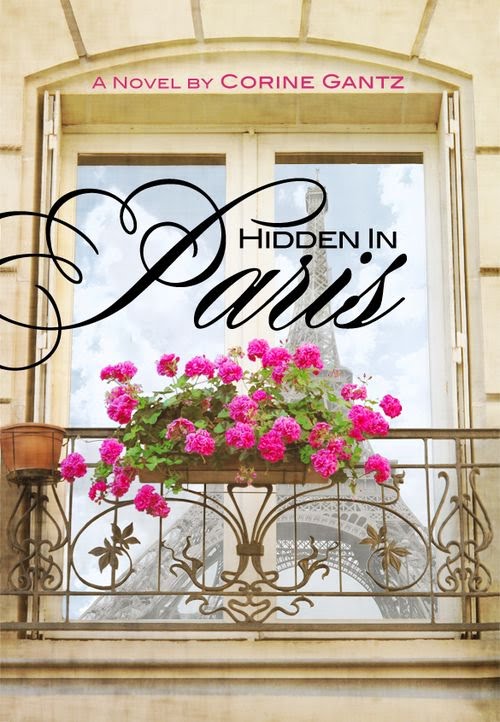
FRANCE – Hidden in Paris – Corine Gantz

Our second featured writer in May, Corine Gantz has just released her debut novel about a group of American women who try to start new lives in Paris.

A displaced Parisian in Los Angeles, where she lives with her husband and two sons, Corine blogs at Hidden in France.

Amazon description:

When bankruptcy threatens her beloved house, her one anchor in life, Annie has no choice but to find renters, and quick. Leave it to someone socially phobic to phrase a want ad in all the wrong ways. With shimmering promises of ‘Starting over in Paris’ –– a concept she has no intention of applying to her own life––Annie attracts tenants with the kind of baggage that doesn’t fit in suitcases.

THAILAND – Tone Deaf in Bangkok – Janet Brown

The last book on today’s list is by Janet Brown, whom we featured on June 10th.

In the article, Janet said: “My parents turned me into a gypsy before I was two, by taking me on their journey by jeep from New York City to Alaska when the 49th state was still a territory and the Alcan Highway was still an unpaved trail into the frozen north. I have wandered ever since, most recently in Southeast Asia with Bangkok as my home, writing down the stories I encounter as I explore.”

Amazon description:

“From her first bewildered hours to the moment that she reluctantly leaves, Janet Brown describes her experience of falling in love with, and in, Thailand’s largest city. Nana Chen’s evocative photographs provide illustrations of daily living in Bangkok.”
BC Magazine review:
“Janet Brown’s experiences in Thailand are chronicled in short essays that bypass the usual tourist spots and concepts and present an intimate and revealing understanding of Bangkok and the Thai way of life from a female foreigner’s fascinated point of view.”

If you enjoyed this post, we invite you to subscribe for email delivery of The Displaced Dispatch, a round up of the week’s posts from The Displaced Nation. Sign up for The Displaced Dispatch by clicking here!

Related posts:

Ho’ omaika’i ‘Ana to TCK writer Tony Roberts

Expat life as psychological thriller? An unholy appreciation of novelist Shireen Jilla

Announcing The Displaced Dispatch – our weekly newsletter

O yea! O yea! Read all about it!

A weekly round up of The Displaced Nation’s posts is now available, and can be delivered to you by email every Saturday.

Instead of your inbox being filled with daily emails from TDN – yes, we post quite often – you can now opt to have one email each week, to peruse at your weekend leisure. If you’re on vacation, you might even find that it’s a good beach read. (Just don’t spill the SPF30 on your mobile phone.)

As time goes by, we will be adding items to the newsletter that you may not get from the site, such as trivia questions, international recipes, or even the occasional giveaway!

So roll up, roll up! Sign up for The Displaced Dispatch by clicking here!

.
Img: Town Crier, Provincetown, MA – Wikimedia Commons

The Enchanted August: Finding vacation enchantment in a displaced world

In Friday’s Classic Displaced Writing post, featuring David Foster Wallace’s essay about a trip on a Caribbean cruiseliner, Anthony Windram gracefully led us into this month’s vacation theme of “The Enchanted August.”

Our August theme is inspired by The Enchanted April, the 1922 book by Elizabeth von Arnim, in which four women, strangers to one another and variously dissatisfied with their lives in post-World War One London, spend four weeks together in an Italian castle. Distanced from their usual habitats and placed in magical surroundings, they each gradually become the person they would aspire to be, rather than the armor that time and circumstance has created.

Now obviously we can’t all spend the summer in a Tuscan castle to cast off our external personae and discover our inner selves, and perhaps that is just as well: if we base our expectations upon the glowing results in The Enchanted April, our hopes are likely to be dashed.

Realizing this, the TDN team this month will be helping our readers to find other, smaller ways to rediscover the person inside — the inner enchantment — rather than the exterior of a person now defined by a displaced lifestyle.

We will look at less exotic sources of enchantment to be found in less idyllic vacation situations — a stay-cation at home, for example, or (as often constitutes a holiday when you’re a displaced person) a lengthy visit with relatives.

We will also practice what we preach this month, and take a break ourselves: August will feature shorter posts as well as a few reissues of some popular early posts which newcomers to the site may have missed, along with a few posts summarizing what we’ve done with the site so far, soliciting your feedback.

So enjoy the sunshine or snow! Wherever you are this August, we hope you have an Enchanted one, and feel a little of the joy that Lotty Wilkins, heroine of The Enchanted April (and now of TDN’s Enchanted August), feels on her vacation:

“…this was the simple happiness of complete harmony with her surroundings, the happiness that asks for nothing, that just accepts, just breathes, just is.”

“The Enchanted April” is available at Amazon, Barnes & Noble, Waterstones, etc. The 1992 movie of the same name, starring Miranda Richardson and Josie Lawrence, is available on DVD.

STAY TUNED for tomorrow’s Classic Displaced Writing post on Elizabeth von Arnim.

If you enjoyed this post, we invite you to subscribe for email delivery of The Displaced Nation. That way, you won’t miss a single issue. SPECIAL OFFER: New subscribers receive a FREE copy of “A Royally Displaced Tea.”

Related posts:

4 lessons Harry Potter can teach us about tolerance – cross-cultural and otherwise

Yesterday, our Random Nomad, Jo Gan said:

“If something one of us does bothers the other person, we compromise… If you really want to make a relationship to work, any relationship, it takes respect, consideration, and a willingness to compromise.”

Wise words, Jo, and sentiments which another Jo – Jo Rowling, better known as JK Rowling – would agree with.

Love them?

Since 1997 and the publication of Harry Potter and the Philosopher’s Stone, we have been engulfed in the world of Hogwarts, wizards, witches, and muggles. With today’s movie release of  Harry Potter and the Deathly Hallows (Part 2), however, this week marks the end of the Harry Potter era.

Perhaps I was just at the right stage of family life to love Harry Potter. My children were toddlers when Philosopher’s Stone was published; this month, as Harry, Ron, and Hermione reach school-leaving age, so do they.  Together, over the last fourteen years, we have read the books, seen the movies, and queued at midnight in bookstores.

Or hate them?

It’s apparent, though, that not everyone shares this affection. While I understand we all have different tastes and Harry Potter cannot possibly be everyone’s cup of butterbeer, in too many cases this aversion has gone far past simple dislike into the realms of…well, ‘hatred’ isn’t too strong a word for it.

Pretty ironic, really, when one of the main Harry Potter themes is Tolerance.

Could it be that the very people who claim to detest Harry Potter are, perhaps, those who most need to read the books?

1. Tolerance of things we fear

Harry’s aunt and uncle, the Dursleys, fear all things magic. They won’t even permit Harry to use the M word – “Magic” – in their presence, and they confiscate his Hogwarts textbooks over summer vacations.

These actions are not unlike those of some fundamentalist churches, who periodically burn Harry Potter books. One Baptist pastor claims:

“The Potter series is worse than pornography. The books are even more dangerous than the Satanic Bible. At least with the Satanic Bible, young people know that the book was written by Satan. The Devil just changed his name to J.K. Rowling this time.”

Satan needn’t have bothered. It won’t help him get a share of the royalties.

2. Tolerance of infirmities

Professor Lupin, a teacher at Hogwarts, is humiliated and discriminated against because, through no fault of his own, he has a chronic disease – lycanthropy. In other words, once a month, he will turn into a wolf, bay at the moon, and run around biting people. The disease is now fully controlled by potions, but Professor Snape still regards it as his duty to inform Hogwarts pupils of Professor Lupin’s  condition.

Sadly, many AIDS sufferers can probably empathize with Professor Lupin’s plight.

However, we learn that in his teenage years, when no potion was available for his disease, Professor Lupin had three friends who developed their own ability to change into animal form, so they could keep Lupin company during full moon.

A true friend, like a life partner, will be tolerant of you in both sickness and in health.

3. Tolerance of other races

Voldemort followers in the Potter series want to rid the world of muggle magicians – wizards and witches who are not born into aristocratic magical families, but born in the real world and who display magical talent. Hermione is one of these, as was Harry Potter’s mother – both brilliant witches, but their talents apparently not good enough for Voldemort’s approval.

The parallels between Voldemort and Hitler, between the uprising of Voldemort followers and the Nazi party, between the desires for a master race and for pure-blood magicians, are only too evident.

4. Tolerance of things we envy

Lastly, a lesson not in the text of the books, but from reactions to the books.

There is wide criticism from both writers and ‘readers’ (I use quotes because generally these people haven’t read the books at all, but are prepared to offer criticism nevertheless) that the books have a clunky writing style, use too many adverbs – in short, name a writing sin, and JKR has committed it, it seems, and therefore does not deserve all the acclaim she has received.

No matter that this woman had an idea, worked on it determinedly for many years under far from ideal conditions, and finally achieved her goal of turning this idea into seven books. How dare someone rise from single motherhood on welfare to happily married, multimillionaire author?

In other words: How dare JK Rowling not be me?

As Jo Gan also said yesterday:

We have learned to accept each other’s differences.

If only everyone could say the same.

STAY TUNED for the first part in our series of interviews with cross-cultural couples.

If you enjoyed this post, we invite you to subscribe for email delivery of The Displaced Nation. That way, you won’t miss a single issue. SPECIAL OFFER: New subscribers receive a FREE copy of “A Royally Displaced Tea.”
Related Posts:

RANDOM NOMAD: Jo Gan, Director of Foreign Teachers, Author and Blogger

Cross-cultural marriage? 4 good reasons not to rush into it…

The Displaced Reads: 7 Books with a twist of Alice

THE DISPLACED READS: 7 books with a twist of Alice

As it’s that time of year when (depending on your hemisphere) poolside or fireside books are a must, and since we’re not quite ready to let go of the Alice theme, we at TDN have come up with our own version of a summer (or winter) reading list.

In our usual perverse manner, we haven’t chosen books on the current New York Times bestsellers list, but, quite simply, books with the name “Alice” in the title.

We haven’t read them yet, either, so this list is as much a journey of discovery for us as it is for you.

Let us know what you think!

1. Alice in Verse: The Lost Rhymes of Wonderland by J. T. Holden and Andrew Johnson

Average Amazon rating: 5 stars

Have you ever wondered…
Who really stole the Queen’s tarts? Whatever did become of the Walrus & the Carpenter after their nefarious jot down the briny beach with the little Oysters? Is there truly any sense to be found in nonsense at all? (Amazon product description)

“The rumored ‘lost rhymes’ of Lewis Carroll are the inspiration behind Alice in Verse: The Lost Rhymes of Wonderland, a compilation of masterful poetry. While adding new and interesting elements, Holden has managed to keep the timeless appeal of the original works, allowing true fans to insatiably dig in. From the absurdity of the verse to the well-composed rhyme to the shrewd black-and-white illustrations, this book is certainly a literature lover’s delight.” The Children’s Book Review)

2. The Logic of Alice: Clear Thinking in Wonderland by Bernard M Patten

Average Amazon rating: 4 stars

“Alice in Wonderland may well be the most interpreted book in history, but there are always new depths to be plumbed. Bernard Patten dazzles us with his analysis of key episodes in the book. Like Lewis Carroll, Patten obviously loves logic and uses wit and humor to draw serious lessons about the principles of clear and logical thinking.” —Clare Imholtz, Secretary, Lewis Carroll Society of North America

“As Patten makes clear, Alice’s Adventures in Wonderland, far from being just an entertaining children’s book, is more complex and deeply reflective of Dodgson’s character than it may seem. By making an effort to understand its deeper layers, both children and adults may profit from this masterful tale by learning to think better and, along the way, having fun.” (Amazon product description)

3. Alice in Wonderland and Philosophy: Curiouser and Curiouser by William Irwin

Average Amazon rating: 4 stars

From the back cover:

  • Should the Cheshire Cat’s grin make us reconsider the nature of reality?
  • Can Humpty Dumpty make words mean whatever he says they mean?
  • Can drugs take us down the rabbit-hole?
  • Is Alice a feminist icon?

This book probes the deeper underlying meaning in the Alice books and reveals a world rich with philosophical life lessons. Tapping into some of the greatest philosophical minds that ever lived—Aristotle, Hume, Hobbes, and Nietzsche—Alice in Wonderland and Philosophy explores life’s ultimate questions through the eyes of perhaps the most endearing heroine in all of literature.

4. Alice I Have Been: A Novel  by Melanie Benjamin

Average Amazon rating: 4 stars

“Benjamin draws on one of the most enduring relationships in children’s literature in her excellent debut, spinning out the heartbreaking story of Alice from Alice’s Adventures in Wonderland…Focusing on three eras in Alice’s life, Benjamin offers a finely wrought portrait of Alice that seamlessly blends fact with fiction. This is book club gold.” (Publisher’s Weekly)

5. Alice Bliss: A Novel by Laura Harrington

Average Amazon rating: 5 stars

“When Alice Bliss learns that her father, Matt, is being deployed to Iraq, she’s heartbroken. Alice idolizes her father, loves working beside him in their garden, accompanying him on the occasional roofing job, playing baseball. When he ships out, Alice is faced with finding a way to fill the emptiness he has left behind.” (Amazon product description)

6. What Alice Forgot by Liane Moriarty

Average Amazon rating: 4.5 stars

“What would happen if you were visited by your younger self, and got a chance for a do-over?
Alice Love is twenty-nine years old, madly in love with her husband, and pregnant with their first child. So imagine her surprise when, after a fall, she comes to on the floor of a gym (a gym! she HATES the gym!) and discovers that she’s actually thirty-nine, has three children, and is in the midst of an acrimonious divorce.
A knock on the head has misplaced ten years of her life, and Alice isn’t sure she likes who she’s become. It turns out, though, that forgetting might be the most memorable thing that has ever happened to Alice.” (Amazon product description)

7. About Alice by Calvin Trillin

Average Amazon rating: 4 stars

Trillin, a staff writer at The New Yorker since 1963, regularly wrote about his family members, particularly his wife Alice, who lost her battle with lung cancer on September 11, 2001. This book, an homage to Alice, was published five years after her death.

“This succinct account of Alice’s upbringing, their meeting, their romance, their family, and her career beyond that of Trillin’s helpmeet, offers glimpses into a multifaceted character.” (Booklist)

“In his writing, she was sometimes his subject and always his muse. The dedication of the first book he published after her death read, ‘I wrote this for Alice. Actually, I wrote everything for Alice.’
In that spirit, Calvin Trillin has, with About Alice, created a gift to the wife he adored and to his readers.” (Amazon product review)

.

STAY TUNED for Monday’s account of the two displaced royals, William and Kate.

If you enjoyed this post, we invite you to subscribe for email delivery of The Displaced Nation. That way, you won’t miss a single issue. SPECIAL OFFER: New subscribers receive a FREE copy of “A Royally Displaced Tea.”

Another Friday, another royal wedding of international fame

Who’s the happy Royal couple today?

Ah yes. Kate Moss and Jamie Hince, in a three-day bling-fest entailing two top chefs, six marquees, and performances by Snoop Dogg and Kanye West. I bet the residents of  Little Faringdon are loving that one. There probably haven’t been as many twitching net curtains since Kate entertained a pipedream of opening a London pub in the middle of the peaceful English Cotswolds.

But I’m joking, of course. While Kate Moss’s wedding is taking place today, the real Royal wedding is that of Prince Albert of Monaco and his 20-years-junior, South African fiancée Charlene Wittstock, in a two-day bling-fest entailing super-chef Alain Ducasse, a Royal courtyard, and performances by Jean-Michel Jarre and The Eagles.

Money no object – money the object

With an estimated price tag of $65 million, Prince Albert’s wedding makes William and Catherine’s April nuptials look like five minutes in a Las Vegas chapel. Sadly, this extravagance seems to be the main point of the exercise: an attempt to revive both Monaco’s struggling economy and its reputation of classy glamour, the latter which, to a large extent, died with Princess Grace in 1982.

With Monaco awash in heads of state, fashion designers, and A-list celebrities, who could fail to notice the wealth and pizzazz of this little principality?

Prince Albert himself said:

“Even if it’s not the main purpose [of the wedding], it will be a chance to shine a light on the principality and to contribute to ending stubborn clichés [about Monaco].”

A runaway bride?

Recent rumors, however, seem to be shining lights in other, unwanted directions.

Already the father of two illegitimate children, the Prince must have been perturbed when a new whisper surfaced that a third offspring was toddling out of the woodwork.

Further rumors that, in response to this revelation, Ms. Wittstock tried to back out of the wedding and fly back to South Africa, and claims by Monaco police that her passport was confiscated to stop her doing so, have surely cast a shadow on the proceedings.

Prince Albert (and his lawyers) have vigorously denied the claims – but then, as Mandy Rice-Davies once said, “Well, he would, wouldn’t he?”

You can’t have a Royal wedding where the bride is perceived as being frog-marched down the aisle.

Lambs to the altar

Actually, you can. It used to happen all the time, and not too long ago either, but we like to think we’ve moved on.

We haven’t. Not really. Royal dynasties need heirs. Prince Rainier needed heirs because if there were none, Monaco would revert to France under a 1918 treaty. Grace Kelly duly produced heirs.

Not surprisingly, parallels have been drawn between Grace Kelly and Charlene Wittstock: both tall and blonde, both ‘commoners’, one an American film star, the other a South African Olympic swimmer who bears more than a passing resemblance to Grace Kelly.

Thirty years ago, similar parallels were drawn between Princess Grace and Lady Diana Spencer, before she became Diana, Princess of Wales. Another tall blonde, capable of producing heirs for a royal family; another dazzling wedding to shine a light upon a country in recession.

One can only hope that, despite this week’s rumors, Her Serene Highness, Princess Charlene of Monaco will have a better fate than the other two. If the marriage is less than perfect, let’s hope it hasn’t all been in vain and that the flagging economy in Monaco recovers as a result.

Plan B

If not, perhaps they could approach Kate Moss and offer her a venue in Monte Carlo to open the London pub she was thinking about. That would soon revive the economy.

Whether it would do the same for Monaco’s classy glamour, however, would remain to be seen.

Related posts:

Jerry Seinfeld – the Royal Wedding’s answer to Ricky Gervais

A displaced American writer, awash in a sea of Royal Wedding apathy

A toast to two displaced writers with passionate views of royal passion

DISPLACED Q: Wimbledon — is it an anachronism in today’s international sporting world?

Given that Fred Perry was the last British man to win a Wimbledon singles event (1936) and Virginia Wade the last British woman (1977), the British public’s enthusiasm for this rather quaint championship is surprising. Then again, nothing fuels their enthusiasm as much as cheering on the underdog, and goodness knows, there are underdogs aplenty for them at Wimbledon.

Every now and then, a British competitor with a sniffing chance at victory will come along and be vigorously rooted for. Alas, no amount of national pride will change the inevitable outcome of (Andy Murray excepted) the Brit’s hangdog expression as he packs away his racquet and towel after losing 6-0 6-0 6-0 on an outside court to an American or Rumanian.

As Clive James, the Australian writer and broadcaster, pointed out:

“A traditional fixture at Wimbledon is the way the BBC TV commentary box fills up with British players eliminated in the early rounds.”

Perhaps different countries are wired for different sports? Czech-born Martina Navratilova, nine times winner of Wimbledon Ladies’ Singles, thinks not:

“I’m an American. You can’t go on where you were born. If you do, then John McEnroe would be a German.”

John McEnroe (born to American parents in West Germany) caused controversy at Wimbledon in 1981, when he loudly criticized a line call and called umpire Ted James “the pits of the world.”

Despite being named by Sports Illustrated as one of the Top 10 Men’s Tennis Players of All Time, McEnroe fears the reputation of his temperament will outlast that of his talent:

“I want to be remembered as a great player, but I guess it will be as a player who got angry on a tennis court.”

For those who say there’s no such thing as bad publicity, McEnroe disagrees:

“Princess Diana, she used to come watch the tennis [at Wimbledon]. And even though she had it 1,000 times worse than I ever did, she pulled me aside a few times and said, ‘I really feel for you.'”

Meeting the Royal Family is something that doesn’t happen too often at, say, the U.S. Open. Perhaps it would be better if it did. Serena Williams, who has her own reputation for putting her verbal equipment in gear ahead of time, describes a Wimbledon meeting with Queen Elizabeth:

“I was supposed to say, ‘Your Majesty.’ I totally choked. I was like, ‘Hey, nice to meet you’, total American style. And then she started talking. Then I was like ‘Your Majesty’ while she was talking… Maybe she’ll remember me.”

Undoubtedly. Serena should have heeded Jimmy Connors’ rueful comment nearly 30 years ago:

“New Yorkers love it when you spill your guts out there. Spill your guts at Wimbledon and they make you stop and clean it up.”

Some international tennis players remain unimpressed by the oldest, and to some the most prestigious, tennis tournament in the world. Russian player Nikolay Davydenko says:

“Wimbledon is the world’s most boring tournament. There’s hardly anything to do apart from tennis. You constantly find yourself yawning – there’s no entertainment here.”

Is he referring to the arduous 30-minute train ride into the bright lights of central London, or is it simply a severe case of sour grapes at never progressing beyond the fourth round at Wimbledon? Whatever the reason, he isn’t alone.

“A lot of people think that everything revolves around Wimbledon but it is just one week of the year for us. If nothing happens at Wimbledon, it’s not the end of the world.”

— this from Elena Baltacha, the Ukraine-born British player, after losing at Wimbledon 2009 and sadly proving Martina right in her earlier statement about birthplace versus nationality. Oh, and Elena — Wimbledon is a two-week tournament. Perhaps that’s where you’re going wrong.

But maybe she’s right not to take it so seriously. My all-time favorite saying by a tennis player is that of Boris Becker, youngest ever winner of Wimbledon’s Men’s Singles, when he lost in the 1987 final to Pete Doohan:

“Nobody died. I only lost a tennis match, nothing more.”

So, let us have your views! Do you see Wimbledon as an anachronism in today’s sporting world, or are its slightly eccentric traditions to be cherished? The strict dress code of white for competitors; the strawberries and champagne; and above all, the venue of the All England Lawn Tennis and Croquet Club. (How Alice is that!)

And on the subject of Alice, our last words come from Venus Williams, on her tennis outfit at this year’s Australian Open:

“The outfit is inspired by Alice in Wonderland. It’s kind of about a surprise, because when Alice goes down the rabbit hole, she finds all these things that are so surprising. This outfit is about having a surprise in a tennis dress, and showing some skin and then just having a print. Prints don’t happen that often in tennis. So it’s called the Wonderland dress.”

Call me old-fashioned, but I’m with the Wimbledon dress code on this one.

STAY TUNED for tomorrow’s post, Part 3 of Sebastian Doggart’s thrilling chase after James Bond creator Ian Fleming’s Jamaican haunts.

Related posts:

DISPLACED Q: How many of these 5 expat Alice characters do you recognize?

After two weeks of total immersion in all things Alice, we’re finding that even normal people look like Wonderland characters.

Here are a few we’ve noticed:

1. The Red Queen

The Red Queen, as her title suggests, queens it over the less experienced and the newly-arrived in Wonderland (or Looking-glass country, if you would like to be pedantic.)

We all knew her in school. She’s the bossy one who made a beeline for The New Girl recently arrived from out-of-town, made a big deal about showing her around, and kindly explained the school rules in a manner guaranteed to confuse and subtly terrify the newcomer – which, of course, was the intention.

Now fully grown rather than three inches high, she reigns supreme over the expat coffee morning posse and sends out Tupperware party invitations which no one dares refuse for fear of excommunication from the International School’s PTA.

Her self-proclaimed superiority is based on her many years in Wonderland, and her familiarity with the country. She knows the place forwards, backwards, sideways, and diagonally.

2. The White Rabbit.

The Red Queen’s (or Duchess’s) sidekick. Always busy, always rushing somewhere, always checking her watch or BlackBerry, always worrying that she will be late for something – although no one cares whether she is there or not, and most would prefer that she isn’t.

She organizes coffee mornings, school bake sales, and garden fetes, and is never happier than when she is chairing a committee. She loves giving orders, which are generally followed but with much resentful muttering from the minions.

Her favorite expression, apart from “Oh my fur and whiskers!” is “If you want something doing properly, do it yourself”, followed by a heavy sigh at the bumbling incompetents with whom she is forced to associate by dint of a common nationality.

3. The Cheshire Cat.

The Cheshire Cat holds himself slightly aloof from the madness that is the expat enclave, accepts Wonderland’s eccentricities with smiling resignation, but has a tendency to disappear when the going gets tough.

Although he is friendly and happy to chat, don’t expect more than a superficial friendship from this one.

4. The Hatter.

Here is someone who should have left Wonderland years ago. Time no longer has any true meaning to The Hatter, who calculates it in days rather than hours, and in months until visa expiration rather than weeks since the beginning of  tea time. He makes jokes that aren’t funny, then gets offended when no one laughs.

The Hatter is a  great fan of the traditional expat gin and tonic, however, and it is always six o’clock in his house.

5. Alice.

The homesick newcomer, desperately trying to make sense of a new country and managing to offend people every time she opens her mouth.

She soon discovers that the beautiful, magic place she tried so many times to enter is full of faults, just like home, and the people in it of whom she was once  in awe are “nothing but a pack of cards.”

At this point she often leaves the country, as she has found the grass on the other croquet lawn isn’t any greener after all. Ironically, if she stays just a little longer, she will find that she has gone through the most difficult time of adjustment, and life in Wonderland can – probably – only get easier.

So – Do you know one of these Alice characters, or – dare you admit it – are you one yourself?

Img: — Many thanks to Emily Cannell at Hey From Japan for the photograph of waxwork Alice at the Tokyo  Tower!

STAY TUNED for tomorrow’s interview with Random Nomad Helena Halme. She appeals for citizenship in The Displaced Nation — and answers an Alice question!

If you enjoyed this post, we invite you to subscribe for email delivery of The Displaced Nation. That way, you won’t miss a single issue. SPECIAL OFFER: New subscribers receive a FREE copy of “A Royally Displaced Tea.”

Related posts: