The Displaced Nation

A home for international creatives

LIBBY’S LIFE #37 – Plots (and waistlines) thickening

Having uncovered corruption in the most unlikely of places, Libby is seeking advice from those around her.

As always when in need of advice, encouragement, and a bit of vindictive support, I went to see Maggie.

I tried to get advice and support from Oliver, but he’s a bloke. Nursery school dirty politics don’t interest him. He was concerned that someone else’s brat was picking on our son, however, so he took Jack aside for some man-to-man words of wisdom. The gist was that if Dominic caused any more grief, Jack was to beat him to a pulp, and Dominic wouldn’t do it again. Then I informed Oliver that Dominic was the son of Caroline, and Oliver turned a little pale and told Jack that Daddy was only joking, because violence is never the answer.

Caroline is the wife of Oliver’s boss, you see.

So, slightly disgusted with my turncoat husband, off I went to visit Maggie. No double standards from her.

When Jack and I arrived at her house, a strange car was parked outside, and I hesitated for a moment. Maggie doesn’t normally have guests, and I didn’t want to interrupt, but while I stood on her porch deliberating whether or not to knock, the front door opened.

“Hi, Mag—” I started to say, before realising it wasn’t Maggie who had opened the door, but the exotic woman I’d met in the Maxwell Plum at the Christmas party.

“How wonderful to see you again!” Anna Gianni exclaimed. “Come in and sit down –  we just made coffee.”

So Jack and I sat on Maggie’s squashy blue velvet sofa and watched two squirrels playing tag around the trunk of the maple tree outside the window, while Anna and Maggie crashed around in the kitchen. Call me possessive and silly, but I felt my role of Maggie’s adopted daughter had just been usurped. Crashing around in the kitchen with Maggie was my job.

Anna carried a tray into the living room and set it on the wicker trunk Maggie used as a coffee table.

“I’ve been meaning to call you ever since New Year’s,” she said, handing me a white china cup with violets hand-painted on it. “But the restaurant’s been really busy, and Frankie’s mother hasn’t been well. I always try to follow through with my promises, but sometimes life gets in the way. Know what I mean?”

I thought about my own January, the news from the ultrasound, and the problems I was having with Patsy Traynor.

“I know what you mean.”

Maggie emerged from the kitchen with a plate of brownies, and Jack looked up hopefully. She sat down in her rocking chair and beckoned him over.

“No school today, Jack?” she asked, handing him a brownie.

Jack crammed half the brownie into his face and shook his head, chewing. Then he crammed the other half in. Brownie juice ran out of the sides of his mouth.

“Gross, Jack.” I patted my pockets for clean tissues but found only a Snickers wrapper. Anna got up from her armchair and headed for the kitchen. “We’ve got a  little B-U-L-L-Y-I-N-G problem at the moment, I’m afraid,” I said. “By another child, I mean.”

“This is at Patsy’s school?” Anna called from the kitchen.

I nodded.

“And what is dear Patsy doing about this little problem?” asked Maggie.

Anna returned with a pile of paper napkins, and used one to scrub the chocolate from Jack’s face.

“That depends on who the child is, doesn’t it?” she said. “The fact that Jack is at home suggests to me that Patsy has done nothing. The troublemaker is still at school, and therefore the mother of the troublemaker is someone Patsy feels she must suck up to.”

I stared at her. “How do you know all that?” I asked at last.

“Patsy might have got rid of the teenage zits, my dear, but she never changed her spots.” Maggie held her arms out to Jack, and he climbed on her lap. “Anna knows her of old.”

“She used to be best friends with your landlady,” Anna said. “Patsy is still the same suck-up as when she was sixteen. Anyone rich, influential, slightly different, and she was all over them, hoping for a piece of reflected power or glory. At one time you might have qualified because you’ve got a British accent, but the town is overrun with Brits now. You need to either win the lottery or do something out of the ordinary.”

I said that since I was “ordinary” personified and we’d never bought a lottery ticket, that probably meant I should start looking around for a new nursery school for Jack.

“Unless I can make it known that she takes bribes. Would Wikileaks be interested? Could I write an anonymous letter to the Woodhaven Observer?”

“You can write it by all means,” Maggie said, “but they won’t print it. The chief editor is Patsy’s uncle. And he co-owns the nursery school.”

I was shocked. “Does this kind of thing go on a lot round here?”

“All the time,” Anna said. “Woodhaven is simply a microcosm of every government in the world, with bribes and abuse of power running riot. You think this is bad? You should have been here twenty-five years ago.”

“What happened then?” I asked.

Anna hesitated. “I think that’s Maggie’s story to tell.”

Maggie looked down into her lap, and I knew this was another piece of Woodhaven’s history that I wouldn’t hear just yet.

“The only way to get by in this town,” said Anna, “is to beat them at their own game.”

I thought. “I’m not sure how I would do that.”

“You have to make your presence at Patsy’s school more desirable than this other woman’s. What’s her name?”

“Caroline. And she’s Oliver’s boss’s wife,” I added.

Anna and Maggie both sucked in their breath. “Tricky,” they agreed.

“Patsy’s a germ-phobe.” Maggie nodded at Anna. “Always was. I don’t know if we can do anything with that.” I wondered what she had in mind. A vial of anthrax? Smallpox? Typhoid? “Remember the boy with impetigo a few years ago? Banned him from the school for weeks, and when the mother finally brought him back, Patsy had given his place to someone else.”

I wondered how Patsy reconciled her germophobia with her dust-laden office, then decided that you didn’t have to be rational to be phobic about anything.

“I heard about that. And the replacement mother was expecting twins. Patsy’s husband is an identical twin,” Anna told me. “When they were first dating, he had to study for some midterm exams, so he sent his brother to take Patsy out for dinner. She never noticed the difference, she says. I often wonder about that date. Bet her husband does, too.”

“I feel that’s taking sibling devotion too far, don’t you?” Maggie murmured.

“At least ours won’t have that problem,” I said. “Not with one of each.”

Anna stared. “You’re having twins?”

“Didn’t Maggie tell you?”

“It’s not my news to broadcast, Libby.”

“Because,” Anna said with enthusiasm, “you could use this to your advantage. Patsy loves having twins at her nursery school. She gets her uncle in from the newspaper, and they do a big feature on how many sets of twins there are in one year. Local nauseating news kind of thing. And then they call in Local Fox News, and they do a piece on it, and Patsy gets a shitload of publicity and gets booked up for the next three years and can charge what she likes.” She paused to reach over for another brownie. “But you see, the thing is, there are more schools in Woodhaven now. The twins are diluted, and Patsy can’t charge what she likes any more.”

“So she just takes bribes instead,” Maggie chimed in. “But it doesn’t really help Libby. The other child, this Dominic, he has to go. Tell me, Libs, does he have impetigo? Recurring conjunctivitis? Feet covered in verrucae? She hates those in summer, when all the children run around in the wading pool.”

I shook my head sadly. “None of those, as far as I know. He’s quite lovely to look at, actually, a Little Lord Fauntleroy. He even has the blond curls. I guess she can’t bear to get his hair cut yet.”

I remembered when I finally had to take Jack for his first haircut, and all his little baby curls fell to the floor. He looked like a shorn sheep, and I cried all the way home. So I couldn’t blame Caroline for wanting to keep those curls for a while longer.

“Shame.” Anna checked her watch, then jumped out of her chair. “Jesus H Christ, I told Frankie I’d be home a half hour ago.” She bent down and pecked Maggie on the cheek.

“I’ll give you a call, Libby. Really. I promise. Don’t let Patsy Traynor get you down, OK?”

I started to say No, I wouldn’t, but she had already gone.

“You don’t often hear people curse like she does in this town, do you?” I said.

Maggie laughed. “You’d never guess her father was a Pastor in Woodhaven at one time.”

“No! What’s the story there?”

But Maggie just smiled and said nothing.

Another piece of Woodhaven history I would have to figure out myself.

.

To be continued next week

.

Next: LIBBY’S LIFE #38 – The battle of the tigers

Previous: LIBBY’S LIFE #36 – Filthy cash, dirty deeds

Click here to read Libby’s Life from the first episode

STAY TUNED for Mary-Sue Wallace’s advice on matters of the heart.

If you enjoyed this post, we invite you to subscribe for email delivery of The Displaced Dispatch, a round up of the week’s posts from The Displaced Nation. Sign up for The Displaced Dispatch by clicking here!

Image: Travel – Map of the World by Salvatore Vuono / FreeDigit

Lyn Fuchs, American expat in Mexico: A raider of the lost art of philosophizing

As January comes to its close, our theme of Spiritual Enlightenment Through Travel would not be complete without a reference to Lyn Fuchs, author of Sacred Ground and Holy Water, and publisher of Sacred Ground Travel Magazine.

Lyn, of course, was our 5th Nomad of Christmas, where he stated his Most Displaced Christmas Moment was:

On December 24th 2008, [when] I was displaced from the palace of an elegant and voluptuous Saudi princess, after I attempted to demonstrate a “traditional Christmas goose.” I still fantasize about returning and showing her how to do a “traditional Christmas stuffing.”

From this, we can gather that the Political Correctness Movement is something that doesn’t bother Lyn a whole lot. Probably that’s the reason I fell in love with his first book, Sacred Ground & Holy Water, and will be buying his second, Fresh Wind and Strange Fire, when it is published.

If your only knowledge of Lyn is via his Christmas Nomad answers, it would be easy to assume that this un-PC, flippant personality is who he is. You may be wondering why someone with the nickname of Lyndiana Jones is the subject of a post about spiritual enlightenment.

To answer this, let me refer you to the Chique Show on Blog Talk Radio, where author Barbara Conelli interviewed Lyn this month.

In forty-five minutes, Lyn talks about his books, his writing, his philosophy on life – and how they came to be that way.

As the saying goes, never judge a book by its cover.

Or a deep thinker by his Christmas Nomad answers.

Here are some highlights from the interview:

On Mexico:

Lyn has lived in Mexico for a total of six years, and is currently Professor at the University of Papaloapan.

Mexico is probably the best place on earth to learn how to practice nirvana. India invented the theory of nirvana but Mexicans…invented the practice of it.

Mexicans are some of the happiest people in the world…You learn a lot here about how to live in the moment…Sometimes you really start living when you lose your fear of dying.

I would say that one of the things about Mexico I love the most is that philosophically they’ve taught me to be happy.

On writing:

Writing really started for me about ten years ago… I was in a remote valley [in Canada] for several months and basically I had nothing to do but exercise, cook, pray, listen to the wolves howl, and watch the snow fall…

I went from being a person that talked all the time to a person that actually had something to say.

So I grabbed a pen and I started reflecting on my life, and my life stories turned into magazine articles. Sometimes your destiny discovers you.

On travel and spirituality:

Travel brings you in contact with global spirituality, and whatever your religious label, if you travel, you begin to discover the spirituality of the universe…if that doesn’t sound too cheesy.

Deeper than just the [physical] movement from this place to that place is really what’s happening to our spirit when we travel.

On academia:

Books alone do not make a human experience.

Intelligence is what God did for you; the real question is “What did you do in return?”

On people’s fixation with politically correct vocabulary when the facts of the big picture are more important:

Sometimes North American hypersensitivity isn’t very sensitive. My books are for people who want to see a part of the world that is beyond their comfort zone.

On his own blunt writing style:

I think I have a responsibility to report the world as I experience it. I may not be right, but at least I’m telling you what I think I saw.

My writing blends spirituality and sexuality which often offends pretty much everybody, but writing honest books helps me sleep at night.

Click here to listen to the full interview on the Chique Show

If you enjoyed this post, we invite you to register for The Displaced Dispatch, a round up of weekly posts from The Displaced Nation, with seasonal recipes, book giveaways and other extras. Register for The Displaced Dispatch by clicking here!

Related posts:

LIBBY’S LIFE #36 – Filthy cash, dirty deeds

Having discovered that another child is making her son Jack’s life a misery at nursery school, Libby has decided to consult Patsy, the nursery school owner. She realises, though, that this Consultation will actually be more a Confrontation.

“Have a seat,” Patsy says, waving at the hard wooden chair on the other side of her desk.

I’ve been in Patsy’s office only once before, when I enrolled Jack at the nursery school. It’s a small room with a big smeary window and dinosaur print curtains drawn back, offering no shade against the afternoon sun that dazzles the occupant of the chair opposite Patsy.

On the wall to the right, nestling among framed finger-paintings by star students, hang assorted certificates from universities and the Commonwealth of Massachusetts – proof, presumably, that Patsy and her staff are competent to impart knowledge to our offspring. A cork board on the other wall is littered with coloured posters advertising local events and fundraisers. Many posters are several months out of date, the paper sun-faded and curling at the corners.

It’s a pretty depressing chamber, with its stegosaurus curtains and floating dust motes. Sitting here, opposite Patsy in her Chair of Power behind the coffee-ringed desk, reminds me of squirming in the office of my old GCSE English teacher, trying to explain why I hadn’t done my homework. Though my English teacher had better dress sense. She would never have come to school in Patsy’s red sweatshirt, home-decorated in acrylic paints with a spotchy picture of what looks like a psychedelic T-rex, but isn’t. “Happy 2012 – Chinese Year Of The Dragon!” trumpet the clarifying words under the T-rex.

Patsy forfeits dress sense for seasonal attire in a big way, I’ve noticed over the last couple of months.

“Is Jack sick?” she asks. “I noticed he wasn’t here today.”

I drag my eyes away from the Chinese T-rex, wondering uncomfortably if Patsy thinks I’ve been sizing up her boobs.

“He’s not sick, no. He didn’t want to come,” I say, and pause for a second. “I think he’s being bullied. By Dominic,” I add, and wait for her reaction. This is going to be a difficult conversation.

You see, Patsy doesn’t — or won’t — believe that three- and four-year olds are capable of bullying each other. This much I learned last week from overhearing her dialogue with Dominic’s mother. The child had been chucked out of a rival nursery school, allegedly for harassing his little classmates. Patsy had been sympathetic toward Caroline, the tiger-mum mother, and I’d heard her opining that bullying didn’t exist among toddlers – it was all the fault of overprotective parents’ imaginations.

I know I am not overprotective, that there is nothing wrong with my imagination, and Dominic’s ex-pre-school probably had a point. When my three-year-old refuses to get in the car to go to a place he’d previously enjoyed attending – coincidentally, before Dominic’s arrival – I know something is wrong.

Patsy, as I had anticipated, is in denial that something unpleasant should happen in her Lilliputian Utopia, and shakes her head at me patronisingly. I just bet she’s been to see that film with Meryl Streep as Margaret Thatcher.

“Oh no,” she says. “No. No, no, no. We don’t have bullying in our school. Some children are more confident than others, of course, and the, er, more sensitive souls such as Jack sometimes feel a little intimidated by the confident ones. We try to work with children like Jack, to raise their self-esteem—”

“It’s got nothing at all to do with Jack’s self-esteem!” I splutter. “He’s got plenty of self-esteem! He’s just not very keen on spending time in a place where undisciplined little sods ram toy strollers at his legs for the hell of it and the people supposedly in charge stand around and waffle on about self-esteem.”

Patsy winces. Whether it’s at my accusations or at the word “Hell” (a very bad word in Woodhaven, I’ve discovered) I don’t know. It won’t be the word “Sods” because she won’t know what that means. It’s what Oliver calls “High-frequency swearing” along with other choice British words that make their way past the censors on TV. Kind of funny really – they’ll bleep out most of Gordon Ramsay’s vocabulary, but the word “Wanker” is allowed to remain because it’s foreign and unknown.

She draws in a breath and folds her hands carefully on the desk, making a steeple out of her index fingers. Definitely Maggie Thatcher.

“As I said. At this age, we do not have a bullying problem. Bullying in pre-school years is entirely in the eyes of the beholder. But rest assured, I will monitor any bad behavioural choices by Jack’s classmates.”

My mother used to monitor my own bad behavioural choices with a couple of slaps on the leg, but I doubt this is what Patsy intends. Sometimes I long for the dark ages of the 1980s.

“And how do you intend to deal with any ‘bad behavioural choices’?” I ask. “Punish the child by not calling them ‘Honey’ at the end of a sentence?”

Pointless to use irony or sarcasm on Patsy. She’s spent too many years with small children, and interprets everything literally.

“Yes. We will speak kindly but firmly with the child – whichever child it turns out to be who Jack is distressed by.”

” ‘By whom’,” I mutter. You can’t pretend to be Maggie Thatcher if you don’t know the difference between Who and Whom.

I put my hand on the seat of the chair and carefully lever myself into a more assertive standing position.

“If I can persuade Jack to come next time, then of course I will. But frankly, Patsy, I’m not reassured by your plan of action. If this child is causing Jack distress, I’m sure he will be causing distress to someone else as well, and I don’t understand why you’re willing to put up with it.”

I hold my hand out to shake Patsy’s, and as I turn slightly, I catch sight of the cork board and its faded posters. One of them is for a fundraiser dear to Patsy’s heart – the Nursery Improvements Fund, currently raising cash for a new jungle gym in the playground. Patsy sends home requests for donations every week. They always go in the recycling bin at home – in my view, what Patsy charges every month should be enough to pay for a new jungle gym, heated swimming pool, and an indoor ski slope – but I know some other mothers donate regularly, holding bake sales and coffee mornings and what have you. Mothers with cash to throw around. Mothers driving Porsche Cayennes. Mothers wearing big diamonds in their earlobes…

“It’s the money, isn’t it?” I say softly, releasing her hand. “You’ve taken this child on for more motives than just out of the goodness of your heart. Getting near the total you need for the new swing set, are you?”

Patsy’s face goes a little pink.

“No, you’re quite wrong if you think I’d—”

“Am I? Am I? I bet if Jack was displaying ‘bad behaviour choices’ you’d be chewing my ear off about it before I could say ‘Supernanny.’ How big a donation would I have to make to your Nursery Improvements Fund before you’d overlook the fact that Jack was making another child’s life a misery?”

Patsy’s silent.

I nod.

“Thought so. Goodbye, Patsy.”

I walk out of the room.

The dust was making my eyes water anyway.

.

To be continued next week

.

Next: LIBBY’S LIFE #37: Plots (and waistlines) thickening

Previous: LIBBY’S LIFE #35: A big piranha in a small pond

Click here to read Libby’s Life from the first episode

STAY TUNED for Friday’s post from Charlotte Day — where is the ultimate spiritual destination for a TCK?

If you enjoyed this post, we invite you to subscribe for email delivery of The Displaced Dispatch, a round up of the week’s posts from The Displaced Nation. Sign up for The Displaced Dispatch by clicking here!

Image: Travel – Map of the World by Salvatore Vuono / FreeDigit

Jennifer Dubowsky, Acupuncturist — Bringing Eastern healing to the American Midwest

Born in:   Bean Blossom, Indiana.

Now: Practicing acupuncture since 2001; currently has office in Chicago, Illinois, USA.

 Cyberspace coordinates: Jennifer Dubowsky (business site); Acupuncture Blog Chicago (blog); @tcm007 (Twitter handle); Jennifer Dubowsky Acupuncturist – Facebook page.

Most recent post: Well Being Increases With Our Ability To Make Choices 

Tell us how you went from “the smallest of small towns” in Indiana to practicing acupuncture in Chicago. 

Since I was young, I’ve always had a huge interest in travel and other cultures and spent a year living and going to high school in Paris when I was 16-17 years old.  In college, I developed an interest in the body and got my Bachelor of Science degree in kinesiology (I actually thought cadaver dissection was quite interesting.) My interest in health and other cultures lead me to the perfect marriage in Chinese Medicine and I got my masters degree in Oriental Medicine, studying in New Mexico and Colorado.

How did you become interested in the practice of acupuncture?

​I have been interested in healthcare my entire adult life. Chinese Medicine was a perfect mix of the exotic and effective healthcare.

What do you think acupuncture is particularly good at doing?
Acupuncture is very good at treating many ailments.  Some examples of common health problems I address in my Chicago office are pain relief, fertility and other gynecological issues, anxiety, allergies, and headaches. One of the major benefits of acupuncture is that it not only helps many problems, but does so without the negative side effects of drugs.

You completed an internship at the Sino-Japanese Friendship Hospital in Beijing. Do you have any special memories of that time?

The time in Beijing was special for me because it completely solidified my love and faith in Chinese Medicine. I also got to explore the city which is so exotic and difficult to manage because I didn’t speak Chinese or read Chinese characters. While I was in Beijing, my hair was blonde and I traveling with a friend who had super curly dark hair. We were a very noticeable pair walking through the streets. People stared and a few stopped us to take photos or touch my friend’s hair. That was a little weird.

As well as your website, you have a blog. Is this another tool you use for your business, or is it more a personal endeavor? 

I started my blog in 2008. It has gone from being a marketing tool for my practice to a true passion. I love being able to connect with people all over the world through the magic of the internet. I have “chatted” with people in India, Israel, Ireland, and Australia and thousands of people from many other places have visited my site.

According to a recent post on your blog, the AAAOM (American Association of Acupuncture and Oriental Medicine) is “working hard to get acupuncture included in the Affordable Care Act as an Essential Health Benefit.” Why do you think it’s important to make acupuncture available and affordable to the general public?

Acupuncture, just like all healthcare, should be affordable to the public. Ultimately each person manages his or her health and deserves options so that they can be informed consumers.  Coverage by all insurance plans would certainly go a long way to making acupuncture available. If readers are interested, they can sign a petition that asks to have acupuncture included in president Obama’s HealthCare Act.

Given your passion for blogging, do you have any other writing projects in the pipeline – a book, for example?
I am currently working on an e-book, my first venture into longer writing, because I believe that a book will connect me to more people. Chinese Medicine can be very complicated for the lay person and I plan to create a book that explains the treatments and philosophy in ways that people can understand and appreciate.

Our theme for January is Enlightenment Through Travel. Did you travel to any other countries apart from China when you were learning about acupuncture,  or is there somewhere you would like to visit in the future to further your knowledge in this field of medicine?

I had the opportunity to spend a couple of months traveling in Southeast Asia after my internship at the hospital in Beijing. I loved exploring other countries and was able to visit other parts of China and the Philippines, Thailand and Indonesia. Something I love about Chinese Medicine is that there is always more to learn. Therefore, I know it would be to my benefit to travel back to Asia because meeting with other practitioners is often like finding someone in another country who speaks your language. Knowing Chinese Medicine is like being in a special club so there is always that connection, despite the often wide cultural gap.

Do you have any gurus whom you look up to?

No gurus, but I have had one teacher, Dr. Tan, who has hugely influenced my practice since I graduated from school. I’ve learned so much from him about how to use my needles to their best advantage.

Would you ever consider living anywhere else? If so — where and why?

Yes — some cities I’d love to live in at least for a while would include Rome and London. Who knows – if an opportunity comes up, maybe I’ll be hopping on a plane to somewhere else 😉

 STAY TUNED for tomorrow’s episode of Libby’s Life, where Libby is finding that high school popularity contests don’t end with high school.

If you enjoyed this post, we invite you to register for The Displaced Dispatch, a round up of weekly posts from The Displaced Nation, with seasonal recipes, book giveaways and other extras. Register for The Displaced Dispatch by clicking here!

Related posts:

Image: photograph of Jennifer, supplied by herself.

LIBBY’S LIFE #35 – A big piranha in a small pond

Even a week after the ultrasound, I can hardly take it in. Twins? Me?

I phoned Mum to tell her about it, of course, and regretted it immediately. She means to be helpful and encouraging, but it never works out that way.

“You’ll probably have a Caesarian,” she said, sniffing. “Everyone does in America, from what I’ve read. But it runs in families, you know, twins. Auntie Doris, my grandmother’s cousin, she had twins. At least, I think she was a cousin.”

Or possibly not related at all. Grandma-Great was from a generation that called all older females Auntie.

“Was everything OK?” I asked. “We must be talking pre-National Health Service here.”

“Heavens, yes. Auntie Doris outlasted Grandma by ten years.”

“I meant the twins.”

“Oh, I see! Well, it was New Year’s Eve. The midwife had had a bit too much gin by the time she got to Doris’s house, and passed out on the floor at a critical moment. Uncle Harry was down the pub, as men did back then, so he was no help, and the twins didn’t survive into January. But since yours are due in May, I’m sure they’ll be fine.”

You see? This is my mother’s idea of making me feel better. I can never decide if she was always like that, or if forty years of marriage with dad has taken its toll.

“It’s OK, Mum. I don’t think nurses are allowed to turn up drunk to work nowadays, whether it’s a bank holiday or not. They get sacked, and sued, and stuff like that.”

“You say that, but only last week in the Daily Mail, I read about a Romanian nurse in London – ”

“If you’re going to start quoting Daily Mail hysteria at me, I’m going to put the phone down. I need to take Jack to nursery school anyway.”

“How’s he doing there? Does he like it? I don’t think it’s right, sending little ones off to school when they could be at home with their mummies.”

I rolled my eyes and started to tell her that of course he liked it there – then stopped. Last week he’d twice had a tantrum when I left him there. And yet before Christmas, he was going happily. Maybe it would take him a few days to get him back into the routine after the Christmas break.

“He’s fine,” I said, crushing the little niggle of doubt.

All the same, I thought, as I put the phone back in the charger, I would have a word with Patsy, his teacher.

* * *

I’ve tried to avoid Patsy as much as possible since Jack started at nursery. It’s partly because I still have nightmares about being roped in for Play-Doh sessions with Playgroup Mafia Mums, and partly because I sense she doesn’t like me. Or at least, she thinks I’m not worth spending time on.

How do I know this? Because I know the sort of girl that Patsy Traynor used to be at school.

She was the one with lank hair and unfashionable clothes, who used to tag along with the pretty, popular, calculating girls. She’d hang on their every word, laugh at every unfunny, airhead comment they made, massaging their already inflated egos and trying to be their best friend. In return, they would let her think she was a friend, but in reality they were keeping her on a string, waiting for the day when she might be useful in their social-political games. The sad thing was, everyone knew this except Patsy.

Now that she’s grown up, you’d think she might be wiser – but no. She has her favourites among the mothers – those who are disgustingly well-off, those who display potential PTA leadership qualities, those with interesting quirks to set them apart (but only in a good way; tattoos and body-piercings don’t count except negatively) – and as I have none of these traits, I’m an also-ran in Patsy’s eyes. Thankfully, Jack talks about “Miss Patsy” with enthusiasm, so I hope her disdain for mediocre parents doesn’t extend to their mediocre children.

When I arrived at the school, she stood in the classroom, chatting to another mum. I caught her eye, mouthed “Hello” and raised my eyebrows to indicate that I needed to ask her something, but my body language was lost on her. She had already turned back to the mum who, even by looking at the back of her perfectly highlighted head, I could tell was just the type with whom Patsy would have ingratiated herself thirty years ago.

I helped Jack take off his coat, but instead of wandering across the room to play in the toy bus as he had done before Christmas, he stayed close to me, staring warily around the classroom.

“Don’t you want to go and play with your friends?” I asked.

He clutched the hem of my jacket and shook his head.

I bent down to his level. “Why not?”

He glanced around again, put his mouth to my ear, and whispered, “Tom.”

“Tom?” I was bewildered. Tom was a little fair-haired boy with glasses and a lisp, incapable of anything more frightening than swatting at Jack with a Milky Bar. “What has Tom done to you?”

Jack shook his head and wouldn’t elaborate further.

What on earth am I doing, having two more children? I can’t comprehend the one I’ve already got.

I decided to be firm.

“Whatever Tom has done, I’m sure it can’t be that bad.” Could it? These boys were only three, after all. “And if you have any trouble with him, you tell Miss Patsy. That’s what she’s there for.”

Jack nodded uncertainly, then wandered off to the Transportation Play Area (translation = toy cars on a frayed rug) where, to my exasperation, he began to race Hot Wheels cars with the very child he’d complained about.

But since I was here, I’d have a quick word with Patsy and mention my concerns about Jack’s reluctance to go to school. She was still chatting, and as I lingered nearby waiting to speak, I realised the other mother had an English accent.

Patsy glanced at me and I heard her say, “This lady here is also British. I think I’ve seen your son playing with her little boy.”

The mother turned around, and I saw with a shock that it was Caroline, the pregnant tiger-mom discussing 4-carat diamond earrings at a coffee morning last July, whom I’d last seen at the Christmas party looking puffy and tired.

No puffiness now, though. She could have been an advertisement for Chanel’s Spring Maternity Collection.

“We’ve met,” she said to Patsy. “Two British mums, both expecting! When are you due, Libby?” She shot a look at my stomach. “Very soon, I do believe…next month, is it?”

You know, it’s fine for me and Oliver to make fun of the size of my bump. But it’s not at all fine for some superior tiger-mum to do it, especially when I distinctly remember telling her my due date at the Christmas party.

I smiled with as much sweetness as I could manage. “May.”

“You poor thing! So huge, and still four months to go! You should get your husband to send you to this marvelous spa in Vermont that I went to at Christmas. I went there with swollen ankles, had seaweed wraps every day, and came out ten days later like this.”

She pulled her trouser leg up a little way to reveal one defined, bony ankle above shoes that she and only Victoria Beckham would wear in late pregnancy.

“I’ve only got another three weeks, thank the lord. I think I’d kill myself if I had four months to go.” She laughed, then abruptly stopped as a small boy charged across the room and head-butted her three times in the thigh, making her wobble slightly on those ridiculous heels. “Dominic, sweetheart, remember what we talked about this morning, about making good choices? Do you think that was a good choice?”

“Yes!” the monster shouted, and raced off again.

“Oh dear.” Caroline sighed. “He’s so boisterous. But I believe in letting children be children, don’t you?’

Umm, no. Children are like weeds. Without due care, vigilance, and regular cutting back, they grow out of control. But you can’t say things like that any more, otherwise you’re not being “supportive”.

Pasty put her hand on Caroline’s arm. “Don’t worry about it. Or, you know, the other issue. The other mother was quite certainly exaggerating, and the school felt they had to make an example of him – quite wrong, in my opinion. Bullying isn’t a problem among three-year-olds. It’s always the parents, believe me – certain types of parents, anyhow. I’m glad you chose this school for him. He’s settled in very well.”

Interesting. Could I infer from this that Caroline, a new parent at this nursery school, had been forced to withdraw her child from another? She’d be all right here, I could tell. She was on Patsy’s list of VIP parents already. Amazing what a big rock in each earlobe would do.

“Libby, did you want to speak to me?” Patsy asked. “We can talk briefly now, or if it’s not urgent I’d be happy to see you after school one day next week.”

Caroline didn’t attempt to move away, and I didn’t feel like discussing Jack’s problems in front of her. “After school on Monday would be fine,” I said.

As I turned away, Caroline’s monster-child ran up behind her again, this time knocking her into Patsy’s arms.

“Dominic!”

It wasn’t quite a shout from Caroline, but it wasn’t far off. She went a little red, presumably embarrassed to be caught not allowing her child to be a child.

“Boys will be boys!” Patsy sang. “Well, time for school. Goodbye, ladies.”

As Caroline and I walked out to the car park, Caroline said, “I’d appreciate it if you didn’t mention anything about what Patsy and I were talking about. To the other Brits, I mean. Some of those women like nothing better than to bad-mouth Dom. Jealous, I suppose.”

Jealous of what? I wondered as I watched her drive away. Diamond earrings that could be cubic zirconia? Give me a break.

Then something else registered. Tom…Dominic…Dom. Dom? Is that what Jack had been trying to tell me, that someone called Dom was making his life hard?

I wasn’t on Patsy’s VIP list. With her shiny hair, sparkly earrings and posh accent, on the other hand, Caroline most definitely was.

Oh dear. Poor Jack.

To be continued next week

.

Next: LIBBY’S LIFE #36: Filthy cash, dirty deeds

 Previous: LIBBY’S LIFE #34: Shadows on a screen

Click here to read Libby’s Life from the first episode

STAY TUNED for another post from TCK Lawrence Hunt.

If you enjoyed this post, we invite you to subscribe for email delivery of The Displaced Dispatch, a round up of the week’s posts from The Displaced Nation. Sign up for The Displaced Dispatch by clicking here!
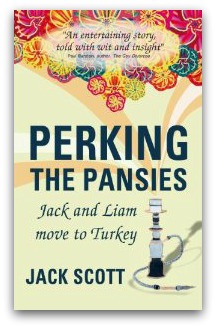
Image: Travel – Map of the World by Salvatore Vuono / FreeDigit

LIBBY’S LIFE #34 – Shadows on a screen

After a Christmas far away from her family, Libby is wondering if she is ready to face the new year without her loved ones. The foods she has been forced to abandon, that is.

Happy New Year!

A bit late, I know. It takes me a few days to get into the ‘Happy’ part. Until then, it’s just another month of winter, minus whatever food or beverage I’ve resolved to give up.

This year was different because I’d given up every nice food or beverage already, hijacked as I am by this alien growing in my midriff. Brie, prawns, coffee, every type of alcohol – you name it, and I have sacrificed it at the altar of pregnancy, although I’m thrilled to report that my taste for tea has unexpectedly returned. But give up chocolate for New Year? I think not. Not with Pinot Noir off the menu for another five months or more. Pass the Cadbury’s – lots of it, and now.

So, here we are in 2012, the year of our second child’s birth. I will be so happy to be rid of this bump. Have heard that babies get bigger the more you have of them, but I always imagined the increments would be more gentle. This one already has the proportions of a fully grown Oompa-Loompa. Still, twenty-two weeks down, eighteen to go, assuming this baby gets out of bed on time, unlike its brother who would have been happy to stay there until his peers were taking A-levels.

In a couple of hours, though, I will be able to stop calling it “it” or “this baby” because it will have a gender and proper name. (More on the dilemma of name choices later. I’m convinced it’s a girl, who is therefore going to be called Megan. Oliver is only contemplating a boy called Sam.) Oliver and I – obviously I, but we’re taking joint ownership of this pregnancy seriously – are going for our first ultrasound scan. I was supposed to go a few weeks ago, but what with Thanksgiving and Christmas and falling off ladders while decorating fir trees, I didn’t quite get round to it.

Such is the cavalier attitude of a second-time mum. Dr. Gallagher’s receptionist was horrified to find I’d only seen a doctor twice in half a pregnancy. I don’t know why. The baby is still there, isn’t it? It’s not as if I’ve put it down somewhere and forgotten it. Although I did that once with Jack when he was a few weeks old in his car seat. I went to Sainsbury’s cafe with Mum, put Jack on the floor next to the table, drank coffee, got up to clear the trays away, and…left.

But the important thing is I came back. The lady wiping the tables down was all set to ring social services, or so she said. Mum tipped her ten quid, and she shut up, but I always went to Morrison’s cafe after that, just in case she wanted another ten quid.

Oops. Time to leave for our appointment.

* * *

Tapping at a computer keyboard with her left hand and staring intently at the monitor’s mass of swirling, indecipherable grey shapes, the technician runs the gelled transducer over my bulging middle. She’s warmed the gel, so the pressure is not an unpleasant sensation, although the baby doesn’t agree and I feel a gentle kick of protest from within. It’s still very gentle, not much more than a flutter really, but it’s there all right.

The technician mutters to herself and types in numbers as she measures and remeasures the distance between various blobs.

“They’re very thorough over here, aren’t they?” I say in a low voice to Oliver, who is also concentrating on the picture on the screen. “I swear Jack’s ultrasound didn’t take this long.”

Oliver looks at me, a little cleft appearing between his eyebrows. “You’re right. It didn’t.” He clears his throat and raises his voice. “Is everything – you know, all right?” he asks.

The technician stops tapping the keyboard and moving the transducer. She smiles at Oliver and then briefly at me. She doesn’t look me in the eye.

“It looks…fine. So far,” she says carefully.

I don’t like her tone. She’s hiding something.

A couple of seconds later, she snatches up a handful of tissue paper, scrubs some gel off my abdomen, and covers me up with a sheet, which after two seconds feels cold on my skin, gooey from the residual gel.

“I’ll be back in a few minutes. I just need to speak with the doctor.” She pauses. “You say you’ve only had two checkups with your doctor so far in this pregnancy?”

I nod, not trusting myself to speak because of the lump of fear swelling inside my throat.

As she shuts the door behind her, I turn to Oliver and whisper, “What does she mean, she needs to speak with the doctor? Does that mean there’s something wrong?” Thoughts of my unknown sister, who survived only four hours, rush around my brain.

I’m willing Oliver to say something reassuring in his usual bluff way – “Don’t be silly, Libs, of course there’s nothing wrong! She said so!” – but he doesn’t.

He looks at me, then at the screen with the frozen picture of what I assume is a part our baby’s anatomy – a leg? A heart? Healthy? Not? – and says, “I don’t know.”

Neither do I. So much for a mother’s instinct.

And here’s the thing.

Despite all my brave declarations that nothing would change my feelings toward this child if it turned out to have a disability like my sister did, I find myself praying and bargaining with a god I don’t believe in.

Please let my baby be OK. Please let my baby be OK. I’ll be nice to Sandra. I’ll stop shouting at Fergus. I’ll even be nicer to Melissa if you let –

The door to the exam room opens and the technician walks back in, her white shoes making squelchy noises on the grey tiled floor. Behind her, in a white coat, is a tall, athletic man who looks as if he should be playing basketball rather than messing around with medical Photoshop. “Dr Holden,” his white coat says above the breast pocket, in blue italic embroidery.

The two medics go into a huddle in front of the computer monitor, checking numbers and flicking between images. I can’t make out what they are saying, let alone understand it.

I gaze at Oliver, then squeeze my eyes shut as he reaches for my hand and we lace fingers, as if by doing so we can weave a magic spell that will make everything all right, the same as everything was two hours ago.

“Mrs Patrick?”

I open my eyes in surprise. The doctor’s voice is high and reedy for someone of his build, and in another situation I would have laughed.

He looks from me to Oliver, and I see he understands what we’ve been thinking.

“There’s nothing to worry about,” he says. “Really. Nothing is wrong.”

I close my eyes again, this time in relief, and feel two tears slide down either side of my face toward my ears.

“But all the same,” his voice goes on, “this news may take a little time to get used to.”

* * *

I collapse onto our sofa. “Tea,” I say in the weak quaver of someone demanding water in the Sahara.

Oliver, like the well brought up English husband he is, heads to the kitchen to turn on the kettle.

A perfunctory knock at the front door is followed by Maggie bursting into the house with Jack, who rushes at me for a hug.

Murmurs and a little cry of surprise from the kitchen as Oliver tells Maggie our news.

Maggie brings in my mug of tea and sits beside me on the sofa. With difficulty, I lift Jack off my lap and sit him on my other side.

“Darling,” says Maggie. “Oliver’s told me all about it. What a shock.”

I nod.

“But in a few days, it won’t be.”

I start to sob, because “shock” doesn’t begin to describe my feelings, and I try to double over – but my bump is in the way. No wonder.

“I could have coped with anything but this! Three thousand miles from my mother, and Oliver keeps going on business trips…and that bloody dog…”

“Shush,” says Maggie. “I’m here. You have me.”

I sniff.

“And on the bright side,” Maggie says softly, “your mother-in-law is not here.”

I sniff again, and this time it’s more like a snort of laughter.

“And it is a cause for celebration, of course,” she persists.

I fumble in my pocket for a tissue, wipe my eyes, and noisily blow my nose. “Yes.”

“A toast, then?” Maggie gestures at the wine rack.“Just one?”

I look longingly at the bottles of Pinot, but pick up my mug of tea instead.

“No. I feel as if I’ve cheated Fate once today. Wine might be pushing my luck.”

Besides, I’ve read about these American pregnant women who get labelled as child abusers just because they ordered half a Bud Lite in a bar.

Oliver comes in with mugs for Maggie and himself, and a sippy cup for Jack.

Maggie raises her mug. “A toast, then! To…do we have any names?”

I glance at Oliver and smirk. “Sam.”

He clicks his Batman mug against my Toy Story one. “And Megan.”

“Sam and Megan,” we chorus, and sip tea politely.

I sigh. Typhoo it might be, but Pinot it is not.

“Somebody pass me the Cadbury’s,” I say. “Lots of it, and now.”

.

Next: LIBBY’S LIFE #35: A big piranha in a small pond

Previous:LIBBY’S LIFE #33: Fairytale of New England

Click here to read Libby’s Life from the first episode

STAY TUNED for Friday’s post – a summary of tweets on this month’s theme!

If you enjoyed this post, we invite you to subscribe for email delivery of The Displaced Dispatch, a round up of the week’s posts from The Displaced Nation. Sign up for The Displaced Dispatch by clicking here!
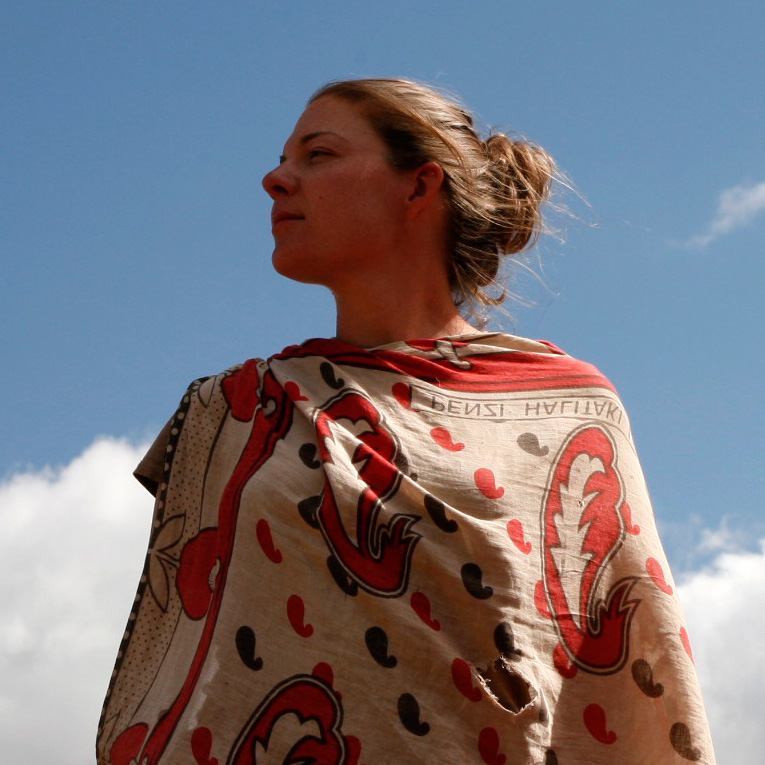
Image: Travel – Map of the World by Salvatore Vuono / FreeDigit

The displaced life and the quest for spiritual enlightenment — welcome to January

Back in 1996, when I handed in my notice at work and announced my intention to become a trailing spouse by moving with my husband to America, my boss first gave me a disappointed look, and then some advice.

“Make sure you do something for yourself while you’re there,” he said.

At the time, it was enough that I would no longer have to get up before the sun to take our toddler to childcare, or that checking my watch as a meeting ran into costly overtime with the childminder would soon be a thing of the past. Become a full time 1950s housewife instead of career mom? Yes, please.

As time went by, however, and my husband and I added to our collection of toddlers, I thought more about my boss’s advice and realized that what he had been talking about was not just the practical side of life but, in effect, the topic for this month’s theme: spiritual enlightenment.

In other words, finding another dimension to oneself — something that might not be easy if you’re a 1950s housewife attending to the needs of your family.

You don’t have to live on a kibbutz to be enlightened — a little

As it turned out, I was lucky. I have a sympathetic husband who has supported my writing addiction, which manifested itself shortly after the birth of our second child. I suspect this manifestation wouldn’t have happened in my former, British life. Being in a new country, among different people, gives you a different perspective on life, which in turn taps into another seam of your psyche – one that you perhaps didn’t know was there.

OK, so maybe my weekly epistle of “Libby’s Life” isn’t exactly enlightened. It’s never going to be up there with the homilies of Mother Teresa and the Dalai Lama. But I’m absolutely positive that Libby would not exist if my husband, daughter and I hadn’t displaced ourselves fifteen years ago – and by writing about her, and by writing posts for this site, I learn more about myself and others each week.

Even though I’m no Elizabeth Gilbert, who traveled to Italy, India, and Indonesia to discover herself, but coincidentally hails from the US state where I now live — I think it’s fair to call that a form of enlightenment.

Looking forward…

Still, this being January and a time when most people are making resolutions for a better life and lower number on the bathroom scales, we will try to inspire your good intentions.

During the next three weeks, you can look forward to interviews with more authors from our “Best of 2011” lists; lively debates on whether travel can lead to a healthier lifestyle; and discover which are the destinations and — naturally — footwear most likely to inspire a gap-year student.

First, though, STAY TUNED, for tough love and spiritual advice from our Tulsa Agony Aunt, Mary-Sue Wallace.

If you enjoyed this post, we invite you to register for The Displaced Dispatch, a round up of weekly posts from The Displaced Nation, with seasonal recipes, book giveaways and other extras. Register for The Displaced Dispatch by clicking here!


DISPLACED Q: Where and how would you spend your ideal Christmas?


For the last 14 years, we have spent Christmas in Connecticut. It sounds ideal – it’s the name of a classic Christmas film, for goodness’ sake – yet recently, more and more, I’ve wished to spend the festive season elsewhere.

By ‘elsewhere’ I don’t necessarily mean Olde England. Although I may be overtaken by the occasional yearning to spend a foggy afternoon in a pub while Slade and Wizzard bellow Christmas songs in the background, the feeling usually passes after two aspirin and ten minutes in a darkened room.

No; now that youngest child is healthily skeptical and I don’t have to invent elaborate fibs about how Santa Claus is going to track us down at another location, more and more I would prefer to spend Christmas somewhere — well, warmer. Much warmer. Maybe in another hemisphere, even.

But (someone is bound to say) you’re in New England! You have White Christmases!

It’s cold, certainly. But white? Not really. Of the fourteen Christmases here, only one has been properly white. While we have snow, and lots of it, the timing is always spectacularly bad. In any case, any aesthetic pleasure in snow is dimmed by the worry of whether the power lines will collapse before or after the beef comes out of the electric oven, and if it will be necessary to raid the kids’ Christmas toys for batteries for flashlights.

Speaking of my kids, they’re a traditional lot. They like Mum’s roast beef and Yorkshire puddings (the British roast turkey was shelved long ago when it became apparent that you can have turkey for Christmas or Thanksgiving, but not both) and my last suggestion of being anywhere but Smalltown, Connecticut on December 25th was met with howls of distress.

Christmas in Aruba? Barbados? Cancun? You’d think I’d suggested Christmas In The Workhouse.

I showed the kids a photo of Santa-hatted people frolicking in the waves at Bondi Beach.

“Doesn’t this look great?” I pleaded.

One of them sniffed. “Christmas is meant to be cold,” he said.

Cold outside with the central heating turned up to 75 degrees, that is.

“How about Disney World?” suggested another. “It’s supposed to be really nice at Disney at Christmas.”

OK, I can see a couple of advantages: above-frigid temperatures, and fake snow that won’t cut your electricity off. The disadvantages: too many to enumerate, but enduring a Disney Character Christmas Dinner would come top of the list and make me wish that either we or Mickey and friends were, indeed, spending Christmas In The Workhouse.

So, in the absence of family enthusiasm for an alternative location, I guess visions of sugar-plums will stay in Connecticut, while my own visions of barbecued shrimp under waving palm trees will just have to stay hold for a little longer.

I’ll keep working on it. Maybe next year.

QUESTION: Where would you spend your ideal Christmas?

STAY TUNED…for Tuesday’s Classic Displaced Writing, when Anthony discusses — who else, at this time of year? — Charles Dickens.

If you enjoyed this post, we invite you to subscribe for email delivery of The Displaced Dispatch, a round up of the week’s posts from The Displaced Nation. Sign up for The Displaced Dispatch by clicking here!

Related posts:

BOOK REVIEW: “Perking the Pansies — Jack and Liam move to Turkey,” by Jack Scott

For some months, I’ve been a big fan of Jack Scott and his blog, Perking the Pansies. Judging by the readership numbers, I’m not the only one, but that’s unsurprising.  Apart from the fact that Jack is one of the nicest bloggers on the block, how could anyone not be enticed by his introduction?

“Imagine the absurdity of two openly gay, recently “married”, middle-aged, middle class men escaping the liberal sanctuary of anonymous London to relocate to a Muslim country.”

Imagine, indeed. Even when it transpires that the Muslim country is Turkey and not Iran —

“We had no desire to be lynched from the nearest olive tree by the Revolutionary Guard”

— newcomers to the blog can be forgiven for wondering, “Guys – what were you thinking?”

Finding Paradise

Thankfully, the imminent publication of Jack Scott’s memoir, Perking the PansiesThe Book, means that readers will no longer have to scroll through months of blog posts for the answer to that question. While the blog’s first post gives a brief account of how Jack and his husband Liam left London for Turkey, the book fleshes out the logistics in a far more satisfactory manner.

Most people “of a certain age” will identify with the events leading up to this dramatic change in lifestyle. A midlife crisis, a middle-aged realization that personal happiness and mental health are worth infinitely more than a big number in the bank account, plus a couple of pieces of golden luck to make it all happen – how many of us have dreamed of just this, to leave the rat race behind and live in our own little Paradise?

Paradise Lost

Naturally, it’s not as simple as that. In leaving the corporate rat race behind, Jack and Liam encountered a new one – the expat rat race. It doesn’t matter where you are an expat – if you’ve ever lived abroad among fellow countrymen with whom you have nothing in common except nationality, you will recognize the competitors in this race. Jack describes them in detail enough to make the reader wince in sympathy.

The truly awful landlady, Chrissy, would be one reason for many people to put their suitcases back in the taxi and return to the airport. A member of The Ignorati  —

“Those who live in utter ignorance of the history and culture of their foster land, shout loudly in English, and see the world at large through the narrow-minded pages of the Daily Mail”

— Chrissy, for me, conjured up the image of a younger Alison Steadman in full-on Mrs Bennet mode. (Later, when Jack likened a hideous expat soiree to “Abigail’s Party without Demis Roussos” I was thrilled to have my impressions confirmed.)

Another memorable character, Clement, I imagined as the likely product of a coupling between a James Bond villain and Noel Coward. Jack deliciously described him as:

“The dotty but loveable old maiden aunt who always pitched up at Christmas and drank all the sherry.”

While I could continue to reminisce about other people I met between the pages of PTP, I won’t. Suffice it to say that Perking The Pansies is not so much about Jack’s Adventures Through The Looking Glass, but more about Who He Found There – a refreshing change from the many memoirs whose authors are constantly center-stage.

Compromise in Paradise

Many readers will also recognize the doubts Jack had about his new life:

“Sad people, bad people, expats-in-a-bubble people. They hate the country they came from; they hate the country they’ve come to. This was my social life. This is what I gave everything up for. This was Liam’s bloody Nirvana. We were the mad ones, not them.”

But eventually, when rid of the expat posse, Jack has this to say of Turkey and its own people:

“Turkey is a magical land graced by a rich culture, gorgeous people and an intrinsic love of the family. A respect for difference won’t destroy that. It’s okay to be queer….At times I think we’re floundering about like idiots, but now and then I think we’re making a real difference.”

Oh Jack — if only all your expat acquaintances could say the same thing.

I’m looking forward to your next book already.

Perking The Pansies by Jack Scott is available from Amazon.co,uk

STAY TUNED for tomorrow’s installment from our displaced fictional heroine, Libby, who is celebrating her mother-in-law’s departure before the holidays. (What, not keeping up with Libby? Read the first three episodes of her expat adventures.)

If you enjoyed this post, we invite you to subscribe to The Displaced Dispatch, a weekly round up of posts from The Displaced Nation, plus some extras such as seasonal recipes and occasional book giveaways. Sign up for The Displaced Dispatch by clicking here!

Related post:

An interview with Robin Wiszowaty: Kenya Program Director for Free The Children

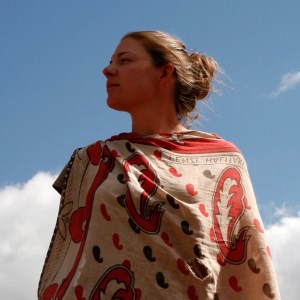
Last week I had the privilege of speaking with a young woman called Robin Wiszowaty. She isn’t a household name. You won’t find her in newspaper gossip columns, or on celebrity chat shows, or sashaying down the red carpet at the Oscars.

Yet I came away from our 45-minute conversation quite star-struck – not even my treasured chance meeting with Paul McCartney could compete – and more inspired than I can say.

A brief bio: From Suburbia to Savannah

Robin Wiszowaty was born in 1981 and grew up in Schaumburg, Illinois: a predominantly white, middle-class suburb outside Chicago. Although on paper Schaumburg appears an ideal place to spend childhood, with its summer block parties and strong sense of neighborliness, Robin says she never quite fit in.

“From an early age, I was unsatisfied with my ordinary life….I could never find my niche or any comfortable sense of self.” [My Maasai Life]

This feeling of discontent followed her through her teen years and into college at the University of Illinois where she studied speech communications. Only after a two-week trip to Israel in December 2001, to explore her Jewish heritage, did Robin begin to understand what she wanted from life.

“It [reminded] me how fiercely I longed to break out of this Western mindset and find something else.” [My Maasai Life]

While her concerned and long-suffering parents assumed the trip would rid her system of dissatisfaction and wanderlust, those two weeks in Israel were, in fact, only the beginning of a lifetime of traveling.

To the dismay of her parents a few months later, through a program run by the University of Minnesota, Robin was on her way to Kenya. After two months with a host family in Nairobi, where she learned basic Swahili and took classes on Kenyan culture, she went to live for a year in rural Nkoyet-naiborr, a Maasai community in the Great Rift Valley – a community and lifestyle as far removed from her Illinois home as anyone can imagine.

Nevertheless, Nkoyet-naiborr became her second home, in the truest sense. Here she forged deep, lasting friendships with her host family and members of the community, and was bestowed with a Maasai name: Naserian, meaning “peaceful person.” Mama, the mother in her host family, became her Kenyan mother, and Robin refers to the children of the family to as her brothers and sisters.

Today, nearly a decade after first arriving in Nairobi, Robin divides her time between Toronto and Kenya, working as Kenya Program Director with the charity Free The Children, implementing long-term development projects in partnership with local communities.

* * *

I spoke to Robin while she was in Canada, a few hours before she made the long trip back to Kenya. Her voice is soft, gentle, diffident, and not exactly what I’d expected; she’s had to overcome a lot of hurdles to be where she is today and, after reading her autobiography, I’m aware that I’m talking to one very determined person.

On Free The Children…

Kate Allison: Tell us a little more about what you do for Free The Children.
Robin Wiszowaty: As Kenya Program Director, I oversee the Alternative Income projects for Kenyan women. We teach the women leadership, financial literacy, how to access loans; and by being able to earn their own money, the women can invest that extra income in their families, their homes and, importantly, their children’s education. They work in groups — there are around 120 women’s groups now — and one example of how they earn income is doing quality beadwork. The bracelets and necklaces they make are sold at the Me to We store in Toronto, and also at the online store. My own Mama, by the way, is one of the beaders — she’s a fantastic beader.

Craig and Marc Kielburger, the founders of Free The Children and Me to We, have more to say about Robin’s role:

We’ve seen her sitting in hushed, intimate conversation with village elders, whose trust she earned through empathy and understanding. We’ve seen her astonish visiting students and volunteers with stories of her adventures. And we’ve seen her embraced by the teary-eyed mamas who are eternally grateful for her hard work in her role as Free The Children’s Kenya Program Director.

On writing…

Eighteen months ago, Robin’s autobiography “My Maasai Life” was published by Me to We Books — publishing division of Me to We, the for-profit social enterprise that supports Free The Children — and having read the book, I wanted to know more about it.

KA: Your book, “My Maasai Life”, tells the story of your transition from the American suburbs to life in a Kenyan village. What made you decide to write it?
RW: Lots of people have said to me that I should write a book about my experiences, but it was at the prompting of Craig Kielburger that I eventually wrote it. Craig was looking for books with a social message to be published by Me To We. “My Maasai Life” was the result, and was actually one of the first books in the Me to We publishing stable.

KA: What audience did you have in mind for the book when you wrote it?
RW: I originally intended it for high-school-aged girls who wanted to see the world — and also for their mothers, to help them understand this.

KA: Yes…in your book, you say your relationship with your own mother was somewhat rocky when you were that age.
RW: It was. But I look at myself now, and I think I’ve become the kind of person my parents always wanted me to be – albeit on my own terms.

(In fact, Robin’s parents long ago accepted, and proudly support, their daughter’s unconventional life choices.)

KA: What other kinds of readers have been attracted to the book?
RW: Young adults, in their 20s and 30s, who want to find a deeper meaning from life than they find in the corporate world where they are at present. And teachers; they read my book in World Issues classes, and discuss it with their students.

KA: Have you written any other books, or are you intending to do so?
RW: “My Maasai Life” has been adapted into a children’s book, subtitled “A Child’s Adventure in Africa”, and I’m currently working on another book, which I hope to have published in another couple of years or so. I’m about halfway through writing it — I don’t know what it will be called, and it doesn’t have a working title — and although it’s also about Kenya, this book is from the perspective of the women there, focusing on the universal concepts of motherhood and womanhood.

On fitting in…

KA: Can you think of a particular occasion in Kenya when you wondered, “What’s a nice girl like me doing in a place like this?”
RW: [laughs] I can tell you exactly when that was. It was on my first night in Nkoyet-naiborr, when I was sleeping in the bed I shared with my sister, Faith, and I heard a wild animal howling outside…

“Faith! ” I whispered.
“Naserian . . . ?”
“What is that sound?”
Faith rolled over, annoyed at being woken. “Hyenas.”
Hyenas? Now sleep was even more impossible. I tried to block out those echoing wails, but my mind flooded with questions. Was I doing the right thing? Was I just substituting one set of frustrations for another? Had I made a terrible mistake?

KA: And what about the other way round — can you think of a moment when you felt more at home in Africa than in the United States?
RW: Oh yes…I’m “taken” by Kenya. There, I feel comfortable within my own soul, that I’m in the right spot. You could say that it’s a calling. The time I feel it most is when I’m sitting with the women, making tea over the fire, just talking…there’s so much soul, such a feeling of family and community.

When I first went to Kenya, I felt at home on the first occasion my Mama let me fetch the water on my own. It felt good to be a provider for the family who were hosting me.

Fetching the water is much easier said than done:

Transporting water, I saw from the women, is an art unto itself. The mitungi must be carefully balanced on two rocks beneath the spout and then held in place while the trickling water slowly fills it all the way to the top. And with water always in scarce supply, we could never afford to waste or spill a drop. When the cylindrical twenty litre container was full, it weighed more than twenty kilos.

More recently, I can think of an occasion at the Kisaruni High School, which is Free The Children’s first all-girls secondary school, and has 41 students who board there. When it first opened last spring, these girls came to the school and we all had a big sleepover party. It was such a lot of fun, and for many of these girls it was the first time they’d slept on a mattress.

It’s the feeling of true community in Kenya that I love. It seems to me that when people come together for the benefit of others, that’s when you get the most profound sense of community.

KA: What about repatriation? Do you find it difficult to adjust between living in your two different worlds?
RW: The first transition from Kenya back to Chicago was most difficult. I felt like a lost 8-year-old, trying to get used to life in America again after a year away. I found it hard to wear shoes, having been barefoot for so long. And I was full of anger, of judgment for the way things were done — for example, at people who ran the water for so long, at the extravagant amounts of food.

Huge wasteful, overpriced family dinners. Thoughtless waste of water, flushing the toilet so many times every day.

But I don’t feel that way now. Then, I was going through that time of life when everyone tries to work out who they are and feels a certain amount of anger. Now I accept that it’s not about everyone having the same; it’s about everyone having enough.

Today, whichever direction I travel in, I always feel that I’m going home to family.

On our November theme of Global Philanthropy…

KA: Over the last month, we’ve discussed — fairly heatedly — the growing trend towards volun-tourism. As part of your work with Free The Children and Me to We, you lead groups of people on international volunteer experience each year. Can the people who go on these trips, who lack language and cultural training, really accomplish much in such a short time?
RW: Volun-tourism can play a great part when it’s done responsibly. Our youth volunteer trips last three weeks, while our family and corporate trips are shorter at ten days. We regularly have employees of large companies like KPMG and Virgin Atlantic on our corporate trips.

After some orientation, our volunteers hit the ground running — they help with building schools, with clean water projects, they go into the community’s homes to help, they learn Swahili. For many of them, it is literally a life-changing experience. It gives them a different perspective on life and on their careers. It’s very positive for both the volunteers and for the communities they are helping.

Volun-tourism skeptics should maybe note that Robin herself first came to Kenya with an attitude of “What can Kenya do for me?” rather than “What can I do for Kenya?”, as can be seen in this extract from her book, describing an incident during her initial two months in Nairobi:

One street man nearby…said in Swahili, “What are you doing in Kenya, if you can’t help us?”

Despite my halting comprehension of the language, I understood his question. What was I doing here? Was I here to help Kenyans? I couldn’t remember any sort of altruistic impulse as my reason for being me here. I only pictured myself three months earlier, curled up on my family room couch reading books on cultural sensitivity, or shopping in neighbourhood department stores for appropriate clothing, thinking this was a chance for me to enlarge my experience and pick up others’ points of view. I’d been driven simply by a desire to escape, not to improve the lives of these poor people.

KA: Which person or people, dead or alive, do you look up to most in your work?
RW:
I would have to say the other team members of Free The Children and Me to We, both in Kenya and Toronto. They all work for the children, not the paycheck. The world may never know their names, but they work so hard and achieve so much for others.

KA: Are there any inspirational stories of theirs you can share with us?
RW: Spencer West, a speaker on the Me to We team, was born with a genetic disease, and lost both his legs at the hips when he was a child. We met in Kenya when he was on an international volunteer trip, helping to build a school there.

Next June, he is going to “Redefine Possible” and climb Mount Kilimanjaro in his wheelchair, in order to raise $500,000 to bring clean water programming to 12,500 people in East Africa.

You can’t get any more inspirational than that.

KA: And lastly — it’s the holiday season. We’re inundated with requests for giving. In your opinion, what’s the best way to spend our dollars (or pounds, or euros, or yen, or whatever) to help those in other parts of the world who have so much less than we do?
RW:
Well — you could sponsor Spencer West on his climb and help those affected by the drought in East Africa, which is the worst in 60 years. Or you could buy your holiday gifts from the Me to We store, either in Toronto or online at www.metowe.com/shop.

Epilogue

The interview ends, and I thank Robin for giving her time, even when she has a hundred other things she could probably be doing, since in a few hours she will be flying back to her Kenyan home. I am awed by our conversation, by how much she has achieved in her short life — she is only 30 — and I feel humbled.

I tell her this. “People like you, who do so much with your lives, make me feel very small.”

There’s a slight pause at the end of the phone, then Robin says, “But… you’re a mother.”

I can’t count the number of times over the last fifteen years when, in answer to the question “What do you do?” I’ve said, “I’m just a stay-at-home mom.” Emphasis on the “just” — an apology for the mundanity of my existence. The counter-reaction, so often, is “But that’s a very important job!” in a slightly condescending tone that makes me feel, even more, that motherhood is merely a consolation prize for missing out on life’s other, more important achievements.

Robin’s tone holds none of this condescension. “You’re a mother,” she says, and it’s a statement of the obvious, that being a mother is an achievement in itself.

It occurs to me that her years with the mamas in Kenya have taught Robin the value of motherhood — a lesson that maybe passes by the young women growing up in our “developed” culture. It’s an irony, perhaps, that in our Western pursuit of progress and women’s rights, we have devalued the most important women’s right of all — that of pride in raising a strong next generation.

Robin, thank you. It was wonderful to talk to you. I hope we meet in person one day.

.

Quotations from “My Maasai Life: From Suburbia to Savannah.” Wiszowaty, Robin (2010-07-01), Perseus Books Group.

Img: Robin Wiszowaty — photo courtesy of www.metowe.com

Related posts:
RANDOM NOMAD: Aaron Ausland, NGO Research Director & Development Practitioner
RANDOM NOMAD: Adria Schmidt, Career Consultant at Violence Intervention Program & Former Peace Corps Volunteer

If you enjoyed this post, we invite you to subscribe for email delivery of The Displaced Dispatch, a round up of the week’s posts from The Displaced Nation. Sign up for The Displaced Dispatch by clicking here!