The Displaced Nation

A home for international creatives

Ask Mary-Sue: Dyngus Day and other great excuses for partying

Mary-Sue Wallace, The Displaced Nation’s agony aunt, is back. Her thoughtful advice eases and soothes any cross-cultural quandary or travel-related confusion you may have. Submit your questions and comments here, or else by emailing her at thedisplacednation@gmail.com.

Well, hello there, Mary-Suers. Hope you and yours had an EGGciting Easter (or Passover, though forget the egg-pun if that was the case).

I have to admit to being pooped by Easter weekend! It was one thing after the other in the Wallace household, and that means plenty of work for me, with hubby Jake nowhere to be seen (if the Easter bunny gave away charcoal to the undeserving, like a certain Mr Claus does, then that’s what hubby Jake would have gotten yesterday). So I was left to cook the ham, supervise the little ones when they made a total mess with the egg dying, and organize the egg hunt that we put on in our garden for all the neighborhood kids. Jake just kept watching the golf on TV, telling me someone called Bubba had won — I was unimpressed, let me tell you. If we had a dog house (we don’t, the dogs sleep on the bed with us), that’s where Jake would have been last night.

Anyhoo, you’ve probably had enough of my yapping when there’s your problems to solve, so let’s get on with them — two on this month’s theme of partying, and one a holdover from last month, when I was bombarded with questions on fashion and beauty.

__________________________________________

Dear Mary-Sue,

I am an American living in Poland. I’ve found it interesting to celebrate Easter here, though to be honest, I have my doubts about Dyngus Day, which is celebrated the Monday after Easter (what we used to call Easter Monday back in the town where I grew up in Kansas). On Dyngus Day, the men chase after the ladies with squirt guns, buckets, or other containers of water. They also  hit them on the legs with switches or pussy willows. Ladies allegedly get their revenge the following day by throwing crockery at the men.

What do you make of this custom? I think it all sounds rather pagan — more like a rite of spring than a proper Easter celebration. Would love to get your opinion.

Wendy from Wichita via Warsaw

Dear Wendy,

I’ll be honest, I’m not impressed. Sounds like the sort of shenanigans that my younger, trashy brother Dan and his wife Sandy get up to in Ringling. Dan’s always off getting drunk at the local dive bars, I know for a fact he and his buddies there have organized wet T-shirt competitions. Put Dan near a pert, pretty thing and he’ll bring out his water gun.

Once she finds out, his wife Sandy lets him know precisely what she thinks of him. I wouldn’t be surprised to learn that she’s thrown a fair few pieces of crockery in her time. Can’t say I blame her, but my sympathies end when one of them comes asking if I can “loan” them the money to bail the other one out.

Is Warsaw like Ringling, Wendy? Think I may have to give it a miss, or open a bail bond there — sounds like I’d make a fortune!

Mary-Sue

———————————-

Dear Mary-Sue,

I’m an English expat in the US — an experience that to be honest has made me even prouder of my British heritage. I’ve just now learned that today is Winston Churchill Day in the US, to celebrate the day in 1963 when our great PM was made an honorary US citizen (posthumously). Looking around, though, I don’t see much sign of celebration, and I’d like to do my part in changing that, for instance, by hanging up a Union Jack flag outside my house. Can you suggest any other measures I could take that would appeal to my new American friends? Perhaps a little party might be in order?

Harry from Harrow on the Hill via Hoboken, NJ

Dear Harry,

Own it completely. Organize a shindig centered around Sir Winston. Perhaps you could hit a cigar bar where you could all smoke like ol’ Winny and maybe indulge in a few brandies. When nicely lubricated, you could then, in the spirit of greater national understanding and that there’s no hard feelings, head to your nearest German restaurant for bratwurst, wiener schnitzel and beer.

Mary-Sue

———————————-

Dear Mary-Sue,

I can’t sleep! I recently spent a week in Rome and did some serious window shopping and all I saw was bald mannequins! Just have a look here

I have a hair appointment tomorrow: Should I go bald?

Anon

Dear Anon,

As George Santayana so wisely put it, “those who cannot remember the past are condemned to repeat it.”

Do we really want to repeat the mistakes of the early 1990s?

I lived through Sinéad O’Connor once, I won’t do so again. If I catch you, Anon, all bald and tearing up a photo of the Pope on Letterman, I will be VERY disappointed.

Mary-Sue
___________________________________________

Anyhoo, that’s all from me readers. I’m so keen to hear about your cultural issues and all your juicy problems. Do drop me a line with any problems you have, or if you want to talk smack about Delilah Rene.

Mary-Sue is a retired travel agent who lives in Tulsa with her husband Jake. She is the best-selling author of Traveling Made Easy, Low-Fat Chicken Soup for the Traveler’s Soul, The Art of War: The Authorized Biography of Samantha Brown, and William Shatner’s TekWar: An Unofficial Guide. If you have any questions that you would like Mary-Sue to answer, you can contact her at thedisplacednation@gmail.com, or by adding to the comments below.

STAY TUNED for Tuesday’s post. Mary-Sue has heard it’s going to be great.

If you enjoyed this post, we invite you to register for The Displaced Dispatch, a round up of weekly posts from The Displaced Nation, with seasonal recipes, book giveaways and other extras. Register for The Displaced Dispatch by clicking here!

Related posts:

 

Interesting celebrations around the world, as selected by Canada’s famed Dr Magister

Continuing this month’s theme of celebrations, today’s post sees Dr Simon Magister, a social anthropologist and skateboarding enthusiast from British Columbia, select his most interesting and strangest celebrations from around the world. We haven’t verified Dr Magister’s research, but we’re pretty confident that he can be trusted.

1. Cargo Cult Ceremony

Every March 13th on the island of Manus in Papua New Guinea, the members of the Tadel tribe celebrate Inspection Day. Being a “cargo” cult, this ceremony involves the chief of the tribe donning the ceremonial overalls of an aeronautical engineer and then conducting a two-hour safety check on the life-size straw replica of a plane that the tribe crafted. When the safety check has been completed, the tribe celebrates with roast hog served on in-flight meal trays whittled from wood.

2. The Festival of the Badger

A leading figure in the Celtic revival of the late-Victorian era, Amelia Mudd, established the Festival of the Badger in her home village of Eppingsop, Wiltshire. Now in its 125th year, and popular with adherents of Druidism, the festival, celebrated on the Spring Equinox, sees a giant wicker badger burnt on the village square. The success of the festival can be seen in the Wiltshire Tourist Board rebranding of the county as “the county of badgers.”

3. Nicaragua celebrates Australia Day

Following Crocodile Dundee‘s a.k.a. Paul Hogan‘s brave service fighting for the Sandinistas during the Nicaraguan Revolution, the Nicaraguan government have declared Australia Day an official public holiday.

4. Ted Bernard Month

The residents of Parlor, Arizona probably weren’t expecting too many changes when they voted in mechanic Ted Bernard as the town’s mayor in 2008. Mayor Bernard, however, had other ideas, one of his first acts being to pass a town ordinance that the month of May was now to be known as “Bernardbury in Parlor.” During Bernardbury, downtown Parlor is host to numerous arts festivals. At Cafe Duvet people can enjoy the jazz festival (featuring Ted Bernard playing his saxophone), at Stern’s Movie House there’s the film festival (featuring exclusive footage Ted Bernard filmed on his flip) and at Claremont Green people can enjoy Shakespeare in the Park (featuring performances from the RSC, Steppenwolf Theatre Company, and Habima, the national theatre of Israel).

Whether Bernardbury continues when the mayor’s term ends in 2013 is, as yet, undetermined.

5. The war that wasn’t

Each October 3rd the island of Vosha in Micronesia commemorates the end of the conflict known as the Battle of Joshua’s Chicken, which most historians now agree didn’t actually take place. The reason for the confusion lies in the published memoirs of Captain William Joshua of the Royal Navy, published in 1817. Joshua recounts how in the 1790s when traveling in the Pacific and in need of fresh produce as well as wood to make some minor repairs to his ship, he docked off the island of Vosha where he was cordially greeted by the island’s king. Joshua’s tale is that sick of all the breadfruit they’d been eating, the crew’s cook stole a chicken that belonged to the king,  and treated the crew to, according to Joshua’s memoirs, a “delicious, richly broth’d casserole.”

Unbeknown to the cook, the chicken was, in fact, the Voshaian’s living deity. Enraged at the death of their god, the people of Vosha engaged in a three-day struggle with the British. At the end of the three days Joshua surmised that the casualties on the Vosha’s side stood at six hundred, with their main settlement burnt down. Joshua then ends that chapter with the cook’s recipe for chicken casserole.

Most modern historians, however, feel that Joshua’s account has no basis in fact and that at no point did the people of Vosha ever worship a chicken. Professor Hopkins of Cornell has posited that Joshua’s memoir — where Joshua also alleges that he had been the lover of both George III and Catherine the Great — was the work of a man writing out delusions brought upon by the late-stage syphilis he must have been suffering from.

What strange celebrations have you seen? Dr Magister is curious to know for his research. From Rodeos to cheese-rolling…what did you think of them?

STAY TUNED, next Monday sees Mary-Sue Wallace dishing out advice like a homeless shelter dishes out soup.

Related posts:

Image: MorgueFile

Dear Mary-Sue: Mad Mad Mad expat men & their fashion & beauty quirks

Mary-Sue Wallace, The Displaced Nation’s agony aunt, is back. Her thoughtful advice eases and soothes any cross-cultural quandary or travel-related confusion you may have. With this month’s theme being fashion and Mary-Sue being Tulsa’s answer to Donatella Versace, she’s keen to share her sartorial expertise with Displaced Nation readers. Submit your questions and comments here, or else by emailing her at thedisplacednation@gmail.com.

You Mary-Suers are an insatiable lot, aren’t you? One big helping of my advice wasn’t enough for y’all this month, so after popular demand following my earlier post on fashion, I’ve been asked back. So that’s two lots of Mary-Sue for you this month — or “double the trouble” as Jake (or Mr Mary-Sue Wallace, as my pastor calls him) likes to say. (My how we laugh at that little joke! Well, I do and the pastor does — Jake doesn’t.)

Anyhoo, if my latest mailbag is anything to go by, I’m finding some interesting (or should that be alarming?) insights into my readership. Seems a lot of my readership skews male and weird — story of my life!

Am I right, or am I right?!

___________________________________________

Dear Mary-Sue,

About a year ago, I moved to the United States from the UK and find I’m now in thrall to the Mad Men series, which has just now started up again on AMC.

My obsession has grown to the point where I’m thinking of getting a retro hair style similar to Don Draper’s. I’ve enclosed a photo of myself to get your opinion on whether that would look good or if it might be too natty?

Cheers,

Tim from Tunbridge Wells via Trenton

Dear Tim from Tunbridge Wells (incidentally my cousin Janine visited there last summer – MS),

Hmmm, I’ll be honest, I’m not convinced this Mad Men malarkey is going to last. Sure, it’s the flavor of the month at the moment, but will we still be talking about Don Draper and his style in thirty years’ time in the way we still talk about Magnum P.I.?

I think not!

My advice to you, Tim, is to grow a mustache like Tom Selleck’s. Having seen the photo you’ve enclosed, you’ll still look like a drunk manatee, but at least you’ll look like a drunk manatee with a Tom Selleck mustache. I can’t promise that it’ll make you look good or natty, but you will definitely be a talking point.

———————————-

Dear Mary-Sue,

I’m from Germany but am now living in London. At the suggestion of my new English girlfriend, I’ve been browsing this mantyhose site (http://e-mancipate.net/). TBH, I can’t decide among the white, the military green, or the ones with patterns (eg, checkerboard, stars, or stripes). Since I’m a newbie to this trend, I wonder if you could give me your thoughts? (I’ve enclosed photos of myself in the mantyhose.)

Hans from Hamburg via Holland Park

Dear Hans from Hamburg,

Thank you for the photograph you sent me. (I don’t know why everyone is so insistent on sending pictures of themselves to me this week. And not a looker among you. I mean I don’t expect all my male admirers to be Tom Selleck or Richard Chamberlain lookalikes, but when it gets to the point where I’d settle for you being an Al Roker lookalike — well, that’s one slim pickings I’ve got.) More importantly, thank you for including a return address on your envelope, the authorities say that will make it very easy to track you down.

I don’t know why you’d think I’d want to see that. You must have mistaken me for Dear Prudence over on Slate.

———————————-

Dear Mary-Sue,

I just moved from Oslo to Oshkosh. I have a suitcase full of trousers in different colors — salmon pink, sky blue, red rose, and kelly green. Back home, these are the latest trend, but looking around here in Wisconsin, I’m afraid I might stand out a little too far in the crowd. Do you think I can get away with wearing them and if so, which color(s)?

Nils from Norway

Dear Nils,

Quite why you’re so bothered with what people from Wisconsin think of your clothes is bizarre to me. Anything other than stretch denim is probably going to draw attention out there.

What I would suggest is that you go with yellow-colored pants. That’ll probably sate your Nordic desire for garish pants. What you can do is claim that they’re your cheese pants and that you’ve picked them out as they’re the same shade of yellow as a fine (though that’s a relative term in this context) Wisconsin cheddar. I’m sure you can convince them that it’s your weird pants-based way of paying tribute to the state’s cheese industry.

Best of luck!

___________________________________________

Anyhoo, that’s all from me readers. I’m so keen to hear about your cultural issues and all your juicy problems. Do drop me a line with any problems you have, or if you want to talk smack about Delilah Rene.

Mary-Sue is a retired travel agent who lives in Tulsa with her husband Jake. She is the best-selling author of Traveling Made Easy, Low-Fat Chicken Soup for the Traveler’s Soul, The Art of War: The Authorized Biography of Samantha Brown, and William Shatner’s TekWar: An Unofficial Guide. If you have any questions that you would like Mary-Sue to answer, you can contact her at thedisplacednation@gmail.com, or by adding to the comments below.

STAY TUNED for Tuesday’s post. Mary-Sue has heard it’s going to be great.

If you enjoyed this post, we invite you to register for The Displaced Dispatch, a round up of weekly posts from The Displaced Nation, with seasonal recipes, book giveaways and other extras. Register for The Displaced Dispatch by clicking here!

Related posts:
 

Thoughts on beauty — and chinos

As regular readers of this blog are doubtless aware, The Displaced Nation always likes to have a monthly theme around which its daily posts pirouette. This month’s theme sees us turning towards the world of fashion.

That leaves me in the somewhat awkward position of having to foist a fashion article onto you all. I confess, and again regular readers won’t be surprised to learn this, that this is not a topic that I am well versed in, I am a skinny guy that has never worn skinny jeans. My own fashion tips begin and end with the advice that you cannot go wrong with a chinos and shirt combo. The shade of beige in the chinos varies and so does the color of the shirt, which can range from powder blue to salmon pink — but that’s still not very exciting, is it?  So unless you want to dress like an ITN foreign correspondent, I’m not really the person to whom you should be paying attention when it comes to fashionista matters.

Perhaps sensing my uneasiness with this topic, it was suggested by others here at The Displaced Nation that I might want to write about whether there is a universal idea of beauty.

This seemed like a better idea than my posting about fashion. I could, I quickly realized, start the article with the old cliché about how “beauty is in the eye of the beholder.” Once that was out of the way, I could suggest that beauty is subjective, doing so by trotting out all those usual cultural differences — very appropriate in the context of The Displaced Nation — that confuse a modern Westerner: the Kayan Lahwi tribe in Burma whose female members wear brass coils around their neck to give the appearance of an elongated neck; the ancient Chinese practice of feet binding; the Essex facelift.

Once that was done I planned to counter the idea of different cultural ideas about beauty by positing that beauty standards are in fact objective — that perhaps Plato was right and beauty exists in his perfect forms. This new point of view would necessitate trotting out the evolutionary psychologists who have conducted studies on infants as young as two months, showing that they gaze at faces judged more attractive longer than the faces of those judged ugly. This, the psychologists contend, could suggest that beauty is indeed innate, that they are objective standards. As babies tend to cry when they see me, it would also prove conclusively that I am one ugly fecker. I would then have ended the article by referencing Keats’ “Ode on a Grecian Urn,” (“beauty is truth, truth beauty”) in an effort to look more learned than I am.

However, that line of argument didn’t seem so convincing. As I tried writing that post, I kept catching sight of myself in the unfortunately huge mirrors that make up the sliding closet doors in my room. They are huge and as this is rented accommodation I can’t do much to change them. So as I typed away, I would keep seeing my reflection and think hmmm, its probably bad karma for you to be pontificating on beauty, Windram. So with that in mind, I think it’s probably fairer to nudge you in the direction of the BBC Radio 4 series In Our Time — specifically, the episode that discusses the history of beauty as a philosophical topic — while I go off and iron my chinos.

STAY TUNED for an interview with Random Nomad Annabel Kantaria.

Related posts:

Dear Mary-Sue: Fashion tips for the hapless traveler

Mary-Sue Wallace, The Displaced Nation’s agony aunt, is back. Her thoughtful advice eases and soothes any cross-cultural quandary or travel-related confusion you may have. Tulsa’s answer to Donatella Versace this month she shares her sartorial expertise. Submit your questions and comments here, or else by emailing her at thedisplacednation@gmail.com.

Happy March to all you Mary-Suers!! Spring is almost here and in the paradise on earth otherwise known Tulsa the sky is blue, the birds are singing and ABC have debuted GCB. Yes, life is sweet – I’ve even made it a little sweeter by making myself a nice pitcher of iced tea while I sit down on the patio and read through the Tulsa Herald to see if there are any interesting yard or estate sales in town this weekend. Anyhoo on with this month’s theme which is fashion – something little ol’ Mary-Sue knows a thing or two about.

___________________________________________

Dear Mary-Sue,

I’m a serial expat and just now moved to Canada from Mexico. Everyone tells met that sooner or later, I’ll have to invest in one of those ugly puffy coats that make everyone look like the Michelin Man, so as to survive the winters. Can you think of any alternative, or some way to jazz up the look?

Tatiana from Toronto

Dear Tatiana from Toronto,

The first thing you’ll discover is that the wind chill factor is a PAIN!!! Even though some days it’s going to seem clear and crisp, it is going to be FREEZING. When it’s like this, you’re going to have to weigh up which is more important to you – snugness or elegance, drabness or hypothermia.

I’ll let you in on a Mary-Sue Wallace tip, when I go on my annual Reykjavik the first thing that I pack is my alpaca hat. I got it from my cousin, Mary-Ann Banville, who lives in California and owns an alpaca farm out there. Well, she makes great hats and sweaters from the alpaca wool – she also grows great avocados as well. Anyhoo, I make sure I’ve got my alpaca hat with me – in fact, I make sure I have it whenever I go north of the 49th parallel. Hubby Jake says it makes me look like a smurf, but he’s no Brian Williams in the looks department and I’m sure you’d look darling in one.

The other thing that you need to do is earn the art of layering. Indulge in some nice autumnal colors, invest in an attractive overcoat and some lovely scarves.

———————————-

Dear Mary-Sue,

I’ve just now moved to Los Angeles from the UK, and I notice that everyone here has straight white teeth. Mine are the usual tea-stained crooked ones that English people have, so I’m feeling very self-conscious. Would you recommend that I get adult braces?

Lily from Lancaster

Dear Lily,

You’re in LA, first things first, get your cheeks, nose and boobies done first, then you can move onto the teeth.

———————————-

Dear Mary-Sue,

I’ve been in Taiwan teaching English for about a year, and I can’t get over how spoiled the dogs here are. Each of them has several little outfits. I know I should be tolerant of other cultures, but I can’t help but think it’s a ridiculous and wasteful custom. Wouldn’t you agree?

Sally from Seattle

Oh Sally,

I know you’re from Seattle and jaded by caffeine and hipsterdom, but get over yourself girl! Would it help if you viewed it all ironically?

My dachshund, Eudora Welty, has a cute little burberry coat. Yes, you’re probably rolling your eyes Sally, try to enjoy life a little more. This is why me and my girlfriends, Sondra and Tilly, are going to Krakow this summer. I’ll be sure to post a picture of Eudora in her Joan of Arc costume up on here.

___________________________________________

Anyhoo, that’s all from me readers. I’m so keen to hear about your cultural issues and all your juicy problems. Do drop me a line with any problems you have, or if you want to talk smack about Delilah Rene.

Mary-Sue is a retired travel agent who lives in Tulsa with her husband Jake. If you have any questions that you would like Mary-Sue to answer, you can contact her at thedisplacednation@gmail.com, or by adding to the comments below.

STAY TUNED for Monday’s post.

If you enjoyed this post, we invite you to register for The Displaced Dispatch, a round up of weekly posts from The Displaced Nation, with seasonal recipes, book giveaways and other extras. Register for The Displaced Dispatch by clicking here!

Related posts:


10 expat books ripe for movie adaptations

Those who have been following this blog for some time are probably all too aware of my unhealthy preoccupation as to what constitutes an expat or travel book.

Is it, as often seems the case when I browse the expat blogosphere, that expat books must occupy themselves with the oh-so-amusing hi-jinks of expat life? The result almost invariably of such approach is that we are depressingly left with another third-rate knock-off of Bill Bryson for us to throw on the bonfire.

So when considering which expat books are ripe for movie adaptations, my first thought is that the film world, not to mention the world in general — at least, the one I want to live in — really doesn’t need any more travesties such as Under the Tuscan Sun, A Good Year or — most horrifying of all — Eat, Pray, Love. So with that in mind I will nominate the following 10 expat books as being ripe for interesting adaptations.

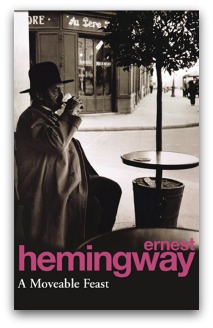
10. A Moveable Feast (1964, revised 2009)

Author: Ernest Hemingway
Synopsis: Hemingway’s posthumously published memoir detailing his years as a young American expat in Paris socializing with the likes of F. Scott Fitzgerald, Gertrude Stein and Ezra Pound.
Film pitch: Perhaps now is the perfect time for an adaptation of A Moveable Feast. The surprising success of Woody Allen‘s Midnight in Paris will perhaps have whetted Hollywood’s appetite for a more serious take on the same subject matter.

9. One Fat Englishman (1963)

Author: Kingsley Amis
Synopsis: Inspired by a year Amis spent teaching at Princeton, One Fat Englishman follows the badly behaved Roger Micheldene with Amis’s typical brio. An English gentleman who is affronted by everything on the American scene, Roger fails to see how his presence might adversely affect Anglo-American relations.
Film pitch: Cast Timothy Spall as Roger and watch the fireworks.

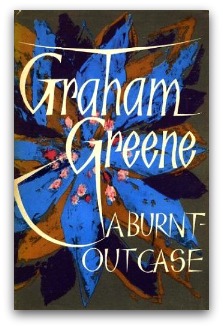
8. A Burnt Out Case (1960)

Author: Graham Greene
Synopsis: A man named Querry arrives at a leper colony in the Congo. He assists the colony’s doctor, who diagnoses him as suffering depression. It is revealed that Querry is in fact a world-famous architect, though he is hiding other secrets, too.
Film pitch: Perhaps Greene’s bleakest work — which may explain why it hasn’t been filmed previously despite being optioned twice by Otto Preminger (Greene was said to be thankful that it was never made). I would argue, however, that it has all the material for a fascinating film.

7. Travels through France and Italy (1766)

Author: Tobias Smollett
Synopsis: After the sad death of his daughter, Tobias Smollett and his wife left England for a tour of France and Italy. Detailing the quarrels Smollett has on his journey with those pesky Continentals, this is a very funny book.
Film pitch: Yes, I am suggesting that someone should make a movie based on an 18th-century travelogue. If Robbie Coltrane and John Sessions can turn Boswell and Johnson’s tour of the Hebrides into a delightful TV movie then I think the same could be done with this.

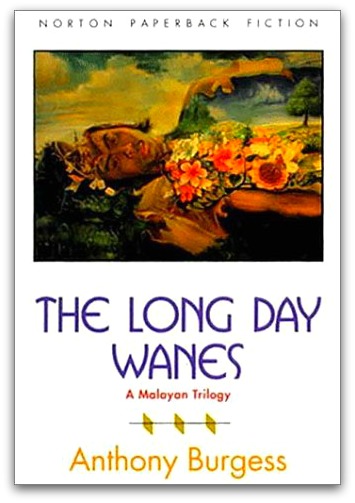
6. The Long Day Wanes: A Malayan Trilogy (1956-59)

Author: Anthony Burgess
Synopsis: Burgess’s first three novels are concerned with the character of Victor Crabbe, a teacher in a village in Malaya (now Malaysia). Based upon Burgess’s own experiences as a British civil servant in Malaya, the three novels that make up The Long Day Wanes detail the death of Empire and the birth pains of a newly independent nation.
Film pitch: Other than A Clockwork Orange, whose adaptation Burgess had strong misgivings over, Burgess’s work often seems overlooked for movie adaptations. It really shouldn’t be.

5. The Thousand Autumns of Jacob de Zoet (2010)

Author: David Mitchell
Synopsis: Until Commodore Perry in 1853 anchored four warships off the Japanese coast and so opened up Japan to western trade, Japan had been a “locked country” (sakoku) where it was illegal for a foreigner to enter Japan and for a Japanese subject to leave. The exception to this was at Dejima, in Nagasaki, where trade with some select foreign powers was allowed. This fascinating piece of history is the basis for David Mitchell’s latest novels. Set in 1799, The Thousand Autumns of Jacob de Zoet details a young Dutch trader who has come to Dejima to make his fortune though he discovers a lot more.
Film pitch: The book has all the makings of a wonderful historical epic.

4. Up Above the World (1966)

Author: Paul Bowles
Synopsis: Dr and Mrs Slade are an American couple touring Central America. A chance encounter with an elderly woman leads to a tense and gripping chain of events.
Film pitch:A disturbing and intense work typical of Bowles, it would make for a deeply compelling thriller.

3. Burmese Days (1934)

Author: George Orwell
Synopsis: Similar to Burgess’s The Long Day Wanes, this novel is concerned with the dying days of Empire. Orwell, who was himself an officer in the Indian Imperial Police Force in Burma, paints a depressing picture of expatriate life that is based around the stultifying social hub of the European club.
Film pitch: Orwell’s first novel and while certainly not his best work, even a bad Orwell novel is still worthy of consideration.

2. Henderson the Rain King (1959)

Author: Saul Bellow
Synopsis: Eugene Henderson is a rich American with an unfulfilled desire. Not knowing quite what it is, he hopes he will discover it by going to Africa. Through a series of misadventures Eugene Henderson finds himself away from his original group and in the village of Wariri in Africa. After performing a feat of strength, Eugene is adopted by the villagers as the Wariri Rain King.
Film pitch: Bellow’s funniest book, Henderson the Rain King could be pitched as an intellectual Joe Versus the Volcano (or maybe not — that’s a terrible pitch).

1. Turkish Embassy Letters (1763)

Author: Lady Mary Wortley Montagu
Synopsis: An important writer in her own right, Lady Mary Wortley Montagu was the wife of Edward Wortley Montagu, who was appointed as the ambassador at Constantinople. Accompanying her husband just after recovering from contracting smallpox marring her famed beauty, Lady Wortley Montagu wrote about her observations in numerous letters. These letters form a fascinating look at the Ottoman Empire — from how they inoculated against smallpox to the zenanas, special areas of the house reserved for women — as observed by an aristocratic English woman of the time.
Film pitch: Just think what a great biopic you could make about her.

Note: If you click on the book titles in the above list, you’ll be taken to Amazon, where the books can be purchased — except in the case of Tobias Smollett’s travelogue, which goes to Gutenberg, where he can be read FOR FREE!!

STAY TUNED for tomorrow’s post, an interview with first-time novelist Meagan Adele Lopez, and her plans for turning the book into a film.

If you enjoyed this post, we invite you to register for The Displaced Dispatch, a round up of weekly posts from The Displaced Nation, with seasonal recipes, book giveaways and other extras. Register for The Displaced Dispatch by clicking here!

Related posts:
Cinema’s top 10 worst British accents

With Oscar season nearly upon us and with it the now seeminly customary Meryl Streep Oscar nomination, I’ve noticed that a number of American friends have asked me my thoughts on The Iron Lady. Specifically, my thoughts on how convincing I find Meryl Streep’s Thatcher.

Yet even when I tell them I haven’t seen the film (I’m just not in a rush to see it on the big screen and am more than happy to catch it on netflix in a few months time), they still ask for my opinion — nationality apparently bestowing expertise on the matter.

From the few clips I’ve seen on TV or the Web, and echoing what most critics have written, Streep’s Thatcher seems decent to me. Whether Streep’s Thatcher dislodges Greta Scacchi‘s somewhat cougar-ish take on the former PM in Jeffrey Archer: The Truth remains to be seen.

What is clear from the little I’ve seen is that Streep (unsurprisingly) will not be entering the Hall of Shame for awful Hollywood British accents. The following are my personal favorites. Let me know yours in the comments — including bad attempts at American accents (it’s only fair).

10. Nicolas Cage in National Treasure: Book of Secrets (2007)

Almost certainly unfair to include as while it is hideously bad, I think it was intended to be hideously bad, and boy did Nicolas Cage succeed in that respect. Included, more than anything, because I think all top ten lists of this nature (something of a creatively bankrupt idea) could be improved with some Cage-branded craziness — it’s like a crack addict’s impersonation of Jimmy Stewart.

9. Josh Hartnett in Blow Dry (2001)

In the (rightly) forgotten hairdresser comedy Blow Dry, the (rightly) forgotten all-American heart throb Josh Hartnett tries hard but fails to convince with an Irish accent… Wait, he’s meant to be doing a Yorkshire accent? Really?

8. John Lithgow in Cliffhanger (1993)

John Lithgow has done some great work in the past, a performer who can be effortlessly at home in comedy or drama. At other times, he seems happy to serve up the audience a big slice of honey roast ham. Cliffhanger was definitely one of his more porcine performances. Warning: clip is not suitable for work — though arguably none of them are.

7. Bette Davis in Of Human Bondage (1934)

Some people would have you believe this is one of the great dramatic scenes of cinematic history showcasing the titantic talent of Bette Davis. Others might counter that it’s am-dram caterwauling delivered in the world’s least convincing cockney accent. Both groups are right.

6. Don Cheadle in Ocean’s 11 (2001)

Actually, forget Bette, Hollywood’s worst cockney accent belongs to Don Cheadle. Here’s Don dubbed in German. Trust me, it’s the only humane way to listen Don Cheadle in Ocean’s 11.

5. Harrison Ford in Indiana Jones and the Last Crusade (1989)

Like the Nicolas Cage entry possibly an unfair inclusion as accuracy was hardly the point, but dude, Harrison Ford acted this in earshot of Sean Connery and so is deserving of either opprobrium or massive props.

4. Lindsay Lohan in The Parent Trap (1998)

That’s right, I’m dickish enough to include a child actor on this list. <Fill in your own Lindsay Lohan joke here>

3. Keanu Reeves in Dracula (1992)

Considering the difficulty Keanu Reeves often seems to have in portraying a functioning, coordinated human being, it was probably a bit too much of a stretch to ask him to do anything as nuanced as acting a different nationality.

2. Dick Van Dyke in Mary Poppins (1964)

You can’t have a list like this and not feature Dick Van Dyke, it’s expected of me and were I to omit it, many of you would invariably comment on it. And while it is a terrible accent, it’s also utterly charming and in no way spoils the movie. Bert probably fell on his head falling from a chimney, knocked his head, and developed foreign accent syndrome.  I believe Henry Mayhew documented this as being very common among Victorian chimney sweeps.

1. Russell Crowe in Robin Hood (2010)

Unquestioningly, Russell Crowe‘s accent in Robin Hood was a triumph. What sort of pr*** would argue otherwise? Definitely not me.

STAY TUNED for next Monday’s post, on travel and cinema.

If you enjoyed this post, we invite you to register for The Displaced Dispatch, a round up of weekly posts from The Displaced Nation, with seasonal recipes, book giveaways and other extras. Register for The Displaced Dispatch by clicking here!

Related posts:


Dear Mary-Sue: Finessing Valentine’s Day abroad

Mary-Sue Wallace, The Displaced Nation’s agony aunt, is back. Her thoughtful advice eases and soothes any cross-cultural quandary or travel-related confusion you may have. Submit your questions and comments here, or else by emailing her at thedisplacednation@gmail.com.

Aloha to all my readers — or as I affectionately think of you, my Mary-Suers! This month finds me in sunny Hawaii — the island of Kauai, to be precise. As president of the Thorn Birds Appreciation Society, I’ve had to come out for the society’s annual trip to see where the series was shot. Yes, yes, I know it was set in the lovely land Down Under, but all those scenes of Richard Chamberlain smoldering away under the Queensland sun were in fact shot here in Kauai.

To think I get to walk along pathways and beaches that Richard once walked along — it’s enough to make a gal go weak at the knees.

So, seeing as I’m at the most romantic place IN THE ENTIRE WORLD!!! — the spot where Rachel Ward snagged herself that dishy Mr C — and with Valentine’s Day fast approaching, little ol’ Mary-Sue is going to tackle your romantic quandaries.

Strap yourself in, things are about to get all Mary-Sue Wallace!

___________________________________________

Dear Mary-Sue,

I have a hot Brazilian girlfriend and am thinking of serenading her on Valentine’s Day. Any suggestions for a song?

Rick in Rio

Dear Rick in Rio,

I’m a trained therapist from no less an august institution as Tulsa Community College. I’m here to provide relationship advice. Maybe you could try that question on Delilah with better luck — or maybe not, I hear she can be one vicious b****.

Mary-Sue

———————————-
Dear Mary-Sue:

My American girlfriend gave me a Valentine’s card with a Cupid on it. I thought it was a comic book character but she said no. So who is Cupid, and what does he have to do with Valentine’s Day? Also, the Cupids in my comics have wings, but this one doesn’t have wings — why is that?

Kim in Seoul

Dear Kim in Seoul,

Who stole my heart?
You did, you did.
Bow to the target,
Blame Cupid, Cupid.

So sang Martin Fry in “Poison Arrow,” a song that btw Rick in Rio is not allowed to sing to his hot Brazilian girlfriend.

You see, Cupid is a naked baby that can fly. He has a bow and arrow that he shoots people with — in the case of this song, Martin Fry (I believe he’s the younger brother of Mr Stephen Fry). Cupid’s arrows don’t pierce the sternum and damage inner organs like, for example’s sake, Robin Hood’s arrow. No, when Cupid’s arrow pierces your heart, it doesn’t cause myocardial infarction but instead you fall in love with the first person you see — in Martin’s case with unfortunate consequences.

As to why the picture of Cupid in the card your girlfriend gave you doesn’t have wings, well that’s simple. That isn’t a picture of Cupid at all, but of a nondescript naked baby. She sounds like the sort who’d buy one of those Flower Baby Calenders — I’d get rid of her if I were you.

Mary-Sue

———————————-
Dear Mary-Sue:

How do I wish someone a Happy Valentine’s Day in French? I’m not sure if they celebrate it over here, but I’m hoping the Frenchwomen will find it charmant, coming from an American.

Peter in Paris

Dear Peter in Paris,

A quick look at my desktop calender reveals that it’s 2012, not 1945 — which means there’s nothing an American man can do to charm the young ladies of Paris. They just don’t appreciate your wholesome all-American charm. Shame, as I’m pretty certain you have a lovely smile. I can sense it from the letter you wrote that you have a lovely mid-Western smile.

Mary-Sue

———————————-
Dear Mary-Sue:

I’m a newcomer to the United States and someone just wished me a Happy Anti Valentines Day. What’s that supposed to mean?

Lars in Los Angeles

Dear Lars,

It’s a sign from the good Lord for you to (pardon my language) get the heck out of Los Angeles and move to Tulsa.

Mary-Sue

___________________________________________

Anyhoo, that’s all from me readers. I’m so keen to hear about your cultural issues and all your juicy problems. Do drop me a line with any problems you have, or if you want to share your fave meatloaf recipe with me (yum! yum!). As they say in Italy, “ciao!”

Mary-Sue is a retired travel agent who lives in Tulsa with her husband Jake. If you have any questions that you would like Mary-Sue to answer, you can contact her at thedisplacednation@gmail.com, or by adding to the comments below.

STAY TUNED for Monday’s post, a displaced Q about the best places to hook up with a honey abroad, by new Displaced Nation team member Tony James Slater (he’ll be writing from recent experience!).

If you enjoyed this post, we invite you to register for The Displaced Dispatch, a round up of weekly posts from The Displaced Nation, with seasonal recipes, book giveaways and other extras. Register for The Displaced Dispatch by clicking here!

Related posts:
 

Talking with author Dave Prager about his — deliriously unspiritual — expat experience in India

Reading like the work of a hipster Bill Bryson, Delirious Delhi is an account of Dave Prager and his wife Jenny’s move from New York to Delhi — the largest city in India by area and second largest by population — as they become what they term “New Delhi Yankees.” On arrival in their new home they, like so many expats, started a blog: Our Delhi Struggle. Detailing ther occasional bewilderment and occasional delight as two thirtysomethings acclimatizing to life in Delhi, their online musings quickly became popular.

Dave set about expanding Our Delhi Struggle into a book, and Delirious Delhi was the result. Those eagle-eyed among our readers may recall the book being featured under “expat memoirs” in one of the lists ML Awanohara compiled of 2011 books for, by, and about expats.

Earlier this month I spoke with author Dave Prager to discuss his book and his thoughts on Delhi — including the extent to which the expat life he and his wife led in India fits the Displaced Nation’s January theme of spiritual reawakenings.

How did you end up in Delhi and then later on Singapore?
I volunteered. My company needed a copywriter in Delhi. A week later I found myself in the city for the first time. We left Delhi for Singapore because we weren’t ready to return home to the US just yet, but we knew that if we didn’t force ourselves to leave India, then we’d never experience living anywhere else in Asia. So we quit our jobs in the middle of the recession, left Delhi, and flew to Singapore where we were both lucky enough to find work.

What made you decide to write a book telling the story of your transition to living in Delhi?
We had so many growing pains when we first moved to Delhi that we started our blog to share our lessons with everyone who would come after us. It became very popular — not just with expats, as we expected, but with Indians. As we were getting ready to leave, someone suggested we write a book. So I did. Ninety percent of the book is fresh content, never before seen until now. It’s very different from the blog. The blog posts are 500-word essays, where this is a single, 100,000-word narrative.

Delirious Delhi is your second book. Any plans for another one?
I’ve had some ideas I’ve been noodling away at. I have an idea about an American who finds himself living in rural India and doesn’t have a clue what’s going on. Which is how I felt every time we went out to the villages.

No plans to write about your time in Singapore?
There’s no plans for anything about Singapore. Don’t get me wrong, I enjoyed my time there, but it didn’t get my creative juices flowing in the way Delhi did. It didn’t inspire me like India inspired me.

What audience did you have in mind for the book?
When I was writing, I knew exactly who my intended audience was and I pictured them in my head as I wrote. It was two people that I know. The first was an American friend who was back in the US and was curious about India and my experiences; the other was an Indian co-worker who was always fascinated with how I — as an American — found life in his country.

I noticed you did a brief book tour in Delhi. Did you experience any negativity to your views?
Generally the response has been really good. There’s a minority who takes exception to a Westerner writing critically about India. But the book is not a criticism of India, it’s a recollection of the experiences — the good ones and the bad ones. Every country has good and bad, including the US. It’s disingenuous to focus on one and not the other — in both extremes.

This month’s theme for the Displaced Nation is the quest for spiritual enlightenment. At the beginning of the book, you say you would never describe India as “spiritual” as many do. What do you think of writers like Elizabeth Gilbert who present India as the ideal place for spiritual tourism?
It’s not that I wouldn’t describe India as spiritual — it’s that I never found it to be spiritual. Maybe because that wasn’t what I was looking for. In many ways, India is a blank slate, and travelers paint it with the colors they want to see. If you go looking for poverty, you’ll find it. If you go looking for wealth and globalization, you’ll find it. If you want spirituality, you’ll find it. India is the perfect place to find whatever it is you seek. The question is, what else do you have to ignore in order to see only one aspect of the country?

One of the most powerful parts of the book for me was the part where you detailed your wife Jenny’s work for a school that lifts girls out of poverty, and how shocked you were by the poverty. Did you find that after your time in Delhi you more politicized than when you first arrived?
Good question. I certainly arrived in India with a very liberal Western outlook of the world. My approach to the world was one of moral relativism — that everyone can to a certain extent be justified in their views. But the longer I stayed in South Asia, the more I began to believe that they are moral absolutes and that there can be certain aspects of a culture that are simply morally wrong — the treatment of rural girls in India being a case in point. So that really is how I changed politically over those 18 months. I moved from moral relativism to moral absolutism, in certain circumstances.

In the book Delhi reads like the main character in a novel  — with an ever-changing personality that is hard to truly get to know. Is that how you saw it?
One of main points with Delhi is how little you can understand it. It really is what you make it to be. New York, by comparison, is easier to understand. With New York you can find a narrative. Every New Yorker thinks that they are the star of the city, and the city aligns itself around them. Delhi has no overarching narrative; you’re more rooted to your neighborhood rather than the city as a whole and so everyone in Delhi is having different experiences and coming to different conclusions. I don’t think there’s a shared Delhi experience like there is a shared New York experience.

Now that you are back in the US, how do you see Delhi?
I have a sense of wasted opportunity. I think about all the things that we didn’t do when we were there, all those Saturdays when we went to the mall rather than explored different parts of the city. That I didn’t attend a cricket match or that I didn’t travel to a village outside of Delhi that’s famous for its Indian wrestling. And now thinking back on it all, I sometimes have an overwhelming sense of missing Delhi.

And how have you found it as a “repat” in the US? Any reverse culture shock?
What’s struck me is that the US just seems so empty. It’s not that India is always intensely crowded; rather, it’s that India you’re never completely alone. There’s always someone to be seen walking or selling something or cooking chai. Outside of a few select cities in the US, it’s not like that here. We now live in Denver and some mornings I find myself wandering around the middle of the city and I have moments when I stop and notice that I’m alone. I look around me and I just wonder where everyone is. All these tall buildings and nobody around.

Delirious Delhi can be purchased here.

STAY TUNED for Wednesday’s post, an interview with Chicago acupuncturist Jennifer Dubowsky, who believes the West can benefit from importing Eastern concepts of natural healing as an alternative to more invasive medical treatments.

If you enjoyed this post, we invite you to register for The Displaced Dispatch, a round up of weekly posts from The Displaced Nation, with seasonal recipes, book giveaways and other extras. Register for The Displaced Dispatch by clicking here!

Related posts:

Images: Used with kind permission of Dave Prager

Travel for excitement, not enlightenment


As I write this I am in a well-known brand of coffee shop. When I stop and think about it, it is all busy, a regular footpath of traffic. Office workers stream in and out for a shot of caffeine to get them through their Monday morning. In between customers the two baristas discuss the smaller one’s mother-in-law (she looks so young that I am surprised to discover that she’s already married); the two open top buttons on the shirt of the man at the table next to mine reveals an interesting chest tattoo of an eagle; a policeman walks in — he carries two guns. All this takes place over a minute or two to the unlikely soundtrack of Tony Bennett’s recording of “A Nightingale Sang in Berkeley Square,” which the well-known brand of coffee shop is piping into its store.

The reason that I mention all of this is that I need to actively stop and think to notice the interesting things around me, those moments of local color. As an expat if this had happened a year or two previously I would have been fascinated by this scene. I would have been alarmed, even repulsed by my close proximity to two firearms.  Now it has all become quotidian. I have lived in cities on three continents and it is remarkable how quickly the exotic turns into the mundane.

For most of us we sleepwalk through life, it is one of quiet monotony — and that isn’t necessarily a bad thing. For many of us we have a life of traffic jams, of unpleasant bosses, of evenings in the grocery store and weekends in the mall. You may be in a city of six million or a town of two hundred thousand, live alone or with your wife and 2.4 children but for many points it may feel as if one existence of mundane solitude.

Last week on this blog ML Awanohara posted her top 10 expat and travel posts on spiritual escapes, about the need many people feel to search for some “me” time. One of the articles that she linked to was “The Joy of Quiet” by Pico Iyer that was from the New York Times.

ML had previously mentioned this article to me and thought that I might enjoy it, or at least find something of interest to it. And, in fairness to her, I did.

Admittedly on reading the opening sentence, which drips with name-dropping, knowingness and smugness  —

About a year ago, I flew to Singapore to join the writer Malcolm Gladwell, the fashion designer Marco Ecko and the graphic designer Stefan Sagmesiter in addressing a group of advertising people on “Marketing to the Child of Tomorrow”…

— I was ready to throw the article across my living room. In fact, I almost did throw it across the room at full force until I remembered that this wasn’t the dead tree edition of the NYT that I was reading, but a digital subscription read via my iPad.

(As someone who has always taken to heart Dorothy Parker‘s adage that this is a book that “should be thrown with great force,” I’m still not entirely happy with reading in the digital age as throwing a kindle or an iPad with great force will only serve to void you of your warranty.)

So not wishing to break my iPad, I kept reading. Iyer is concerned that technology is bombarding us and with that comes an increasing need for us to seek quiet, to try and mediate, to seek some form of solace from the “noise” of the modern world.

There’s nothing particularly original, per se, about this idea nor does Iyer claim so. Perhaps the greatest work in American literature (though other opinions are available) is Thoreau’s Walden. There has always been a desire to escape. We can go way further back than Walden– Christ and the Buddha both headed out to the wilderness. When we couple this desire as Iyer does with the tech writer Nicholas Carr‘s hypothesis that the Internet is shortening our attention spans, altering the very way in which we think, there is a desire to be a modern Canute and try to stop the advancing waves of technology.

That brings us to this month’s theme which concerns itself with the search for solitude or for a transforming experience, which some may class as being spiritual. Often this, as seen with the likes of Elizabeth Gilbert, means taking a rather patronizing view of the country that you are visiting that I find entirely unpalatable.

To me it seems that Iyer is in the Gilbert new-agey BS camp. Returning to the “Joy of Quiet” he writes:

For more than 20 years, therefore, I’ve been going several times a year — often for no longer than three days — to a Benedictine hermitage, 40 minutes down the road, as it happens, from the Post Ranch Inn. I don’t attend services when I’m there, and I’ve never meditated, there or anywhere; I just take walks and read and lose myself in the stillness, recalling that it’s only by stepping briefly away from my wife and bosses and friends that I’ll have anything useful to bring to them. The last time I was in the hermitage, three months ago, I happened to pass, on the monastery road, a youngish-looking man with a 3-year-old around his shoulders. . . .

Now most of us can’t be as amazing as Pico Iyer — that’s just the burden we have to carry through our lives. We can’t just move to rural Japan and fetishize solitude. We will still spend our evenings in the grocery store, our weekends in the mall, they will still be those 2.4 children and those bloody traffic jams — as David Byrne sang,“same as it ever was.”

What I am going to do try and do in 2012 (and yes even though it’s mid-January I still feel it is early enough to mention resolutions in a post) is to take advantage of technology to find some solitude. I’m not going to posture by lighting an incense stick as if the path to personal enlightenment lies in sniffing in something called Egyptian Musk. What I am going to do is take advantage of the quiet moments that my everyday life provides by sitting and concentrating at a task and deriving satisfaction from that. It may be by learning programming, a foreign language, or taking advantage of the sheer, vast number of books that are now available for free on Google books. In this well-known brand of coffee shop while Tony Bennett plays to me and the tattooed man and the policeman and the baristas return to talking about the smaller one’s mother-in-law, I have on my iPad access to a library of books greater than the Bodleian — reason enough not to throw the iPad across the room when I’m annoyed by Iyer.

So, I’ll be making a greater effort to sit and read. Return to my first love. I do read a lot, but my attention span has suffered in the Internet age to what it was before. But when I listen to David Foster Wallace in the embedded video (2 minute 14 seconds in is the pertinent part in my opinion), I am inspired to make a greater effort. That will be my act of meditation. My escape from the mall and the grocery shopping.

Travel will not be an escape from the noise, from the barrage of imagery. It will remain a escape from the quotidian, a retreat from the banal. It will be where I go to barraged by sound, sight, people, history, culture — thank God for that.

Hmm… Readers, do you agree that travel writer Pico Iyer belongs in the Gilbert new-agey BS camp? And do you travel for excitement or escape from excitement? Where are you on the continuum?

STAY TUNED for Tuesday’s post, a Displaced Q on healthy food by new TDN writer Tony James Slater.

If you enjoyed this post, we invite you to register for The Displaced Dispatch, a round up of weekly posts from The Displaced Nation, with seasonal recipes, book giveaways and other extras. Register for The Displaced Dispatch by clicking here!

Related posts: