The Displaced Nation

A home for international creatives

Tag Archives: Movable feasts

RANDOM NOMAD: Nerissa Muijs, Business Development Specialist

Born in: Kingston S.E., a wee town in South Australia
Passport: Australian, but will be eligible to become a dual Australian-Dutch citizen this year
Countries lived in: Malaysia (Shah Alam): 1997; New Zealand (Christchurch): 2003; England (Plymouth): 2006-2007; Scotland (Edinburgh): 2007-2008; Netherlands (Almere): 2008-present
Cyberspace coordinates: Adventures in Integration (blog)

What made you leave your homeland in the first place?
I grew up in a small town in South Australia called Lucindale (just 300 people). I don’t feel like I was ever a good fit. I have always had a feeling of wanderlust and being able to go on an AFS exchange to Malaysia when I was 17 added more fuel to the fire, rather than sating my taste for experiencing new places. Once I returned home, I never really settled down again. I was constantly planning my next adventure.

Is anyone else in your immediate family a “displaced” person?
One of my Fabulous Aunts is also perfectly displaced. She lives on a yacht with her partner and two cats. They are currently floating around the Colombian coast, preparing for hurricane season before braving the Panama Canal to head back into the Pacific and beyond.

Describe the moment when you felt most displaced over the course of your many displacements.
Perhaps it was sitting in a restaurant in Malaysia with my wonderful Chinese host family. They had taken me out especially to eat shark’s fin soup. Or it could be the time I was the only Australian sitting in a bar in Christchurch watching the Wallabies beat the All Blacks in the semi finals of the 2003 Rugby World Cup. But seriously, it was probably when I found myself in the immigration offices in Amsterdam realizing I was making a potentially permanent commitment by moving to my husband’s homeland — it was time to grow up!

Describe the moment when you felt least displaced.
On my birthday in 2007. I was living in Edinburgh at the time. My Dutch boyfriend, who is now my husband — we met in Australia when he joined one of my tours to Uluru — was visiting from the Netherlands. A group of my friends took us out to celebrate. In that moment I was happy, I was at home. I find I don’t have the sense of “home” when I return to my hometown in Australia any more. I feel at home with people, not places. Having a cup of tea with my best friend, for example. We’ve done that in at least four countries together and it’s always the same.

You may bring one curiosity you’ve collected from each of the countries where you’ve lived into the Displaced Nation. What’s in your suitcase?
From Malaysia: A batik sarong. I’ve been wearing the same one weekly since 1997, and I love it just as much as the day I paid 5RM for it.
From NZ: The jade pendant I got from Hokitika. It feels cool or warm on my skin and is smooth and comforting.
From England: A cream tea with scones and Cornish clotted cream. A cream tea will always make me think of my elderly great aunts at home and of England.
From Scotland: A “hairy coo” fluffy toy. (Actually, I’d prefer to bring a real-life hairy coo, but I imagine you have strict quarantine rules…)
From Netherlands: Rookworst (a type of smoked sausage, similar to bratwurst).

You’re invited to prepare one meal based on your travels for other Displaced Nation members. What’s on your menu?
Being Australian, I will have to say a barbie. We’ll eat steak, snags [sausages], lamb chops and onions. We’ll tip our hats to Malaysia with some satay sticks. We’ll have bread and my grandma’s hot potato salad. There will be noodle salad that my mum made and sliced beetroot on the side, which I’ll drop on my shirt. Of course, because I live in the Netherlands, we’ll have garlic sauce along with our tomato sauce. And because of the UK influence it will probably be raining, but there will be beer. Lots of beer. And it won’t end for two days. I’ll be up early to cook bacon and eggs again the next morning for the people who just won’t leave. (Dad, I’m talking to you!) It will be fun — care to join me?

You may add one word or expression from each of the countries you’ve lived in to The Displaced Nation argot. What words do you loan us?
From Malaysia: Adding a “la” onto words and sentences: “Okay-la.”
From New Zealand: “Chur bro.” Depending on the context, it can mean “thanks,” “nice,” or “cheers, mate.”
From England: “I’m not trying to be funny, but [insert random passive aggressive insult here].”
From Scotland: Any swear word you can imagine.
From Netherlands: Gezellig, the most important word in the Dutch language. There is no real English translation, though “cosy” is sometimes used. It’s a word people use to describe a pleasant situation. Going out with friends is gezellig. Sitting around having a nice dinner with family is gezellig. Anything that gives you a nice warm fuzzy happy feeling inside can be described as gezellig. Wonderful word.

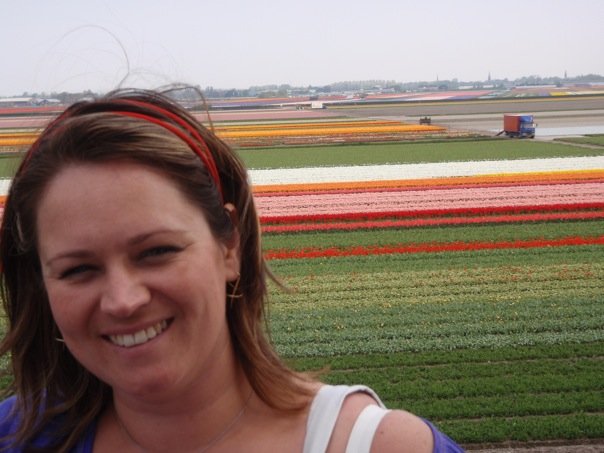
img: Nerissa Muijs at tulip fields outside Lisse, Netherlands.

If you enjoyed this post, we invite you to subscribe for email delivery of The Displaced Nation. That way, you won’t miss a single issue. SPECIAL OFFER: New subscribers receive a FREE copy of “A Royally Displaced Tea.”

Related posts:

Tiffin: A displaced word of many meanings, but this one is sweetest

Special announcement from TDN: ML Awanohara and Kate Allison will be live-tweeting the Royal Wedding from a displaced perspective. Join us from 5:00 a.m. EST, using the hash tag: #DNRW Read more.

“Taj Mahal” by Arvind Balaraman / FreeDigitalPhotos.net

Tiffin – a word imported to England in the times of colonial British India, when, as well as being Queen of England, Victoria held the title of Empress of India.

Unlike other Anglo-Indian imports, such as gin and tonic or kedgeree, tiffin has shades of definitions – lunch, afternoon snack, or any light meal. My favorite definition, however, is the one given to me by my cookery teacher when I was twelve, which I’m sharing with you in honor of the wedding tomorrow.

It requires very little cooking, and if you start now, you will have enough time to make another batch to replace the one you intended to take to the street party but absent-mindedly ate instead.

One batch is never enough.

*

Tiffin

You will need:

100g / 4oz / 1/2 cup butter

50g / 2oz / 8 tablespoons desiccated (shredded) coconut – optional

50g / 2oz /1/3 cup seedless raisins

2 tablespoons golden syrup (see below if you’re unfamiliar with or can’t obtain this ingredient)

2 tablespoons powdered drinking chocolate (sweetened cocoa)

200g / 8oz / 2 cups broken digestive biscuits. If you can’t get digestive biscuits, graham crackers or crunchy oatmeal cookies would work.

100g / 4oz /2/3 cup plain (semi-sweet) or milk chocolate, as you prefer.

A 9″ x 9” cake tin, greased with butter. (Exact dimensions aren’t critical for the success of this recipe.)

Method:

1. In a small pan, melt the butter and golden syrup over low heat, then remove from heat.

2. Add coconut, raisins, drinking chocolate, and broken biscuits.

3. Mix well, then transfer to the greased tin. Pack down firmly with the back of a large spoon.

4. Put about an inch of water in a saucepan and bring the water to simmering point.

5. Break the chocolate into pieces and put in a heat-proof bowl (e.g., Pyrex). Fit the bowl over the pan of water, keeping the water simmering gently. Stir until the chocolate is melted.

6. Pour melted chocolate over the biscuit mixture in tin, and spread evenly.

7. Refrigerate for a few hours until chocolate is hard, then cut into small squares.

8. Serve with hot tea — of course.

*

Golden syrup

Golden syrup is a favorite in Britain and Australia. It’s thicker and sweeter than corn syrup, lighter in color than treacle (molasses), and  I knew it best for drizzling on my morning porridge before going to school.

In America it’s either unobtainable or very expensive, but according to an article on eHow, you can make your own.

You will need:

Heavy saucepan

1/2 cup white sugar

2 tsp. water

1 tsp apple cider vinegar

2/3 cup light corn syrup

Wooden spoon

Glass or plastic container

Method:

1. Pour the sugar in the saucepan, spread evenly over the bottom of the pan.

2. Mix water and vinegar, and sprinkle over the sugar.

3. Cook the mixture over low heat for five minutes. DO NOT STIR!

4. Turn the heat up to medium, and cook for a further five minutes, without stirring. Remove pan when mixture is a golden color.

5. Add light corn syrup and let mixture sit for 3 minutes. When the bubbling has stopped, stir well with wooden spoon.

6. Allow syrup to cool, then pour into a heatproof glass or plastic container, such as a mason jar. Seal, and store at room temperature. It will keep for two or three months.

(Thanks to my good friend and regular commenter on Displaced Nation, Joanna M-M, for sending me the link to this.)

*

Enjoy!

Img “Taj Mahal” by Image: Arvind Balaraman / FreeDigitalPhotos.net

If you enjoyed this post, we invite you to subscribe for email delivery of The Displaced Nation. That way, you won’t miss a single issue.
Expats in Moscow satisfy a hunger to learn

Special announcement from TDN: ML Awanohara and Kate Allison will be live-tweeting the Royal Wedding from a displaced perspective. Join us from 5:00 a.m. EST, using the hash tag: #DNRW

I well remember my first foray into an American supermarket. Dozens of brands of orange juice, offset by a dearth of blackcurrant Ribena.  Cheese in aerosol cans, breakfast pizza bagels…  As for the meat — well, thank goodness everything came shrink-wrapped so I could smuggle it home and investigate its cooking requirements in privacy. Anything was better than revealing my ignorance of American cuts of beef to Stop & Shop’s rather intimidating butcher. It made me want to attend cooking classes – not because I couldn’t cook,  but because unfamiliar ingredients and lack of vital ones limited my usual repertoire. I had to eat what Americans did.

All this confusion took place in a country where the language was approximately the same as at home. How much more difficult must this experience be, then, in a country whose language is strange to you?

Borsch and blini

Victoria Agabalyan understands this problem well. She is the founder and chief executive of Taste of Russia, the first English-language culinary school in Moscow, whose students are primarily foreign tourists and expats.

In order to understand what Europeans expected of cooking classes, she, like American TV chef and one-time expat Julia Child before her, attended culinary school in France.  Consequently, Taste of Russia focuses on teaching traditional cuisine from Russia and the former Soviet Union in a cozy atmosphere. Student Bonnie van der Velde says:

“I cooked borshch and drankini with mushrooms for my mom and her colleagues in the Netherlands, and they liked it very much.”

Although Agabalyan teaches some of the classes herself, she also invites chefs to conduct culinary workshops while she or the school’s administrator translates. She plans to open more schools in other cities in Russia.

Hidden bonus for expats

Similar to my own dealings with strange supermarkets,  expats in Moscow have problems finding their way round the grocery shelves, and attendance at Taste of Russia helps them get over this difficulty. Another student, Angeline Sandmann, says that on her first shopping trip in Moscow she bought sour cream instead of the intended yogurt.

But it could have been worse. Try spraying cheese on top of your ice cream sundae.

Source:  The Moscow Times

If you enjoyed this post, we invite you to subscribe for email delivery of The Displaced Nation. That way, you won’t miss a single issue.

RANDOM NOMAD: Kim Andreasson, Management Consultant

Kim AndreassonBorn in: Sweden
Passport: Swedish
Countries lived in: Australia(Sydney): 1988-89; USA (New York and LA): 1996-2010; Vietnam (Saigon): 2010-present
Cyberspace coordinates: DAKA Advisory (business)

What made you leave your homeland in the first place?
My parents decided to travel around the world in 1988-89 and took me along for the ride. We left a snowy Sweden in December and arrived at our first destination, Los Angeles, in 72 degrees and sunshine, staying in the Hyatt on Sunset (now the Andaz West Hollywood). We explored the city’s many attractions including Disneyland and Universal Studios. I was sold and ever since, have considered LA to be the greatest city in the world. At the same time, my curiosity was piqued and I was sold on the idea of leaving something you know well for something different. I have never looked back.

Is anyone else in your immediate family a “displaced” person?
My California-born wife is now displaced as we are living in Saigon. By the way, we first met at a Swedish restaurant in Chinatown in New York City — call it displacement in microcosm.

Describe the moment when you felt the most displaced over the course of your various travels.
I’ve been fortunate to live in the kinds of cities where it’s relatively easy to blend in. But I’ve certainly experienced some memorable cultural contrasts. Soccer (what we Europeans call “football”) is a good example. During the World Cup in 2002 I was in an Irish pub on New York City’s Upper East Side at 4 a.m. watching the match between Sweden and Argentina. I believe I was the only one there watching the game. That was a really strange feeling. By contrast, during the 2009 qualifying match, the time difference was better and there were thousands of of us Swedes watching the games at a bar near Times Square in the middle of the day. This time, I thought I was in Sweden, which was also strange, in its way.

Describe the moment when you felt least displaced.
It’s a curious thing, but it’s when I leave my adopted homeland(s) that I feel especially at home in them. If you ask me my nationality in Vietnam, I’ll always say I’m Swedish. But if you ask me when I’ve just left Vietnam, I’ll say I’m Saigonese (a resident of Saigon). I was in Bangkok recently and couldn’t stop talking about how much I preferred life in Saigon. Likewise, when I lived in the U.S. and went home to Europe, I would feel more American than European during my visit.

You may bring one curiosity you’ve collected from your travels into the Displaced Nation. What’s in your suitcase?
From Australia, a boomerang, for the symbolism of always coming back. From America, a basketball because I enjoy the game and would like to continue playing it. And from Vietnam, a business suit — you can get world-class tailoring here at a very good price.

You’re invited to prepare one meal based on your travels for other Displaced Nation members. What’s on your menu?
Without a doubt, as a Swede, I am known for my guacamole. No, really. I guess because I lived in LA for so long, I came to love Mexican food. I would prepare it for you according to a classic recipe, something like:
1 tablespoon red onion
1 tablespoon cilantro
1 tablespoon jalapeno
1 avocado
2 tablespoons diced tomato
1 pinch of salt

You may add one word or expression from each of the countries you’ve lived in to The Displaced Nation argot. What words do you loan us?
From Australia: “G’day mate” — for its friendliness.
From the USA: “Awesome” — it reminds me of how globalized LA jargon has become, courtesy of Hollywood.
From Vietnam: “Ba” — and if you repeat it three times, you get a beer (333)!

img: Kim Andreasson on his way to Bến Thành Market, in Saigon (Ho Chi Minh City) — that’s if he can navigate the intersection of Le Loi, Ham Nghi, Tran Hung Dao Avenues and Le Lai Street.

If you enjoyed this post, we invite you to subscribe for email delivery of The Displaced Nation. That way, you won’t miss a single issue.

RANDOM NOMAD: Anita McKay, Property Manager

Born in: Indonesia
Passport(s): Indonesian and British Permanent Resident
Countries lived in: Australia (Sydney): 1999-2001; Scotland (Aberdeen): 2007-2009; Western Australia (Perth): 2009-2013
Cyberspace coordinates: Finally Woken (blog)

What made you leave your homeland in the first place?
I left in 2000 to study for a master’s degree in Sydney. I left again in 2007 because my then fiance (now husband) got a job in the UK. Philosophically, I have never really felt at “home” in my own home country of Indonesia. Lots of its values don’t match with mine. From the time I was a child, I felt like an alien and longed to go away.

Is anyone else in your immediate family a “displaced” person?
No. My brother doesn’t like to travel and still lives at home with my parents. But three of my father’s sisters are married to Germans: two still in Germany and one in Indonesia. And I have four cousins living in the Netherlands and Germany.

Describe the moment when you felt the most displaced over the course of your various travels.
It was in Sydney. I was working as a casual staff at an ice cream shop while doing my postgraduate study. It was winter, around 10:00 or 11:00 p.m. I had just closed the shop and was waiting for the bus. It was rainy and cold, and then all of a sudden, there was a hailstorm. I almost cried, I felt so sorry for myself. I was thinking about how if I’d stayed put in Indonesia, I could have been working for a big company and earning a nice salary by then, living with maids and a chauffeur. I wouldn’t have to mop floors or clean windows to pay the rent. In the Indonesian island where I come from, everyone knows me and my family, but here in Sydney, no one cares who I am or whose daughter I am…

Describe the moment when you felt least displaced.
Weirdly, I almost always feel more at home in anywhere but my own country.

You may bring one curiosity you’ve collected from your travels into the Displaced Nation. What’s in your suitcase?
A flash disk containing thousands of photos.

You’re invited to prepare one meal based on your travels for other Displaced Nation members. What’s on your menu?
Chicken tikka masala — it’s originally from Glasgow, most people don’t know that — and cranachan for dessert.

You may add one word or expression you’ve picked up from the countries you’ve lived in to The Displaced Nation argot. What word(s) do you loan us?
“Bollocks.” My hubby, who is Scottish, says it sounds cute when I say it. I try to use a Scottish intonation. He would let me say it whenever I wanted — until I said it in front of his 95-year-old grandmother, and then he explained it was actually a very very rude word.

img: Anita McKay (left) with a good Indonesian friend who was visiting her in Scotland, in front of Balmoral Castle, the only royal residence outside England.

If you enjoyed this post, we invite you to subscribe for email delivery of The Displaced Nation. That way, you won’t miss a single issue.
Tonic water — from medicinal mixer to cocktail art form

Gin and tonic – as synonymous with expat life in the tropics as a nice cup of tea is with life in Britain, or as mint julep with the Kentucky Derby.

While specialty gins have raised a once-medicinal drink to the status of gourmet cocktail, tonic water has always been the inferior half of this partnership.

Not any more.

Fever-Tree, based in Shepton Mallet, England, produces Indian tonic water from only high-quality, natural ingredients, by

 blending fabulous botanical oils with spring water and the highest quality quinine from the fever tree

The company’s philosophy – that it’s pointless to drown an exquisite gin with mediocre tonic – is gaining ground with consumers, particularly those in Spain where there is already a rapidly growing market for premium gins.

Spain’s use of Fever-Tree’s tonic water doesn’t stop at the highball glass, however. According to the Financial Times, chef Ferran Adrià of the El Bulli restaurant near Roses even made a soup from it.

For expats in Spain who are upholding the tradition of early evening G&Ts, things can only get better.

If you enjoyed this post, we invite you to subscribe for email delivery of The Displaced Nation. That way, you won’t miss a single issue.

When in doubt, have a pint of Guinness

The Dunkirk spirit appears to be alive and well in Tokyo, according to an article by Nick Allen in the Telegraph.

Despite employers’ offers of repatriation and pleas from worried relatives in Britain, a small number of stalwart Britons are ignoring warnings of radioactive winds, and instead are drinking Guinness in the Mermaid pub.

One of them, Michael Summons, has elected to stay “because he loves the country,” while Martyn Terpilowski, a 34-year-old investment broker, says he feels it’s his duty not to leave.

His mother, however, disagrees. He should not put money before his health, she says.

It will probably be little comfort to her to know that, according to Ann Coulter’s blog:

“There is, however, burgeoning evidence that excess radiation operates as a sort of cancer vaccine.”

The exodus of expats from Japan, however, suggests that most people would prefer not to discover at first hand if Ms. Coulter’s theory is correct.


If you enjoyed this post, we invite you to subscribe for email delivery of The Displaced Nation. That way, you won’t miss a single issue.