The Displaced Nation

A home for international creatives

Tag Archives: La Dolce Vita

THE DISPLACED Q: What’s the most intoxicating scent you’ve encountered on your travels?

It’s Friday here at the Displaced Nation — La Dolce Vita time!

For the past couple of weeks, I’ve been doing a series of posts in aid of living the sweet life — even if you’re feeling displaced! The key, of course, lies in cultivating an approach to travel involving the five senses.

We began with the eyes and the ears, and we’re now moving on to the nose. Have you ever had the experience of catching a whiff of something and instantly being transported back to a specific moment in time — to a memory so sharp and clear you can picture it exactly? And then it’s gone, almost as quickly, as the smell wafts away and your other senses take over again, feeding the real world back into the loop…

Smell is the oldest sense, it touches the most emotional part of the brain.

– Roja Dove, the world’s sole Professeur de Parfums

Smell, like taste, is tied very closely to memory. Actually smell and taste are almost the same sense, but we won’t get into that right now — largely because we’d be talking about how in order to smell something, you have to get tiny particles of it up your nose. And that particular conversation rarely ends well…

Because smells create such strong associations with individual memories, your ideas and my ideas of an intoxicating smell are probably rather different.

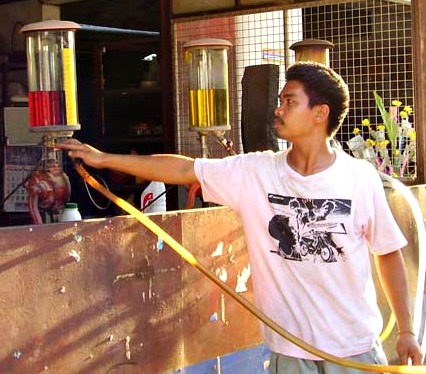
Ah, the smell of…Thai petrol?!

For example, everyone loves the smell of freshly mown grass; but how many of you like the smell of petrol (gasoline, for those of you across the pond)?

I love it. I associate it with long, busy days in Thailand, running errands for the animal clinic where I was volunteering, driving around looking for stray dogs in need of vaccinating — on my tiny little Yamaha motor scooter.

I could always smell the petrol when filling up the scooter tank — because most of the gas stations had only one barrel of the stuff, with a hand-pump and a rubber hose just long enough to reach your tank.

So that smell always brings back happy memories…even though it’s not widely considered a delicate fragrance!

The most noxious of odors — bread?!

Here’s another odd one. I’ll say it slow, in case anyone is likely to faint from pure, unadulterated, lust: Freshly. Baked. Bread.

Mmmmmm! Right?

Wrong. For me, anyway! To afford my trip to Thailand (and Fiji), I had a job working shifts in a bread factory in Australia, where that gorgeous smell permeated the whole building 24 hours a day. Perhaps because I was the only guy, and therefore resilient (or expendable?), I got to be in charge of the enormous, stainless-steel walk-in ovens. I put the bread trolleys in and, twenty minutes later, took them out again. It’s a process that has to be done quickly, or else the oven loses too much heat — but the trolleys themselves get rather warm in the process, and of the four of them, two had broken wheels.

You know how hard it is to steer a supermarket shopping trolley with a jammed wheel, right? Now imagine trying to do it fast — very fast — with a trolley approaching 200 degrees Celsius…and for 12 hours straight. Even my burns had burns.

I survived a whole two weeks in that job, and then as soon as my paycheck hit the bank, I fled straight to Bali to spend it!

To this day I can’t smell baking bread without thinking that pain — the kind that accompanies searing, scorching flesh — is about to follow…

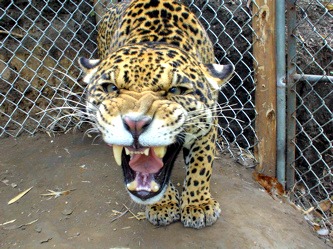
Another smell to avoid: live jaguar!

Now I’ll tell you something you don’t ever want to smell: anywhere a jaguar is living! When a jaguar is confined in, say, a remote mountain-top rescue centre in Ecuador (such as the one I worked in and on which my book is based), you have to clean the enclosure out pretty regularly. Now what goes into a jaguar — especially when you’re doing this on behalf of a nonprofit that’s operating on a shoe-string budget — isn’t particularly wholesome.

To begin with, the jaguar’s body odor isn’t noted for its appeal, unless perhaps you’re another jaguar. And of course they scent-mark everything.

But what comes out of them? Bearing in mind they are pure carnivores, living exclusively (in captivity) on carrion. It’s not…I mean, it’s just…. Look. Just don’t ever go there. Trust me on this!

And now for some winners!

Okay, back to the good. Toward the top of my list of intoxicating smells is that of the traditional Australian Sausage Sizzle. Usually held as a fund-raiser for some charity or other, they never fail to rake in the dough because the smell — of frying meat and frying onions — is utterly delicious, utterly irresistible, and carries for miles.

Now that I’m living as an expat in Perth, I get to experience this smell on a regular basis, as there’s a Sausage Sizzle held directly opposite the entrance to my gym every Saturday morning.

The moment I finish my hard-core workout, I come outside and walk full-tilt into that heavenly smell…at just the point when my body is starting to crave sustenance.

It’s almost as though those cooks are waging a personal crusade against my willpower. And my waistline.

And you know what? They win every bloomin’ time.

But my absolute favorite? I’ve got to tell you mine, right? Then you can tell me yours… It’s food again (of course!): the aroma of fresh donuts!

This dense, cakey scent takes me right back to one small stand in Morecambe Bay, in the north of England, where I went on holiday as a child. Yes, to one of my very earliest trips with my parents. I loved that I could get three donuts for £1! And, if I ate them quickly enough, I could pretend as thought I’d never had them, and convince my parents to give me another pound to buy three more! Ah, happy days indeed.

So there you have it. Now it’s your turn to describe the most delicious smells you’ve encountered on your travels — meadows, Himalayan incense, sunlight on rainbows…? Tell us in the comments! And if you happen to have a photo to illustrate this intoxicating scent, send it to me at tony@thedisplacednation.com. Yes, I may make that “la dolce vita” slideshow I’ve been promising before too long…

STAY TUNED for Monday’s post, when expat Anthony Windram recalls some chance encounters with “locals” that have enhanced his sense of the bittersweetness of life in his adopted home.

If you enjoyed this post, we invite you to register for The Displaced Dispatch, a round up of weekly posts from The Displaced Nation, with seasonal recipes, book giveaways and other extras. Register for The Displaced Dispatch by clicking here!

Related posts:

Images: photos of the gas pump and the jaguar are from Tony James Slater’s personal collection.
RANDOM NOMAD: Jeff Jung, American Expat in Colombia & Career Break Travel Guy

Jeff JungPlace of birth: Fredericksburg, Texas USA
Passport: USA*
Overseas history: South Africa (Vanderbijlpark): 1988-1989; Argentina (Buenos Aires): 2007 (on and off between March-December 2007, continuously from September-December); Colombia (Bogotá): 2009 – present.
Occupation: Editor of CareerBreakSecrets.com and producer/host of the soon-to-be-globally-televised “The Career Break Travel Show.”
Cyberspace coordinates: Career Break Secrets Website/blog, Facebook page and YouTube channel; @CareerBrkSecret (Twitter handle).
*It’s filled up again so time to get to the embassy to add pages.

What made you leave your homeland in the first place?
Originally, I left to go travel the world when I took a career break from the corporate world in 2007. When I left, I didn’t know that I was going to start as an expat. But, while traveling, I met someone here in Colombia and wound up staying.

Is anyone else in your immediate family “displaced”?
I have many family members who have a bit of wanderlust in their soul. But, I think I am the only one who is living as an expat.

Can you describe the moment when you felt the most displaced?
That would probably be my trip to Egypt in 2008. I normally feel at home on the road. I love to travel. But, in Egypt, I just couldn’t seem to make a connection with the people, the culture or the country. I spent about ten days traveling with a friend. The combination of the heat, the constant sales pitches in the streets, and the culture of backsheesh just wore me out. It wasn’t all bad though. I had a few days on a felucca on the Nile and a few days to hang out in Luxor. But, when we returned for our final two days to Cairo, I didn’t go out. I hid in my room — not my travel style at all. I just wanted to rest and wait until it was time to go to the airport and leave.

Is there any particular moment that stands out as your “least displaced”?
That’s easy. I was an exchange student to South Africa just after high school. I had such an amazing year. Between four host families and a lot of great friends that I made at my host school, I didn’t want to leave. It’s probably why I’ve been back six times since then. On my last trip in 2009, I got to see the country preparing for the World Cup. I was so proud of South Africa. I’ve seen it go from pariah apartheid state to emerging world influencer — with many bumps along the way. It really is a special place. It’s been a few years since I’ve been, so I’m probably due for a visit again. I’m missing a good braai (barbeque) with my friends. My dream is to have a place in or just outside of Cape Town someday, with a view onto the ocean.

You may bring one curiosity you’ve collected from your adopted country into The Displaced Nation. What’s in your suitcase?
From Argentina: Breakfast foods — coffee, facturas (sweet Argentinian pastries with various fillings) and medialunas (Argentinian croissants).
From South Africa: Some bottles of wine, probably red. No, definitely red.
From Colombia: My mochila (over-the-shoulder daybag). These are used by everyone in Colombia, men and women, and they are perfect for carrying your stuff while you’re out running around.

You are invited to prepare one meal based on your travels for other members of The Displaced Nation. What’s on your menu?

Oh, this is going to be fun!
Appetizers: A selection of dips and finger foods from Turkey. I love the food there and really miss it.
Main course: A pork barbecue prepared by my dad who is a national award-winning BBQer in the US. Maybe we’ll have some fresh Patagonian lamb with it too. The meat will be served with a Greek salad and lots of veggie dishes — the veggies will have been bought fresh from La Vega Central, the produce market in Santiago, Chile. Finally, there will be plenty of my Dad’s award-winning sauce to go with the meal.
Drinks: Of course there will be plenty of wine from South Africa and we’ll also have sparkling water for a non-alcoholic option.
Dessert: Why select one? It’s a dinner party so there should be a variety! Brigadeiro (chocolate bonbons) from Brazil, ice cream from Argentina (unexpectedly amazing!), fresh fruit from Ecuador and Colombia, and churros from Spain (that can be a dessert, right?).
Nightcap: Amarula (cream liqueur) from South Africa, served with Segafredo coffee from Italy.

And now you may add a word or expression from the country where you live in to The Displaced Nation argot. What will you loan us?
Chucha (pronounced choo-chah): This Spanish word has multiple meanings across Latin America. In Chile, Ecuador and Peru, where I picked it up, it’s an interjection meaning “sh**” or “shoot.” In Colombia, it has two entirely different meanings depending on where you say it. In Bogotá, it means armpit odor and in Cartagena, it means vagina. People often look at me funny here when I say it. I’m sure the Displaced Nation has occasions when you could use a confusing swear word…

Put it this way: we like anything that makes people laugh! And this month we are looking at ways of achieving “la dolce vita” — by that we mean, indulging in life with all your senses. Can you describe an instance on your travels when you felt you were living la dolce vita?
In 2008, I traveled through Patagonia and had an amazing six weeks. The first part of the trip was on a Chilean ferry called Navimag, which cruises north to south from central Chile to the southern tip. You are in protected waters (most of the time) and on both sides of the ship is this beautiful, untouched landscape full of snow-capped volcanoes, lush green countrysides, enormous glaciers (some of the biggest in the world), and tiny, remote villages. You can also see marooned ships and the occasional dolphin. The weather can change from clear, sunny skies to blustery snow in a heartbeat. That trip is one of my most special trips ever. I really felt like I was living La Dolce Vita during those four days.

I personally think that the yearning for la dolce vita increases as one grows older. I know you are an expert on adult gap years. What made you decide to take one for yourself?
My catalytic moment was the night I went out with some friends to dinner on the River Walk in San Antonio, Texas, on a hot, balmy Friday night. They could tell I was down, and had been for some time. They asked me what it was going to take to make me happy. I didn’t have a good response that night. But, the question haunted me all weekend. I finally had an epiphany that I really wanted to leave my corporate job and get out in the world and travel. I traveled for almost two years mostly through South America, parts of Europe, Turkey and Egypt.

And then you decided to set up a business to encourage others to do the same?
Once I decided to settle in Colombia, I chose the entrepreneurial path and set up CareerBreakSecrets.com. I wanted to help popularize the idea of taking a career break and show other people that they can do it with just a little bit of guidance and inspiration. We’re now in our third year and will be releasing a book and launching our show, The Career Break Travel Show, globally later this year. I love hearing from real people who have decided to take their own break and if they set up a blog, follow them around the world on their travels. The people I’ve encountered have ranged from teachers to social workers to business people who have done some amazing things like volunteer and share their skills, hike Patagonia, bike across New Zealand, or take transcontinental train rides.

Readers — yay or nay for letting Jeff Jung into The Displaced Nation? Tell us your reasons. (Note: It’s fine to vote “nay” as long as you couch your reasoning in terms we all — including Jeff — find amusing!)

STAY TUNED for tomorrow’s diary entry from our fictional expat heroine, Libby, who is desperately trying to hang onto her sanity…and her marriage. (What, not keeping up with Libby? Read the first three episodes of her expat adventures.)

If you enjoyed this post, we invite you to register for The Displaced Dispatch, a round up of weekly posts from The Displaced Nation, with seasonal recipes, book giveaways and other extras. Register for The Displaced Dispatch by clicking here!

Related posts:

img: Jeff Jung with baby cheetahs near Oudtshoorn, South Africa, September 2009.

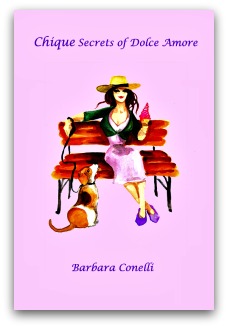
BOOK REVIEW: “Chique Secrets of Dolce Amore” by Barbara Conelli

TITLE: Chique Secrets of Dolce Amore
AUTHOR: Barbara Conelli
AUTHOR’S CYBER COORDINATES:
Website: www.barbaraconelli.com
Twitter: @BarbaraConelli
Facebook: www.facebook.com/AuthorBarbaraConelli
PUBLICATION DATE: May 2012
FORMAT: Ebook (Kindle) and Paperback, available from Amazon
GENRE: Travel
SOURCE: Review copy from author

Author Bio:

Born in London to an Austrian mother and an Italian father, Barb now splits her time between Milan and New York. Her first book, Chique Secrets of Dolce Vita, was published in 2011. She is the host of  Chique Show at Blog Talk Radio, where she interviews authors and talks about life in and her passion for Italy.

Summary:

Fascinating, enthralling and seductive travel and life tales about unexpected encounters with the capricious, unpredictable and extravagant city of Milan, its glamorous feminine secrets, the everyday magic of its dreamy streets, the passionate romance of its elegant hideaways, and the sweet Italian art of delightfully falling in love with your life wherever you go.

(Amazon product description)

Review:

In their instructions for describing someone’s appearance, “How To Write” gurus advise you not to reel off physical characteristics in a shopping list. Don’t write “blond hair, brown eyes, even teeth”, they say, but focus on a couple of arresting features: stripy but chipped nail polish, or a wrist laden with silver bangles.

By describing in detail only personal, quirky aspects of the whole, these teachers rightly insist, you create a vivid picture for your readers.

This is exactly how Barb Conelli brings to life the Milan she knows and loves.

Instead of reciting a shopping list of Places You Must See, which you could find in any guide to Milan, Conelli figuratively takes you by the hand and says, “Forget the official tour. Let me show you my Milan, the people and places I love.”

On this off-the-beaten-track tour of Milan’s streets, we visit The Paradise of Pink Feathers: the garden in Via die Cappuccini number nine, with its many flamingos, whose owner’s identity nobody really knows. We eat panettone at Marchesi’s, while Conelli relates the fascinating legends behind the pastry’s origin. (Tip: you should first try it on 3rd February, because on this day panettone has magic powers. Who knew?) On one day, she brings you along to visit the studio of an artist friend; on another, we go to the ballet school of Annamaria Bruno and her daughter Liliana to live out our dreams and become ballerinas in point shoes for a day. We meet the ghost of Mrs. Giuseppina Luini, an enterprising baker from Puglia who came to Milan in 1949, and turned the family recipe of Panzerotti into a Milanese legend.

Milan’s beauty, Conelli says, does not just lie in its breathtaking architecture, but in its inhabitants, past and present.

To me, the city is not an inanimate cluster of buildings and their architectural elements; the city is a living organism boiling with energy, its features are being recreated every day by the people who walk its streets.

It’s a city full of secret corners and quiet clusters of serenity; of shadows of people long dead, and the vibrance of those living today.

In taking a walk with Barbara, we discover the magic that is Milan.

Words of wisdom:

In order to see the world, you must know how to look at it.

~

When the streets of Milan ask you to dance, there’s nothing else to do but put on your ballet shoes and surrender with confidence to the arms of the city.

~

As an Italian, [my father] had rich experience with diabolic temptation and enjoyed surrendering to it very often and with great delight.

~

Despite its fickleness, vanity, unpredictability, and fancy for sophisticated elegance, Milan is an immensely simple city whose inhabitants know that real joy means seeing miraculous moments in everyday ordinariness.

Verdict:

At 76 pages, this book is a short but very satisfying read. If you have not been to Milan, it will make you want to visit; if you’re not a newcomer to the city, you will want to rediscover it.

Chique Secrets of Dolce Amore can be purchased here.

Or you can register for The Displaced Dispatch and hope you’ll be one of this month’s lucky winners!

Editor’s note: Kate Allison interviewed Barbara Conelli in March: “An Italian with a passion: How to live the Dolce Vita, with Barbara Conelli,” which is what inspired this month’s Displaced Nation theme of La Dolce Vita.

STAY TUNED for Wednesday’s Random Nomad interview with mid-life gap year expert, Jeff Jung.

If you enjoyed this post, we invite you to register for The Displaced Dispatch, a round up of weekly posts from The Displaced Nation, with seasonal recipes, book giveaways and other extras. Register for The Displaced Dispatch by clicking here!

Image:  Book cover – “Chique Secrets of Dolce Amore”

Related posts:

Kidding yourself over La Dolce Vita

As you are doubtless aware, this month’s theme is la dolce vita, an Italian phrase meaning the sweet life. It would be remiss of us to choose that theme without referring to Fellini’s 1960 masterpiece of the same name.

Regular readers of The Displaced Nation may not be surprised to learn that I was a somewhat pretentious teenager. A thin youth, callow and pallid, I could be found most nights ensconced in my bedroom reading the novels of Thomas Hardy or writing in a notebook my own cringe-worthy poetry. However, I would sometimes, late at night, usually on a Friday, descend from my literary lair and head down to the living room where I would turn the TV to BBC2 or Channel 4 to watch some classic foreign film that I felt I ought to know about.

Though my teenage years aren’t that far behind me (the late 90s, if you must know) they exist in another epoch, a time of old media, where nobody normal blogged, where there was no twitter and there was most definitely no streaming online of every movie you could ever wish to watch. Instead my cultural endevours were rationed. The northern town that I grew up in had no bookstore (unless we rather generously classify W.H. Smith as a bookstore) or cinema, so I found myself spending a lot of my time in my local library or scanning the Radio Times to see what (if any) interesting examples of world cinema where being shown on either of the two niche channels (BBC2 and C4). Invariably, something was being shown late most Friday nights. It was in these circumstances that I first came across Fellini’s La Dolce Vita.

I can’t in all honesty say that I “got it” when watching it for the first time that night, but on a superficial level, I loved it. More particularly, I loved the effortlessly cool, brooding Marcello Mastroianni who anchors the film. This, I reasoned, was how manhood should be, how I should live my life: apertifs in the cafes, dances at the Cha-Cha-Cha Club, a midnight wade into the Trevi Fountain with an Anita Ekberg figure, two lonely souls enjoying a fleeing moment of warmth.

So I pondered about how one goes about affecting a similar style to Mr Mastroianni. The problems quickly became apparent. My clothes came from Marks and Spencer’s men’s department and gave me more the appearance of a Mormon missionary than Italian heartthrob. Then there was the impossibility of finding in Hartlepool a Cha-Cha-Cha Club that played the music of Nino Rota — now, the Bikini Fun Bar played 2Unlimited, but between you and me that wasn’t quite the same. Most disappointingly, I had no Anita Ekberg; none of the girls in school would take up my invitation to wade with me in the duck pond in Ward Jackson Park.  So the attempt to give my teenage years a Fellini spin were dashed. I couldn’t recreate the Rome of 1960 as seen through Fellini’s lens in the Hartlepool of 1998 (hardly a surprise).

But if I stopped pretending to act like I’d stepped out of a Fellini film, still I think this might have been when I was unknowingly inoculated with wanderlust — and the thought that somewhere out there is a place where cafes serve apertifs, not sausage rolls, where the club plays Nino Rota, not 2Unlimited, and where Anita Ekberg is waiting. That’s the sweet life.

STAY TUNED for tomorrow’s post, Kate Allison’s review of Chique Secrets of Dolce Amore, by Barbara Conelli — the book that inspired this month’s theme!

If you enjoyed this post, we invite you to register for The Displaced Dispatch, a round up of weekly posts from The Displaced Nation, with seasonal recipes, book giveaways and other extras. Register for The Displaced Dispatch by clicking here!

Related posts:

THE DISPLACED Q: What’s the most delightful sound you’ve heard on your travels?

Have you ever just stopped and listened — really listened, I mean? Yes, of course you have! Because you’re Displaced Nation readers, which automatically means you’re closely in touch with all five senses. After all, that’s what travel is all about!

But just in case those ears of yours have been missing some vital input — of the kind that would help you to appreciate life’s sweetness — let’s do an exercise in aural comprehension and memory.

Yes, it’s time to pay some attention to those great big flappy things on the sides of your head — you know, the ones that help cartoon elephants to fly? Yes, friends (Romans and countrymen), I’m asking you to lend me your ears. Don’t worry — I’ll give them back. And, by the time I do, you will understand why there’s a photo of wet grapes on this page!

Today, in the service of living a fuller Dolce Vita, our question is: What is the dreamiest, most beautiful sound you’ve heard in the course of your travels?

Beauty in serendipity

Now, because La Dolce Vita is all about finding beauty in unexpected things, I won’t wax lyrical about waves lapping on foreign shores, morning birdsong in uninhabited fields, or other somewhat clichéd ideas of a “dreamy sounds.”

True, it was incredibly sweet to hear my girlfriend say “yes” when I asked her to marry me; I’m sure the same is true for everyone who’s been through this stage in their life. In fact, I hardly heard her at all because she was crying so much. (I was crying too as it happens, but that was because I was kneeling in an ants’ nest at the time and Australian ants really hurt when they bite! Damn them!)

Now, I’m the sort of person who takes great delight in discovering life’s hidden treasures in the moments you’d least expect them. And I take even greater delight in pointing them out to everyone else, which apparently is one of the most annoying qualities a person can have. Especially if you’re having a bad day.

So, what’s the most delightful sound you’ve heard recently? Is it some gentle-voiced stranger, mentioning how bright and sunny the day is, even though the train is making you horribly late for work? Or is it the sound of someone telling that well-spring of positivity to shut the f@&8 up and p*$$ off?!

I apologize in advance for being that guy. I should try to keep my happy-happy joy-joy observations to myself more often!

But in terms of the most wondrous sounds I have come across, I’ve decided not to opt for the obvious — the soft harp music at my wedding in England; the sound my footstep makes in deep, fresh snow at 10,000 feet; or the poignant jingling of a Spanish music box, dearly remembered from my childhood, which I inherited from my granddad when he passed last month.

Instead I’ll go for the unexpected: the sound of rain on my tent.

Raindrops are falling on my tent!

After three months of living under canvas, doing agricultural work in the hope of extending my Australian Working Holiday visa, hearing that particular sound would fill my entire being with joy. Why did it have such an effect on me, you may ask? Was I looking forward to soggy clothes on the washing line or to a cold, wet sprint to the block of toilets? No, even a cheerful person like me isn’t that much of a glutton for punishment.

For me, the sound of raindrops simply meant…FREEDOM!

Because as any budding grape-picker knows, you can’t pick ’em when they’re wet — so any downpour of sufficient strength to wake me meant a day off work, for sure! No hours of bending over in the scorching summer sun; no cuts and prickles of delicate fingertips; no hauling of endless buckets, boredom, drudgery and indelible purple juice on everything. (Trust me, there are parts of you that just shouldn’t be purple — ever.)

Most of all it meant 6:00 a.m. was not the time to be wriggling out of bed, out of a nice warm sleeping bag into the miserable grey dawn — and into a set of filthy work clothes. No! 6:00 a.m., when the rain fell, rattling the flysheet and threatening to overwhelm its scant moisture resistance, meant only one thing: time to go back to sleep.

For me, that hard, driving rain was the world’s most blissful lullaby!

So there you have it. No magnificent concertos, no first cries of your first-born baby — even though no one will dispute the loveliness of those sounds.

My challenge to you today is to think of a sound that holds an interesting story about your travels abroad. What’s a sound that struck you as the dreamiest and most beautiful, but that’s unique to your own wanderings?

Let me know in the comments! And if you have a photo that accompanies that sound, send it to me at tony@thedisplacednation.com. As mentioned in last week’s post, I hope to be staging a “la dolce vita slideshow” before too long!

STAY TUNED for Monday’s post — a contrarian view of La Dolce Vita by none other than Anthony Windram!

If you enjoyed this post, we invite you to register for The Displaced Dispatch, a round up of weekly posts from The Displaced Nation, with seasonal recipes, book giveaways and other extras. Register for The Displaced Dispatch by clicking here!

Related posts:


Living La Dolce Vita with Susan Ross Donohue, Canadian Artist & Francophile

The artist Susan Ross Donohue revels in city life, art, literature and anything that makes her laugh. She lives physically in Montreal but mentally in Paris. As she has such a good handle on La Dolce Vita, I asked her to share the sensory highlights of her travels and some advice on enjoying the sweet life even if you stay at home…

Most heart-stopping sight

Our first visit to Paris. My husband and I were very young, and this was our first time abroad. Upon arrival, we took the métro to Charles de Gaulle Étoile, the station closest to where our hotel was located. We walked up the stairs et voilà — there was the Arc de Triomphe just as I imagined it would be, only better. I was stunned. Speechless actually. But I have to say that this still applies. The Arc and the Eiffel still bring tears to my eyes, I’m not sure why.

Most intoxicating scent

The flowers — jasmine, lavendar, roses — in Grasse, in the south of France. Grasse is considered France’s perfume capital as it produces over two-thirds of the natural aromas used in perfumes. Touring Parfumerie Molinard is an education in itself. I thought I knew scents until I took the tour but then I found out how much more there is to learn! But, you don’t have to be an expert to appreciate the aromas of this area. Just breathe in and enjoy.

Dreamiest sound

This is strange — it wasn’t in France! My husband and I had driven from Nice to Sanremo, Italy, just across the border. While wandering through the town, we heard strains of a violin coming from the art gallery (which is what we were looking for in the first place). We went in to check out the art work only to discover the music was “live.” A girl was practicing the violin and she continued to play while we looked at the exhibition. No one in the gallery, which was called Tunnel Dell’Arte, spoke English or French, and our Italian is nil — but we did manage to understand she was practicing for a concert that night. We bought a small painting and the owner mimed that he could send it to us by air (with much flapping of the arms to get the idea across).

Most delicate flavors

It’s a toss-up between the hot dogs at Harry’s New York Bar in Paris and a white wine served at a dinner in the Loire Valley (unfortunately, I can’t remember the name).

Softest physical sensations

Walking in the Tuileries one day, we came across a man feeding the birds out of his hand. We were watching him when he motioned to me to put my hand out, and he filled it with seeds. Sure enough, these tiny little birds landed on my fingers to have their lunch. This was an amazing feeling. Very delicate, very soft, very special.

Most interesting unexpected encounter with another human being

There is no one particular person that I can single out because we’ve always had nothing but good experiences with people during our travels — I’m remembering, for instance, an entire café full of people trying to find a street address for us.

A place that stimulates all five senses

Montmartre stimulates all five senses with the mixture of music, art and restaurants. Further up the hill in Montmartre is the local vineyard, the wonderful restaurant La Maison Rose and the Lapin Agile cabaret, with its fascinating history. I couldn’t go to Paris without some time in Montmartre. I especially like going on a week night, when it’s a bit quieter, and I can picture Picasso, Modigliani or Utrillo sitting at a café talking about art. Bliss.

Favorite contemporary artist with a sense of dolce vita

The American pop artist Jim Dine is a favorite. I’ve loved his work for years and have met him a few time at exhibition openings. He is equally talented in printmaking, painting and sculpture. His work is very personal, but the viewer doesn’t feel like an intruder.

Favorite historical artist

Who had more heart and soul than Van Gogh? To see a real Van Gogh is a totally different experience from seeing a reproduction. This is something else that led me to tears the first time I saw one of his canvases. (Truly, I don’t cry a lot — Paris seems to do that to me!)

Favorite travel quote

″A traveler without observation is a bird without wings.”
– Moslih Eddin Saadi

We travel to open our minds and hearts, and to learn from the experience. For me observation is the whole point of traveling.

Advice for living la dolce vita at home

La dolce vita is whatever you want it to be. Try evenings with a particular country theme — a Spanish night with paella, a Parisian evening with raclette, French wine and music. All the information you need is on the Internet: recipes, lessons for learning a foreign language, instructions for adding a foreign touch to your decor… The possibilities are endless.

Susan Ross Donohue is an artist who lives in Montréal, Canada. She makes frequent trips to Paris, a city she considers her second home. Her travels are recorded in her blog Life, Laughter and Paris, and you can see her artwork — much of which is inspired by the sights and sounds of Paris — at her art site, Susan Ross Donohue. Follow Susan on Twitter (@srossdon) and on Facebook.

STAY TUNED for tomorrow’s bulletin from Woodhaven, where our fictional heroine, Libby, is not so much courting trouble as dragging it handcuffed to the altar. (What, not keeping up with Libby? Read the first three episodes of her expat adventures.)

If you enjoyed this post, we invite you to register for The Displaced Dispatch, a round up of weekly posts from The Displaced Nation, with seasonal recipes, book giveaways and other extras. Register for The Displaced Dispatch by clicking here!

Related posts:

Images: Susan Ross Donohue in her favorite city;  “L’Accordéoniste,” one of her paintings.

THE DISPLACED Q: What’s the most heart-stopping view you’ve seen on your travels?

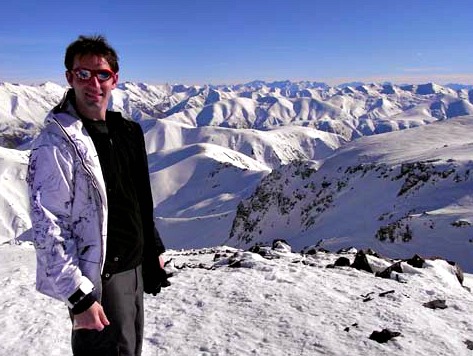
It was the perfect day. The weather was incredible. We’d looked beyond the ski area boundary signs before, of course, but this — the crystal clear visibility — meant we could see for hundreds of miles.

From this high up — the very pinnacle of Mount Hutt, in the New Zealand Alps — we could actually see the curvature of the earth. And it looked like the snow-wrapped mountains extended the whole way there.

The photo at right can’t come close to doing the view justice — especially as some idiot couldn’t resist parking himself in the frame! (Sorry, folks!)

Every time I look at this picture I well up, not because it’s good but because the memory — of unspoilt nature at its most breathtaking — is so special. I was living what The Displaced Nation likes to call la dolce vita.

Today and for the remainder of the month, I’ll be urging you to live la dolce vita as well, by conjuring up the sensory aspects of travel.

This week, I’m talking up the need to train your eyes to see the beauty all around you when you travel. In my case, in fact, this requirement of la dolce vita comes rather naturally. I see beauty everywhere I go — in nature, in ancient structures, even in the occasional female of the species(!). In 1878, the Irish writer Margaret Wolfe Hungerford coined the following phrase in her novel Molly Bawm:

Beauty is in the eye of the beholder.

One of the meanings I take from it is that you see what you look for; so, look for beauty and you’ll find it almost everywhere. (The reverse, of course, is also true.)

But that’s just my tin-pot philosophy, and this week we’re asking you to come up with the most heart-stopping view from your travels. Now that narrows it down considerably, because for me a “view” means a landscape — and I find there are elements a landscape has to have for me to really put it up on that pedestal:

1) It has to be isolated. Maybe that’s just me, but I love the wilderness, that connection to nature, that feeling that this view may not have changed for a thousand years or more.

2) It has it be high-up. I love to be high (no double entendre intended!). A bit of altitude can reveal the magnificence of even a tortured landscape. How peaceful does the Earth look from space, eh?

3) It has to be dramatic. What separates one pretty landscape from another? In my humble opinion, there needs to be some drama, something visually astounding: the scale of the place; the way color dominates it; the patterns of light and dark; the capture of elemental forces at work… Drama is in most places if you look for it.

I very rarely take pictures — which doesn’t exactly lend itself well to a life of writing and blogging. I’d been in Thailand for six months and taken only one photo when my parents (in despair!) sent me a camera for Christmas. It was great! I gave it to a friend.

Luckily, I am now married to one of the afore-mentioned beautiful women — and the pictures I don’t take, she makes up for in spades. Seriously. She has been known to take over a hundred pictures just to ensure having one good one (but she keeps them all). She takes photos of flowers! Of swans! Of cows! And of yours truly! Thank goodness — otherwise, I wouldn’t have been able to share with you the above alpine view, except with words.

So, please — tell us about your favorite views! Where is the most beautiful, jaw-dropping place you’ve seen with your own two eyes? I’d especially love to know, as I plan on visiting a few of them :0)

Please tell all in the comments! In addition, I urge you to send me a photo of that view: tony@thedisplacednation.com. With the help of my better half, I may be staging a “la dolce vita slideshow” before long!

STAY TUNED…for Monday when The Displaced Nation’s agony aunt, Mary-Sue Wallace, will be addressing cross-cultural quandaries and travel-related confusion.

If you enjoyed this post, we invite you to register for The Displaced Dispatch, a round up of weekly posts from The Displaced Nation, with seasonal recipes, book giveaways and other extras. Register for The Displaced Dispatch by clicking here!

Related posts:

Img: Tony James Slater in the New Zealand Alps, taken at the top of Mount Hutt (December 2009).

RANDOM NOMAD: Isabelle Bryer, French Expat in the City of Angels

Place of birth: Bourgoin, France — a small town between Lyon and Grenoble.
Passport: France and now USA*
Overseas history: USA (New York City): 1990; USA (Los Angeles): 1991 – present.
Occupation: Artist and art instructor
Cyberspace coordinates: Isabelle Bryer Paintings (artist site and blog); Isabelle Bryer Paintings (Facebook page); and @IsaBryerArt (Twitter handle).
*I decided to become a US citizen after I had my first baby. Since she was an American, I thought it would be prudent to be a citizen, too — I’m not sure what I was afraid of! To this day, I can remember swearing allegiance to the American flag in a giant room full of 6,000 immigrants with the song “God Bless the USA” blasting through loudspeakers. It felt surreal but I found it hard not to get emotional with people crying all around me. Some of them had waited many, many years for this moment and were escaping countries where they had few rights and even less opportunities. It made me feel spoiled, coming from France and seeing this process simply as an administrative hurdle.

What made you leave your homeland in the first place?
I left because I couldn’t wait to start living my own life. In France I always felt “the daughter of” or “the sister of” (I have three older brothers). I felt that everything I was doing was dictated by what was expected of me by everyone else. When I arrived in New York, I felt as though I could reinvent myself. Of course my new identity was that of “the French girl” — but at least it felt exotic! I loved that everything was odd, new and exciting.

It took me three months to be able to speak English efficiently, and still I was constantly making mistakes! To this day, I make some mistakes, which never cease to make my husband and two kids laugh! Mainly, I put accents on the wrong part of some words — in French everything is pronounced “flat” with no emphasis on any particular syllable.

During that year in New York, I worked as a fashion consultant. I went back and forth between New York and Europe about five times within the year. I would visit European cities — Paris, Barcelona, Milan, Florence — and act as a “fashion spy,” taking photos and sketches of trendy designs that might inspire American designers. Then I would go back to NYC and compile everything in books that were sold to clothing manufacturers. The job was very badly paid, but it was way more exciting than my old life!

I met my husband when he was in New York on business. A few months later, I moved with him to Los Angeles.

So your husband is an American. Is anyone else in your immediate family “displaced”?
I was the first and only one of my family to leave my town. They all still live there, which is good because I can easily see everyone when I go for a visit.

Can you describe the moment when you felt the most displaced?
When I was living in New York, I was going home late from work by subway. There was a homeless guy in the car trying to eat his hand and screaming. It really terrified me, but I didn’t want to exit before my stop because I was afraid of I’d get lost in the wrong neighborhood. That was the moment when I realized “I’m definitely not in Bourgoin anymore!”

That said, I also remember walking alone down one of the avenues on the west side of New York on a sunny Sunday morning. I felt like a French country girl who’d been dropped in the middle of West Side Story. Everywhere I looked seemed like a movie set. I felt entirely displaced while also having the sense of floating on air. I just loved it.

Is there any particular moment that stands out as your “least displaced”?
When I’m alone and painting in my art studio, I have the feeling of being in the exact right place. I am not sure that I would have found in France what I was supposed to do in life. Sometimes you have to leave your familiar surroundings to start over and become who you were meant to be.

Can you describe the kind of art you do?
I guess the closest description might be “naive surrealism.” My work is very much inspired by folktales.

You may bring one curiosity you’ve collected from your adopted country into The Displaced Nation. What’s in your suitcase?
I’d like to carry in a couple of memories of curious times.

From New York: A night at the wild nightclub Copacabana. In the early 1990s it was the place to be: beautiful people, drag queens and transsexuals, with everyone dancing to disco music. You could see Madonna’s dancers practicing “voguing” in the back room. One night I also found myself starstruck — I was going down the stairs behind Iggy Pop.

From L.A.: A typical afternoon at my favorite place, Cafe Mimosa in Topanga Canyon, which I think must have been the birthplace of the peace and love culture. Mimosa is owned by Claire, also a French native. The most amazing crowds assemble there, making you feel as though you’re a character in a hippie revival play. It’s not uncommon to see barefoot people, a man with a huge cockatoo on his shoulder, another one carrying a baby goat. You might run into someone who wants to read your aura for free. The ads on the cafe’s bulletin board offer the services of horse or dog whisperers, dream interpreters, or people ready to loan you their herd of goat to mow your lawn in an environmentally friendly way. It is one of the best places in the world to sip your vanilla chai and people watch. I would love for you all to experience it.

You are invited to prepare one meal based on your travels for other members of The Displaced Nation. What’s on your menu?

Appetizer: Lemon rolls (spicy tuna on the inside, fresh tuna on the outside, topped with thin lemon slices and pine nuts in a delicious sauce) and Asian rolls from my favorite sushi place in LA, Kushiyu.
Main course: Baked sweet potatoes with marshmallows on top. Watching my mother-in-law serve this dish for the first time was an absolute culture shock. I couldn’t wait to call my family in France to tell them that these crazy Americans put rows of chamallows on top of sweet potatoes to bake in the oven and serve with turkey. To this day, I refuse to eat these baked sweet potatoes with meat but love to have them for dessert.
Dessert: A Galette des Rois that I would make myself. It’s a French cake made of puffed pastry stuffed with frangipane (a mix of sugar, almond powder and eggs). You hide little figurines of a queen and a king inside the galette before you serve it, and whoever finds one in their slice gets to wear a crown for the day. I have successfully introduced this tradition to my family and friends in the United States.

And now you may add a word or expression from the country where you live in to The Displaced Nation argot. What will you loan us?
One of the first expressions I learned when living in New York was “That’s how the cookie crumbles” — basically the American equivalent of “C’est la vie!

This month we are looking at the concept of “la dolce vita” — by that we mean living with an open heart and soul, indulging in life with all your senses. Can you tell me about a recent instance when you felt you were living la dolce vita?
I remember floating on my back in my swimming pool on a perfect warm April morning, watching hummingbirds fluttering by (and also a few helicopters since it’s Los Angeles, after all!). Living in California is still exotic to me. I feel like I’m on a permanent vacation, which I love.

If you were to take the adult equivalent of a “gap year” now or in the near future, where would you go and what would you do?
If I could take a year off, I would take my family to visit a few far-away places like India, China and Japan. I would pack drawing pads and a digital camera and keep a record of all the beautiful things we encountered on our travels. I would use it for inspiration when back in my studio.

Readers — yay or nay for letting Isabelle Bryer into The Displaced Nation? Tell us your reasons. (Note: It’s fine to vote “nay” as long as you couch your reasoning in terms we all — including Isa — find amusing!)

STAY TUNED for tomorrow’s episode of “Libby’s Life”, with another bulletin from Kate — who seems to be regretting her rash promise to “stay with Libby for a while.” (What, not keeping up with Libby? Read the first three episodes of her expat adventures.)

If you enjoyed this post, we invite you to register for The Displaced Dispatch, a round up of weekly posts from The Displaced Nation, with seasonal recipes, book giveaways and other extras. Register for The Displaced Dispatch by clicking here!

Related posts:

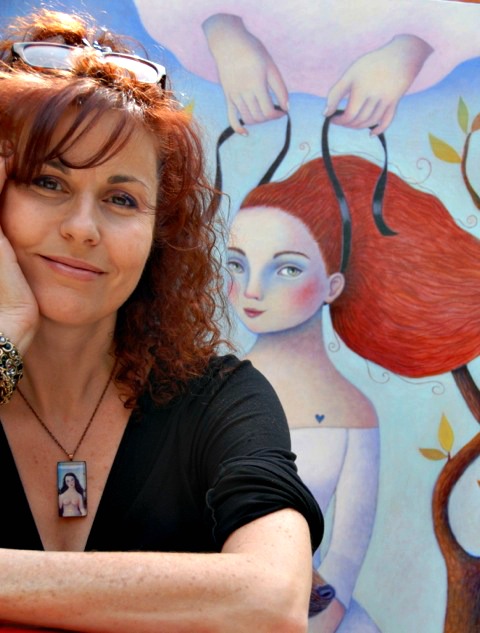
img: Isabelle Bryer and four of her paintings.

Welcome to May: A month of living La Dolce Vita

After a month of partying, we’re ready for a quieter life. Fewer late nights and hangovers, and more self-TLC: more sleep, more relaxation, more stopping to smell the roses, more broccoli on our dinner plates…

OK. Maybe not the broccoli. You can have too much of a good thing.

But the sleep, relaxation, and sniffing the roses — they’re all part of living a good life.

A sweet life.

In other words: La dolce vita.

A gateway to the sweet life

A “displaced” life, by definition, is a gateway into experiences we probably wouldn’t have had if we’d stayed home: new places, new people, new perspectives.

While for some this means pushing excitement and new experiences out of your personal comfort zone somewhere into the moon’s orbit — yes, Tony James Slater, I’m thinking of you! — for others, this gateway is one that leads to la dolce vita.

A life of self-indulgence, or indulging yourself in Life?

How do we define la dolce vita?

It’s a phrase that entered the English language after the 1960 Federico Fellini film of the same name, and literally translates to “The sweet life.” It sounds harmless enough, if a little vague.

The Merriam-Webster dictionary takes a more Puritanical view of the translation, and condemns it as “a life of indolence and self-indulgence.”

For our purposes this month, however, we’re going with the definition Barbara Conelli gives at the beginning of her book, Chique Secrets of Dolce Vita:

To live a dolce vita means living with an open heart and soul, indulging in life with all your senses. It means having the eyes to see real beauty, having the nose to smell intoxicating scents, having the ears to hear dreamy sounds, having the mouth to taste delicate flavors, having the body to perceive soft sensations. It means being aware of yourself, of your emotions and desires. It means finding happiness in ordinary yet unique things.

What sort of things are we talking about? Well, I guess it depends on the person.

Respite. Sleep. A massage. Meals you don’t have to cook or cater. Looking up at a different sky. Heart-stopping views. Silence. Walking barefoot on the beach at sunrise. Or sunset. Or midnight.

Another way of putting it?  “A life that caters to the pleasures of the senses” — that’s the definition of “Hedonism.”

How TDN will be living la dolce vita in May

Later this month, we will be reviewing Barbara Conelli’s new book, Chique Secrets of Dolce Amore, and interviewing best-selling author Douglas Kennedy, whose book Temptation reveals downsides of the materialistic dolce vita. We will also be talking to several global nomads about how they define, and live, their own dolce vita.

One of these Random Nomads will be Jeff Jung. Many people who’ve reached mid-life realize that they haven’t smelled the roses in a while, and some are now taking time out of the rat race in order to do just that.  Jeff, who specializes in mid-life gap years, is now settled in Bogota, Columbia, where he markets instructional videos for people preparing for career breaks.  You can read more about Jeff and his philosophy on mid-life gap years here.

Until tomorrow’s interview with another Random Nomad, though, I’ll leave you with more words from Barbara Conelli:

Live your own dolce vita no matter where you are in the world. Because la vita e bella, life is beautiful, and the most amazing wonders of this world often hide in the simplest things.

STAY TUNED for Wednesday’s Random Nomad interview with artist Isabelle Bryer, French expat in the City of Angels.

If you enjoyed this post, we invite you to register for The Displaced Dispatch, a round up of weekly posts from The Displaced Nation, with seasonal recipes, book giveaways and other extras. Register for The Displaced Dispatch by clicking here!

Related posts: