Meagan — who is also known as MAL and the Lady Who Lunches (after her blog of that title) — may have just three questions, but I had quite a few more! I wanted to find out what inspired her to write her book, which she is now attempting to turn into a screenplay — the story behind the story…
Here’s what she had to say.
Meagan, I think it’s fair to say that you’ve been around a bit — I mean that in the nicest possible sense! Would you mind telling us a bit about your background — where you grew up, what you studied?
Do you mean I’ve been around as in I’ve lived for a long time, or do you mean I’ve traveled loads? (I won’t bother going to the other possibility!) Actually, I am getting up there in age — just six more months of my twenties; but there’s no need to rub it in, Tony! Just kidding. I think I’ll be relieved to be out of my twenties. What a crazy ride they were!
No, of course I wasn’t referring to your age — I’m an English gentleman, remember? I meant, you’ve lived in quite a few places — and that was before you moved abroad.
By the time I was 12 years old, I had lived in 12 different houses, and four different states. I pretty much grew up in a suburb of Baltimore called Towson. I say “pretty much” because I also lived in Tennessee and New Jersey for two years in between. But Towson is where I call home.
You have a passion for acting. When did you develop it?
Since I was eight years old, acting was all I wanted to do. For high school, I auditioned for a conservatory arts school called Baltimore School for the Arts (it boasts Jada Pinkett, Josh Charles and Tupac as students), where I was lucky enough to be trained by professional actors everyday.
Funnily enough, I wanted to be an actor, too. What drew you to the profession?
I had this fear that my life would pass too fast, and acting was somehow a way to slow down time, and be “in the moment.” Nowadays I find that writing is what does this for me. I am able to record thoughts and moments forever. Very existential, I know.
But you haven’t completely lost your passion for acting — I see you’ve instilled it in your main character, Adele (“Del”), in Three Questions. And I noticed there’s a mention of a horror film in your author’s bio — could you tell us a bit about that?
About the horror film? Oh no, you really don’t want to know about that (wink). But okay, my first starring role was in a horror movie called Sleepy Hollow High, about students who believe that the legend of Sleepy Hollow is real. It’s one of those films that is so cheesy and kitschy that it might be considered entertaining at some level. At the time, I was just excited to be in something, but it certainly wasn’t Oscar-worthy — ahem — at all.
And you also got into some major motion pictures?
My first speaking role in a big Hollywood movie was as a cocktail guest in Traffic, with Catherine Zeta Jones and Michael Douglas — now there’s an Oscar worthy film. Unfortunately, my lines got cut — but you can still see me shaking Michael Douglas’s hand. I got my Screen Actors Guild card from acting in small parts in Enemy of the State, a spy-thriller starring Will Smith, and The Replacements, a college football film starring Keanu Reeves. Numb3rs was my first TV show.
Wow — you gave all that up to become a writer?
I got disillusioned with acting after working in casting for four years. I saw how completely random and superficial some of the choices can be for who gets cast. I’d gotten into acting for a much more altruistic goal — I wanted to make a difference in how people see the world — but ultimately realized that the place where I could make a real difference, because I have control over my own success, was with writing. Without great content, after all, actors couldn’t do their job!
Well you’re having plenty of success with writing. In addition to the book (which we’ll come to, don’t worry!), you started up a popular expat blog, A Lady Who Lunches, while you were living in the UK. Now that you’ve repatriated, and are living in Chicago, are you still keeping it up?
When I got to Chicago, the blog went through a bit of an identity crisis. Even though I’d never lived in that city, writing about the adventures of a newbie Chicagoan didn’t really interest me. Especially since I was no longer lunching — I was working, hard. Though I still have the same URL and twitter handle (@theladylunches), I now call the blog by my own name, and I’m glad I’ve kept it up. It’s a built-in fan platform that has helped me to sell my novel.
You’re also something of a social media guru. Are there any secrets you can impart to other bloggers about building an audience?
I didn’t set out for the blog to become popular (and thank you for saying so). It was a lot of ground work, as well as trial and error. You can’t expect results from a blog unless you’re updating it frequently, creating a community with other similar, like-minded people, and engaging with them on a consistent basis. My biggest piece of advice to other bloggers is to take a course in SEO. I never really paid attention to SEO, and it wasn’t until I took a course that I realized the importance of knowing the basics. Simple things like: are people even searching for the topics that you’re writing? Are you wasting two hours of writing time on a topic that gets only 100 hits per month?
Now let’s turn to Three Questions, which follows the developing love between two young people — who have only met each other once, by chance, on a night out in Las Vegas. The love interest, Guy, is from England, as is your real-life boyfriend, Jock. So what I’d like to know is, just how much of the book is autobiographical?
This is a question that Jock and I dodge quite often! I would say that about sixty percent of the book is autobiographical. There are many similar personality characteristics between Guy (Del’s boyfriend) and Jock, and between Del and me, Even the outline of the story conforms quite closely to what happened to Jock and me. Jock and I did meet in Las Vegas before his trip to Africa, and we did write letters back and forth to get to know each other. Hey — they always say to write about what you know, so that’s what I did! However, “how” things happened — and obviously the ending — are all very different.
One of my favorite aspects of the book was the use of the three questions in each email between Del and Guy, which the couple used to get to know one another during their long separation. It’s genius! Where did the idea for that come from?
Thanks, Tony! It came from Jock, actually. He used to play a questions game with his mates in England when they were out at the pubs. They were quirky questions like “If you were an animal, what would you be?” When Jock went traveling through Africa and we had only met that one night, he decided to take a slightly different spin on it, and ask me three VERY different questions to get to know me. It was such a great way to get to know someone, and build up the intensity and connection. I highly recommend it for anyone who has a long-distance relationship.
Tell us about the screenplay for the novel.
At the end of last year, I raised some money through a Kickstarter campaign to take the novel to the next level, which hopefully will include turning it into a movie. I’m working on the screenplay now, and then I’ll pitch it to Hollywood. What they do with it after that is up to them.
To give you a taster, Meagan has just released this movie-style trailer for the book, which is awesome!
Right, here’s something your fans will be keen to know the answer to: are you writing another book, and can you share any juicy details with us? Is it about travel again?
I’m now working on a second novel, which — particularly as a citizen of The Displaced Nation — you’ll be interested to learn is about someone who is forcibly, not voluntarily, displaced. It’s about a Cuban teenager who was torn from her homeland and true love in the early 1960s — and the struggles, ghosts and eventual success she faces in the United States leading up to today.
Love is a recurring theme in your writing, and one we’ve been looking into recently at The Displaced Nation. So, post Valentines Day, do you have an advice for the singletons out there, wherever they are?
My only advice is to figure out who you are first, and what you want before worrying about finding someone. I really believe that the right man or woman will come when you finally decide that you’re the most important person in your life, and you are taking care of you.
And I have to ask this of someone who has written such a beautiful and memorable love story; tell me about True Love. Does it exist? Is there one person for each of us?
Wow — that’s the kind of question that years ago, I always used to ask everyone else. I never thought I’d be on the receiving end. (Maybe I am getting old?!) I come from a family where love comes multiple times in their lives, so for a long time I never believed that there could be only one person for me. What I’ve come to learn is that with a mixture of timing, chemistry and hard work, true love can certainly be created. How else do I explain running into Jock in a bar in Vegas on Easter Sunday, and thus creating a life out of it, despite our different backgrounds, cultures and nationalities?
Yes, how does a girl from Towson get together with a bloke from Portsmouth? Can I ask, how is Jock coping with the transition to life in Chicago?
Ah… besides the constant yelling at the way we drive, the lack of manners that Americans have when opening doors, and absolutely hating the egos and pompous attitudes of our politicians and media? I would say he’s adjusted much better than I did when I was in England! (I did a lot better in Paris!) Luckily, Chicago has a variety of cultures. He has actually started a business with another Englishman, and found another good friend who’s English. Plus, I think he secretly loves the attention that his accent brings him.
And will your love story have a traditional ending — any plans to tie the knot?
He has one more year before he has to get down on his hands and knees. I gave him five years not thinking he would take the entire five! But we’ve had a few cross-continental moves in the past four years, which has made it challenging to find the right moment.
In Three Questions, Del describes her perfect future as “living by the water in a big city, traveling as much as possible.” You’ve traveled and lived in France and England, and now you’re living in the Windy City, presumably somewhere near the lake… Have you found that perfect future yet? Or is your dream different from Del’s?
Perhaps when I first started writing the book, that was my dream. But success is very important to me as well. I want to leave this life with a feeling that I have left a significant mark on people’s lives. I don’t think I will feel satisfied until that happens, which means I may always be striving to better myself, to make a difference… On a more practical note, I can see myself back in SoCal or having a flat in Paris eventually. That’s not too much to ask for, is it??
Thanks very much, Meagan! It was great chatting with you.
* * *
So, what do you all think? I loved Meagan’s book Three Questions and I’m not normally a fan of love stories and chick lit. I strongly recommend you all give it a read. Three Questions is available now on Amazon.com for the Kindle and, most excitingly of all, is now in paperback! Three Questions on Amazon Kindle Three Questions in Paperback
And luckily for you lot, Meagan has also agreed to participate in a giveaway, just for Displaced Nation readers!!!
She’s agreed to give a free ebook to the first 15 people who tweet: I want a free copy of @theladylunches’ new romance from afar novel, #ThreeQuestions via @displacednation
AND, she’s offered to give away a free copy of the paperback to the best comment in the comments section.
So what are you waiting for? Let’s chat 🙂
STAY TUNED for tomorrow’s episode from our long-running expat soap, Libby’s Life. You can look forward to a battle with tiger-mums, a three-hour glucose tolerance test, one suspected case of galloping dandruff, and the crowning glory of a Valentine’s Day party for three-year-olds. (What, not keeping up with Libby? Read the first three episodes of her expat adventures.)
If you enjoyed this post, we invite you to register for The Displaced Dispatch, a round up of weekly posts from The Displaced Nation, with seasonal recipes, book giveaways and other extras. Register for The Displaced Dispatch by clicking here!
Those who have been following this blog for some time are probably all too aware of my unhealthy preoccupation as to what constitutes an expat or travel book.
Is it, as often seems the case when I browse the expat blogosphere, that expat books must occupy themselves with the oh-so-amusing hi-jinks of expat life? The result almost invariably of such approach is that we are depressingly left with another third-rate knock-off of Bill Bryson for us to throw on the bonfire.
So when considering which expat books are ripe for movie adaptations, my first thought is that the film world, not to mention the world in general — at least, the one I want to live in — really doesn’t need any more travesties such as Under the Tuscan Sun, A Good Year or — most horrifying of all — Eat, Pray, Love. So with that in mind I will nominate the following 10 expat books as being ripe for interesting adaptations.
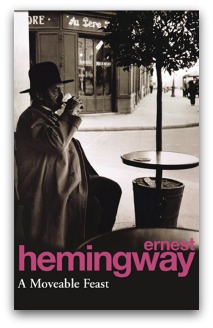
Author:Ernest Hemingway Synopsis: Hemingway’s posthumously published memoir detailing his years as a young American expat in Paris socializing with the likes of F. Scott Fitzgerald, Gertrude Stein and Ezra Pound. Film pitch: Perhaps now is the perfect time for an adaptation of A Moveable Feast. The surprising success of Woody Allen‘s Midnight in Pariswill perhaps have whetted Hollywood’s appetite for a more serious take on the same subject matter.
Author:Kingsley Amis Synopsis: Inspired by a year Amis spent teaching at Princeton, One Fat Englishman follows the badly behaved Roger Micheldene with Amis’s typical brio. An English gentleman who is affronted by everything on the American scene, Roger fails to see how his presence might adversely affect Anglo-American relations. Film pitch: Cast Timothy Spall as Roger and watch the fireworks.
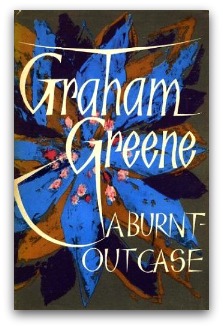
Author:Graham Greene Synopsis: A man named Querry arrives at a leper colony in the Congo. He assists the colony’s doctor, who diagnoses him as suffering depression. It is revealed that Querry is in fact a world-famous architect, though he is hiding other secrets, too. Film pitch: Perhaps Greene’s bleakest work — which may explain why it hasn’t been filmed previously despite being optioned twice by Otto Preminger (Greene was said to be thankful that it was never made). I would argue, however, that it has all the material for a fascinating film.
Author:Tobias Smollett Synopsis: After the sad death of his daughter, Tobias Smollett and his wife left England for a tour of France and Italy. Detailing the quarrels Smollett has on his journey with those pesky Continentals, this is a very funny book. Film pitch: Yes, I am suggesting that someone should make a movie based on an 18th-century travelogue. If Robbie Coltrane and John Sessions can turn Boswell and Johnson’s tour of the Hebrides into a delightful TV movie then I think the same could be done with this.
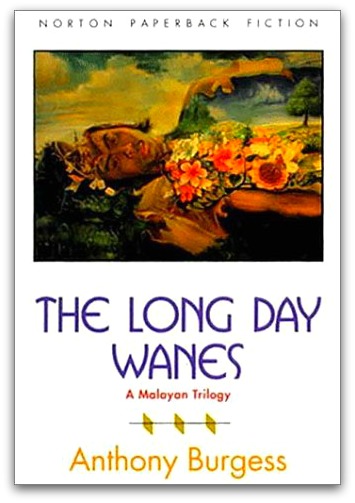
Author:Anthony Burgess Synopsis: Burgess’s first three novels are concerned with the character of Victor Crabbe, a teacher in a village in Malaya (now Malaysia). Based upon Burgess’s own experiences as a British civil servant in Malaya, the three novels that make up The Long Day Wanes detail the death of Empire and the birth pains of a newly independent nation. Film pitch: Other than A Clockwork Orange, whose adaptation Burgess had strong misgivings over, Burgess’s work often seems overlooked for movie adaptations. It really shouldn’t be.
Author:David Mitchell Synopsis: Until Commodore Perry in 1853 anchored four warships off the Japanese coast and so opened up Japan to western trade, Japan had been a “locked country” (sakoku) where it was illegal for a foreigner to enter Japan and for a Japanese subject to leave. The exception to this was at Dejima, in Nagasaki, where trade with some select foreign powers was allowed. This fascinating piece of history is the basis for David Mitchell’s latest novels. Set in 1799, The Thousand Autumns of Jacob de Zoet details a young Dutch trader who has come to Dejima to make his fortune though he discovers a lot more. Film pitch: The book has all the makings of a wonderful historical epic.
Author:Paul Bowles Synopsis: Dr and Mrs Slade are an American couple touring Central America. A chance encounter with an elderly woman leads to a tense and gripping chain of events. Film pitch:A disturbing and intense work typical of Bowles, it would make for a deeply compelling thriller.
Author:George Orwell Synopsis: Similar to Burgess’s The Long Day Wanes, this novel is concerned with the dying days of Empire. Orwell, who was himself an officer in the Indian Imperial Police Force in Burma, paints a depressing picture of expatriate life that is based around the stultifying social hub of the European club. Film pitch: Orwell’s first novel and while certainly not his best work, even a bad Orwell novel is still worthy of consideration.
Author:Saul Bellow Synopsis: Eugene Henderson is a rich American with an unfulfilled desire. Not knowing quite what it is, he hopes he will discover it by going to Africa. Through a series of misadventures Eugene Henderson finds himself away from his original group and in the village of Wariri in Africa. After performing a feat of strength, Eugene is adopted by the villagers as the Wariri Rain King. Film pitch: Bellow’s funniest book, Henderson the Rain King could be pitched as an intellectual Joe Versus the Volcano (or maybe not — that’s a terrible pitch).
Author:Lady Mary Wortley Montagu Synopsis: An important writer in her own right, Lady Mary Wortley Montagu was the wife of Edward Wortley Montagu, who was appointed as the ambassador at Constantinople. Accompanying her husband just after recovering from contracting smallpox marring her famed beauty, Lady Wortley Montagu wrote about her observations in numerous letters. These letters form a fascinating look at the Ottoman Empire — from how they inoculated against smallpox to the zenanas, special areas of the house reserved for women — as observed by an aristocratic English woman of the time. Film pitch: Just think what a great biopic you could make about her.
Note: If you click on the book titles in the above list, you’ll be taken to Amazon, where the books can be purchased — except in the case of Tobias Smollett’s travelogue, which goes to Gutenberg, where he can be read FOR FREE!!
STAY TUNED for tomorrow’s post, an interview with first-time novelist Meagan Adele Lopez, and her plans for turning the book into a film.
If you enjoyed this post, we invite you to register for The Displaced Dispatch, a round up of weekly posts from The Displaced Nation, with seasonal recipes, book giveaways and other extras. Register for The Displaced Dispatch by clicking here!
But I wanted to give you some slightly more alternative choices — because I try to avoid being ordinary whenever possible. Yes, okay, you can say it — because I’m downright weird. So in place of those otherwise awesome films, may I present to you the following movies which have inspired me personally:
Why I love this film: It’s ridiculous and lots of fun, which is pretty much how I think all life should be! As three Sydney drag queens travel through the barren Australian outback, we get to see that iconic terrain, vast and empty and aching to be explored. This film has it all: humor, a light-hearted way of handling a serious message (about homophobia) and visuals to die for as the trio procession through some of Australia’s most awe-inspiring scenery. In a big pink bus. Personal note: Not only did I travel to Australia and fall in love with a woman who considers this her favorite movie ever –- I also had the good fortune to be with her when she decided to re-enact one of the film’s famous scenes, when the drag queens hike around King’s Canyon in their fabulous dresses! I’d say we got mixed reactions from the other tourists — probably me, most of all… Memorable line:
Felicia: The only life I saw for the last million miles were the hypnotized bunnies. Most of them are now wedged in the tires.
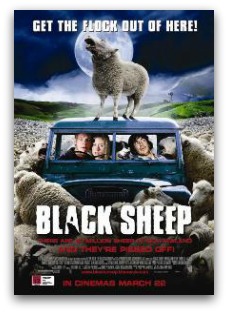
Also ran: Actually, I was going to nominate The Lord of the Rings trilogy but then decided — NO! I can’t use it. It’s too easy. Plus we’ve already had one film with Hugo Weaving (the mighty Elrond played a drag queen in Priscilla!). I know, across the three films they showcase the sights of New Zealand at their jaw-dropping best — anyone who hasn’t watched these films and felt an urgent need to visit New Zealand needs to watch them again but ignore the kick-ass sword fighting… Yeah, I know. That’s never going to happen. Why Black Sheep won out: The rugged landscape looks every bit as impressive in this movie as it does in Lord of the Rings — but it’s also populated by were-sheep, an accidental result of some unusual genetic manipulation… See it, and laugh at the New Zealanders. Oddly enough, they’ll love you for it. It’s the Kiwis’ love of poking fun at everything, especially themselves — their self-deprecating humor — that really made me want to visit the place. I felt like I would fit in there. And I did — I stayed for two years. By the time I left, I was on a first-name basis with the entire population. Memorable lines:
There are 40 million sheep in New Zealand…and they’re pi**ed off!
Harry (as the were-sheep charge towards them): F**k, the sheep! Tucker: No mate, we haven’t time for that.
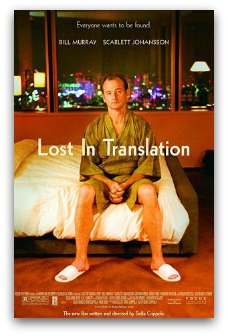
Why I love this film: It’s an odd one, this one. The first time I watched it, my mind boggled at how something so boring, with nothing remotely resembling a plot, could get made into a movie. Then I watched it again. And again. Because it was the rainy season in Thailand, where I was living, so I couldn’t go outside — and we only had three DVDs in English, so we watched all of them every day. For two months. Somewhere around the halfway point of this torturous process, I fell in love with Lost in Translation — maybe I just needed to relax to appreciate it? Once I stopped looking for something to happen, I started to understand what it was all about: loneliness, uncertainty, being adrift and confused in a completely alien culture. And ever since then I’ve desperately wanted to go to Tokyo. Well, not enough to actually go there — yet — but you know what I mean. I do travel vicariously — just sometimes — and this is one of ‘em. Caveat: If, like me, you’re a fan of films where, you know, stuff happens — it might take you a few viewings to get used to it. Forty or fifty should do the trick. Memorable line:
Charlotte: Let’s never come here again because it would never be as much fun.
Why I love this film: The closest I’ve come to China are the little “made in” labels on almost everything I own. This film, however, kindled a desire to visit China that I never knew I had in me. It’s the biographical story of the most famous kung fu practitioner in the world — not Bruce Lee but his teacher in Wing Chun kung fu, master Ip Man. It’s set in Foshan, China in the 1930s-40s during the Japanese Invasion, but was filmed in Shanghai. It follows the family of the master as he becomes ensnared in the war, losing everything over the course of the Occupation and being forced to face the hardest choices a man could make. The insight into a lifestyle and culture so utterly different from my own was fascinating enough, but this is a story both moving and powerful. Audience participation: I dare anyone to watch it and not leap off the couch at some point with a cry of “Yeah, kick his ASS!” Ahem. Okay, so maybe that’s just me. In sum: Will it make you want to visit China? I think so. Will it make you want to learn kung fu? I absolutely guarantee it!
And because I’m a contrary kind of guy, I just had to retaliate against my own optimism by highlighting a film that made me NOT want to travel:
Why I don’t recommend this film: The film is set in the 1970s, in the poorest districts surrounding Rio de Janeiro, where drugs and guns rule and the population live in a fear only matched by their misery. I saw it in South America, in its native Portuguese — but with Spanish subtitles. Given my fledgeling abilities in that language, as described in a previous post, I may have failed to grasp every nuance of the story, but basically what I took from it was: “DON’T EVER GO THERE! They will kill you for the hell of it.” Analysis:There is poverty everywhere in the world — I’ve worked in homeless shelters in the UK and seen people every bit as desperate as the denizens of Brazilian favelas (shanty towns). But these kind of places, where automatic weapons are more readily available than McDonald’s hamburgers and life is so very cheap…they absolutely terrify me. In sum: Brazil remains on my list of all-time favorite, must-visit countries — but no way am I going anywhere near the favelas in Rio. This film has put me off — for life.
* * *
And finally…there’s one character that stands head and shoulders (and hat!) above all the rest when it comes to inspiring my travels. I’ve carefully avoided mentioning his films, as I was trying hard to keep this a cheese-free list — but I can’t hold it in any more.
I WANT TO BE INDIANA JONES!
I know, I know! So does everybody in the world, ever. Even people in remote tribes that have never been contacted by the Western world, secretly harbor a desire to be Indiana Jones — they just don’t know how to put it into words.
So — now it’s your turn!
1) What films have made you want to travel? And why?
2) What films have made you want to run screaming from the very idea of travel — and why?
3) If you WERE Indiana Jones — what would you do?
STAY TUNED for tomorrow’s post on cinema and the expat life.
If you enjoyed this post, we invite you to register for The Displaced Dispatch, a round up of weekly posts from The Displaced Nation, with seasonal recipes, book giveaways and other extras. Register for The Displaced Dispatch by clicking here!
With Oscar season nearly upon us and with it the now seeminly customary Meryl Streep Oscar nomination, I’ve noticed that a number of American friends have asked me my thoughts on The Iron Lady. Specifically, my thoughts on how convincing I find Meryl Streep’s Thatcher.
Yet even when I tell them I haven’t seen the film (I’m just not in a rush to see it on the big screen and am more than happy to catch it on netflix in a few months time), they still ask for my opinion — nationality apparently bestowing expertise on the matter.
From the few clips I’ve seen on TV or the Web, and echoing what most critics have written, Streep’s Thatcher seems decent to me. Whether Streep’s Thatcher dislodges Greta Scacchi‘s somewhat cougar-ish take on the former PM in Jeffrey Archer: The Truth remains to be seen.
What is clear from the little I’ve seen is that Streep (unsurprisingly) will not be entering the Hall of Shame for awful Hollywood British accents. The following are my personal favorites. Let me know yours in the comments — including bad attempts at American accents (it’s only fair).
Almost certainly unfair to include as while it is hideously bad, I think it was intended to be hideously bad, and boy did Nicolas Cage succeed in that respect. Included, more than anything, because I think all top ten lists of this nature (something of a creatively bankrupt idea) could be improved with some Cage-branded craziness — it’s like a crack addict’s impersonation of Jimmy Stewart.
In the (rightly) forgotten hairdresser comedy Blow Dry, the (rightly) forgotten all-American heart throb Josh Hartnett tries hard but fails to convince with an Irish accent… Wait, he’s meant to be doing a Yorkshire accent? Really?
John Lithgow has done some great work in the past, a performer who can be effortlessly at home in comedy or drama. At other times, he seems happy to serve up the audience a big slice of honey roast ham. Cliffhanger was definitely one of his more porcine performances. Warning: clip is not suitable for work — though arguably none of them are.
Some people would have you believe this is one of the great dramatic scenes of cinematic history showcasing the titantic talent of Bette Davis. Others might counter that it’s am-dram caterwauling delivered in the world’s least convincing cockney accent. Both groups are right.
Actually, forget Bette, Hollywood’s worst cockney accent belongs to Don Cheadle. Here’s Don dubbed in German. Trust me, it’s the only humane way to listen Don Cheadle in Ocean’s 11.
Like the Nicolas Cage entry possibly an unfair inclusion as accuracy was hardly the point, but dude, Harrison Ford acted this in earshot of Sean Connery and so is deserving of either opprobrium or massive props.
Considering the difficulty Keanu Reeves often seems to have in portraying a functioning, coordinated human being, it was probably a bit too much of a stretch to ask him to do anything as nuanced as acting a different nationality.
You can’t have a list like this and not feature Dick Van Dyke, it’s expected of me and were I to omit it, many of you would invariably comment on it. And while it is a terrible accent, it’s also utterly charming and in no way spoils the movie. Bert probably fell on his head falling from a chimney, knocked his head, and developed foreign accent syndrome. I believe Henry Mayhew documented this as being very common among Victorian chimney sweeps.
Unquestioningly, Russell Crowe‘s accent in Robin Hood was a triumph. What sort of pr*** would argue otherwise? Definitely not me.
STAY TUNED for next Monday’s post, on travel and cinema.
If you enjoyed this post, we invite you to register for The Displaced Dispatch, a round up of weekly posts from The Displaced Nation, with seasonal recipes, book giveaways and other extras. Register for The Displaced Dispatch by clicking here!
Two expats — he from England and she from Germany — first lock eyes in the lobby of a posh hotel in the Big Apple.
Returning to his room from the gym, he stops in his tracks, bowled over by her exotic Northern European beauty, while she is drawn to his toned and muscular physique. (Did we mention that he is of mixed — Nigerian and Brazilian — ancestry, and wearing bicycle shorts?)
She is, as it happens, already carrying another man’s child. But luck is on his side: she has split up with that man, some months back, after catching him in the arms of a jewelry heiress.
The goddess is available!
He wastes no time in sweeping her off her feet and, after less than a year, invites her to a custom-built igloo in British Columbia on the top of an glacier in uncharted terrain — kitted out with a bed, rose petals, and candles — to ask for her hand.
The couple are of course Seal and Heidi Klum — who until recently were the exemplar of a cross-cultural, cross-racial expat marriage.
Happy Valentine’s Day
But we’re here today to celebrate — not caution against — such unions. It’s February 1, and Valentine’s Day is just around the corner.
The Displaced Nation is dedicating the month to international nomads who are out there looking for their own Heidi/Seal. Some of you may already have found a candidate, in which case you are busy decking out your version of Seal’s igloo with hearts and champagne, in preparation.
But whether you’ve found someone or not, the Displaced Nation is where you’ll want to hang out this month. We’ll have posts on Valentine’s Day customs, seductive foods, hook-up stories, and testimony from those who, unlike our celebrity example, have lived happily ever after — all with an international flavor.
And we’ll be celebrating love’s robust and free-wheeling spirit, as unleashed in the following lines:
Love, love, love, love, love, love, love, love, love.
There’s nothing you can do that can’t be done.
Nothing you can sing that can’t be sung.
Nothing you can say but you can learn how to play the game
It’s easy.
Notably, John Lennon composed these lyrics after the Beatles were to come up with a song for Our World, the first live global television link (it was watched by 400 million in 26 countries). He was told it had to contain a simple message to be understood by all nationalities.
John and Yoko — there’s another international, interracial couple. They were living in New York. Would they still be together if John were alive? One likes to think so…
Hey, listen — should love not prove as easy as the song suggests, our blog can assist with that, too. One of our most frequently visited posts is one I wrote during Pocahontas month last summer: “Cross-cultural marriage? 4 good reasons not to rush into it…” (I’m not exactly proud of that, given that I’m the veteran of two cross-cultural marriages — a case of “don’t do what I do but what I say”?)
Pocahontas-John Smith are of course an archetype of cross-cultural, cross-racial marriage à la Lennon-Ono, Seal-Klum.
Just sayin’!
Movie-ing right along…
I promise I’ll come back for you. I promise I’ll never leave you.
–Hungarian geographer, Count László de Almásy (Ralph Fiennes) to his married lover, Katharine Clifton (Kristin Scott Thomas), in The English Patient
Sometimes fiction can be more wondrous than truth. Certainly that is the hope of those magicians of cinematography, who seek to manipulate us by reaching through the big screen to move our hearts and change how we see the world, remind us we have a soul…
If you’re a cinema lover, you’re in luck — because we are also dedicating this month to the movies.
In honor of film award season — the BAFTAs as well as the Oscars — The Displaced Nation will spend part of February paying homage to films that in some way feature expats and/or international travel.
Ah, the movies… As you get older, how much preferable it seems to experience danger and romance via the big screen. Why? Because you’re so much more aware of the risks.
Now, if only there weren’t so much bromance about. All of this male bonding is enough to make you long for Hollywood’s Glory Days, when stars were paired for their sizzling on-screen chemistry. Is is any wonder so many of us have turned to the small screen — namely, Downton Abbey — for that sort of thing of late?
Downton has the expat theme going for it, too, with an American heiress — played by Elizabeth McGovern, herself an American expat in England with an English husband — at the heart of the action (her money has kept the British estate from going under). And Shirley MacLaine will be arriving in Season 3 to play her mother!
Okay, I’ve gone off on a tangent. Back to what celluloid has to offer. When asked by Charlie Rose in November to explain the allure of film, Alexander Payne, director of the Oscar-nominated film The Descendants, said:
Like so many people, I’ve been madly in love with film as long as I can remember. If you love film, you love life. It’s the most verisimil [sic] mirror we have… If we look to art in general to be a mirror of our lives, to give us context, give us something to reflect off of — we’ve been waiting millennia for film… it really is us. And it also captures time, it defeats death in a way… You can capture moments of in life, core samples of someone’s life…
I don’t know about you, but I think we displaced types deserve a piece of that action!
Questions: Do you have any Valentine’s Day abroad stories to share with us? Are you rooting for any particular films at this year’s Oscars? And is anyone else besides us left feeling oddly bereft at the news of Heidi and Seal’s break-up?
STAY TUNED for tomorrow’s episode in the life of our fictional displaced heroine, Libby Oliver. Having uncovered corruption in Patsy’s Munchkinland, Libs wonders what to do. Should she inform WikiLeaks of the situation, or write a strongly worded letter to the Woodhaven Observer? Or is it just simpler to say ‘if you can’t beat them, join them’? (What, not keeping up with Libby? Read the first three episodes of her expat adventures.)
If you enjoyed this post, we invite you to register for The Displaced Dispatch, a round up of weekly posts from The Displaced Nation, with seasonal recipes, book giveaways and other extras. Register for The Displaced Dispatch by clicking here!
CLICK HERE TO REGISTER for THE DISPLACED DISPATCH. It’s delivered to your inbox and features:
* new works by expats or other international creatives;
* debate-worthy topics in the expat realm;
* surprising discoveries expats have made; &
* a couple of the latest Displaced Nation posts. SIGN UP NOW. (On temporary hiatus; next issue to appear in Spring 2018)
FOR, BY & ABOUT DISPLACED CREATIVES
We have interviewed many displaced creatives: memoirists, novelists, entrepreneurs & artists of various kinds. Check out the collection for possible soulmates!
About The Displaced Nation
The founders of The Displaced Nation share a passion for what we call the "displaced life" of global residency and travel—particularly when it leads to creative pursuits, be it writing, art, food, business or even humo(u)r.














 The Displaced Nation