The Displaced Nation

A home for international creatives

Tag Archives: A picture says…

For this global travel buff who meditates with camera in hand and HDR on screen, a picture says…

Andy Harvard A Picture Says Collage

Canon zoom lens; photo credit: Morguefiles. Andy Harvard enjoying an ice-cold Hansa in a hotel bar off the coast of Durban (photo source: Andy Harvard).

Welcome to our monthly series “A picture says…”, created to celebrate expats and other global residents for whom photography is a creative outlet. The series host is English expat, blogger, writer, world traveler and photography enthusiast James King, who thinks of a camera as a mirror with memory. If you like what you see here, be sure to check out his blog, Jamoroki.

My guest this month is the 45-year-old South African photographer, traveller and chef Andrew (Andy) Harvard. Most chefs enjoy eating and are by nature creative people. Andy is no exception and his creative talents, ideas and passion spill over into his passion for photography, which he indulges on travels in South Africa and worldwide. He has a blog that celebrates all three passions under the descriptive title “snap fly cook”.

An early bird, Andy often wakes-up at 03h00 in summers to be on the beach in Durban, where he lives, in time for first light and sunrise an hour or so later. He is also fond of seeking out “hard to access” locations and revels in the hours spent working and reworking his photos through his favorite software packages. As he puts it:

I find this process very calming and am sometimes like a kid in awe when something magical happens. It is a meditation of sorts for me, an “addiction” that has to be fed. Oh! The wonders of HDR processing.

* * *

Hi, Andy. Even though we haven’t met face to face, we’ve had a fair amount of electronic communication over the past six months, and I’m pleased we’re finally doing this interview. Before we start I’d like to thank you for the support you gave me when I was grappling with the real basics of DLSR and HDR photographylike how to take the lens cap off so my photos wouldn’t look so dark! I know you were born in Durban, which was the first place I visited in South Africa, in 1990. When did you spread your wings and start travelling around photographing different places?
It all started in 1999 at the end of a relationship. My ex-girlfriend and I had travelled to destinations such as Mauritius and the Maldives luxuriating in 4 & 5 star hotels and resorts. As part of our very amicable breakup, she gave me a free return flight to England, where I met my (now) best friend, Jason. He and I flew from England to Amsterdam for three nights. Remember the adage “what goes on tour stays on tour”? Well, I will say no more than it was a good tour and the start of my real travel and photography adventures.

Now we all want to know more; please carry on, Andy.
Well, I have mostly travelled alone and up until meeting my wife, have enjoyed adventuring by myself. I found that travelling with others has the potential to cause unnecessary complications. Maybe you want to eat Italian and your companion wants to eat Indian. One wants to head into Northern India, and the other wants to go spend a week in a houseboat in Kerala, a state in southwest India. I have no problem talking to strangers, mingling and keeping myself very busy. Budget accommodation and street food are my favorites, although I have been known to spend 5,000 INR (Indian rupees, around 80 USD) on a lobster and 14,000 INR (around $2,300 USD) on a hotel room in Mumbai, as well as similar amounts in other locations. But that is only once in a blue moon. It will, therefore, come as no surprise that on each occasion I have been to India, I have suffered from food poisoning.

Concentrate the mind on the present moment – Buddhist precept

You’ve been to quite a number of places in the world. Can you give us a clearer idea of the range?
I have travelled on business to Swaziland and many other destinations in South Africa. In pursuit of the Buddhist spiritual path, I have been to Germany, Spain and the UK to participate in retreats and festivals. I have an appetite for grassroots communication that has taken me to countries such as Brazil, Thailand, Croatia, Turkey and Lesotho. Meeting people from various cultures has been a great inspiration. According to Trip Advisor, I have been to 18 countries and 115 cities.

I understand you like to disconnect completely when you’re on a trip?
When I travel, I have minimal to nil contact with my home country. I purposely detach myself from everyday life for the time I am away so that I can dissolve into a dreamland of new discoveries and possibilities.

Despite having gone North, South, East and West, you are currently living in your birthplace, Durban, a city of which I have fond memories. It’s so long since I was there! What is life like in your hometown these days?
Durban (Zulu: eThekwini, from itheku, meaning “bay/lagoon’), for those who don’t know it as well as you do, is the largest city in the South African province of KwaZulu-Natal and the busiest port in South Africa and Africa. Though a major manufacturing hub, it’s also a major centre of tourism because of its subtropical climate and fabulous beaches. I don’t think it’s changed much since you left. We Durbanites have always been “laid back”. Our roads are nowhere near as busy as those in the capital, Johannesburg. The beach is still magnificent for surfers and sun lovers, but swimmers must take care. The surf is big and the sharks bite! It’s never cold as you will know, but often the humidity is high. Let’s see, what else can I tell you? Oh, I know. Durban is the home of the Sharks Rugby Union, who are usually title contenders (rugby being our national sport).

It still sounds like a great place to be, but as I became an adopted Capetonian, I afraid I can’t support the Sharks. It’s the Stormers for me.

Receive the present moment, pleasant or unpleasant, just as it is… – Buddhist precept

Let’s get down to one of your passions that is fast becoming one of mine, too—photography. First, you have kindly agreed to share three photos that capture some of your favorite memories. Can you describe the story behind each one and what makes them so special for you?
These three photos are from 2009 and 2010, before the photography bug really bit me hard. But they have each etched a place in my heart.
Calcutta_1

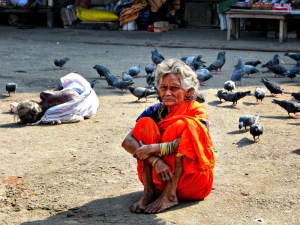
The grim reality of poverty in Kolkata; photo credit: Andy Harvard.

This photograph, taken in Kolkata (aka Calcutta), India, shows an elderly, thin, grey-haired lady in an orange sari. The lady in the white sari, lying curled up on the ground, I’d previously seen walking hunchbacked, slowly and in considerable pain, toward Mother Teresa’s home. I had a strong suspicion she was desperately trying to reach Mother Teresa’s Home for the destitute, sick and dying. I do not recall having ever having seen poverty of this magnitude when walking the main and side roads of South Africa, or anywhere else.

The picture alone tells a tragic story but your explanation adds a lot more. Thank you.

Calcutta_2

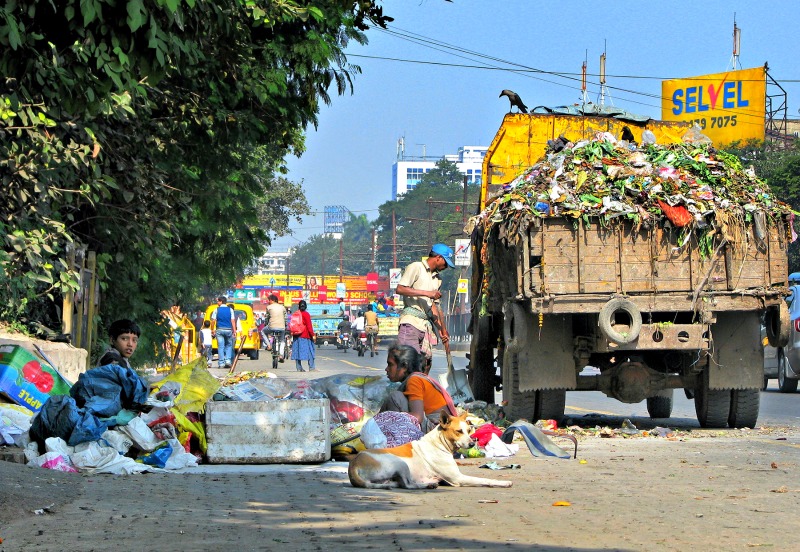
Another view of poverty in Kolkata, slightly more uplifting; photo credit: Andy Harvard.

This photo, also taken in Kolkata, indicates how desperate the lives of some people still are. The driver shovels refuse onto the truck while the crows watch in anticipation of scraps as a lady and her son appear to do so as well. The lady was searching for food and maybe something of value whilst her son sat quietly guarding their personal belongings. The dog, relaxed, watched as drivers constantly hooted and maneuvered around one another. A lot of noise but minimal fuss, no road rage or the time-consuming jams we tend to associate with dense traffic. The Kolkata experience was very brief, but I felt a sense of spirituality here. Small shrines are erected on the sides of most roadssometimes seen every fifty metres or so. Every person (other than the beggars at the temple), including the crows, dogs and cows appeared to be busy, desperately doing something meaningful in their quest for survival.

Knowing the story behind this photo helps us to appreciate how well you have captured a small corner of peace and quiet surrounded by a cacophony of noise.

WorldCup_SouthAfrica

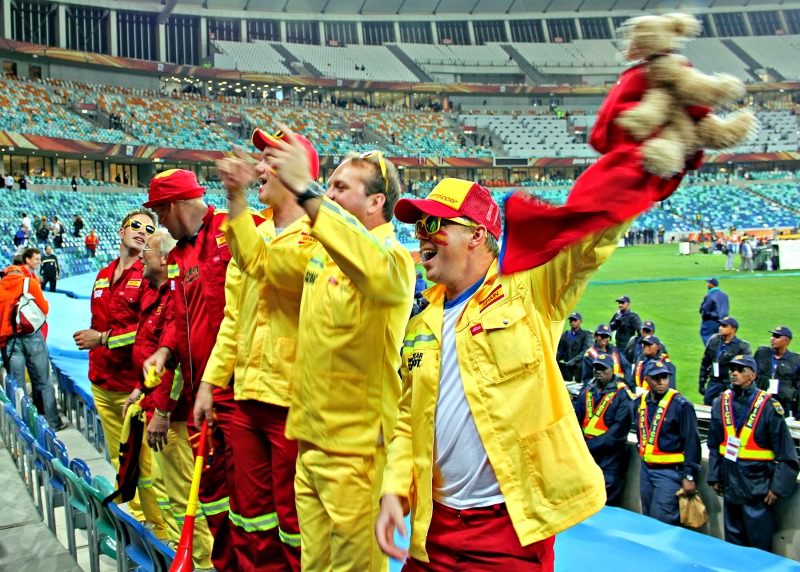
The 2010 World Cup quarter-final match Uruguay vs. Spain, held in Durban, SA (Spain won to eventually take home the title); photo credit: Andy Harvard

Spain beat Germany in Durban on 7 July 2010. They reached a World Cup final for the first time and went on to beat Holland in Johannesburg. The only goal in Durban came from a header by Carles Puyol. This was the first time I had witnessed extreme soccer fever, and this photo won a competition in one of Durban’s newspapers.

In this photo you have captured the spirit of the occasion, which is now upon us again in Brazil. Congratulations on your award.

The key to happiness is inner peace – Buddhist precept

Next we’re going to talk about some of your current favorite places to take photographs. Can you explain why these three places inspire you and how it shows in the photos you’ve selected?
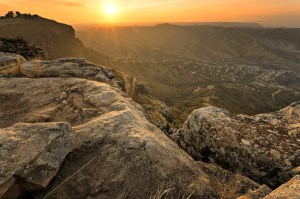
1) Huge mountains, deep valleys, tranquillity, big skies, rural living, clean fresh breezes, golden lightMonteseel, in the Valley of One Thousand Hills, makes one realize how small and insignificant certain problems we all have actually are:
Monteseel, in the  Valley of 1000 Hills, South Africa; photo credit: Andy Harvard.

Monteseel, in the Valley of 1000 Hills, South Africa; photo credit: Andy Harvard.

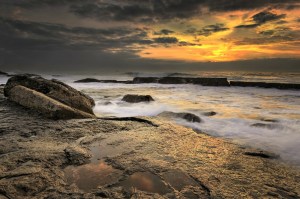
2) This unspoiled coastline with restricted access is literally around the corner from Durban’s Central Business District, which we call CBD. It’s a photographer’s paradise:
SouthAfricanBeach

Northern Bluff coastline, Durban, South Africa; photo credit: Andy Harvard.

3) Early mornings at this spot are full of activity: surfers, ski boats, fishermen, sailboats, people exercising, seine netters, photographers, holiday makers, recovering late night revellers and more. After a year of hard slogging, I managed to take this serene pier shot:

MoyoPier

Moyo uShaka Pier, Durban, South Africa; photo credit: Andy Harvard.

This photo actually won first place in my photo club’s monthly competition. The chairman said:

Brilliant, love the symmetric composition with a warm and cold side, slightly reminiscent of Turner’s sky in The Fighting Temeraire.

I know that Monteseel is an awesome place, so powerful it’s almost overpowering. It’s a great capture. Your photo of CBD is so dramatic that, although I know how warm the sea is, it looks positively cold. Why have you never shown me this before? It’s awesome. So you had to work a bit to get the last one! Well done.

You should move with a sharp consciousness… – Buddhist precept

Would you say that photography and the ability to be able to capture something unique, which will never be seen again, is a powerful force for you?
Yes, but more importantly, photography is the way I choose to meditate. I go into a semi-transcendental state when shooting and later when processing the photos on the computer. I believe the habit dates from my mother’s death in early 2013. When we visited her in hospital, we would all sit on the veranda outside the ward while I took night-time photos. Later, when going through some boxes of photos she had taken in her youth, I learned that she had been a photographer of “social” note. Not long after, I got hooked on HDR photography. I was a member of a Buddhist tradition for two years, attending teachings and meditation classes about 6–7 hours a week. Now my “meditation” is taking photos while a new day dawns in near complete silence and then sitting for hours post-processing photos to create a work of art. It isn’t a jobit’s a passion; and I want to keep it that way and share the results with others.

Thank you, Andy, for sharing such a fascinating personal story. Now for the technical stuff. What kind of camera and lenses do you use?
I have a Canon 6D, 17/40mm and 24/105mm. I also have my “old” baby Canon 550D which uses either lens above when not in use by “big brother”.

And which software do you use for post-processing?
Which software do I not use? I will use any software available to manipulate my photos to achieve the look I want to see. I know no bounds in this regard. I started with Photomatix HDR software and would attempt to “HDR” everything I could at any time of the dayi.e., dogs, people, machinery and trees. Later I learnt that this was a little foolish but, as I realized when reading this article on the topic, a necessary part of my progression. Lately, I’ve been shooting fewer exposures and manually blending them in Photoshop with layers and masks. I am new at this and on another learning curve.

Sounds like you are a post-processing junkie. I can identify with that and hope to move up to your level when I understand a lot more about the various programs. Finally, do you have any advice for wannabe photographers who are traveling or living abroad?
Be confident and take charge. Keep the camera in hand or on a sling (not deep in a bag). Take lots of photos and even different angles on the same scene. Go into a tunnel zone where you are only thinking about and taking photos. Get down on the street and get dirty. Find top photographers who you admire and follow them. Study their work and every word on their pages (great tips sometimes come hidden in a few sentences). Look at the best photo you find and think “I can do this and better, it might just take some time”. Some really kind photographers offer free tutorials in video or written formatmake the time to find them and work through them.

* * *

Thank you, Andy. I have really enjoyed our interview. Your story is so compelling and you do approach things from a different angle to many of us.

Readers, what do you make of Andy’s experiences and his photography advice? And do you have any questions for him on his photos and/or experiences? Please leave them in the comments!

And if you want to know more about Andy, don’t forget to visit his blog, Snap Fly Cook. You can also connect with him on Facebook and visit his gallery of “special” photos on Pixels.com.

(If you are a photographer and would like to be interviewed by James for this series, please send your information to ml@thedisplacednation.com.)

STAY TUNED for next week’s fab posts!

If you enjoyed this post, we invite you to register for The Displaced Dispatch, a round up of weekly posts from The Displaced Nation, with seasonal recipes, book giveaways and other extras. Register for The Displaced Dispatch by clicking here!

Related posts:

For this globe drifter and Adult Third Culture Kid, a picture says…

Rachel Kanev Collage

Canon zoom lens; photo credit: Morguefiles; Rachel (right) with her friend Sara experimenting with make-up and photography with the help of a bottle of wine (or two?) and some props (photo credit: Rachel Kanev).

Welcome to our monthly series “A picture says…”, created to celebrate expats and other global residents for whom photography is a creative outlet. The series host is English expat, blogger, writer, world traveler and photography enthusiast James King, who thinks of a camera as a mirror with memory. If you like what you see here, be sure to check out his blog, Jamoroki.

My guest this month is 24-year-old Rachel Kanev. She has a Bulgarian father and German Jewish mother but grew up in England, where she studied French and Chinese languages. She feels she got “…caught somewhere in between” these many cultures:

With my Jewish nose, Bulgarian skin and English accent, I at once belong to British, East German, Bulgarian, Jewish, French and Chinese cultures and yet to none of them at all.

Her grandmother, by contrast, lived in Berlin for decades but was more English than Tetley tea.

Indications of Rachel’s escalating identity crisis are borne out in the images that bombard you upon reaching her engaging blog, Global Drifting, in which she says she is drifting across the globe in hopes of stumbling upon enlightenment…

* * *

Hi, Rachel. I’m pleased your globe-drifting has taken you to the shores of the Displaced Nation, which gives us the opportunity to discuss your photo-travel experiences. For one so young you’ve travelled a fair bit, but where were you actually born?
I was born in my mother’s hometown of Berlin, at the traffic lights on the way to hospital. My mother said I looked like a hedgehog that day, and my family still calls me Igel (“Hedgehog” in German). A few months later, the Berlin Wall came down and one year after that, we all moved to England.

So you were a Third Culture Kid in Britain. When did you spread your wings to start travelling?
My nursery and primary school classes were filled with international children. Eugenia—a Spanish girl from Madrid with long black hair and a passion for witchcraft and the Greek goddess Athena—soon became my best friend. In the momentary way that often strikes a child, I was devastated when she left me to return home for good. So, at the tender age of nine, I boarded a plane alone, in my size 1 shoes, to visit Eugenia in Spain. As I began my first solo journey, I experienced a thirst for discovery, which, as yet, has not been quenched. Since that first adventure, I have visited Italy, Holland, France, Austria, Switzerland, Réunion Island and China. I plan to step (in my now size 5 shoes) into Morocco and perhaps Israel this coming summer.

What do you love so much about travel?
I love travel because everything is new and unknown; we share no past and perhaps no future with the things we see and people we meet. The errant wanderer therefore has no choice but to revel in the present.

Will I ever get over the pull I feel to both of these places?

Despite your age, I think I can put you in the category of seasoned traveller. Tell me, what inspires your decision to travel to particular places?
My inspiration comes partly from a love of languages and partly from the idealistic images of France I painted in my head when watching French films and listening to French music, which I did while revising for my exams at university. Aided by the amazing Erasmus, that towering figure of the Renaissance, I had taken a university year abroad in the island paradise of Réunion, near Africa. It’s a French overseas department so qualifies for the European Union’s Erasmus Programme, which finances students to spend up to a year of their university courses in a university in another European country. But it wasn’t until after finishing university that I had a chance to visit France itself. I meandered through southern French villages like an aimless hippie, reveling in its rural chic.

I understand you also have a passion for China?
Chinese was my third language at university. After graduating, I remained in England saving pennies as a waitress to finance spending a year in the land of silk. I lived in a city about an hour from Beijing.

I’m curious: where are you right now and what are you up to?
Right now I’m back living in my English hometown of Cambridge, selling nutritional products to vitamin-mad French and German customers—and saving up for my next Chinese/Moroccan/Spanish/Israeli adventure this summer. As I look out of the window, I am visualizing being there already, far from the Land of Vitamins C and D!

RK_SouthofFrance

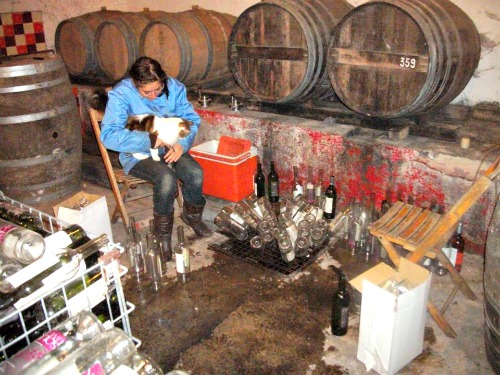
No use crying over spilled wine! Rachel in the cellar of a now-defunct winery near Perpignan, France; photo credit: Rachel Kanev.

Hmmm… I think I detect something of the entrepreneur in you, alongside your intrepid traveller’s spirit! And now let’s have a look at a few of your favorite photos from your travels to France and China.
Sure! I took this first photo in a wine cellar in a small hamlet near Perpignan, some way off the coast of southern France. I’d been helping out, but it was late December, and there was very little work left. Besides, the winemaker, whose name was Bernard, had gone bankrupt due to the stresses of organic farming. Our main task for the day, as his helpers, was to pour bottle upon bottle of wine down the drain as he looked on bemoaning the demise of the modern world. It proved a good way to get skillful with a corkscrew!! And I think poor Bernard appreciated our efforts quite a lot. Just think if he’d drunk all that wine in his cellar, it would have sent him spiraling into an even deeper fit of depression…

RK_dragonriceterraces

China’s Longji (Dragon’s Backbone) Terraced Rice Fields are so named because of their resemblance to a dragon’s scales; photo credit: Rachel Kanev.

The next photo provides a glimpse of the glorious Dragon rice terraces of Longshen, in China’s Guangxi province. Amazing terraces stretch as far as the eye can see. I visited some years ago and remember being in awe at the combination of nature’s beauty and the skillfulness of the human hand. I had quite an adventure ambling through the fields with two of my Chinese friends. We got lost and at one point envisaged spending a cold night cuddled up to the cows. In the end we reached our hostel, at the top of the terraces, by nightfall. I returned again last year and was saddened to see that the beauty of the fields has been marred by the greedy hand of tourism. Huge plastic cable cars now transport visitors to the top, and the local villagers are paid to dress in traditional clothes.

RK_AnotherBernard

A French farmer, another Barnard; photo credit: Rachel Kanev.

Last in this series we have another Bernard who stumbled into my traveller’s path. This Bernard is an 80-year-old farmer with whom I lived on my own for a week. His farm is an hour away from the nearest town and is completely self-sufficient. He grows his own organic vegetables and was fit enough to hack up the ground with a pickaxe when the underwater pipes burst (ironically, I had left the home of Bernard number 1 because his pipes had burst and the water system needed to be repaired, only to be faced with more burst pipes at the home of Bernard number 2!).

I love the first photo just because it looks as though you’ve broken into someone’s cellar and are drinking all the wine!! The dragon terraces appear so surreal to me because they are so different to the flat rice fields of Thailand, where I live. I wish I could see them one day. I know you take a lot of photos and these next four, I believe, have a special significance for you. Can you explain?

Not all who wander are lost…

The following is a photo I took of a photo of Bernard number 2, which was taken some fifty years ago, when his newly polished army boots took their very first steps away from the small village on the outskirts of the Pyrenees, where he was born. He bid farewell to the farm he’d grown up on and to the parents who’d raised both him and the thriving trees and crops that had formed the backdrop to his childhood. By the time I encountered Bernard, nature had outlived his parents but their legacy remained. He is now a beekeeper and organic vegetable farmer, tending to the very same trees and plants that his father and his father’s father had cared for. Though he has no human family, the trees you see in my other photo of Bernard (above) appear to me to be his forefathers; they are equally his children.

Bernard as a young man

The French farmer Bernard as a young soldier; photo credit: Rachel Kanev.

The next photo was a fluke as I managed to capture an ad for Longines watches showing Kate Winslet just as the sun was setting. In that fleeting instant, one can see Shanghai’s varied transportation, high-rise buildings and red lanterns—that curious amalgamation of Western modernity and Chinese traditionalism that is everywhere around you in the city.

RK_ShanghaiSunset

A British beauty, a Swiss watch and a Shanghai sunset; photo credit: Rachel Kanev.

Cambridge is my home town and I think of it much like a family member, having watched it age and evolve just as it has silently witnessed me grow and change. I love its grandiose architecture, endless greenery, and the way winter and spring intertwine in front of the University’s palace-like structures that are fit for if not a queen then the rulers of academia, to which I never belonged.

RK_CambridgeUK

The dreaming spires of Cambridge; photo credit: Rachel Kanev.

Here my sister explores the labyrinth-like forestry of a park near where we live in Cambridge. It has amazing multi-coloured plants I have never seen anywhere else before and huge trees that watch over you like silent giants. I like this photo because she looks like Alice in Wonderland with her long, thick flowing locks!

RK_SisterinPark

The great outdoors near Cambridge, UK; photo credit: Rachel Kanev.

Is photography sometimes a moral decision?

I love your explanations as they show us the profound effects a picture can have on its creator, something the viewer can never fully appreciate. Tell me, do you ever feel reserved about taking photos of people, particularly when they are conscious that you are doing so?
For me, the morality of taking photos of strangers has always been ambiguous. I think of it whenever I see photos of human suffering. I believe I have the right to use my camera to record the world but without intruding on it. At what point does the power of images and the need for education and understanding through the push of a button and flash of a light become intrusive and affect the lives of others in a negative way? I’ll give you an example from my own experience. The Western media has focused almost exclusively on China’s explosive economic growth when in fact 1.6 million people (11.8 percent of the population) still live below the poverty line. When taking the train, part of me would like to photograph the dirt-covered, barefooted children asleep on newspapers or the train door frozen from the inside as passengers are left to deal with the icy temperatures of the North (-37°C). But feeling intrusive, I refrain.

Do you also feel self-conscious in Asia?
It’s difficult being subtle, given the colour of my hair and skin, and the stamp on my passport. Noticing me walking the streets of China, many Chinese will assume, quite rightly, that I am Western but quite wrongly that I must therefore have dollar bills rolling from my body like a central bank printing press. Often I do not wish to fuel their prejudices by whipping out a digital camera, however small, before their eyes.

As a resident in Thailand, I can empathize with those views, especially the general Asian misconception that all Westerners are rich. Although this can be annoying, I do believe these views are changing for the better, as the younger generation becomes more socially aware through travel and better education. Now let’s turn to the technical stuff. Some of our readers may want to know what kind of camera and lenses you use.
I have a small Samsung camera that fits neatly in the palm of my hand. It’s nothing fancy and often leaves something to be desired in terms of quality, but it was a birthday gift years ago and has sentimental value, having been my only travel partner across unknown lands. Whatever it lacks in lens quality, Windows Photo Gallery makes up for in magical editing power!

Finally, do you have any advice for wannabe photographers who are traveling or living abroad?
Wander through villages, peel garlic with a farmer, shake hands with a prince, run through jungles, leap into waterfalls, swing across the rainforest wilderness and lose a leg to the marble rocks—see the world and allow the world to be seen. Travel, live, eternalize what you see with a photo.

Great non-technical advice, Rachel, that’s right up my street! I’d like to thank you for taking the time to tell your fascinating story in this interview.

* * *

Readers, what do you make of Rachel’s experiences and her photography advice? And do you have any questions for her on her photos or her travels? Please leave them in the comments!

And if you want to know more about Rachel Kanev, don’t forget to visit her blog, Globe Drifting. You can also follow her on Twitter or even shoot her an email.

(If you are a photographer and would like to be interviewed by James for this series, please send your information to ml@thedisplacednation.com.)

STAY TUNED for next week’s fab posts!


If you enjoyed this post, we invite you to register for The Displaced Dispatch, a round up of weekly posts from The Displaced Nation, with seasonal recipes, book giveaways and other extras. Register for The Displaced Dispatch by clicking here!

Related posts:

For this intrepid Irish “ruin hunter,” a picture says…

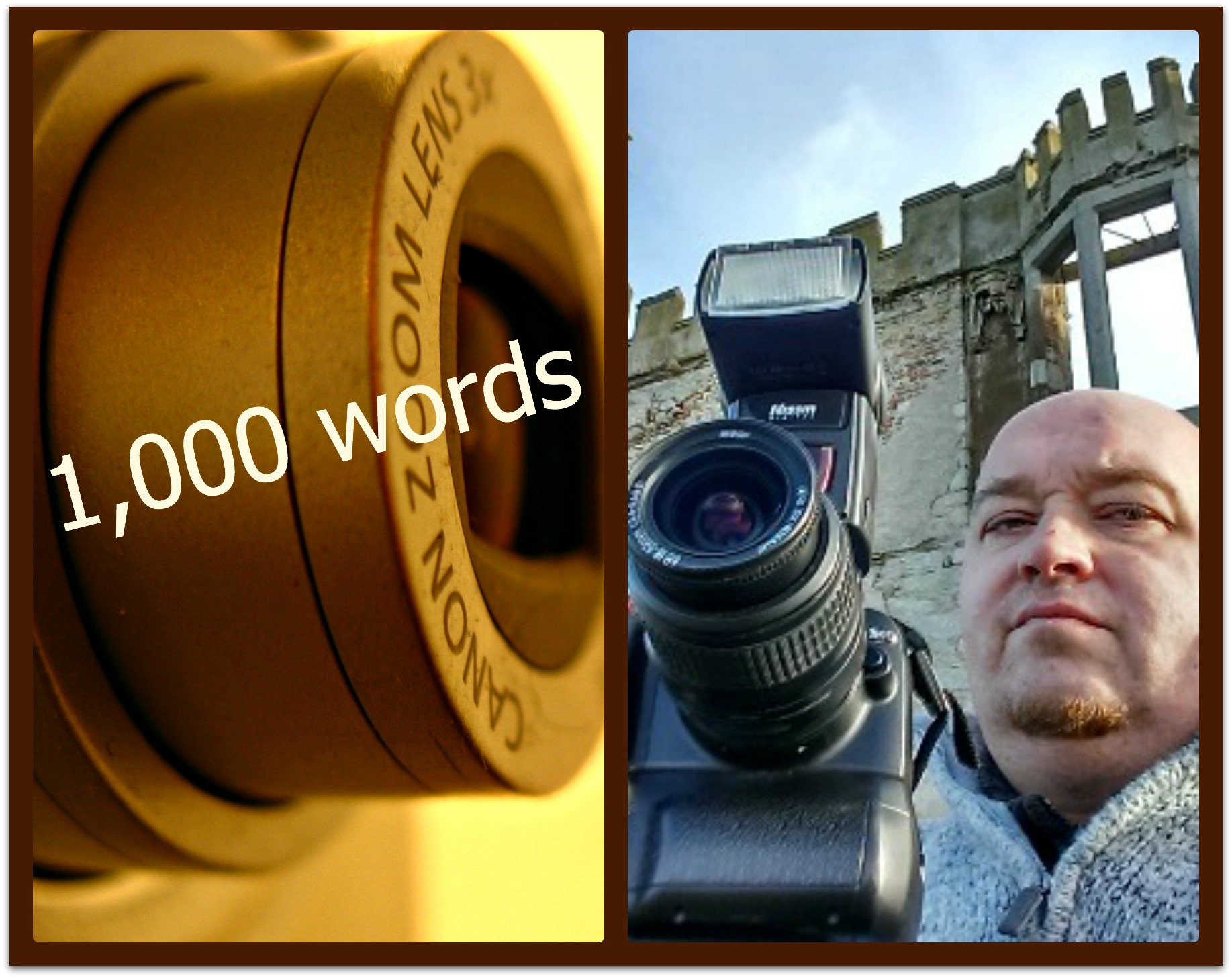
Ed Mooney 1,000 words Collage

Canon zoom lens; photo credit: Morguefiles; Ed Mooney in front of the ruins of Ducketts Grove, County Carlow (photo credit: Ed Mooney).

Welcome to our monthly series “A picture says…”, created to celebrate expats and other global residents for whom photography is a creative outlet. The series host is English expat, blogger, writer, world traveler and photography enthusiast James King, who thinks of a camera as a mirror with memory. If you like what you see here, be sure to check out his blog, Jamoroki.

My guest this month is 38-year-old Irishman Edward (Ed) Mooney. His story is quite different from previous guests for several reasons, the main one being that he is not an expat. On the contrary, he travels within the confines of his native Ireland.

That said, Ed does cross boundaries, at least in a temporal sense. He loves nothing more than to immerse himself in an obscure historical site, exploring Irish history, lore and mythology while also photographing the surrounding ruins, to keep a record of what remains from generations past.

I really like the name Ed has given to his hobby: “ruin-hunting”. Ed tells me that ruin-hunting merges Past, Present & Future. By researching the history behind a place, he pays tribute to the Past. By writing about the experience, he brings it into the Present. And by posting his article, along with his photos, on his blog, he preserves his findings for the Future.

I have been following Ed for some months and love the way he weaves historic research into (mostly) black-and-white images.

* * *

Hi, Ed. Thanks for joining me at the Displaced Nation. I know you live with your young family in Kildare, but where were you born and what gave you the urge to travel around Ireland photographing ancient ruins?
I was born in Dublin, where I lived until flying the coop at 17. I moved to Kildare for work. I only got into photography seriously three or four years ago. With a young family, I don’t get to go abroad very often. But I am fortunate enough to travel within Ireland itself, which with its rich heritage offers an abundance of fascinating sights. And the crazy thing is, the majority of them are relatively unknown and rarely visited. It is these off-the-beaten-track places that I tend to concentrate on while traveling the country, attempting to capture them with my DSLR camera.

“I love everything that’s old…” —Oliver Goldsmith

You seem to have found an interesting niche. Can you tell us a little more about this “ruin hunting” hobby of yours?
It all started in 2011. I had just gotten my first DSLR and joined the local camera club, but had very little opportunity to get out and about shooting. I wasn’t into wildlife or landscape photography like some of the other club members. I guess I was searching for my niche, as you put it. One day a flyer came through the letterbox, which had an image of a nearby historical site called the Rock of Dunamase, in County Laois. Though I didn’t know it at the time, this was the beginning of what would become an obsession. A few days later, I located Dunamase and went exploring. Now, looking back at the photos, I cringe—but at the time I thought they were the best shots I’d ever taken. Around this time I had starting blogging and decided to post a brief essay on the history of Dunamase, along with the images. Next thing I knew, I was spending all of my spare time searching out new sites. Now that the kids are a little older, I have been able to take them on some of my trips. To date I have explored sites in nine counties with plans for many more over the coming months.

When you said “a flyer came through the letterbox…,” I immediately thought of a WWII fighter pilot. I would love to know more about what inspires you to spend so much of your spare time visiting historical places.
My inspiration comes from my deep love of history. In my early twenties, I joined what was then known as the Heritage Awareness Group, or HAG. We visited sites such as Newgrange, Tara and Baltinglass Abbey. Nowadays my favourite ruins are castles and Neolithic sites such as stone circles and cairns, although I am forever coming across many ecclesiastical sites which are interesting in their own right and make for some stunning shots. It’s quite hard to find the locations so I’ve created maps for each county, and make a point of recording every site I visit on my blog along with an interactive map showing the exact location to assist other travellers.

It’s great that you record your findings in so much detail and include exact locations in case others are inspired to follow in your footsteps. Ireland is a small country, unless you get lost. Tell us, where are you now, how did you end up there and what is life like in that part of the world?
We have been in Monasterevin, Kildare, for almost seven years now and absolutely love it. It’s a different way of life to Dublin. If I didn’t have to commute daily to the City to work, I would probably return there rarely. The great thing about Monasterevin, besides the relaxed atmosphere and close community, is that I am situated almost in the centre of Ireland. I can travel to any part of the country in two to three hours, which is great considering the amount of travelling involved in “ruin hunting”.

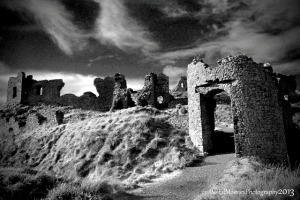
Rock of Dunamase. Photo credit: Ed Mooney

Rock of Dunamase. Photo credit: Ed Mooney

I’ve never been outside Dublin but I hear the countryside is beautiful. Other benefits are that you never run out of Guinness and you just won the Six Nations rugby! Thank you for sharing some of your photo shots which capture a few of your favourite memories. Can you describe the story behind them and what makes them so special?
These three are from recent shoots. The first, of the Rock of Dunamase, is a special place not just for the stunning views and fascinating history but also because it’s where my journey started.

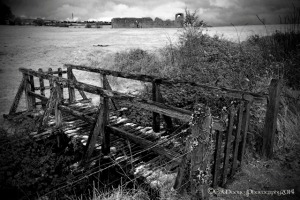
Church ruins in Laois; photo credit: Ed Mooney.

Church ruins in Laois; photo credit: Ed Mooney.

The second photo is of another site I discovered in neighbouring Laois, which, with its stunning views, constitutes a ruin hunter’s paradise. This one is special on a personal level as well, being the first ruin I visited with all three children. In the chancel to the rear of the church is an old iron gate blocking the entrance to a vaulted mortuary chamber. Ryan, my eldest, had an interesting observation on the chamber: “Daddy, that’s where the Vampires live.” Now how the heck did he come up with that? Have you ever tried convincing an eight-year-old that something doesn’t exist?

Skryne Hill Church; photo credit: Ed Mooney.

Skryne Hill Church; photo credit: Ed Mooney.

The third is of the church that sits on Skryne Hill, the site of an early Christian settlement. To this day my memory of Skryne remains vivid. The tower is inaccessible due to a very heavy iron gate that on examination appeared to be rusted shut. I shone my torch through the bars on one of the windows. Inside were a number of interesting stone artifacts that I wanted to capture. So I set up my flashgun and shot through the bars. On the second or third flash something physically grabbed my camera strap and pulled it into the tower. It all happened so fast, but somehow I managed to pull that camera away from the window while shouting a few expletives. At first I wondered if it might have been a draft of some kind that had caught my strap, but it could not have been as I was pressed right up against the opening and there was no wind to cause a draft. Then I thought that maybe someone was inside, but there was no way for a person to get in or out of the tower. To this day I still can’t explain what happened. But it certainly left a lasting memory.

“Memory, in widow’s weeds, … stands on a tombstone.” —Aubrey de Vere

Great memoriesand that last story is quite eerie. But I suppose you would expect the odd ghost or two in buildings so old? Now, out of these many destinations, do you have any that stand out as your favorites?
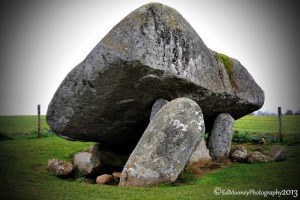
If you haven’t already guessed, old ruins are what attract my attention, be it a crumbling castle, a neolithic stone circle or standing stone, or an ancient church overgrown with ivy. Here are three of my favorite places:

Brownshill Dolmen, County Carlow; photo credit: Ed Mooney.

Brownshill Dolmen, County Carlow; photo credit: Ed Mooney.

Ballymoon Castle, County Carlow. Photo credit: Ed Mooney

Ballymoon Castle, County Carlow; photo credit: Ed Mooney.

Cillbharrog Church & cemetery; photo credit: Ed Mooney.

Cillbharrog Church & Cemetery; photo credit: Ed Mooney.

Can you explain why these particular places inspire you?
It’s kind of hard to explain but once I set foot on the site of an ancient monument, something about the atmosphere affects me, and a flip switches in my head. I feel as though I’m stepping back in time. The modern world disappears for a while and I get to experience something really special. With my photography I try to capture that experience and hopefully portray it to the viewer. Mood, atmosphere and a sense of the past are the most important elements for me to enjoy shooting at a location.

I can assure you, Ed, that, for me, you usually achieve it. Your photos make me feel as though I’m there, not you. I know people aren’t a part of your ruin hunting but I want to ask you all the same if you ever feel reserved about taking photos of people on your travels, particularly when they are conscious you are doing so?
I still enjoy getting out and doing some street photography from time to time and I have never really had an issue with shooting people, but then again I have had plenty of experience ranging from large events in Dublin down to small country festivals. I guess at the start I was a bit shy and unsure of how to approach shooting strangers, but once you learn how to engage with a subject it becomes fun. Some of the best shots I have taken were the result of strangers coming up to me wanting to have their pictures taken. Parades and street festivals are probably the best for doing this as everyone is relaxed and having a good time.

Do you ask permission before taking people’s photographs?
Most times I don’t have to. I find it amazing how people start posing once they see a camera in your hand. Obviously, with children you have to be really careful these days and should always get parental permission.

“Ireland’s ruins are historic emotions surrendered to time.”—Horace Sutton

Interesting—that last point would never be considered in Thailand, where I live. So would you say that photography and the ability to be able to capture something unique which will never be seen again is a powerful force for you?
Absolutely, I would say that most photographers constantly strive to get that once-in-a-lifetime shot. In my case the deeper motivation is to capture historic sites for posterity. As in many other countries, Ireland’s local and national heritage sites continue to disappear for good. Most people don’t care and the government is only interested in money. Take my home town of Tallaght, a suburb of Dublin. There were several castles in the area up until about 40 years ago. Now only a part of one remains. This scenario recurs with alarming regularity. So if I can capture the essence of a place before it is wiped away for good, I have done my job.

I see you use the word “job”. But I see it more as a calling and you, as a preservationist and historian. Either way you are doing an excellent “job”–one that incidentally reminds me of my last interview subject, Gaetan Green. He is trying to record China’s traditional landscapes before they fall to the forces of modernization. So when did you realize this deeper purpose?
Right from the start. The need to preserve the past was a major factor in motivating me to choose this path for my photography.

Now for the technical stuff at which I am far from proficient. What kind of camera and lenses do you use? And which software do you use for post-processing?
I still use my trusty Nikon D40 with kit lens. Yes it is outdated by today’s standards, but it has served me well over the last few years and taken a lot more punishment than it should have. I am planning to upgrade later this year and hopefully the D40 will be converted to shoot Infra Red, which is something I really want to experiment with. For my raw images ACR is a must, but my one stop shop for post processing has to be Photoshop. I currently use CS6 and it does everything I need. I still have various other programs sitting on my desktop but these rarely get a look-in.

Finally, do you have any advice for wannabe photographers who are traveling or living abroad?
If I was starting photography now I would say take the time to enjoy what you do and most importantly, research, research, research. Find out as much as possible about the place you are travelling to. Look at as many images of the place as you can, take inspiration from them and don’t go and shoot the same scene as everybody else. Look for a new angle or view. Don’t be afraid to get creative.

Thank you, Ed. It has been a real pleasure to interview you. Your story so far is fascinating. I say so far because I know one day you will run out of ruins in Ireland and you’ll be dreaming up your next historical project in places further afield.

* * *

Readers, what do you make of Ed’s experiences and his photography advice? And do you have any questions for him on his photos and/or experiences? Please leave them in the comments!

And if you want to know more about Ed Mooney, don’t forget to visit his excellent photography site. You can also like his Facebook page, follow him on Twitter, connect with him on LinkedIn, or shoot him an email.

(If you are a photographer and would like to be interviewed by James for this series, please send your information to ml@thedisplacednation.com.)

STAY TUNED for tomorrow’s post, the start of a brand new column on travel and fantasy writing, by Andrew Couch.

If you enjoyed this post, we invite you to register for The Displaced Dispatch, a round up of weekly posts from The Displaced Nation, with seasonal recipes, book giveaways and other extras. Register for The Displaced Dispatch by clicking here!

Related posts:
For this Swiss ethnographer with a fondness for remote parts of China, a picture says…

Gaetan in China Collage

Canon zoom lens; photo credit: Morguefiles. Gaetan Green doing fieldwork in Xishuangbanna, a region of Southwest China squeezed between Laos and Burma; photo credit: Gaetan Green.

Welcome to our monthly series “A picture says…”, created to celebrate expats and other global residents for whom photography is a creative outlet. The series host is English expat, blogger, writer, world traveler and photography enthusiast James King, who thinks of a camera as a mirror with memory. If you like what you see here, be sure to check out his blog, Jamoroki.

My guest this month is 33-year-old Swiss national Gaetan Green, who has spent the last 12 years between China, Europe and North America. After graduating university, Gaetan studied and conducted ethnographic research in remote parts of China. He went back to do field work in the country’s ethnic borderland when pursuing a master’s degree in geography at a university in Vancouver.

For the past three years Gaetan has lived in one of China’s mega-cities, but he always grabs the opportunity to travel in the countryside, where he can indulge in his current passion for the  ancient and ethnic villages of south and southwest China, with a “minor focus on Guangzhou and the Pearl River Delta.”

Gaetan keeps a fascinating blog, Travel Cathay. He posts about his off-the-beaten-path travels to parts of China most of us wouldn’t know existed.

* * *

Hi Gaetan. I have been following your blog for a while now and am very pleased to have the opportunity to interview you for the Displaced Nation. Let’s start with some background on you, shall we? Where were you born, and when did you spread your wings to start traveling?
I grew up in a ski resort in the middle of the Swiss Alps and I started travelling as soon as my parents would allow it. My first trips were to Southern and Eastern Europe with classmates—that started when we were around 16 years old. But my travels became a lot more serious when I left Switzerland for my first trip around the world, at age 20. This trip changed my life for good.

So your wanderlust dates from an early age. Why do you think that was?
There were essentially two things that inspired me to travel. The first was a map of the world that I discovered at home when I was an inquisitive eight-year-old. The map made me realize the world was much bigger than the valley surrounded by big snow-capped mountains where we lived. I was itching to discover the reality behind all the exotic place names. The second source of inspiration was my home country. With its pure air, snow-capped mountains, green valleys and quaint mountain villages, Switzerland is beautiful—but way too small. The boy I was then saw a world so big, I knew I had to leave.

Which countries did you travel to?
Besides southern and eastern Europe, I visited Australia, Peru, Bolivia, Ecuador, Malaysia, Philippines, and Singapore. And of course, eventually, China.

And now China has become a second home for you.
Although I have traveled to other countries, China is the one I know best because that is where I have spent most of my time so far, and I have only five provinces left to discover. My love story with China started at age 20: I spent three months of my round-the-world trip traveling within its vast terrain. When I returned home, I started to learn Mandarin (some of my friends thought I was seriously deranged!!). Then one thing lead to another: I studied for two years in Chongqing (a city of 15 million people in central China), worked as an ethnographer in remote parts of Yunnan province, taught English in Kunming, and conducted academic research between Vancouver and Xishuangbanna. Although China is a country, it gives the impression of being a continent because it is very diverse. Contrary to what many people think, China does not have a monolithic culture. I speak Mandarin, so that makes travel easier. I can venture into the countryside knowing I’ll be understood.

“Let’s all go up to the mountain to be close to the flowers and songs.” – Dong folk ballad

I’m sure that speaking the language gives you a huge advantage. Tell us more about the life you now lead in China.
I am currently working as a sourcing agent and living in one of China’s megacities. Recently I have developed mixed feelings about the megacity life. Megacities can be convenient places to live, providing easy access to food, entertainment, communication and transportation; but I find them overcrowded. Dangerous levels of pollution and food hygiene are growing concerns and also the reasons why some of my expat friends have already left.

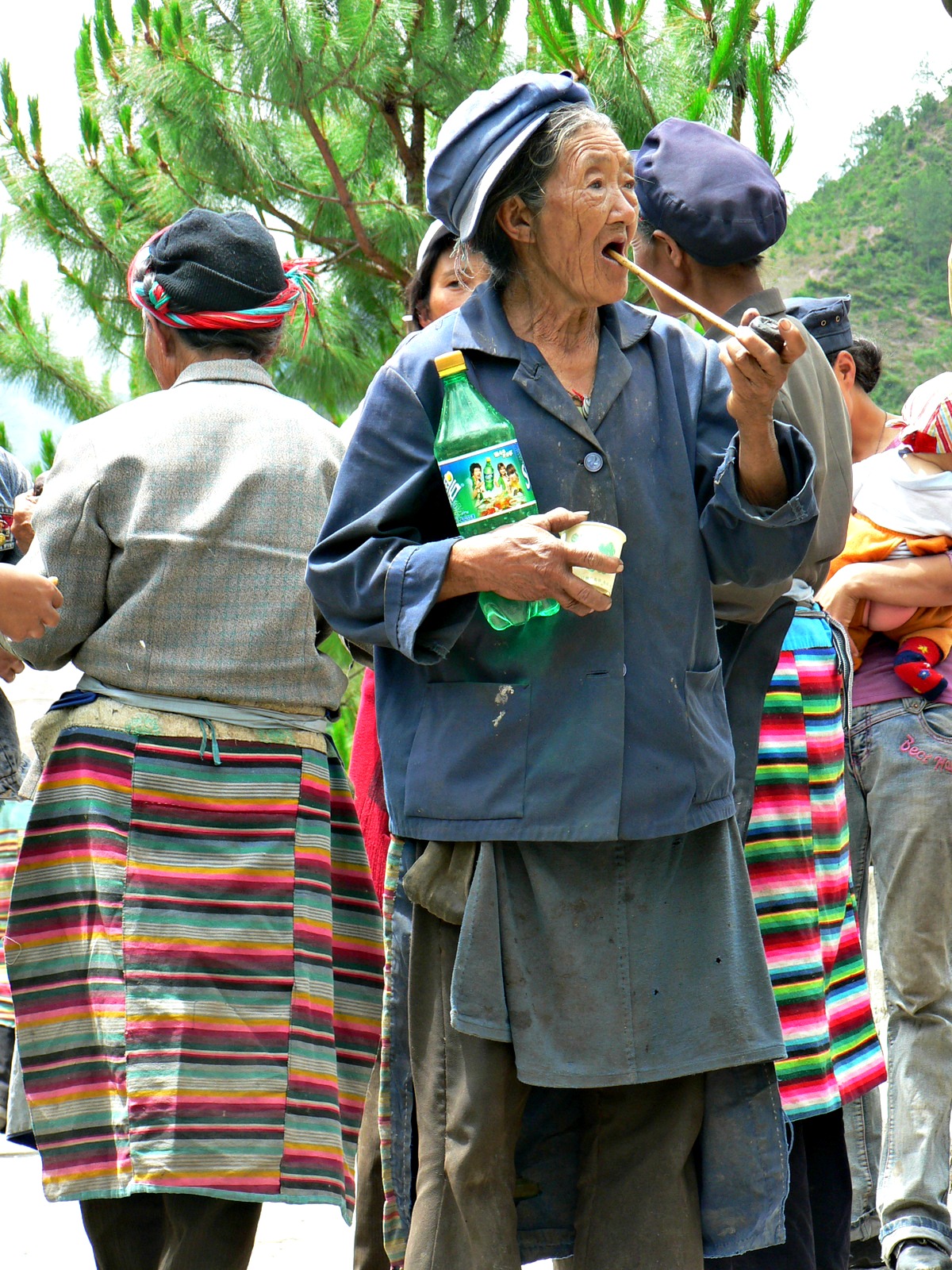
Old woman in a Tibetan Catholic community; photo credit: Gaetan Green.

An elderly woman pushing barley alcohol in north Yunan; photo credit: Gaetan Green.

Some friends of mine have recently moved to China to work in Shanghai but they refuse to live in the city for the same reasons you mention. But let’s get away from the megacity and take a look at your first three photos, which take us far away from that scene. Can you tell us what makes each of these photos so special?
This first photo reminds me of the time when I was doing ethnographic research about Tibetan Catholic communities in remote regions of north Yunnan province. On that particular occasion, I had the opportunity to witness a ceremony during which villagers prayed that it would rain on the graves of French missionaries who’d been assassinated at the beginning of the 20th century during anti-Christian violence in the region. There was a steep hike to reach the graves. At end of the ceremony, this woman started giving everyone barley alcohol in a paper cup. I remember going back to the village half-drunk after she challenged me to a second glass of firewater.

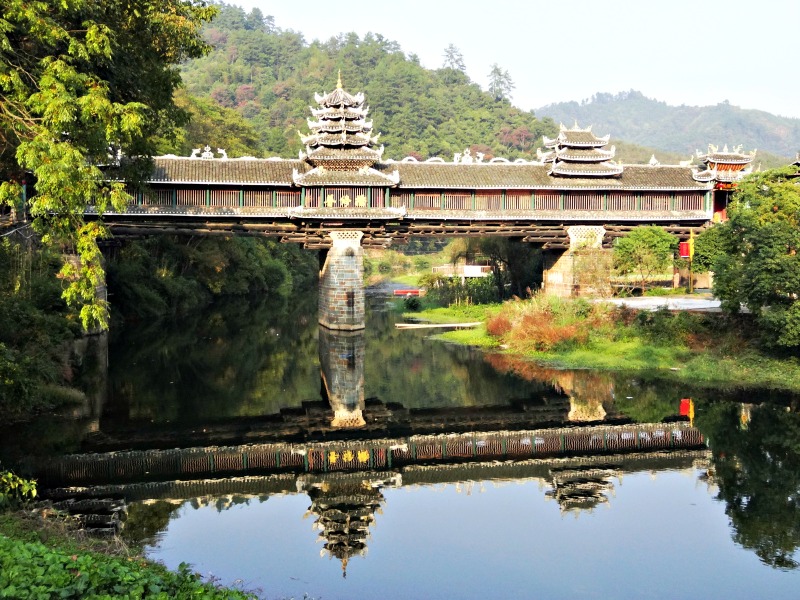
Wind and Rain Bridge, Tondao. Photo credit: Gaetan Green

Blown away by the Puxiu Wind and Rain Bridge in Tondao; photo credit: Gaetan Green

The second photo was taken after I’d missed the last afternoon bus and got stuck in the small town of Tongdao (southwest Hunan province), which I’d never heard of. I eventually ended up hiring a taxi driver for the afternoon to show me around. We went to a few ethnic villages and by 4:00 p.m., we had arrived by this amazing covered bridge, which is an example of a “wind and rain” (fengyu) bridge common to the Dong ethnic minority region. Missing my bus was the best thing that happened to me that day.

Taoist Temple, Macau; photo credit: Gaetan Green.

The Jade Emperor’s generals on their joss paper thrones; photo credit: Gaetan Green.

The third photo records the time I got lost in Macau somewhere between the Ruínas de São Paulo and the Camões Garden, I went to a Taoist temple. In one hall, I noticed that some statues had uneven stacks of joss paper (spirit money) under them. I asked the temple caretaker: “Why?” He explained that there were, in that particular hall, the statues of the 60 heavenly generals who help the Jade Emperor to supervise human life on earth. There is one heavenly general for each birth year, and the more joss paper there is under the statues that matches your birth year, the luckier you will get. I decided to boost my luck and bought stacks of joss paper to boost my heavenly general higher. The temple caretaker gave me three sticks of incense to burn; he said a long prayer in Cantonese and gave me a red talisman. I definitely enjoyed doing business with the gods, though I didn’t feel any luckier afterwards.

“Who can rob me of the songs I learned?” – Dong folk ballad

I love all three photos, and, yes, you are right, missing the bus and staying in Tondau must have been divine providence. Now, I’m keen to know where your favourite places to take photographs are, and why these places inspire you and how that shows in your next three photos?
Now that I live in a big Chinese city, the places that inspire me the most are the ethnic and ancient villages. In the cities, many historical buildings and old streets have been knocked down to give way to shopping malls and skyscrapers. Ethnic and ancient villages are real windows on the past and the cultural diversity of China. I chose the next three photos to make this point.

Cizhong Catholic Church; photo credit: Gaetan Green.

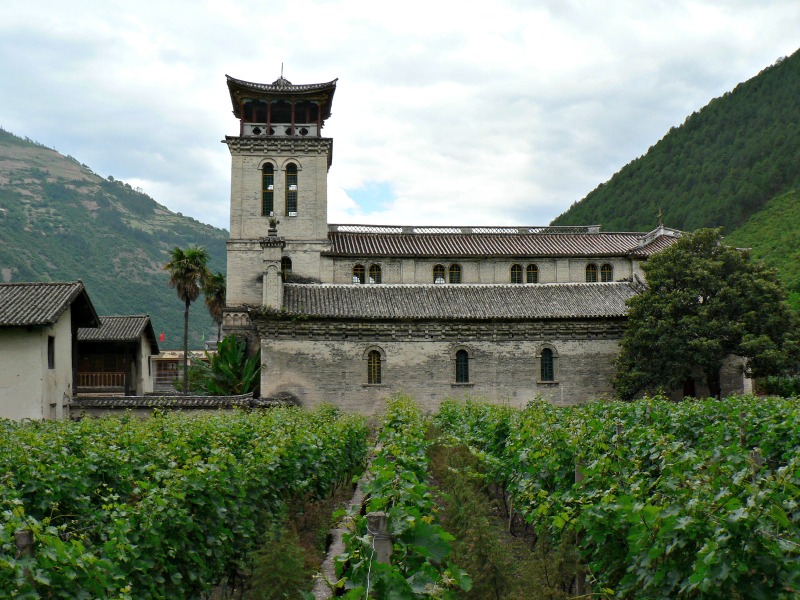
A Roman Catholic Church in an unexpected spot: by the Lancang (Mekong) River at Cizhong; photo credit: Gaetan Green.

The first is of the Catholic church at Cizhong, a remote village of north Yunnan province that is home to a community of Tibetan Catholics who were converted by French missionaries more than 100 years ago. The church seems out of place in this land of Buddhism. The mountains surrounding the village make it a picturesque spot.

Yunnanyi Gaetan Green

If these walls could talk: Yunnanyi village on the Tea Horse Road; photo credit: Gaetan Green.

The second photo is of Yunnanyi village, in Yunnan province, which was an important stop on the Tea Horse Road that linked Southeast Asia to the Tibetan plateau. Horse caravans carrying tea, spices and other goods stopped in Yunnanyi. In 1936, the communist armies of Mao Zedong stopped in Yunnanyi to rest during the Long March. Then, during WWII, the rice fields behind the village were transformed into a U.S. airfield. Planes that had flown from India over the Himalayas (to avoid the Japanese-controlled Burmese airspace) landed in Yunnanyi with supplies for the Chinese armies. The history of this unknown village is inspiring. The mud-brick courtyard houses have seen a lot. I wish these walls could talk.

Stepping back in time in Qianyang; photo credit: Gaetan Green.

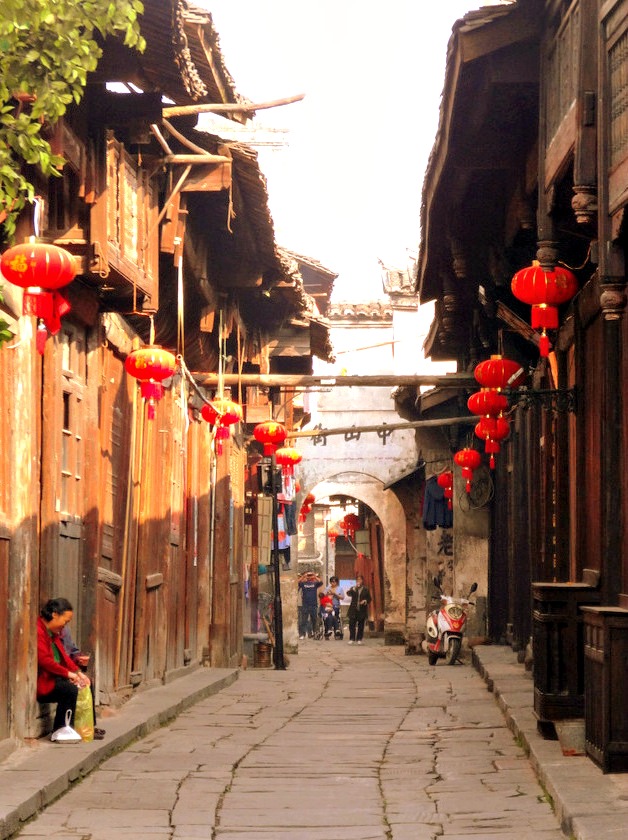
Stepping back in time in Qianyang; photo credit: Gaetan Green.

The final photo is of Qianyang, in Shaanxi, an ancient regional political centre that has been forgotten in China’s rush to develop. The streets are lined with dozens of temples, an ancestral hall, and courtyard mansions that belonged to local officials. Most of the city’s walls and four out of fives gates are still standing. There were no tourists when I visited. It felt like stepping back in time and taking a walk in China’s past.

What I find amazing in these pictures is the beautiful architecture and the pristine condition of such old buildings and the cleanliness of the streets. Tell me something, I notice that many of your photos are of buildings or streets. Do you feel reserved about taking photos of people, particularly when they are conscious that you are doing so?
I do feel reserved about taking pictures of other people so I rarely do. The exception is when I have the opportunity to witness a ceremony or special event.

I know this is a similar question but do you ask permission before taking people’s photographs and how do you get around any problem of language?
Since I now travel mostly in China, I ask in Chinese. If I am in a region where people do not speak Mandarin, a hand gesture is usually enough.

Would you say that photography and the ability to be able to capture something unique which will never be seen again is a powerful force for you?
It is indeed. I would add that photography also has the ability to monitor change. In a country like China where everything is growing and changing so fast, photography can be a tool to record how the landscape is transforming.

That’s a very pertinent point, particularly when applied to China. Was there a particular moment when you realized that?
I thought about it a lot while on a business trip to Ningbo, a city of nine million people that is just a couple of hours by train from Shanghai. I had been able to take an afternoon off and wander in the city. I discovered an entire neighbourhood of stone houses built during the late Qing Dynasty (late 19th century), all of which were empty. They were going to be knocked down to build a shopping mall and high-density residential buildings. In China I am constantly thinking that what I see today may be different or not even exist tomorrow.

If someone wants to learn from me, I’ll teach him songs as melodious as cicadas.” – Dong folk ballad

I know exactly what you mean. It almost feels like you are running out of time. I have many old pre-digital photos (35 years old and more). I didn’t realise until now how precious they are. Moving on to the technical stuff (I’m not too good at tech but getting better). Some of our readers will want to know what kind of camera and lenses you use.
I use a very simple point-and-shoot Sony camera.

I must say it works really well and the shooter has a good eye! Finally, do you have any advice for wannabe photographers who are traveling or living abroad?
I think I am in the same position as you. I need advice.

Gaetan, I’d like to thank you for taking the time to tell the story of your exciting journey and for sharing so much interesting information. You may not consider yourself to be a good photographer, but your “point and shoot” pictures embellish your narrative beautifully. Keep following your way and I am sure you will inspire other young people to travel the globe as you are doing. I, for one, will be checking your progress.

* * *

Readers, what do you make of Gaetan’s experiences? Do you have any questions about his photos or his travels? Please leave them in the comments!

And if you want to know more about Gaetan, don’t forget to visit his excellent blog, Travel Cathay. You can also follow him on Twitter: @TravelCathay.

(If you are a photographer and would like to be interviewed by James for this series, please send your information to ml@thedisplacednation.com.)

STAY TUNED for tomorrow’s fab post!

If you enjoyed this post, we invite you to register for The Displaced Dispatch, a round up of weekly posts from The Displaced Nation, with seasonal recipes, book giveaways and other extras. Register for The Displaced Dispatch by clicking here!

Related posts:
For this Filipina with a passion for immersive escapades, a picture says…

Jean Alaba Collage

Canon zoom lens; photo credit: Morguefiles. Jean Alaba in front of moat surrounding Osaka Castle, Osaka, Japan. Photo credit: Jean Alaba.

Welcome to our monthly series “A picture says…”, created to celebrate expats and other global residents for whom photography is a creative outlet. The series host is English expat, blogger, writer, world traveler and photography enthusiast James King, who thinks of a camera as a mirror with memory. If you like what you see here, be sure to check out his blog, Jamoroki.

My February guest is 20+ Filipina Jean Alaba. An extrovert who describes herself as a “God-fearing human being” and a “firm believer of living vividly,” Jean is, without a doubt, fulfilling her passion in life: TO TRAVEL. As she explains on the About page of her blog, The Eager Traveller, travel affords her an opportunity to move outside her comfort zone and grow as a person.

Jean was motivated to start up her blog just over a year ago, as a space to record the re-collections of her travels—which she modestly calls “my humble escapades”—in hopes of inspiring others to “nurture their zeal for new adventures” and of promoting the joy of immersing yourself in “the vibrant cultures across the globe.”

Why am I not surprised that Jean has gathered a considerable following in just over one year? My interview with her may provide a few clues as to why other avid travellers are drawn to Jean and her suggested itineraries.

* * *

Hi Jean. I know it has taken us a bit of time to connect, but I’m glad we finally managed to find some time to discuss your photo-travel experiences. Firstly, I see that you are 20+ (I am also 20+: 20 + 50!!), and for one so young you have travelled a fair bit. Can you tell us where you were born and when did you spread your wings to start travelling?
I was born in the Philippines. This may sound like a cliché but my first source of inspiration for travelling was a National Geographic magazine I saw in our school library.

National Geographic is a wonderful publication. I love it.
But I didn’t spread my wings until I made my first trip to West Coast USA. The Strip struck me the most because everyone there seemed to be having the time of their lives. There was such a lot to experience and yet the time was way too short. After that, I developed a passion to immerse myself in new cultures, interact with unfamiliar nationalities and engage in overseas adventures.

To a fearless person, no fence is high enough.—Filipino tagalong proverb

I assume you mean the famous Sunset Strip that has featured in so many movies over the years? I want to know more about your travels, but let’s start with what it’s like to be a solo female traveller.
So far I’ve travelled for pleasure and for business but as yet have never travelled alone. That’s a hurdle I hope to cross this year. I realize it can be risky, but from the inspiring articles I’ve read online, it’s clear it can also be rewarding.

Even though stepping into the unknown by yourself can sometimes be difficult, even for seasoned travellers, I believe preparation is the key. I’m sure you will be fine. Next I would love to know what what countries you have already visited?
So far, I’ve only been to the United States, India, Singapore, Japan, South Korea, Hong Kong, China and Taiwan. I lived in Singapore as an exchange student for four months, which gave me a a sense of independence and responsibility. Another highlight was my six-week business trip in India, where I had the opportunity of visiting Mumbai, Agra, New Delhi and Jaipur. Here are two photos I took on that trip:

Q9-Taj-Mahal

The Taj Mahal in all of its intricacy. Photo credit: Jean Alaba

The first is of the Taj Mahal. I immediately fell in love with its intricate design. By pure luck, a bird flew across at the moment when I snapped this shot. It was only when I was viewing my photos on my laptop that I realized I had captured such an amazing moment. For me, the bird is special: it symbolizes freedom from all the worries in one’s life and from whatever is holding you back from achieving your dreams.

Q9-Bhawani

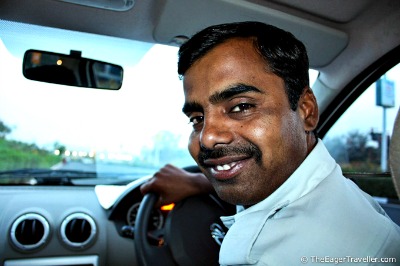
The jolly Jaipur driver Bhawani. Photo credit: Jean Alaba

The second is of Bhawani, the driver assigned to my group during our two-day outing to Jaipur. It reminds me of his kindness and positive disposition in life. He had to take us around Jaipur in the burning hot summer, but never once did he become irritated or impatient. He always had a smile on his face, and that kept us all in a good mood during the trip. In fact, the following week when we went to New Delhi, the company driver assigned to us was totally rude and inconsiderate. At one point he left us in the car sleeping (engine shut off!) while he had his dinner. Worse, when we lightly honked the car to signal that we were awake and frankly not amused, he completely ignored us.

I loved your photo of the Taj Mahal when I first saw it on your blog’s Home Page, but I have to be honest, I never noticed the bird until you pointed it out just now. Maybe that’s good as I was able to appreciate the intricate carvings. Now I’m worried I’ll miss the building and concentrate on the bird!! You’ve captured Bhawani exactly as you describe him; perfect.

One finds a way, or finds a reason to do something.—Filipino tagalong proverb

You are very modest to say you’ve been to “only” eight countries. That’s a lot more than most people visit in a lifetime. So tell us about where are you right now and why.
Well, as you know, James, I am currently in my country of birth, the Philippines, but I’m working out a deal that will hopefully pave the way for life in a new place. I’ll keep you posted.

Q9-Baler

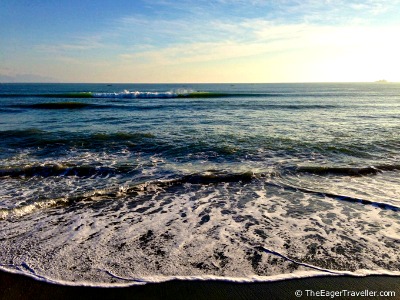
Baler, nicknamed the Philippines’ surfing capital. Photo credit: Jean Alaba

So you are keeping the secret for now, but I’m sure your blog will be give the game away when you are on the move again. The Philippines is a beautiful country and I see you have included one picture in your selection.
Yes, I’ve included this photo of Baler, which is in Aurora province. I like it because it reminds me of my first time attempting to surf and for someone not sporty, I didn’t do too badly. This was also my first time to go beyond my comfort zone in my own part of the world: I travelled for six hours just to catch the waves. It was a spontaneous weekend that proved to be pretty rewarding.

For me, the Baler surf lapping the shore looks just like a welcoming carpet in someone’s lounge.

If you plant, you will harvest.—Filipino tagalong proverb

I know you take a lot of photos but where, so far, are your favourite places to do so? and Can you explain why these places inspire you and how it shows in your next three photos?
My favourite places to take photos so far are India, Japan and Hong Kong. I’ve included one photo of each.

Q10-India

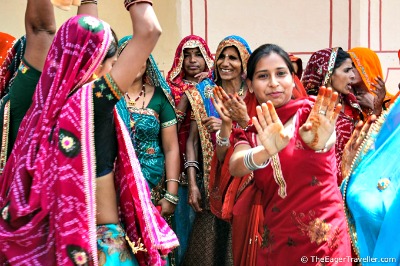
Indian women in colorful saris. Photo credit: Jean Alaba

I like taking photos in India because Indians are very proud of their heritage. This was apparent everywhere we went in India, regardless of the people’s social status.

Q10 Japan

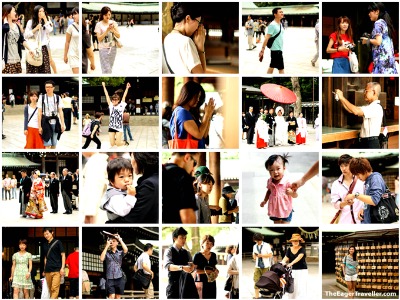
Portraits of Japanese people. Photo credit: Jean Alaba

Japan is a favorite of mine because the people are so organized, disciplined and polite. I never run out of things to see and admire.

Q10-Hong-Kong

A Hong Kong eatery. Photo credit: Jean Alaba

Hong Kong inspires me because of the food! I should think its vast array of local dishes are enough to inspire anyone!

I like that you manage to get a handle on people from the different countries you visit, without actually living in that place. You are clearly a good observer of people, as well as a keen researcher. Tell me, do you feel reserved about taking photos of people, particularly when they are conscious you are doing so?
Not really unless I see they’re offended. But so far, no one has reacted angrily when they see me taking their photo. This is a good thing since I like shooting people. Capturing their unique expressions enables me to glimpse who they are and the kind of lives they lead. I must have taken a thousand portrait shots while in India. Perhaps I’ll get some of these printed and make it my wall art.

I’m the same. I hate to take “posed” photos so never get into a discussion with my subjects. I either take the pic or I don’t. So you like shooting people? Don’t worry; I know what you mean! I think the wall art is a great idea. I know this is a similar question but do you ever ask permission before taking people’s photographs. And how do you get around any language barriers?
Most of the time, I don’t ask but when I was in Japan, where permission needs to be secured for taking photographs of infants and kids, I would politely approach one of the parents and ask them in Japanese—of course with the help of sign language (pointing to my camera and their kids).

Thanks to you, I won’t get into trouble if I ever go to Japan. Would you say that you are motivated by the possibility of capturing something unique, which will never be seen again?
Definitely. You always have to live in the moment, and there is nothing more rewarding than being able to capture the special moments that, unless you have a time machine, you’ll never be able to bring back. Those photos may give you inspiration just when you need it most.

I have to agree, as I think most photographers would. So when did you first realize the power of photography, and how has it changed you?
I first realized it after borrowing a decent SLR for my trip to Hong Kong in 2008. I was able to take high-quality photos to serve as a memento. Ever since, I’ve made it a point to capture moments with my camera, whether during a vacation or simply at a gathering of family or friends—moments I’ll be wanting to view when I get old and grey.

I know what you mean. The picture for me is like a diary of an event in visual form. The photographer can write about it but no one else could.

When the sheets are short, one needs to make do.—Filipino tagalong proverb

Most readers will know by now that I’m not too good on the technical stuff but some of our readers will want to know what kind of camera and lenses you use.
I’m still using the borrowed camera; it’s a Canon 450D. I use the kit lens and a prime lens. It’s outdated equipment now.

You sound a bit like me except that I haven’t managed to borrow any equipment yet. And you aren’t asking me for technical advice. That’s great!! Finally, do you have any advice for wannabe photographers who are traveling or living abroad?
I don’t feel I’m in a position to give advice since I haven’t really achieved anything noteworthy. But I would say from my experience, don’t hesitate to take as many pictures as you can while travelling. Before embarking on a journey, research and learn from the professionals online. You can try copying them, using a trial and error process.

I actually think that is very good non-technical advice, Jean. I’d like to thank you for taking the time to tell your story so far in this interview. On your blog you say:

It has been a spectacular life so far but there is so much more to be seen! I have yet to find that life-changing opportunity which will allow me to do my passion for travelling and blogging as a living.

I have no doubt you will find that opportunity. I’m booking you in for a follow up interview next year to check your progress!!

* * *

Readers, what do you make of Jean’s experiences and her photography advice? And do you have any questions for her on her photos and/or travels? Please leave them in the comments!

And if you want to know more about Jean, don’t forget to visit her excellent blog, The Eager Traveller. You can also follow her on social media:
Twitter: @eagertraveller
Instagram: theeagertraveller
Google+: Jean Alaba

(If you are a photographer and would like to be interviewed by James for this series, please send your information to ml@thedisplacednation.com.)

STAY TUNED for tomorrow’s fab post!

If you enjoyed this post, we invite you to register for The Displaced Dispatch, a round up of weekly posts from The Displaced Nation, with seasonal recipes, book giveaways and other extras. Register for The Displaced Dispatch by clicking here!

Related posts:

For this displaced Irish writer and cultural chameleon, a picture says…

Aisha Ashraf Collage

Canon zoom lens; photo credit: Morguefiles. Aisha Ashraf at Air Canada Centre, Toronto, for her very first live ice hockey game, 2013.

Welcome to our monthly series “A picture says…”, created to celebrate expats and other global residents for whom photography is a creative outlet. The series host is English expat, blogger, writer, world traveler and photography enthusiast James King, who likes to think of a camera as a mirror with memory. If you like what you see here, be sure to check out his blog, Jamoroki.

A happy new year to one and all at the Displaced Nation. My guest today is 38-year-old Irish expat, blogger, traveller and photographer Aisha Ashraf. She is currently based in Canada with her husband and three children. A freelance features writer, Aisha has published articles in newspapers, magazines and a range of expat and mental health websites. She says she has been a cultural chameleon since she first emigrated from Ireland to England at the age of eight. She is also a friend to the Displaced Nation and a recent recipient of one of its “Alice Awards” for a post on her Expatlog blog, provocatively entitled “My mother was a nun.”

Today I’ve asked Aisha to shares with us her experiences and view of the world via a selection of photos from her peripatetic life. I have followed Aisha on Expatlog for a short while and am so impressed by her pictures and the stories behind them.

* * *

From the glamor of Europe (Paris, France)…

Hi, Aisha. It’s good to meet you here at the Displaced Nation. I understand you now live in Canada. But where were you born, and when did you spread your wings and start traveling?
I was born in the same Dublin hospital as Bono from U2 and spent my early childhood roaming the family farm on the broad plains and bogs of Co Kildare, Ireland. Following my father’s diagnosis of bipolar disorder (“manic depression” in those days), we emigrated to England so that my mother could be nearer her family, swapping the farm for suburban living. I was eight when we left and it was many years before the night-time tears of homesickness subsided.

I have seen U2 twice. A great experience and I wonder if Bono knows he was born in the same hospital as you!! I trust those difficult times are now a distant memory, and I know travel has featured quite a lot in your adult life.
Aside from travelling all over the British Isles (we moved house almost annually after leaving Ireland), I didn’t travel abroad again until I met my husband. Together we explored Europe—we drove all over Malta in a yellow convertible. We also loved Paris so much we kept returning. He proposed to me in the bar of the Metropole Hotel in Brussels—a gorgeous historical landmark in the centre of Belgium’s capital, the setting for numerous films and host to royalty, foreign dignitaries, presidents and film stars.

That gives us quite a lot in common. In 1995 I had a great holiday in Malta, and Paris is a favourite of mine, too. And now I would love to know how you and your husband finally ended up in Canada.
Just before our second child turned one, my husband took a post in Libya while I held the fort at home in the UK. He travelled around the country seeing the sights and even sleeping under the stars in the Sahara, but the long absences were tough on all of us. After six months we were certain we didn’t want to continue living apart and considered moving our family to Tripoli. Luckily for us a post in Canada was offered because in the following months expats were evacuated when the revolutionary spirit that had taken Tunisia by storm spread to Libya, and the Gaddafi regime crumbled. We began the Canadian chapter of our life in 2010 and have been here since.

…to the rugged beauty of North America (Paris, Ontario)

scenefromAishaslife

Paris, Ontario. Photo credit: Aisha Ashraf

Canada is a big country. Where exactly do you live, and what is life like in those parts?
We live in Ontario, just outside Toronto. Initially my husband was slotted for a Toronto office but when Canadian HR learned he had a family they felt we’d be happier in Whitby, a once-bustling port on the banks of Lake Ontario, now a haven for families. It’s a great base from which to explore natural wonders like Niagara Falls and Algonquin Provincial Park, along with historic settlements like Kingston, Stratford, Bracebridge and Paris—Ontario!—which you can see in this first photo. I took it from the bridge spanning the Grand River.

A moment

A moment in the Distillery District, Toronto. Photo credit: Aisha Ashraf

Boywithtincup

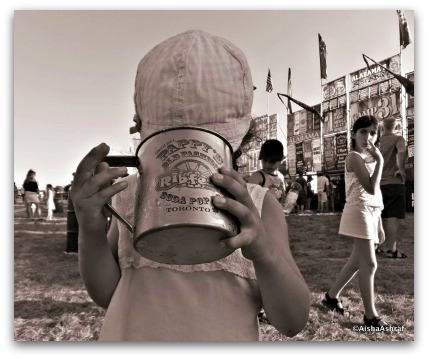
The local ribfest. Photo credit: Aisha Ashraf

Thank you for sharing some of the photos that capture a few of your favourite memories of Canada thus far. I’ve never been there, but I can see it is an amazing place. Can you tell us a bit more about these next two photos, which I believe are of your children?
This first one, of my son standing awestruck before a monstrous sculpture with an exploded head, brings to mind a bitterly cold winter’s day spent exploring Toronto’s Distillery District, where the kids got to meet Santa and the Victorian architecture and cobbled streets made us nostalgic for home. Back then we still felt like tourists. The second one is of my youngest child taking a deep draught from a tin mug at the local ribfest. I’m recalling a day of competitive rib-eating and blazing sunshine that melted into a night of flashing lights and fairground rides. Children are always such rewarding subjects—their innocence and unselfconsciousness makes them great fun to photograph—and the photos I take of my own children of course have special meaning.

hawkbyAisha

Soaring turkey vulture. Photo credit: Aisha Ashraf

And this next must be a New World bird of prey?
Yes, it’s called a turkey vulture. I got lucky after several attempts of zooming in and losing it to the vastness of a magnified sky. The photo always reminds me of an afternoon spent at the slipway, watching people get their boats in and out of the lake whilst navigating some particularly plentiful algae—it was more entertaining than TV.

The irresistible pull of the Great Outdoors

I think that is so interesting because, recently, I have been looking back over photos I took 35 years ago in many different countries and there isn’t a single one that doesn’t bring on a flood of memories. Photos are like that for me, a trigger, and they always have a story attached. Your two shots of the children are quite compelling—I love the girl picking her nose in the fairground photo—and the vulture is a great shot. Do you have any favorite places in Canada to take photographs?
Without a doubt, it has to be Lake Ontario—it’s where we head to chill, explore, reconnect and refocus. I actually get withdrawal symptoms if I don’t go regularly. The ever-changing light and character mean I snap lots of pictures that, once home, I usually find I have failed to capture whatever elusive quality it was I was trying for. We go for walks on trails and in conservation areas so I have countless photos of woods and water. Here are just a few that I really like:

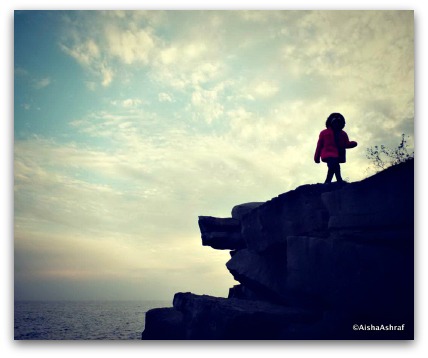
Daughterwalkingoncliff

Cliff walk near Lake Ontario. Photo credit: Aisha Ashraf

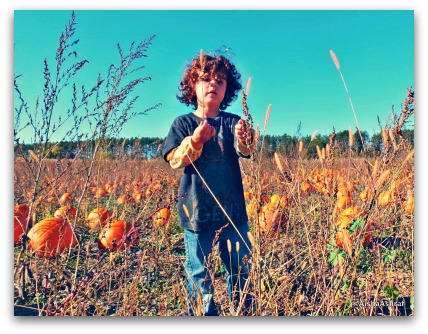
boyinpumpkinfield

Pumpkin field near Zephyr, Uxbridge, Ontario. Photo credit: Aisha Ashraf

Wavesofthelake

Lake Ontario. Photo credit: Aisha Ashraf

The one of your daughter in the field full of pumpkins is so vital, and the naturalness of the colours brings your lovely composition to life. By complete contrast, your daughter on the rocks is positively Neolithic and, although it’s Canada, so Cornish! Nourishing stuff. And I understand that the black-and-white photo of the sea lapping the shore of the lake is a real favourite of yours. Can you explain why these places inspire you?
I love nature—perhaps it was growing up on a farm and spending most of my time outdoors. I have a condition called Borderline Personality Disorder (BPD) and getting outside is a big factor in alleviating its debilitating hold. I see incredible, uncomplicated beauty in the natural world that I find soothing and strengthening. I try to capture it with my camera in a way that may allow others to be moved/nourished by it, too.

Thank you for your honesty about your condition, Aisha. I feel exactly the same about photographing the natural world: it allows us to capture not just the picture but the way we feel at that particular moment. Unfortunately, unlike you I am only at a level where I am trying to move and nourish myself. If others are moved also, that’s a bonus. Now I know you enjoy photographing your kids, but do you ever go to the other extreme: ie, taking photos of people you don’t know in the places where you visit, and do you find that awkward?
Absolutely! I know my shyness has cost me many a great photo-op. I’m not sure if it’s my BPD or my peripatetic life, but I always feel like an observer, standing in the periphery looking in. This translates into a preference for my subjects to be oblivious to me and my camera. I like to capture the raw moment.

Yes, I know that feeling. You want to melt into the undergrowth and take the most natural shot possible. Do you ask permission before taking people’s photographs and how do you get around any language barriers?
I have, on occasion, screwed up my courage and asked someone if they’d mind if I took their picture—come to think of it, no one’s ever said no. I think if language were a barrier, it might make things easier. Tourists get away with a lot!

I understand. Taking people photos can be a bit personal. It’s so much easier shooting a mountain as it’s too far away to argue! Would you say that photography and the ability to be able to capture something unique which will never be seen again is a powerful force for you?
Capturing memories and the perfect picture are my twin obsessions. I’m in love with light and the effect it has on everything: the study, the photographer, the viewer. Is there anything else so intangible, potent and unspoken, and whose experience is unique to each individual?

When did you come to realise the importance of light?
Ever since I can remember, I’ve been transported by the tone of light or the way it falls—it triggers memories for me like nothing else can. Not so much of occasions, but of feeling and being. For a few brief seconds I’m caught in a flashback. Time slows so that even the dialogue in my head is distorted, becoming deep and stretched like treacle, a voice on a tape recorder played too slow.

Such powerful analogies. Now for the technical stuff which I am not very good at. What kind of camera and lenses do you use?
I have a Fuji FinePix f750EXR—it’s just a regular compact camera, no fancy lenses or anything. If I couldn’t fit it in my pocket, I wouldn’t be able to take it everywhere with me. Photography is as much about identifying a good picture as it is about capturing it, and many great photographers have started with a basic machine. A good eye is evident whatever tool you have at your disposal.

I can’t tell you how much better that makes me feel! Finally, do you have any advice for wannabe photographers (like me) who are traveling or living abroad?
Never leave home without your camera. Mine even comes grocery shopping with me—you just never know where that next great shot will be. Sometimes you find the sublime in the ordinary, and for me that’s the sign of a great photographer—that ability to show the beauty in the everyday.

Thank you so much, Aisha, for joining me in this interview. It really has been a pleasure talking to you.

* * *

Readers, what do you make of Aisha’s experiences and her photography advice? And do you have any questions for her on her photos and/or travels? Please leave them in the comments!

And if you want to know more about Aisha, don’t forget to visit her excellent blog, Expatlog. You are also welcome to contact her at aisha-a@hotmail.co.uk +/or follow her on social media:
Twitter: @AishaAshraf1
Facebook: Expatlog FB Page
Linkedin: Linkedin profile
Google+: Linkedin Profile

(If you are a photographer and would like to be interviewed by James for this series, please send your information to ml@thedisplacednation.com.)

STAY TUNED for tomorrow’s post, when our fictional expat heroine, Libby, returns to the Displaced Nation to update us on her many adventures. (What, not keeping up with Libby? Read the first three episodes of her expat adventures.)

If you enjoyed this post, we invite you to register for The Displaced Dispatch, a round up of weekly posts from The Displaced Nation, with seasonal recipes, book giveaways and other extras. Register for The Displaced Dispatch by clicking here!

Related posts:
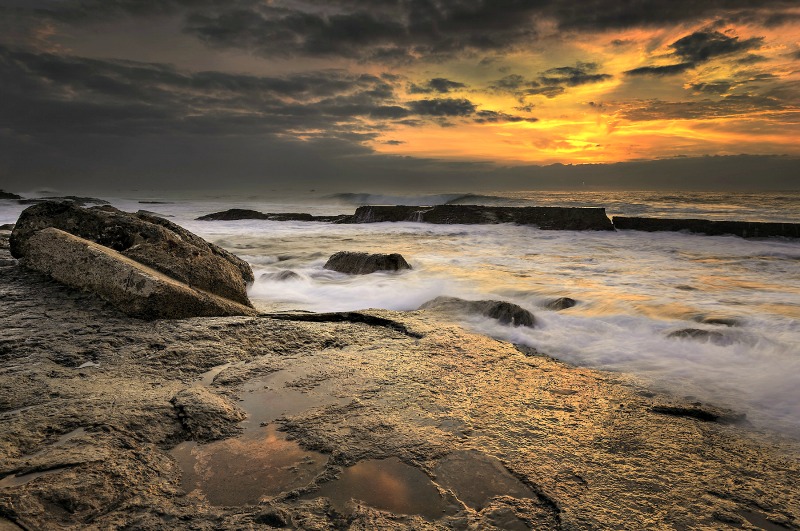
For this peripatetic Argentine, now an expat in Queensland, a picture says…

Canon zoom lens; photo credit: Morguefiles. Belu in Buddha Truth Relic Temple, Singapore; photo credit: Belu.

Canon zoom lens; photo credit: Morguefiles. Belu in Buddha Truth Relic Temple, Singapore; photo credit: Belu.

Welcome back to our series “A picture says…”, created to celebrate expats and other global residents for whom photography is a creative outlet. The new series host is English expat, blogger, writer, world traveler and photography enthusiast James King, who blogs at Jamoroki and truly believes a camera is a mirror with memory…

Greetings, Displaced Nation-ers. My guest today is the 35-year-old Argentine Belu: an expat, blogger, world traveller and photography enthusiast. Belu studied industrial design at university in Argentina and then moved to Europe. Not long ago, she relocated to Australia, where she sells her designs at street markets and travels as much as her finances allow.

Belu brings her experiences and unique view of the world to her photography blog, BeluChi, and to the travel blog, Travel Tips and Pictures, where she is the main travel writer.

I have followed Belu for a short while and love the simple, down-to-earth way she brings her pictures and the stories behind them to life through her writings.

* * *

South American but with deep European roots

Hi, Belu. Thanks for agreeing to this interview. Can we begin by having you tell us: where did you live in Argentina, and when did you spread your wings, leave the nest and start your world travels?
I was born in Mar del Plata, a pretty big town located 500km south of Buenos Aires. I lived there until I was 25, and it was about that time that I became curious about travel and ended up moving to Europe.

So you got the travel bug. I can relate to that—but what really inspired you to travel?
Travelling for me is a way to get connected with people and to nature. I so love meeting people, and I knew travelling would give me that opportunity better than anything else. I love it when people tell me about their lives, their cultures and traditions, stories and dreams. I learn so much from my travels.

I know exactly what you mean. It’s quite addictive and I can see you are a compulsive globe-trotter. Tell me what countries have you visited so far?
Aside from Argentina and southern Brazil, I’ve travelled mostly around Europe: Portugal, Spain, France, Italy, Monaco, Belgium, England, Scotland and Ireland. And now, because I live in Australia, I’m starting to be more in touch with Oceania and Asia—Indonesia and Singapore, for example. I’m planning a trip to China next year, and in 2015 I hope to travel to India and some countries in Africa.

Wow, that’s quite a package! Tell us, how did you end up in Australia, and what is life like for you your new home?
I met my partner when travelling in Australia over two years ago, when living in Barcelona. So, after going back and forth several times, we decided to live together here in beautiful Cairns, a city in the far north of Queensland. So far, so good. I believe that how you feel in a different place and culture depends mostly on how you connect and interact with the people in your new environment, at least in my case. Weather is also important to me because I’m a “sunlight” lover.

Pizza San Marco, Venice Italy. Photo credit: Belu

Piazza San Marco, Venice, Italy. Photo credit: Belu

You offered this photo—of you and all the pigeons in the Piazza San Marco in Venice—as one of your favorite shots that captures cherished memories. Thank you for sharing it. Can you tell us more about why it’s so special?
This photo brings me back to the first time my parents came to Barcelona to visit me. We went to Venice and Rome—spectacular!—and then to Lettopalena, a tiny little village up on the top of a mountain in Chieti Province, around 200km from Rome. It was the place where my grandmother was born. I met my Italian family, who are still living there. That trip was exiting because of the contrasts.

Taupo Lake, Taupo, New Zealand. Photo credit: Belu.

Black swan on Lake Taupo, New Zealand. Photo credit: Belu.

Solo travel and staying with locals

That must be a very personal piece of your life. Now moving on to your photo of a beautiful black swan on Lake Taupo in Taupo, New Zealand.
Lake Taupo is in the centre of the North Island. My trip to New Zealand was unforgettable because of the natural beauty. It was also solo-travel, so I could be more in contact with locals and travellers from everywhere. I love this kind of travel. I usually have a “tentative plan” that I hardly ever follow. I love the freedom of changing and re-organising my itinerary according to my feelings.

Oh! I know the feeling well. No one to nag you. Free as a bird (so to speak). Okay, so now for a photo of the everyday scene—a street market in Ripoll, Girona (one of the four provinces comprising Catalonia), Spain. My favourite country!

Street market in Ripoll, Spain. Photo credit: Belu.

Street market in Ripoll, Spain. Photo credit: Belu.

I spent a Saturday morning strolling around the heart of Catalonia, in southeastern Spain. I had the honour of staying at my friend’s parents’ home, always with locals… that made this travel special. I did visit popular tourist spots in that area, but when you are with local inhabitants, it makes the place so much more interesting and you learn so much more about their culture. They told me folk tales and stories that you’ll never find in any guidebook.

I seem to be agreeing with everything you say, but it’s difficult to argue with that. So many people travel but never really integrate with the local people. They miss so much. But we must move on now. Where were or are your favourite spots to take photographs?
My favourite spots are high viewpoints and streets.From high viewpoints you get to admire the whole picture, almost like aerial photography. I find that very exhilarating. And when I am in the streets I am close to the people and can really feel the ambiance and capture the essence of the place.

High vs low, scenery vs people

The last three photos you’ve chosen illustrate the difference between high (looking down) and low (streets at ground level) admirably:

Cairns, Queensland, Australia. Photo credit: Belu.

Cairns, Queensland, Australia. Photo credit: Belu.

Back street, Bali, Indonesia. Photo credit: Belu.

Back street, Bali, Indonesia. Photo credit: Belu.

London (near St. Paul's), England. Photo credit: Belu.

London (near St. Paul’s), England. Photo credit: Belu.

The photo of Bali is so typical of a Southeast Asian back street. And the one of London, showing a tramp walking between a dust cart and a City businessman with St. Paul’s Cathedral as the backdrop, is an absolute gem. Actually, this photo leads to my next question: do you ever feel reserved about snapping photos of people, particularly when they are conscious that you are doing so? And do you ask permission before taking people’s photographs? How do you get around any problem of language?
It usually depends on the situation and the local culture. I sometimes ask permission by words or sign language, especially if I feel the person is uncomfortable because of the camera. Fortunately, I have never had any problem about that. Most of the time people say “yes”.

That must make it easier to take natural shots; so would you say that photography and the ability to be able to capture something unique which will never be seen again is a powerful force for you?
For me the answer to that is “most definitely, yes!” When I left Argentina I, maybe unconsciously, realised what a powerful force pictures are. To be able to produce something that can never be repeated exactly is quite amazing.

Let’s get technical

Now for the technical stuff which I am not very good at. What kind of camera and lenses do you use?
I have a Canon Ixus 107 called “Anastasia”. She is always in my bag. It isn’t a professional camera but it works as it were! A useful camera for me must be compact and not too expensive, because I don’t want to be too worried about it when travelling.

Finally, do you have any advice for wannabe photographers (like me) who are travelling or living abroad?
Well, the Internet has plenty of information, videos, etc, for those in search of photography tips. But I can tell you what I do: stay curious, learn from others, and meet people.

* * *

Readers, what do you make of Belu’s experiences and her photography advice? And do you have any questions for her on her photos and/or travels? Please leave them in the comments! 

Once again, if you want to read more of Belu, don’t forget to visit her sites (see links above). You can also contact her via aquibeluchi@gmail.com.

(If you are a photographer and would like to be interviewed by James for this series, please send your information to ml@thedisplacednation.com.)

STAY TUNED for next week’s fab posts, including an interview with this month’s featured author!

If you enjoyed this post, we invite you to register for The Displaced Dispatch, a round up of weekly posts from The Displaced Nation, with seasonal recipes, book giveaways and other extras. Register for The Displaced Dispatch by clicking here!

Related posts:

For semi-retired expat blogger James King, a picture says…

Welcome back to our series “A picture says…”, which we created to celebrate those for whom photography is a creative outlet—who rely on a camera to register the look, character, and ambiance of the people and places that capture their fancy as they move around the globe.

Today’s guest is English expat, blogger, writer, world traveler and photography enthusiast James King. From December onwards, James will take over the hosting of this column from Andy Martin and publish it monthly.

As James plans to ask his interviewees to provide a selection of photos that help to tell their personal travel stories, it seems only fair that we require him to undergo the same exercise. What pix would he use to illustrate his peripatetic life of the past 25 years?

Indeed, “peripatetic” seems an apt descriptor for James. Semi-retired and now living in Chiang Mai, Thailand, he has traveled to over twenty countries. He lived in South Africa for a couple of decades and Thailand for the past five years. Here, in summary, are his vital travel stats:
Place of birth: England, UK
Passports: UK and EU (British citizen)
Resident in: UK (Bristol): 1942 to 1995; South Africa (Durban, Johannesburg, Cape Town): 1995 to 2008; Thailand (Chiangmai): 2008 to present.
Main countries visited: France, Spain, Greece, Italy, Morocco, Gambia, Kenya, Botswana, South Africa, USA, Thailand, Malaysia, West Indies.
Business interests: Majority shareholder in WestJewel (Pty) Ltd., a Cape Town jewelry wholesaler he founded in 2004.
Social media coordinates:
Twitter: @JimKing28265666
Facebook: Jim King
Linkedin: James King
Google+: jamoroki@gmail.com
Blog: Jamoroki.com

* * *

A bloomin’ late bloomer!

Hi, James. I see you were born in England during World War II. When did you actually start traveling?
Life was pretty austere after the war, we had rationing and people lived a fairly simple life. There were very few restaurants and I don’t actually remember ever going out to eat with my parents. Don’t get me wrong, we weren’t on the “bread line”; but it just didn’t happen in those days. We had TV for the first time in 1953, and it wasn’t until I was 24 that I first traveled overseas; to Paris in fact. When I got into my thirties, then I really started to spread my wings but I was very busy trying to make a living so I didn’t have the freedom I gained later in life. Only then was the adventurous side of me given wings, so to speak. Eventually, at the age of 53, I packed my bags and emigrated to South Africa after a few sorties there in the three years before.

SouthAfricanBeach_JK

Photo credit: James King

Okay, time to see your first photo. What’s the story behind this one?
This guy wears many hats and makes a living selling his wares on the beach at Bloubergsands, which is close to the house that I bought (and am now trying to sell!) in Table View in Cape Town. Generally these traders are not South African. They often travel a very long way from neighboring countries such as Zimbabwe, Zambia and Mozambique. Many of them dodge border posts by hiding in the back of goods trucks. They all hope to make a new life in South Africa after escaping from oppressive regimes or poverty. Some of them are intelligent, articulate and well educated, as I remember this guy was.

What do you like most about this shot?
I like that it highlights the harshness of Cape Town light. The ozone layer is so thin there—I had to be far more careful of the sun than I do in the tropics. I also like the photo because at that time, I wasn’t into photography at all and had even less idea about what I was doing than I do now. I always have to be aware of what harsh light can do to my pics.

Okay, let’s move along to another photo that speaks to your South Africa experience.
Can I have two shots, please? One of the Cape of Good Hope and the other of Table Mountain, with Cape Town below.

EndoftheEarth_JK

Photo credit: James King

TableMountain

Photo credit: James King

For me, these photos bring back memories of how wonderful the landscape is in that part of the world. So overwhelming, you really have to experience it in person. Just think, we are at the Cape of Good Hope, the bottom of Africa! And, despite how beautiful it looks, you don’t want to know how cold that water is. Naked you may survive ten minutes in there!

What particularly appeals to you about the Table Mountain photo?
I love how the clarity changes as soon as you hit the shore line below the mountain. It really is like that and not a cock-up on my part. It won’t win awards, but it is very personal so I love it.

How did you end up in Cape Town?
How long have you got? Things went a bit wrong for me in England after I got divorced, and then I met a guy who used to live in Durban and still had some business interests there. His wife had died the previous year so we were both single and hit it off. He had to go to South Africa again, so we decided to go and work together. That’s the “nutshell” version.

Semi-retirement in the Thai tropics

And now 20 years later you are in Thailand. How did that happen?
I’ll have to get the “nutshell” out again. In 2004, with some backing, I bought a jewelry wholesale business. Most of our silver is sourced and manufactured in Thailand, and I took on the responsibility of buying overseas. So I started traveling to Bangkok to meet suppliers and go to the Gems and Jewelry Fair in March and September. I met so many new people and also took a couple of holidays in Phuket before going back to Cape Town. Gradually I got a taste for SE Asia and, after a few years, decided to stay for four months getting to know more whilst still working remotely. That was it. Semi-retirement in the tropics beckoned and I was hooked!

I imagine it’s all been plain sailing since you moved to Thailand. Just kidding! I see from your blog you’ve had your struggles.
It is very difficult to précis my life over the last four years. I wrote my first book, the memoir MASK, to try and show the different sides to Thailand, its people and their culture. The book isn’t everybody’s cup of tea, but it was a cathartic exercise and helped me a lot. I should add that I didn’t include everything in it. The rest may come out later. But now I have a new lease of life and am so pleased I found blogging and photography because I believe the two go hand in glove. Writing, which has been a passion of mine for a long time, can embellish the photos and photos can enhance the writing, so in blogging you have the best of both worlds.

You say that photography gives you the ability to be able to capture something unique, which will never be seen again. What brought you to this realization?
I have always admired great photography while not having time to pursue it because I was working. Now, through my blog, I am learning how to incorporate photos into my posts. It’s fair to say my appreciation is growing as I hope will my knowledge. Writing is still my primary passion, but I now have another tool in my observation box. Although late in life for me, we are so lucky to be living in a technological age where we have the tools to enable us to express ourselves like never before. Sorry to take over the interviewing, but don’t you think it is so amazing?

Thailand2_JK

Photo credit: James King

But of course! Getting back to you and the photos that capture special memories: what do you choose next?
Actually, on my “to do” list is scanning some of the photos from my pre-digital collection, beginning in the 1970s, a number of which carry powerful memories and should help to create some rather interesting blog posts. In the meantime I have selected three of my more recent favorites for you.

The first one shows this guy and his wife who live in their little house at the end of Kata Noi, a beach on Koh Phuket. Every grain of sand is polished every day, they welcome everyone whether you want a drink or something to eat or just to say hello. They have a few beach loungers as well if you want to relax there. If you can have a more simple stress free existence, I’d like to know about it. On this particular day, I visited early one morning before the tourists woke up, and they made me feel most welcome.

Thailand3_JK

Photo credit: James King

This little seven-year-old boy lives in my village in Chiang Mai. As you can imagine he is very naughty and the older children tease him unmercifully. So he comes to my house at weekends to annoy me and get chocolate and biscuits. He always wants me to take his pic, and on this occasion I caught him waiting for the school bus. He felt very proud.

Let’s not get technical

What kind of camera and lenses do you use?
Please don’t ask me anything technical. It says on the bottom “Canon PC1130” and on the front “Power Shot S2 IS”. One fixed lens 12x Optical Zoom with lots of numbers on it. It has lots of settings but I don’t know what they are for so I leave it on auto-pilot and hope for the best. Oh, and most importantly, the rechargeable batteries are held in with an elastic band. I haven’t got a clue whether it is any good or not: I just shoot and ask questions afterwards. But sometimes I do worry that my photos are not so good when I see many accomplished photographers blogs. I just console myself I must work extra hard on the subject matter.

ThaiWhiteTemple_jk

Photo credit: James King

I think you have one more Thai photo?
Yes, this one: the white temple in the forest, which can be viewed from my village. This is very special because most of the time, although I know it is there, I can’t see it for mist or haze. Then one evening it was there and so was I with my camera!

Where have been your very favorite places to take photographs?
On safari in Kenya, Mykonos Island in Greece, and here in Chiang Mai where, even though I say it myself, I’ve managed to capture some beautiful morning and evening landscapes.

MykonosTown_JK

Photo credit: James King

Do you have a shot that’s your all-time favorite?
I pick this one, of a house in Mykonos Town, taken in 2005. I think it will always be one of my favorites.

A few parting shots

Do you feel reserved about taking photos of people, particularly when they are conscious that you are doing so?
It’s a very good question because I am always conscious that they may be shy and so I try and make a quick judgement call. But I do have an aversion to posed photos in the natural environment, so getting the balance right is important to me.

Do you ask permission before taking people’s photographs?
I just try and feel how they feel if they are aware I want to shoot them. I prefer to take them when they are unaware, then smile and say thanks. Otherwise I don’t get the naturalness I want. Look, I’m not experienced so I am not over-confident and I need all the advantages I can get. I find people will show you pretty quickly if they don’t want their picture taken.

But how do you get around problems of language?
Funnily enough I find not speaking the same language gives me an excuse not to ask. I have a smattering of Thai so the people here know I’m not a tourist, which definitely helps a bit.

Finally, do you have any advice for wannabe photographers who are traveling or living abroad?
In a nutshell (there I go again!), here are two pieces of advice:

  1. Never leave your camera at home or you may miss the shot of a lifetime out of nowhere. (Up until recently I have regretted not taking my camera on so many occasions. Now I hardly go anywhere without it, so much so that I often feel like a Japanese tourist. Believe it or not, most of my best shots were taken when I forgot to put in the SD card!)
  2. If, like me, you are not proficient, use other skills such as writing and storytelling or bizarre scenes, so that the photos don’t have to stand alone, to be judged naked.

* * *

Thank you, James! Readers, what do you make of James’s experiences and his photography advice? And do you have any questions for him on his photos and/or travels? Please leave them in the comments! (If you are a photographer and would like to be interviewed by James for this series, please let me know: ml@thedisplacednation.com.)

Once again, if you want to read more of James, be sure to check out his blog, Jamoroki.com. (Hmmm…I suspect there’s a story in that name!)

STAY TUNED for tomorrow’s post, an interview with November’s featured author, a novelist!

If you enjoyed this post, we invite you to register for The Displaced Dispatch, a round up of weekly posts from The Displaced Nation, with seasonal recipes, book giveaways and other extras. Register for The Displaced Dispatch by clicking here!

Related posts:

Main image at top of page: Camera lens from Morguefile; James King at the Khao Panong Rung Khmer Temple near Buriram, NE Thailand. All other images by James King.