The Displaced Nation

A home for international creatives

A Parisian lunch in Manhattan, à la displaced author Elizabeth Bard

I have a confession to make. I have a bit of fluff on the side. I’ve had it for many years now — and the flame of my passion never diminishes. The love burns in my soul, aches in my flesh, and ignites my nerves.

Why am I revealing this now, and in such a public way? As you may know, the Displaced Nation is dedicating many of its October posts to the joys of moving to France and learning French cooking.

I take this as a sign that the time has arrived for me to own up to my own rather torrid relationship with La Belle Cuisine Française — she of infinite variety, who makes hungry where she most satisfies.

Admittedly, I do feel a little guilty talking so openly about our affair while my husband, who is Japanese, is away on a business trip. (Because I’m so practiced at hiding it, I think he assumes that, like him, I would always choose Asian food over Western, Italian over French.)

But there you have it, my little secret. And now that it’s out in the open, allow me to report on my most recent tryst — a Parisian lunch I hosted in Manhattan yesterday using the recipes of Elizabeth Bard, who will be featured on this blog next week. A former New Yorker who now lives in Provence with her French husband, Bard is the author of Lunch in Paris: A Love Story, with Recipes.

Friday, Oct 7 — plotting my assignation

I download Bard’s book to my Kindle and retreat to bed — mais oui! — for a read.

I am instantly enchanted. Bard is a woman after my own heart: she went to Europe to study and then fell head over heels for the culture, a man, the food…

I’m having a hard time choosing among Bard’s recipes, though.

The guest list is easy: my sister (who will go into the hospital on Wednesday for an operation, after which she won’t be able to enjoy food for a while) and two foodie friends, a couple, with whom I’ve collaborated on some lovely meals.

Except this time I’ll be going solo, especially as my husband is away (though maybe that’s just as well as he tends to dismiss French food out of hand, and therefore out of kitchen, for being too rich and creamy).

Actually, it’s the main course I’m dithering about — not the starter or the dessert.

I know I want to do mussels for the opening course as that’s one of my sister’s favorites, and Bard has a classic recipe for Mussels with White Wine and Fennel (and fennel is now in season).

I see that on her Web site, Bard has a recipe for Spicy Chocolate Pots with Fresh Figs — and quickly decide to make that my dessert. Like most sane people, I consider chocolate (along with champagne and oysters) to be the perfect food for revving up the libido.

And figs — Bard says that every autumn, around this time, she stages her own mini Figapalooza. I like the sound of that orgy. The more I think about it, the more convinced I become that the Bible got it wrong: Eve must have seduced Adam with a fig, not an apple. Didn’t he cover himself up with a fig leaf afterwards?

Speaking of apples, the recipe of Bard’s I’m most attracted to for the main course is her Pork Tenderloin with Four Kinds of Apples. The only thing holding me back is that my sister has a pet pig. For a moment, I imagine being able to persuade her to partake of this forbidden meat. “Oh, go on, just one little taste…” But then I realize how offended I’d be, as a dog owner and lover, if I were invited to lunch at a Korean household and they were serving dog.

No, not a good idea. So I opt for Bard’s Pasta with Fresh Peas, Arugula, and Goat Cheese for my main. To be honest, I feel a little sheepish about it. Surely my infatuation with La Belle Cuisine should drive me to my boldest feats of exploration and invention?

But then I remember Bard’s story about her husband-to-be inviting her to lunch at a Parisian restaurant that specializes in du porc noir de Bigorre. She refuses to indulge, even (especially?) when the waitress tells her he’s a happy pig, ordering the cassoulet instead.

Pasta it is, even though the only thing French about it involves topping the pasta with extravagantly big gobs of goat cheese.

Saturday, Oct 8 — shopping for just the right ingredients

I head to the green market in Union Square very early, my two dogs in tow. Just before I reach the Patches of Star Dairy stand, which sells fresh goat cheeses and goat cheese ice cream, one of them, my cocker spaniel, scavenges a brussels sprout and someone asks me if he is a vegetarian. (I wonder if his English springer spaniel heritage is kicking in, and he’s registering his disapproval of my love affair with France?)

Other green market finds include freshly picked arugula (also for the pasta), onions and fennel (for the mussels), and heavy cream (for the dessert).

I see some blue salvia at the flower stall that remind me of postcards I’ve seen of Provence, and appropriate these for the table decor.

I still need to get peas (they aren’t in season), so leave the dogs at home and go out again. Bard makes a curious observation at the start of her pasta recipe:

Five years ago, if someone told me I would take this much satisfaction in shelling my own peas, I would have laughed out loud. How times have changed.

I guess I’m not quite there yet (or perhaps I was there when I was younger — am I getting too old for these affairs?), as I find myself heading to the Trader Joe’s on 14th Street for a bag of freshly shelled English peas (yes, English — apparently there are limits to my love).

Actually, waiting on the line at Trader Joe’s on a Saturday is almost as tedious as shelling peas, and I almost laugh out loud — but then console myself by noting that I’ve also managed to score the bow tie pasta. It’s not whole wheat, though, as Bard recommends. I’m not sure if I’ve ever seen whole wheat farfalle, TBH. (I wonder where Bard gets hers?)

It still remains to get fresh pesto (from the Italian specialty store on E 11th St), Green & Black’s 70% organic chocolate and ras el hanout for the dessert. I find both of these items at the Indian grocery around the corner from Little India. The ras el hanout is labeled “couscous spice” and smells appropriately exotic.

I stay up late infusing the ras el hanout in the heavy cream and melting the chocolate in that mixture for the dessert. Heaven!

Sunday, Oct 9 (morning) — final mad preparations

Another early start. I swing by the East Village Cheese store for a fresh whole wheat baguette, and then it’s off to the green market at Tompkins Square Park, to buy fresh mussels at the fishmonger’s.

There’s a spring in my step as I approach his stall. I am a woman in love, a woman possessed. Little do I know that disaster is about to strike — he had only a small supply of mussels and sold them all first thing.

Aïe. I stumble away from his stall trying to hide my tears. But then, American ingenuity kicks in: why don’t I try using Bard’s recipe but for little neck clams, which are in large supply? I go back and discuss with the fishmonger, who’s a friendly sort, très sympathique. He ends up giving me 40 clams for the price of three dozen.

But I’m not out of the woods yet. I have forgotten the figs — those delectable little fruits that ooze with flesh and seeds when you cut them open. Despite trying three grocery stores, I can’t find a single fig in the East Village — and this is fig season. Go figure!

On this ingredient, I cannot compromise. I text my foodie friends who are coming to the lunch (they live in the West Village) and ask them to scour the shops for the fleshiest, freshest figs they can find. They come through for me, confirming my long-held belief that West Village is the city’s epicurean center.

Sunday Oct 9 (1 p.m. onwards) — ah, quel plaisir!

My sister and friends arrive, the wine (initially the Muscadet I’m cooking the clams in) flows, and conversation does as well, ranging from tales of our misspent youths to the Wall Street protests.

I produce the first course, and it’s judged a big success. Does anyone mind that it’s clams and not mussels, I ask? All agree that it’s the broth that counts — and the broth, a mix of fennel, onions, garlic and white wine, is divine.

Despite being a little tipsy on the wine — we have now progressed to a bottle of red from the family domaine of Robert Sérol, au cœur de la Côte Roannaise — I manage to make the bow tie pasta al dente. I stir in the peas and the pesto, divide among four plates and then dollop on the lightly salted chevre. My guests and I gorge ourselves on this latest creation, exclaiming as several nuances emerge and caress our taste-buds — oh là là!

I suggest that we take a short break before the dessert. My cocker spaniel is nipping at my pant legs — signaling that it’s time for the guests to go home as he needs my full attention (and some treat toys with the leftovers).

But my other dog, who is mostly poodle, is having the time of her life (bien sûr), making several rounds with the guests for extended petting sessions.

Enfin, it’s back to the table for my chocolate dessert, which, I’m sorry to say, falls a little flat because — absolument incroyable! — it’s too chocolatey. Is that our fault (we don’t know chocolate from chocolate) or could the recipe use some sugar?

But the purplish-brown figs, which are ripe and ever-so-sweet, save the day.

Over little cups of coffee we all agree that my Parisian lunch at the hands of Elizabeth Bard has been an affair to remember.

Monday, Oct 10 — the morning after

My husband calls in the wee hours of the morning. He is now in Tokyo, with another week to go on his business trip.

“How was your Sunday?” he asks.

“Well, I had some my sister and some friends over for a little lunch,” I reply, thinking to myself: what he doesn’t know won’t hurt him.

I go back to bed and awaken several hours later, at around 8:00 a.m. I lie there for a few minutes, basking in the afterglow of yesterday’s tryst.

When I at last rouse myself and face the mounds of dishes still to be done, I realize that this little flirtation of mine has its costs (not to mention my exhaustion at having to clean the apartment).

At least the hole in my pocketbook isn’t too bad. I reckon this particular fling has cost me around $80, including the wine — not bad considering what it would cost for four people to go out for a proper French lunch in Manhattan.

Hmmm… I wonder if I can fit in one more quickie meal before my husband gets home on Friday?

As Mario Cuomo, former New York State governor and father of our current governor, once said:

When you’ve parked the second car in the garage, and installed the hot tub, and skied in Colorado, and wind-surfed in the Caribbean, when you’ve had your first love affair and your second and your third, the question will remain, where does the dream end for me?

Touché — only I don’t think he’s ever been seduced by French cuisine à la Elizabeth Bard?

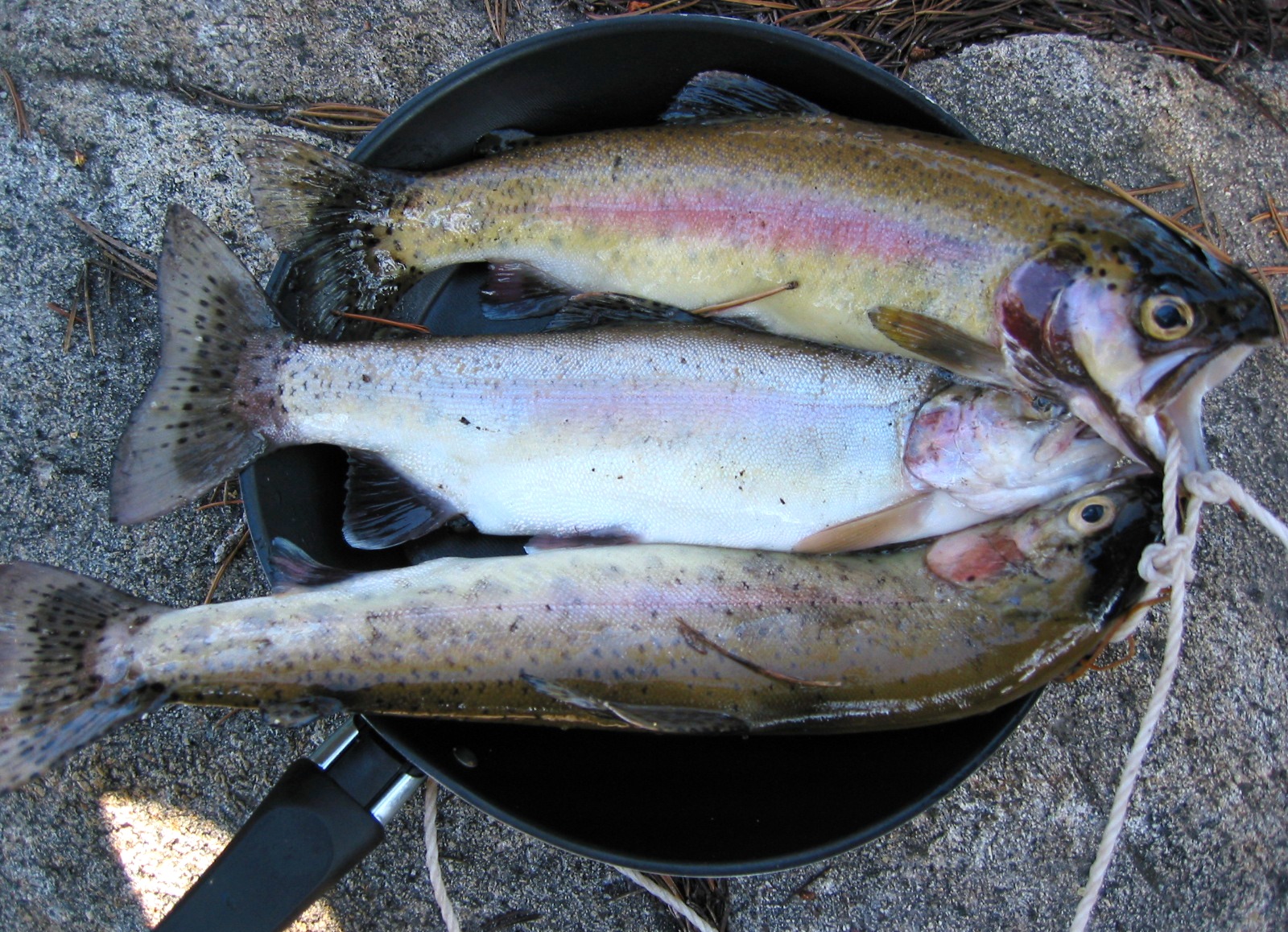
Images (top to bottom): Friendly fishmonger at Tompkins Square Park; little neck clams in fennel; an enthusiastic canine participant; chocolate pot with figs.

STAY TUNED for Tuesday’s post on classic displaced writing.

If you enjoyed this post, we invite you to subscribe for email delivery of The Displaced Dispatch, a round up of the week’s posts from The Displaced Nation, including seasonal recipes and book giveaways. Sign up for The Displaced Dispatch by clicking here!

Related posts:

12 French cooking terms — a glossary for kitchen dummies, or anyone not lucky enough to be an expat in France

Although Julia Child made a career out of teaching French cuisine to the masses, not all of us have had the opportunity to practice our culinary skills to the extent that good lady may have envisioned.

Still, the good news is, sometimes we use French cooking methods without even realizing it.

For those not lucky enough to live in France or to have studied French cooking for a dedicated period, here is a short glossary of common terms — as defined by culinary experts (Master Chefs) and dummies (whose experience tends toward Gordan Ramsey’s Kitchen Nightmares).

1. BEIGNETS
Master Chef Definition: Small lumps of fried dough.
Kitchen Nightmare Definition: Donut holes. (See: Dunkin Donut, Krispy Kremes, Fairground stands, etc.)

2. BEURRE NOISETTE –
MC Definition: Browned butter.
KN Definition: The realistic result of squabbling children and the following recipe direction: “Gently melt 1 ounce of butter over a low heat.”

3. CANAPE –
MC Definition: An appetizer consisting of a piece of bread or toast or a cracker topped with a savory spread (such as caviar or cheese.)
KN Definition: Ritz crackers and Marmite.

4. CHAPELUX –
MC Definition: Browned bread crumbs.
KN Definition: The contents of the toaster’s crumb-catcher.

5. CROUTONS –
MC Definition: Small cubes of toasted or crisply fried bread
KN Definition: The best part of a salad.

 6. DARIOLE –
MC Definition: A small cup-shaped mold used for making individual dishes.
KN Definition: A small cup-shaped mold in a set of six, bought in a fit of retail therapy enthusiasm in specialist kitchen shop. Used once for packet Jell-O. Now gathering dust at back of pantry, possibly with the addition of dead wasp or similar.

7. DEGLACER – 
MC Definition: To dissolve cooking juices attached to the sides of a pot or pan with a little hot liquid to create a sauce. 
KN Definition: A way of cleaning the burnt bits off a pan without using a Brillo pad.

8. ESCALOPE –
MC Definition: A piece of boneless meat, thinned out by using a mallet.
KN Definition: 1) A method of making the dregs of the freezer go further; 2) Friday night stress-reliever after aggravating week.

9. FLAMBE
MC Definition: Covered with liquor and set alight briefly.
KN Definition: A sinful waste of good alcohol.

10. MARMITE
MC Definition: An earthenware container for soup.
KN Definition:  Oh come on. Everyone knows what Marmite really is. (See “Canape”)

11. RECHAUFEE –
MC Definition: Reheated food.
KN Definition:  A fancy word to disguise the fact you’re giving the family leftovers for the third day in a row.

12. TERRINE –
MC Definition: A mixture of chopped ingredients baked in a loaf-shaped container, served at room temperature.
KN Definition: Day-old meat loaf

STAY TUNED for Monday’s Recipe Review – A Parisian Lunch in Manhattan.

Related posts:

If you enjoyed this post, we invite you to subscribe for email delivery of The Displaced Dispatch, a round up of the week’s posts from The Displaced Nation. Sign up for The Displaced Dispatch by clicking here!

Image: MorgueFile

RANDOM NOMAD: Mardi Michels, Elementary School French Teacher, Home Cook, Writer, Photographer & Traveler

Born in: Adelaide, South Australia
Passports: Australia (by birth), Britain/EU (through my dad), Canada (I became a citizen in 2007)
Countries lived in: France (Paris): 1995-2000; Canada (Toronto): 2000-present
Cyberspace coordinates: eat. live. travel. write | my creative refuge from academia (blog); eatlivtravwrite (Twitter handle)

What made you leave your homeland in the first place?
I left Australia because I was working on my PhD in French literature and felt it made a lot more sense to be in the country of the language and culture I was studying. Soon after moving to Paris, I began working in a restaurant (Woolloomooloo Restaurant Australien — now closed) to supplement a meagre scholarship. About a year after moving to Paris, I got a job teaching English at Université Paris X and I was hooked on teaching English (I was already qualified to teach French) so I undertook my Dip TEFL [professional diploma in Teaching English as a Foreign Language] at the University of London Institute in Paris, eventually scoring a full time teaching job at the British Council. My PhD? Incomplete…

Is anyone else in your immediate family “displaced”?
My sister also left home when she was in her early 20s to complete a PhD at Oxford (which she did), and from there she worked in banking all over the world (England, Singapore, Japan). She has also traveled extensively in South America. She, too, has ended up in North America (New York City), teaching math!

How about your husband? Is he displaced?
He was when we first met — in Casablanca in December 1999. I was on a vacation in Morocco, and after that two-week jaunt, Mr Neil followed me back to Paris for a visit. He is the reason I am now in Canada. Six months after he visited me in Paris, I had a job teaching in French in Toronto lined up for the 2000-01 school year — and the rest, as they say is history. Neil is originally from Vancouver but has traveled the seven continents to some “out there” places. I mean, how many people do you know who have been to Easter Island?

Describe the moment when you felt most displaced.
The first time I had to do lunchtime outdoor yard duty the first year I was living in Toronto. I was ill equipped for the cold, wearing leather boots and a wool coat that was more than adequate in Paris. Not so much here. It was five years before I succumbed to the puffy coat and winter boots.

Describe the moment when you felt least displaced.
Honestly? Stepping off the plane this past summer when I arrived in Paris. I try to get back there every year or so (I completed my MA in Second and Foreign Language Teaching a few years ago, requiring me to take courses two summers in a row in Paris). Even though I have lived longer in Toronto now than I did in Paris (and I love my life in Toronto), and I don’t have any family there, Paris is still a place where I feel curiously “at home.”

You may bring one curiosity you’ve collected from each of your adopted countries into the Displaced Nation. What’s in your suitcase?
I’m thinking cookware from Mora (a treasure trove of ring molds, tart pans and other French pastry equipment) or A Simon (good selection of glassware and heavy-duty white French porcelain) — both on rue Montmartre; or else baking ingredients from G Detou, one of the world’s great food shops, in Les Halles.

You’re invited to prepare one meal based on your travels for other Displaced Nation members. What’s on the menu?
The meal I would prepare for you would include a dish inspired by each continent. My husband and I have visited all seven continents, and we actually hosted this luxury dinner last year, as documented on my blog:

  • Moroccan spiced chick peas
  • Vietnamese caramelized chili prawns
  • Italian polpette d’uova
  • Australian micro meat pies
  • Mexican tortilla chicken soup
  • Cuban ropa vieja
  • Panamanian (coconut) rice with pigeon peas
  • Jamaican jerk chicken
  • Île flottante

You may add one word or expression from the country you’re living in to The Displaced Nation argot. What will you loan us?
I couldn’t pick one specific one but some words that have crept into my vocabulary (and that of my students’) include hop là, aïeoh là là, et hop, and ouf — words that sound ridiculous removed from the context of everyday French vocabulary but that have turned out to be very useful in the context of my classroom 😉 Surely The Displaced Nation could use a few more interjections?

It’s French Cuisine month at The Displaced Nation. Who is your favorite French chef, living or dead, and why?
Whilst she is not French, it has to be Julia Child, mainly for her “can-do” attitude.

Julia Child is the role model for our posts this month — and has just now been inducted into our Displaced Hall of Fame. Of the following three quotes by her, which one do you most identify with?

1) The only time to eat diet food is when you’re waiting for the steak to cook.

2) The only real stumbling block is fear of failure. In cooking, you’ve got to have a what-the-hell attitude.

3) Until I discovered cooking, I was never really interested in anything.

I have to say the quote I most identify with is “The only real stumbling block is fear of failure. In cooking, you’ve got to have a what-the-hell attitude.”

I teach a once a week cooking class to nine-to-eleven-year-old boys, called Les Petits Chefs; and though my students are pretty young and cannot be expected to know a lot about cooking (yet!), I found myself thinking of them as I read this quote. What continues to amaze me about my group of little chefs is their willingness to try new things and their (mostly) complete lack of fear about being in the kitchen (well, science lab, in our case!). Yesterday, for example, I had five little boys cutting up raw chicken (thighs, no less, so much messier than neat clean breast meat), and I watched them attack the task with great gusto. No fear (though a few “ewws!”) — they just got on and did the job, trusting me that the icky meat would be turned into something delicious in about 30 minutes (it was!).

Readers — yay or nay for letting Mardi Michels into The Displaced Nation? Tell us your reasons. (Note: It’s fine to vote “nay” as long as you couch your reasoning in terms we all — including Mardi — find amusing.)

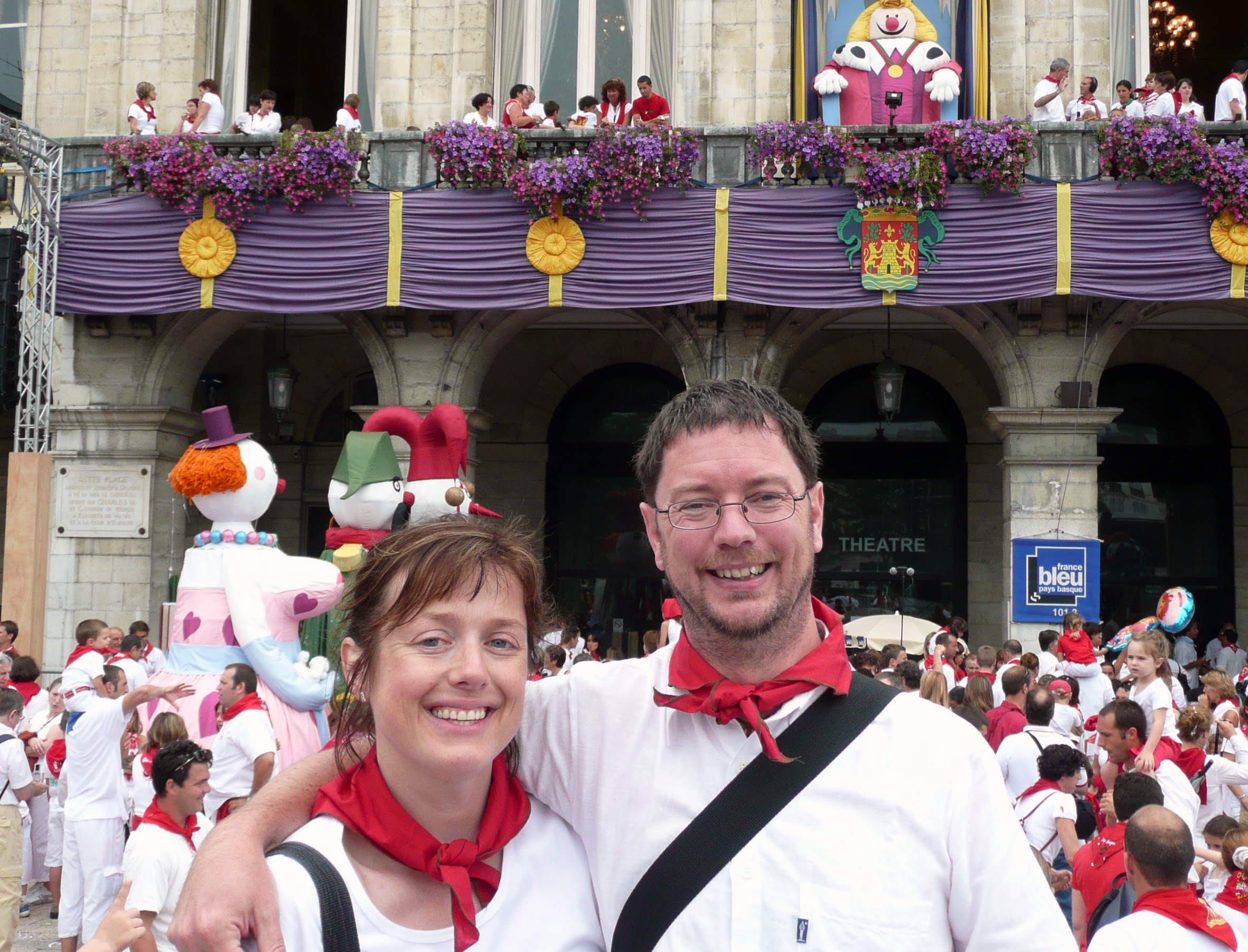
img: Mardi Michels and her mari, Mr Neil, at the Fêtes de Bayonne (2008).

STAY TUNED for tomorrow’s installment from our displaced fictional heroine, Libby, who seeks advice on her unexpected second pregnancy from someone who is older…if not altogether wiser. What, not keeping up with Libby? Read the first three episodes of her expat adventures.

If you enjoyed this post, we invite you to register for The Displaced Dispatch, a round up of weekly posts from The Displaced Nation. Includes seasonal recipes and book giveaways. Register for The Displaced Dispatch by clicking here!

Related posts:
Finding Paradise in Provence, Part 2: Our expat foodie asks – Patisserie or Pudding?

In the second of her guest posts this month, Joanna Masters-Maggs talks more about her recent culinary discoveries in France, as we ask her, “Is the foodie capital of the world everything it’s cracked up to be – or does the emperor need to put his clothes on?”

“I’m tired of these perfectly-glazed French tarts”, my husband declared last night. “I want a big, fat, English pudding.”

I looked up sharply. Was he making some untoward comparison between chic French ladies and less well-presented English women, such as myself? I hoped not, for his sake. But he was ruefully regarding the Mille Fueille on the plate before him.

“Some custard too. That would be nice.” He looked at me sadly.

I wasn’t sure how to react. “Get me some Golden Syrup and I’ll make steamed pudding,” I offered. Sixteen years overseas, but how English we are!

Just desserts…every Sunday

We have only been in Aix for six weeks and have held to our plan of finding the best food and drink it has to offer. Part of this includes buying a cake or tart from a patisserie each week for Sunday dinner. I reflected on what we have so far sampled: a chocolate Opera for the weekend of my daughter’s birthday, an open apple tart, another filled with patisserie cream and topped with fruit and, yes, glaze. We tried the Tropezienne which hails from St Tropez and was named by Brigitte Bardot.

Now this “thousand leaves of pastry” sat before us. Like its predecessors, it was pedigree in origin. Only the most shameless “bring–a-dish” guest would try to pass this off as homemade. Perfectly cut, evenly browned, you just knew it would not suffer from a soggy bottom or any similar such indignity.

So why is it that with these desserts fastidious restraint is so easy to find? My husband is right. If we had a steamed syrup pudding and some custard before us, we would have been slavering for second helpings. With this aristocrat, to do so would seem uncouth and unnecessary.

The proof of the pudding…

Perhaps, dare I even suggest, in terms of flavour and texture, if not the skill required to make it, Syrup Pudding and its like are superior as a pudding to their French counterparts. I am ducking the missiles I feel may be coming my way. But if I am unrefined in my tastes, surely I cannot be alone? Syrup Pudding may be simple, comfort food but it is also a divine comination of textures and flavours. The addition of custard, Crème Anglaise if you will, serves to cut any possible cloyingness of texture or the risk of oversweetness. Surprisingly light, but pleasingly substantial, there always seems room for another serving.

I have, on occasion, offered to clean up after dinner, singlehanded. Not some heroic act of self-sacrifice, offered at the shrine of my family’s comfort. Rather, the siren call of the dish the pudding was steamed in, enticing me to scrape it out. Can the same be said for the tin in which a Tarte Tatin was made? I fear not.

Leave it to the experts – or leave it to Mum?

I have been told that no French person would take along homemade pudding as a contribution to a dinner to which he or she had been invited. Such a thing would be to insult the host with a poor quality, amateur offering. Why take some ramshackle amateur affair when there are professionals to do a proper job?

It seems that we English – well, at least, my husband and I – feel differently. The “homemadeness” is what we enjoy. The time spent making it, the compliment to the host. As I cast my mind back to adverts for cakes and packaging for various factory-made cakes and puddings, it is clear that supermarkets and manufacturers are keen to stress their product is “Just like home” or “What Mum used to make.” The Brits will remember Mr. Kipling and his extraordinary cakes, which he liked to bring out for village fetes and cricket matches. It’s just that Mr. Kipling was a factory, somewhere fairly industrial in England, churning out Battenbergs by the thousand.

I have enjoyed and will continue to enjoy my foray into French patisseries. However, I feel it will not end my love of the home-baked, and what I will enjoy in most French bakeries are the comfortable croissants and brioches.

The best of both sides (of the English Channel)

For me food seems less about style and more about comfort and general “toothsomeness”. Is this another difference between England and France? I think it may be. I count myself lucky that, at the moment, I can enjoy both attitudes. But this weekend, my husband will get his syrup pudding and custard. Not, not just custard — make that “Crème Anglaise”!

Related posts:

Finding Paradise in Provence, Part I: An expat foodie’s views on French cuisine for the very young

Displaced Q: in modern French cuisine, who wins the race — the slow-food tortoise or the McDonald’s fast-food hare?

When a Julia Child-like curiosity about French cuisine leads to a displaced life — bienvenue au October theme

If you enjoyed this post, we invite you to subscribe for email delivery of The Displaced Dispatch, a round up of the week’s posts from The Displaced Nation. Sign up for The Displaced Dispatch by clicking here!

Img: MorgueFile

Give a dog a chocolate — why US-based expats shouldn’t use UK Chocolate Week to revive an old complaint

Continuing this month’s food-related theme — and in honor of National Chocolate Week in the UK — founding contributor Anthony Windram weighs in with some thoughts on the often contentious expat topic of American chocolate.

Though I do, like most people, enjoy a bit of chocolate, I’ve never been a connoisseur of the stuff. Any old rubbish will do for a quick fix, truth be told. I’m not one of those people looking for what percent of cocoa is in a bar. As a six year old, I remember my Nana — God bless her, then in the beginnings of dementia — had bought me a packet of chocolate from the corner shop. I can still recall the packet which, rather tellingly, was taken up with the picture of a happy dog. The chocolate inside was a little more out of the ordinary, a little grittier than normal. But it was chocolate and I was happy sat on the floor of my Nana’s living room munching away while watching TV, my mouth doubtless covered in chocolate. My dad, however, happened to notice the packet of chocolate and asked me if he could see it for a moment. Being a trusting child I made the mistake of giving him the packet of chocolate. I was never to see it again.

Nana, I was later to learn, had inadvertently purchased for me some chocolatey dog treats. However, as I recall they really weren’t too bad. Yes, the texture was more gritty than you’d prefer, but I had been as happy as Larry eating them. That should have been the moment that I realized that I was not, and never would be, a chocolate aficionado. When I was older and the only chocolate that I could find in the house was cooking chocolate, I was more than happy to snack on that, too. Coincidentally, its grittier taste reminded me of the dog treats I’d been given all those years before.

In its own way eating that chocolatey dog treat turned out to be good preparation for living in the US. The European expat now often seems to have strong views about chocolate in the US. Without any prompting they’ll bring the subject up and scrunch their face in disgust. “American chocolate,” they’ll say, spitting out the words like they probably do the chocolate itself, “is disgusting.”  And yes, I will admit, that it’s not great. Hershey’s chocolate has a lingering, bitter aftertaste that after eating it I often think I’m suffering from GERD. But you can eat a Milky Way and for the most part it is fine. You’ll possibly suffer from cognitive dissonance from the fact that an American Milky Way is, in fact, like a British Mars bar rather than a British Milky Way bar which is, in turn, like an American Three Musketeers Bar…oh, the confusion! But the chocolate in a Milky Way, while different, isn’t necessarily worse. It’s just in the grand scheme of things in the world of chocolate, American chocolate is the chocolate dog treats my confused Nana bought — and that isn’t something I’m going to complain too much about.

Question: What are your thoughts on American chocolate?

Image: MorgueFile

STAY TUNED for tomorrow’s post, part 2 of Joanna Masters-Maggs’ quest to find paradise in Provence.

If you enjoyed this post, we invite you to subscribe to The Displaced Dispatch, a weekly round up of posts from The Displaced Nation, plus some extras such as seasonal recipes and occasional book giveaways. Sign up for The Displaced Dispatch by clicking here!

Related posts:
Dear Mary-Sue: Things to do in Paris

Mary-Sue Wallace is back and she’s dishing out advice to the helpless like it were soup, soup from a big tureen of common sense in the soup kitchen we call the blogosphere … or something like that. If you are looking for solace, then you need Mary-Sue Wallace. Submit your questions and comments here, or if you are a shy bunny requesting anonymity then you can email Mary-Sue directly at thedisplacednation@gmail.com.

Dear Mary-Sue,

Growing up here in Japan as a big-time Francophile, all my life I’ve wanted to visit Paris. This fall I finally have a chance to go visit it for myself. I am so happy at the thought. I will get to stroll the streets and eat plenty of good food. Being such a travel expert could you give me a list of the top things you think I should do when visiting Paris?

— PA, Kyoto

Dear PA,

Ol’ Coley Porter put it best when he wrote that lovely classic of his, I love Paris. “I love Paris in the springtime / I love Paris in the fall / I love Paris in the winter when it drizzles / I love Paris in the summer when it sizzles.” And that sums up so perfectly and so succinctly my own thoughts about this darlin’ city. No matter the time of year, I fall in love with it. Whenever I arrive in Paris, I always make sure on that first night that I go for a stroll along the Seine. Ah, bliss. And when that’s over I go to a little cafe that I adore that is called…

….wait a moment….

….hmm….

….I’m sorry about this, PA, but I just noticed that you wrote that you’re from Japan. In that case, forget Paris. It’s overrated. Have you thought of visiting Malmo? I hear there’s also an interesting cement works in Frankfurt, you could go there. I’m sure it’s fascinating. And people keep telling me Swansea is the Paris of south Wales…

…Aw, shoot. As a loyal Mary-Sue-ite, you deserve a fuller explanation from me, PA. A Japanese Francophile finally visiting Paris after a lifetime of waiting? Aw, honey, sounds like you could be a prime candidate for Paris syndrome. Certain places just seem to have a strange effect on people. Believe me, I know this only too well. It’s why I’m never going back to Jerusalem. Went on a cruise there with my hubby Jake a few years back. Darn it if he didn’t come over all Messianic on me – thought he could walk on water. Well, the fine people at Cunard weren’t too impressed when he went overboard when trying to be all Matthew 14.

And Paris syndrome ‘aint no picnic either, honey. You can end up psychologically destabilized, suffering anxiety, hallucinations, feelings of persecution. Many Japanese visitors to Paris go there with such a romanticized image of the city and its occupants, that it’s a place of sophistication and politeness, that when they finally get there and see for themself the surly, rude reality of Paris they simply can’t cope. 

So PA, I ask again, have you thought about going to Frankfurt? 

— Mary-Sue

Anyhoo, that’s all from me readers. I’m so keen to hear about your cultural issues and all your juicy problems. Do drop me a line with any problems you have.

Mary-Sue is a retired travel agent who lives in Tulsa with her husband Jake. She has taken a credited course in therapy from Tulsa Community College and is the best-selling author of Traveling Made Easy, Low-Fat Chicken Soup for the Traveler’s Soul The Art of War: The Authorized Biography of Samantha Brown, and William Shatner’s TekWar: An Unofficial Guide. If you have any questions that you would like Mary-Sue to answer, you can contact her at thedisplacednation@gmail.com, or by adding to the comments below.

img: Close, by Corina Sanchez.

STAY TUNED for Monday’s post.

If you enjoyed this post, we invite you to subscribe to The Displaced Dispatch, a weekly round up of posts from The Displaced Nation, plus some extras such as seasonal recipes and occasional book giveaways. Sign up for The Displaced Dispatch by clicking here!

Related post:

Finding Paradise in Provence, Part I: An expat foodie’s views on French cuisine for the very young

Continuing our theme of French cuisine, today we bring you the first of two guest posts from Joanna Masters-Maggs. Joanna and her husband are originally from England and have four children aged between seven and fourteen. Over the last fifteen years they have lived in seven different countries, and this summer they achieved what is considered by some to be the Holy Grail, the Paradise of company transfers: a two-year assignment in France. Despite her nomadic lifestyle, Joanna has stayed British at heart, and her post therefore is written in British English.

Oscar Wilde once famously said:

“When good Americans die they go to Paris.”

Paraphrasing him, I like to say of the employees of the company for which my husband works that

“If they are good, they will finally be transferred to Paris.”

After living in six other countries during our 15-year marriage, our family has been lucky enough – or perhaps well-behaved enough – to be transferred to France. Not Paris but, in terms of Paradise, close. In fact, some would say we have been even luckier, because we are now based in delightful Aix-en-Provence.

Having spent the last two years in Saudi Arabia, I was more than ready to reacquaint myself with the delights of French charcuterie and wine. While a six-week period of hotels and temporary apartments offered plenty of opportunities to try restaurants, bistros and cafes, there is no point waxing lyrical about Michelin-starred restaurants and the quality of basic ingredients in markets and delicatessens. It’s all been said before, and by people far more qualified than I.

Thankfully, more prosaic matters had piqued my interest before I was invited to write this guest post.

Developing a French palate? It’s child’s play.

One of our first purchases in France was a couple of board games for family game night. Not the usual Monopoly and Trivial Pursuit, however.

“How interesting!” I thought, as I looked at these things in the shop. “Tasting games and smelling games for children? I’ve never seen that before.”

Well, the instructions claimed these pastimes were suitable for young children, but little did I realise how demanding the games would be. I am not four years old (the lower end of the suggested age range for players) but I had trouble distinguishing between liquorice and aniseed. More trouble than I care to admit.

We travel to experience different cultures. But even after living in such various places as Holland, Brazil, and Saudi Arabia – among others – I realised with the purchase of these games that resettling in France with four children was going to be quite the cultural experience.

Out of the mouths of babes

This hunch was confirmed a few days later. My 7-year-old son, Patrick, recently started a new international school here in Aix. As we walked down the leafy lane that leads to the kind of shuttered and shabby chic building this part of France does so well, we met David, one of Patrick’s new friends.

During the ensuing conversation that covered the unoriginal topics we mums tend to ask about, I learned that David had spent his first year in a mainstream French school before attending international school.

“It was hard,” he solemnly informed me. “No one spoke any English, and they were strict. But I miss it.”

“You do?” I asked in the sing-song, too-bright way that mothers always adopt when talking to small children. “Why is that?”

He turned serious eyes on me.

“Well, the food, of course,” he replied.

He was too polite to add “stupid” but it hung in the air.

“The French, you see. They’re good at food. It’s nice here, but in French schools they have three courses and lots of different cheese. We get less cheese,” he added sadly.

If you cook it, they will come.

I was already impressed with the food served at the two international schools my four children attend, so I understood this was praise indeed from David. My children’s schools have resisted the usual route of chips, nuggets and pizza, and instead serve mainly simple grilled meats with vegetables and salads. Wednesdays tend to be more indulgent days, involving cheesy gratins and so forth. Puddings are sparse, and at their most indulgent involve only a small patisserie. No one is allowed second helpings, but fruit is plentiful.

The French are rightly proud of their reputation for good food and believe that appreciating it should form a part of the educational system.

School lunches: a social occasion, and rightly so.

Not since our days in Brazil have I been so enthused by a system of school lunches. Brazil took the whole process one step further. From the ages of 4 and 5, my children sat down at one table with their classmates, teacher, and assistants, and ate together, passing the vegetables and pouring water for one another.

How wonderful to take the time in the middle of the day to eat together and socialize in this way.

Between Brazil and France, I have spent a lot of time in various schools, agitating for better food and a more pleasant way of serving it. Jamie Oliver would have been proud of me. Time and again, though, I was told that the schools had tried switching to healthier food on the menu, but the children didn’t eat it.

“Children must have choice,” the mantra goes. Thus the healthy food, unappealingly presented, is placed next to the chips and baked beans. After a week or so of throwing it away, the contracted caterers stop serving it, to save money and maximize profits.

What the French and Brazilians understand, however, is if the choice is between eating well or going hungry for a few hours, most children will eventually adapt their tastes into healthy eating habits that will last a lifetime.

Good food, small portions, and time given to it. Simple.

Other countries could learn so much from this philosophy, especially those who constantly bewail an obesity problem among their population.

After all, it’s probably no coincidence that I see so few large French people – or saw so few large Brazilians.

.

Img: Exhausted but happy! Joanna on her first afternoon in France.

STAY TUNED for tomorrow’s episode of Libby’s Life, when Oliver returns from Vancouver to some news from Libby. Good news — or not?

Related posts:

DISPLACED Q: In modern French cuisine, who wins the race — the Slow Food Tortoise or the McDonald’s Fast-Food Hare?

When a Julia Child-like curiosity about French cuisine leads to a displaced life — bienvenue au October theme

If you enjoyed this post, we invite you to subscribe to The Displaced Dispatch, a weekly round up of posts from The Displaced Nation, plus some extras such as seasonal recipes and occasional book giveaways. Sign up for The Displaced Dispatch by clicking here!

DISPLACED Q: In modern French cuisine, who wins the race — the slow-food tortoise or the McDonald’s fast-food hare?

In yesterday’s post on French cooking guru Julia Child, ML Awanohara wrote about the Slow Food movement, which began life in the 1980s in resistance against big international interests and, more specifically, the opening of a McDonald’s near the Spanish Steps in Rome.

Today, on its website, Slow Food states it aims to

counter the rise of fast food and fast life, the disappearance of local food traditions and people’s dwindling interest in the food they eat, where it comes from, how it tastes and how our food choices affect the rest of the world.

Valid and valiant aims in an eco-conscious world that nevertheless marches toward global homogenization.

Slow and steady? Or just slow?

Yesterday, ML also expressed her bemusement that the movement started in Italy, not France — a reaction I share with her, because if one traditional cuisine takes le gateau when it comes to drawn-out toiling over a hot stove, it’s the French.

Learning the nuances of French cooking isn’t something I’ve ever yearned to do. While I am full of admiration for Julie Powell and her quest to conquer all 524 recipes in Julia Child’s tome of French cooking, I have no desire to repeat the exercise myself.

Well, perhaps that is no more you would expect of me. I am British, after all — Brits aren’t famed for their good food, although of course I feel this reputation is undeserved — and I have lived much of my life in America, home of fast foods such as Burger King and McDonald’s.

Do I exist on cheeseburgers and fries, though? Absolutely not. Rarely, in fact. I cook most things, from traditional English cakes and roast dinners to an authentic variety of Indian, Chinese, and Thai dishes. When it comes to French cuisine, though, my repertoire is limited to creme brulee and cherry clafoutis.

My reason? I’m not prepared to spend vast swathes of my evening preparing an eighteen-ingredient, three-page recipe when I can get an enthusiastic reception from my family by cooking a Ken Hom stir fry in one-third of the time.

But no matter the nationality of food I cook, it’s rare that our family does not sit down together in the dining room and eat together. The way I see it, rather less time spent in the kitchen means more time eating and conversing as a family.

Could it be that French cuisine has shot itself in the foot with its complicated nature?

Winning by a hare’s breadbun?

In his 2008 article in The Times, Hugo Rifkind describes McDonald’s as

“France’s dirty secret.”

Three years ago, Paris had around 70 McDonald’s — or McDoh’s, as they’re known there — which is the same number as in London, in a city with a third of London’s population.

Rifkind says:

Stop any Frenchman on the street…and he will shrug and snarl and say that he doesn’t eat in McDonald’s.

But someone does, and it can’t be just the tourists.

Evidence suggests that the image of the French businessman taking a two-hour, multi-course lunch is gradually being consigned to the past, and instead of lingering over a bottle of fine red and runny camembert, Monsieur is adopting the regrettable Anglo-American habit of lunch on the hop.

One oft-quoted statistic is that the length of the average French meal has fallen from 1 hour 22 minutes in 1978 to a mere 38 minutes today.

A sad statistic indeed.

While McDonald’s is trying to cater to the French palate by introducing the McBaguette and the Croque McDo, I feel this is missing the point.

Food is not just about fueling the body.

It is about taking time out of your day to enjoy time and conversation with friends. It should be about savoring the taste of good flavors, not about stuffing a sandwich down your gullet as fast as possible so you can make that meeting at one o’clock.

In Aesop’s fable, the tortoise eventually won the race.

In this race, I hope the Snail does.

STAY TUNED for Wednesday’s guest post by a serial expat who has recently moved to Provence.

Related post:

When a Julia Child-like curiosity about French cuisine leads to a displaced life — bienvenue au October theme

If you enjoyed this post, we invite you to subscribe for email delivery of The Displaced Dispatch, a round up of the week’s posts from The Displaced Nation. Sign up for The Displaced Dispatch by clicking here!

Img: MorgueFile

When a Julia Child-like curiosity about French cuisine leads to a displaced life — bienvenue au October theme

The first time I was introduced to the Slow Food movement was in the land of its birth, Italy. My husband and I were in Florence for the wedding of his niece, and we ended up befriending and dining out with a couple of the other guests: a Chinese-American brother and sister from California who were serious gourmets and would only go to Slow-Food restaurants.

Ever since then, I’ve been puzzled.

Not by the concept of Slow Food itself. I get the idea of savoring a meal that is cooked from fresh, locally-sourced ingredients and that has not been prepared in advance — we’re talking the anti-Fast Food.

What’s more, I had enormous fun in Florence peering at all the restaurant doorways to see if they had a snail symbol. “No snail? Well then we’re not eating there,” I would declare to my husband.

No, what I find confounding is that the movement started in Italy, not in France.

For me, Italian food, with its pizzas, anti-pastas and gelatos, comes fairly close to being the fast food of Europe.

That could never be true, of course, of French cooking. (And what better symbol of French cooking than a snail, btw?)

I feel certain Julia Child would agree with me. An expat in Paris for many years, Julia belongs in the Displaced Nation’s Hall of Fame because of her refusal to be satisfied with her native country’s Anglo-derived plain food consisting of meat and potatoes and two veggies — let alone the fast-food version: meat (as it were), bun, French (quel insult!) fries, no veg.

Addressing just one of these nefarious ingredients, Julia once said:

How can a nation be called great if its bread tastes like Kleenex?

For Julia, France was a spiritual as well as culinary homeland. As she wrote in her memoir, My Life in France:

I fell in love with French food — the tastes, the processes, the history, the endless variations, the rigorous discipline, the creativity, the wonderful people, the equipment, the rituals.

A date with destiny

Julia’s first forays into foreign cuisine occurred when she worked for the Office of Strategic Services (the precursor to the CIA) during World War II.

She was posted first to Kandy, Ceylon (now Sri Lanka), and then to Kunming, China. Along the way, she met, and fell in love with, Paul Child, an early example of a foodie. At Paul’s initiative, they entertained themselves by exploring Ceylonese and Chinese cuisine and culture.

The pair married the year after the war ended, and Paul went to work for the American Embassy in Paris — a move that proved fortuitous in the extreme for his wife’s career.

For their first meal on French soil, Paul ordered sole meunière. For Julia, it was an epiphany — “the most exciting meal of my life.” The scales fell not just from the fish but from her eyes. She could see what American WASPs like herself were missing out on: sauces made with fresh herbs, butter, wine, and so forth.

The rest is history.

Bon appétit — say what?

Well, not quite. To be honest, I don’t think Julia’s approach to French cooking ever really took hold here in the U.S. We pretended that it did because we loved Julia so much. We loved her for her jolly-jape sense of humor and melodious voice.

But half the time, we didn’t understand what she was wittering on about.

Now, Julia knew that her fellow citizens were mostly flimsies (her word for people who aren’t serious about food). But she thought that the key to converting us was to provide a step-by-step outline of the centuries-old techniques that the French learn like a language: how to make foundation sauces, how to do a roux, how to lay in flavor, how to be patient.

The blogger Julie Powell tried to cook all 524 recipes in Child’s encyclopedic Mastering the Art of French Cooking, in a single year. Some say it was a gimmick, but I say, hey, she deserves the fame — including the honor of having Amy Adams play her in the ensuing Nora Ephron film, Julie & Julia.

‘Fess up: when was the last time you cracked open Julia Child’s magnum opus and gave her recipes a try?

Food writer Regina Schrambling wrote in a post for Slate just after the film’s release, analyzing the problem:

Consider the boeuf bourguignon depicted so romantically in the movie… The ingredients and instructions for its recipe span three pages, and that is before you hit the fine print: The beef stock, braised pearl onions, and sautéed mushrooms all require separate procedures. Step 1 involves making lardons and simmering them for 10 minutes in a precise amount of water; seven steps later, the fat is finally skimmed off the sauce, which is either boiled down to thicken or adjusted with liquid if it’s too thick.

And this is considered an entry-level recipe….Even simple sautéed veal scallops with mushrooms involve 18 ingredients and implements and two pages of instruction.

TDN’s October theme

Still, if expat blogs are anything to go by, a Julia Child-like curiosity with France and French cuisine has continued unabated since Julia’s own time. There is no shortage of Americans (also some Canadians and South Americans) who have relocated to France and intend to stay for as long as it takes to learn the art of French cooking at some level.

Partly out of curiosity, partly out of jealousy, The Displaced Nation will peer into the lives — and kitchens — of several of these expats during October.

What is it actually like to make the Ultimate Slow Food your focus? It any less daunting because of living in France and adopting the French lifestyle? And like Displaced Hall of Famer Julia Child, do today’s expats have (or hope to have) a spoon in the soup back here: are they planning to stir things up and convert us?

Readers, do you have any questions you’d like us to explore on this theme? Vas-y! Let us know!

If you enjoyed this post, we invite you to subscribe to The Displaced Dispatch, a weekly round up of posts from The Displaced Nation, plus some extras such as seasonal recipes and occasional book giveaways. Sign up for The Displaced Dispatch by clicking here!

Image: MorgueFile

The road trip and the teenage soul

Beginning today, Charlotte Day joins The Displaced Nation as monthly columnist and will comment on our themes from her third culture kid (Australia-US-UK) perspective. September, of course, was road trip month. Though Charlotte has yet to earn her driver’s license, the prospect of free time between high school and university has begun to fuel her imagination…

Sitting at my English boarding school desk, with English boarding school weather drizzling down from the sky outside my window, the idea of a road trip seems utterly foreign. While I’ve been putting together my application for English universities over the past week, which involves a disgustingly trite “personal statement,” the post-exam summer has been jeering at me from behind an ever-growing pile of books.

The road trip represents all of a stressed and stifled sixth former’s ideals, the first being absolute freedom. This freedom is born more of security than anything else — exams finished, hopefully a university offer in the bag, five whole months to dispose of, no looming responsibilities. The image of the angst-ridden teenager is romanticized and misguided: we do not seek malaise and uncertainty but rather comfort and certainty.

Evaluated in this sense, the road trip is akin to a ghost story. The pleasure we take in listening to ghost stories comes from the knowledge that, though the tale itself may threaten, secure reality encircles and protects us. Teenagers nowadays go adventuring in South America, more often than not supervised by charitable organizations and subsidized by their parents. Setting off into the wilds, they seek a future that doesn’t seem vulnerable to any current of chance. Rather, adventure is a brief detour from a pre-set plan.

I have often contemplated my own post-exam adventure in the form of a road trip across the Australian desert with one of my oldest friends. Yet, I am tempted to wonder, what is the point of venturing into the unknown, if only to return to the comfort of the known?

A true coming-of-age adventure would take courage — and would not end in merely turning the van around and arriving home with several memory-sticks full of photographs. That said, I do not cancel the possibility of driving through my native country — an experience that would very likely prove both enjoyable and “life-changing” in a tame sense. But my phantom road trip, eschewing tameness and security, is, undoubtedly, more interesting material for this column.

Let us begin, then, with the road. (I can’t say I know much about roads, save that hairpin bends on a mountainside are as hair-raising as country dirt roads are romantic.) Given that this is the Displaced Nation, familiarity with the territory is out of the question. I will forcibly displace myself — ruling out the United States, England and Australia.

Setting out to conquer … Western Siberia?

This still leaves a huge selection of countries — and having done the electronic version of sticking a pin at random in a world atlas, I have settled on Western Siberia.

Given I am a passionate Russophile and speak a modicum of Russian, my cursor couldn’t have landed on a better country. But confronted with the expanse of Western Siberia, it is doubtful that either of these qualities will be of much use. Perhaps it is telling that Google maps cannot plot a journey from Yakutsk, through Irkutsk and Krasnoyarsk, to Novosibirsk.

One dilemma instantly presents itself: where would I stop and spend the night? I would doubtless end up sleeping in the car for the vast majority of the trip, which brings us to the car itself. In my perhaps misguided road-trip fantasies, I had always pictured one of those old Volkswagen vans — slightly falling apart, squeaking along an endless highway.

But the prospect of breaking down in the middle of Western Siberia does not appeal to me. I must settle for a more prosaic Winnebago-type vehicle, and seek excitement elsewhere. And, as traveling through a wooded desert of sorts, alone, would be not only foolhardy but isolating, a companion seems necessary.

But who, of my sensible friends and relatives, would jump at the chance to travel Siberia in a Winnebago with an insane Russophile?

Given this journey is a child of my fancy, I will not scruple to add another fantastic fabrication: someone whom the power of affection has persuaded to join me on my ill-advised quest. In short, a boyfriend: thoroughly idealized, as a genuine boy in his late teens would prove a terrible nuisance, stuck in a Winnebago from Yakutsk to Novosibirsk. (But of course, the conceit of the comfortable Winnebago is also absurd: such things are found with difficulty in Russia.)

Relishing the … monotony?

You may ask, save an endless parade of trees, open space, greyish vegetation, what would I hope to see? Just that, smattered with the odd town, church cupola, river, lake, blue sky, grey sky, sunrise and sunset.

Unlike Konstantin Levin of Anna Karenina, I do not see myself losing my heart to the Russian land, and devoting my future to wheat threshing. I would become an unfulfilled Chekhovian heroine, stifled in the provinces.

But I believe the fields must be seen, just as we must eat bread, where macaroons would bring more pleasure to the taste buds. Macaroons, far from nourishing, make us fat and complacent. Bread sustains, and makes us grateful to be alive and fed.

I would like to see land in all its endless, characterless glory, to drive from sunrise to sunset, and to talk the night through (although not literally, as I would be loath to crash my Winnebago through exhausted inattention).

I envisage some sort of talisman, suspended from my rear-view mirror—and not one of those scented pine trees, seen so frequently dangling from the rear-view mirrors of American cars. Perhaps an Australian gum leaf on a string, as a reminder of my greater journey’s starting point, now eleven years in the distance.

After all, if I am not to return to the known at the end of this journey, I must bring a fragment of it with me, into the dangerous, the blank, the uncharted space, from which discovery springs.

Readers, any questions or suggestions for Charlotte, before she sets out on any phantom — or real — road-trip adventures?

img: Charlotte Day surveying Trafalgar Square in London.

STAY TUNED for Monday’s post, the first in a new series on the joys and challenges of being an expat in France and attempting to master French cookery.

If you enjoyed this post, we invite you to subscribe to The Displaced Dispatch, a weekly round up of posts from The Displaced Nation, plus some extras such as seasonal recipes and occasional book giveaways. Sign up for The Displaced Dispatch by clicking here!

Related posts: