The Displaced Nation

A home for international creatives

Displace Yourself…to Dubai

Welcome to the first in a new occasional series, “Displace Yourself”, where we look at different countries popular among expats, and find background reading for those who might be contemplating a move.

This month: Dubai, UAE.

Dubai: Facts and figures

Population : 2.2 million and rising fast
Area : 3,900 square kilometers
Official Language : Arabic
Major Religion : Islam
Government Type: Constitutional Monarchy
Legal System : Federal court system
Main Exports : Crude oil, natural gas, dried fish, and dates
Working week (public sector) : Sunday through Thursday
Time Zone : + 4GMT
Local Currency : UAE Dirham
(Source: http://www.dwtc.com

Inside Scoop  —  on practicalities

@home in Dubai – getting connected online and on the ground
by Anne O’Connell
Published December 2011

About the author:
A native of Halifax, Nova Scotia, Anne has been an expat since 1993, when she swapped central heating in Canada for air-conditioning in Florida, Dubai and Thailand.

Cyber coordinates:
Website: http://www.globalwritingsolutionsonline.com
Twitter: @annethewriter
Facebook: http://www.facebook.com/annethewriter or http://www.facebook.com/globalwritingsolutionsonline.com

Overview of book:
“From getting a work permit to finding a WiFi hotspot… or even connecting with a fun sport or social group, @Home in Dubai has the inside scoop on how to get it done. Knowing the drill is half the battle and O’Connell, and other expats who weigh in with their advice and experiences, are happy to share a few ‘how tos’. ” (Amazon product description)

One reader’s review:
“It was Anne’s wealth of information that let me slip into life in Dubai with relative ease. How thoughtful of her to have put it all down in writing so that others can benefit from her experience and avoid some of the pitfalls of not exact or missing information or the ever present uninterested, ill-informed clerk.” (Katie Foster, at Arabian Tales And Other Amazing Adventures.)

Inside Scoop — from one who returned

One Year in Wonderland: A True Tale of Expat Life in Dubai
by Christopher Combe
Published July 2011

About the author:
Christopher Combe lives near York, England, and through his work has traveled to the USA, the Middle East, Far East, and much of Europe. “One Year in Wonderland” was his first book, published in July 2011. His second, “You Are My Boro: The Unlikely Adventures of a Small Town in Europe” was released in December 2011.

Cyber coordinates:
Blogs:  http://fatandfurious.blogspot.com/ and http://beerandbloating.blogspot.com/
Twitter: @BigHippyChris

Overview of book:
“Based on the popular blog “Beer And Bloating in Dubai“, this is the story of one British family’s year in Dubai, presenting a forthright, funny and poignant outlook on their experiences. Written between the summers of 2006 and 2007, it offers a peek at what the city is like through the eyes of one mad fool who took the plunge.” (Goodreads)

One reader’s review:
‘It is accurate and straight talking, and very amusing in parts too, and it does paint a very realistic picture of the good and bad of expat life, or rather, what life is like for some expats in DXB. As a book, it still reads very much like a blog and perhaps a bit more content and context could have been added to fill it out some to make a better book, but as it is, it makes for a succinct and funny report on Dubai life.” (Amazon.co.uk review)

Inside Scoop — the good, the bad, and the not so pretty

City of Gold: Dubai and the Dream of Capitalism
(Published in UK as Dubai: The Story of the World’s Fastest City)
by Jim Krane
Published September 2009

About the author:
Journalist Jim Krane has had a long and varied career as reporter for the Associated Press in Dubai, Baghdad, and Afghanistan, and as an AP business writer in New York, focusing on technology news. He is the winner of several journalism awards, including the 2003 AP Managing Editors Deadline Reporting Award, for coverage of Saddam Hussein’s capture in Iraq. Jim Krane lives in Cambridge, England.

Cyber coordinates:
Website: http://www.jimkrane.com

Overview of book:
“Jim Krane charts the history of Dubai from its earliest days, considers the influence of the Maktoum family which has ruled since the early nineteenth century, and looks at the effect of the global economic downturn on a place that many tout as a blueprint for a more stable Middle East.” (Author’s website)

One reader’s review:
“Krane rightly highlights Dubai’s dark side. Indeed, local UAE bookstores are not selling it because there is sensitivity to what he writes. He doesn’t pull punches–either about human rights and labor abuses, prostitution, or Dubai’s difficult balancing act between the US and Iran, or about the short-sighted Arab-bashing in the US Congress that characterized the Dubai World ports deal. Krane calls ’em like he sees ’em. “City of Gold” is an enjoyable and eye-opening read.” (Amazon.com review)

Inside Scoop — behind closed doors

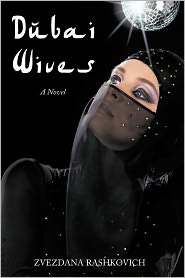
Dubai Wives (Fiction)
by Zvezdana Rashkovich
Published January 2011

About the author:
Born in Croatia and raised in Sudan, Zvezdana Rashkovich has since lived in Egypt, Iraq, USA, and Qatar. She currently lives in Dubai, where she is writing a novel based on her life in the Sudan.

Cyber coordinates:
Website: http://zvezdanarashkovich.webs.com
Blog: Sleepless in Dubai
Twitter: @SleeplesinDubai

Overview of book:
“A stirring tale encompassing tradition, identity, and faith, Dubai Wives takes the reader into a hidden world behind the walls of lavish mansions and into the desperate back alleys of Dubai; from the hills of Morocco to the gloomy English countryside and from the slums of India to the glittering lights of the Burj Al Arab.”
(From author’s website)

One reader’s review:
“The author’s greatest strength lies in showcasing the ethnic and cultural diversity of the city. There is Jewel in her Swarovski embroidered abaya, humiliated by her husband’s infidelity, the Romanian Liliana dancing in a seedy nightclub, Cora the Filipino maid desperate to rid herself of an unwanted pregnancy and plain English Jane whose Dubai make-over includes plastic surgery and belly dancing lessons as she relentlessly pursues a transformation into glamour.” (Amazon.com review)
.

STAY TUNED for Wednesday’s post, another in our new series where we investigate if you really can “go home again.”

If you enjoyed this post, we invite you to subscribe for email delivery of The Displaced Dispatch, a round up of the week’s posts from The Displaced Nation. Sign up for The Displaced Dispatch by clicking here!

Image: MorgueFile

LIBBY’S LIFE #54 – Opening the cocoon

There’s probably a word for it in the Complete Oxford English Dictionary. An obscure word that only makes an appearance on Radio 4 intellectual game shows. Something like:

Tri-gami-matri-taci-filial (noun, Old English) — the silence of a son regarding his mother’s marriage to a serial bigamist after the father’s third marriage.

Then people like Stephen Fry and Paul Merton would make clever, rude jokes about this word, and you’d wonder why the English language possessed such an item, because such a situation was unlikely to exist.

Except the situation does exist, and consequently I’d like to know the word that has this definition:

“The pissed-off feeling after realising that your husband of nearly seven years has accidentally-on-purpose forgotten to tell you that his estranged father was a serial bigamist and didn’t run off with a local librarian like he and your mother-in-law had always led you to believe.”

I mean, it’s not as if it would have mattered, is it? If Oliver had told me on our second date, “Oh, by the way, Libs, I didn’t grow up with a father because my mum found out that he was married to a couple of other women at the same time” — I would hardly have stomped out of the restaurant before he could ask me out on a third date.

Did he really think I would have said, “God, Oliver, I’m glad you came clean with me now because obviously, there is no way I could marry the spawn of such pond slime”?

I know what you’re thinking. If it wouldn’t have been such a big deal on our second date, why am I making a fuss now?

Because it’s gone past the point of being an unfortunate fact about Oliver’s ancestry. Ten years ago, before our engagement, I could have processed the knowledge and said, “Poor Oliver. Your poor mum. What a terrible thing to happen.”

Now, although I still think that way, pity has been overtaken by hurt that Oliver couldn’t see fit to tell me.

I am being treated like the criminal, but why? The real criminal is Oliver. He has known about this all along, and in the ten years we have known each other, has never told me this story, although it’s obvious that he knew. Why did he not feel he could tell me, his girlfriend, his fiancé, his wife, his soulmate? Has he so little faith in me? I feel bereft, my faith in Oliver plundered.

But self-pity inevitably mutates into anger.

Today, I am angry, and everyone knows it.

Well, nearly everyone. Jack knows it, George knows it, and Beth knows it. The only person who is oblivious is Oliver himself, the object of my anger, and as usual he’s out, avoiding the issue. Avoiding me.

Meanwhile, rage swirls around my head and seeps out through my ears, filling the house with noxious atmosphere.

I’ve been passive too long.

I gather up the twins and strap them into the double stroller. Jack peeps cautiously at me from behind the sofa where he is quietly playing with Lego bricks.

“Put your sneakers on,” I say. “We’re going out.”

*  *  *

It’s a long time since we’ve been out.  Nursery school has finished for the summer. After the first couple of weeks when the Coffee Morning Posse delivered freezer casserole after freezer casserole, no one has been to visit — not even Maggie. I suppose they think I’ve got enough to do without catering to visitors. Even my mother has been quiet, phoning only once since she got back home. For the last few weeks, I’ve holed myself up in the house, seeing no one, ordering groceries online, too depressed and timid to put a foot outside.

But today is a beautiful, sunny day, my anger is invigorating, and I’m tired of being a hermit. I make Jack hold the handle of the stroller, loop Fergus’s leash round my wrist, and off we set, along Juniper Close.  We are walking to Main Street, to a place of busy-ness, to be with other people who will only coo at my babies and won’t see the rage and hurt in the back story.

Fergus, however, has other ideas. He crosses the street docilely enough, but as we turn right towards the road that leads to Main Street, however, he lags behind and his leash pulls on my wrist. He wants to go the other way.

I tug on the leash. He sits. I tug again. He lies down.

It’s an impasse. Fergus and I stare at each other. He usually wins these stare-down contests, but I’m in no mood for defeat. Today, I’m determined to win, so I don’t break my gaze, not even when I hear footsteps on the sidewalk behind me. Whoever it is can step onto the road and walk around us.

The footsteps slow, then stop.

“We first met,” I hear Maggie say, “when there was another drama going on between you and this dog. I haven’t seen you out with these children for weeks. Were you coming to see me?”

I continue to stare at Fergus so I don’t have to meet Maggie’s eyes. She’s right. I haven’t seen her since the twins were a couple of weeks old. How time flies when you’re having fun.

“If I hadn’t seen you today,” she goes on, “I’d have come to visit. I don’t like to intrude, but…”

“It’s been difficult,” I mutter. “The twins — they’re a lot of work.”

“I’m sure they are,” she says. “And from what I hear, so is your husband.”

She has my attention now.

“How do you know?” I demand. “What do you know?”

Maggie places a hand on my forearm and takes Fergus’s leash from my wrist. She gives the leash a gentle shake, and he gets up to stand by her, as docile as you please.

“Your mother and I became pretty good friends while she was here, you know. We made an agreement. I would be there for her daughter in America, and if the need ever arises, she will be there for mine in England.”

Mums’ Army. The Maternal Foreign Legion.

“Come on, Jack,” Maggie says, taking his hand. “Back to Granny Maggie’s house.”

With difficulty, I turn the wide stroller around to face the other direction.

“‘Granny Maggie’?” I ask. “Does that make you my mother, then?”

Maggie smiles, just a little.

“The next best thing on this side of the ocean,” she says.

.

Next post: LIBBY’S LIFE # 55 – Dark secrets

Previous post: LIBBY’S LIFE #53 – Preserved on tape 

Need the 411 on characters in Libby’s Life? Click here for  Kate’s page  of Who’s Who in Woodhaven.

Click here to read Libby’s Life from the first episode.


STAY TUNED for Monday’s post — a Dolce Vita Slideshow!

If you enjoyed this post, we invite you to subscribe for email delivery of The Displaced Dispatch, a round up of the week’s posts from The Displaced Nation. Sign up for The Displaced Dispatch by clicking here!

Image: Travel – Map of the World by Salvatore Vuono / FreeDigit

A marathon reign of Olympic proportions: Queen Elizabeth II’s Diamond Jubilee

Regardless of where you were in the world at the weekend, you were most likely aware of a little party going on in Britain, to celebrate one woman’s six decades as Queen.

Queen Elizabeth II is only the second monarch of Great Britain to have reigned sixty years, the first being Queen Victoria, who was on the throne for 63 years and 7 months. Given the Royal Family’s record of longevity — the Queen Mother was 101 when she died in 2002 —  Victoria’s record could well be beaten in 2016, and Brits shouldn’t rush to chuck away the flags and bunting. They’ll probably need them in another ten years’ time for Britain’s first Platinum Jubilee.

Sixty years is a long time for anyone to be in one job, particularly when you didn’t get much say in your nomination for it. And, OK, while republican sympathizers might think a carriage clock for the mantlepiece at Buckingham Palace would be adequate recognition, millions of Brits this weekend seemed very happy to foot their share of the bill for the extravagant national celebrations.

A job for life

Most people would have quit that job long ago. The Queen, however, is made of sterner stuff, and her determination to see the job through to the end — quite literally — means, inevitably, she has seen huge changes during her reign.

Not least of these is the issue of how she came to be Queen in the first place. Forced to choose between being King and marrying divorcee Wallis Simpson, Edward VIII abdicated the crown to be with the love of his life, and in doing so made his younger brother King, and his niece Elizabeth first in line to the throne. To have a monarch married to a divorcee went against the teachings of the Church of England, of which the British monarch is Supreme Governor.

Ironic, then, that three of Queen Elizabeth’s four children have divorced, including, of course, the Prince of Wales, Britain’s next King. They all divorced or separated in 1992, the year referred to by the Queen as her “annus horribilis”.

The monarchy survived this crisis with its usual show of stalwartness and stiff upper lip, only to be hit, five years later, by a much bigger crisis — the greatest since the abdication of the Queen’s uncle in 1936.

Making a rod for one’s own back

After the sudden death of Diana, Princess of Wales, the Queen again employed a stiff upper lip in her “business as usual” approach to the tragedy, but drastically underestimated the intensity of the public’s grief at the death of her ex-daughter-in-law. The public perceived the Queen as cold and uncaring when she stayed in Scotland in Balmoral Castle while insisting on adhering to Royal  protocol by not having the flag at Buckingham Palace flying at half mast.

In an article in The Telegraph, Mary Francis, a former advisor of the Queen,  said that at the time she “feared that republican MPs would call for a end to the monarchy because of public anger at the Royal Family’s initial reaction to the death of Diana.”

In the Radio 4 documentary, “A Royal Recovery”, Mrs. Francis said:

I do remember walking into Buckingham Palace the first morning I was back. Although there were so many people around, it was very quiet. It was a threatening and rather unpleasant atmosphere.

Rising from the ashes

Incredible, then, fifteen years later, to watch the enthusiastic crowds in London at the weekend as 1,000 boats sailed up the River Thames in the largest pageant on the Thames since the reign of Charles II, 350 years ago. It was as if the Diana crisis had never happened. Or maybe it was something more – an acknowledgement, admiration, of this woman’s unswerving devotion to duty.

As my Australian friend, Kym, said to me yesterday:

“Regardless of what you think of the monarchy, it’s an amazing testament to a woman who has been in ‘the job’ for 60 years.”

Indeed. Sixty years is, in terms of Olympian feats, a marathon; one which deserves a crowd to cheer on the runner.

Our theme for summer: Olympian Feats

It’s fitting, therefore, that the Jubilee’s acknowledgement of stamina and determination should come at the time of another event when these qualities are essential:  the 2012 Summer Olympics in London.

Because of this, we have decided to revolve our summer posts around an Olympic theme — not necessarily the sports themselves, but more about the qualities required of an Olympic athlete, or a long-reigning monarch.

As we are more armchair sportsmen, however — and it is Wimbledon very soon, of course, which takes up an awful lot of armchair time —  we will be taking a break ourselves, by cutting our posts down to four per week rather than the usual five. Nevertheless, you can look forward to two new series starting this month — “Chance Encounters” and “You CAN Go Home Again” as well as the familiar Random Nomads, Displaced Qs, questions for Mary-Sue, book reviews, and bulletins from Libby in Woodhaven.


If you enjoyed this post, we invite you to subscribe for email delivery of The Displaced Dispatch, a round up of the week’s posts from The Displaced Nation. Sign up for The Displaced Dispatch by clicking here!

LIBBY’S LIFE #53 – Preserved on tape

I stare at the dark computer screen, wondering if my overactive imagination is misleading me.

Only one way to find out. An imagination doesn’t mislead twice. Not in the face of hard facts from a digital camera.

I hit “Play” on the screen again, and scroll through our unedited wedding footage until the time elapsed says 1 hour, 25 minutes.

Act 1:

The evening party at our wedding. To the left of the stage where the band is playing a particularly sickly version of  Stevie Wonder’s “I just called to say I love you” (look, my dad booked the band, OK?) a large clock on the wall shows the time to be 9:40.

At 9:40pm on our wedding day, Oliver and I were on the other side of London, in the bar at the Heathrow Hilton, ready for our flight to Ibiza the next morning.

This is all the stuff that happened after we left our party. It’s fascinating and morbid at the same time. Like watching your own funeral.

No one appreciates the band’s rendition of Stevie Wonder, and the only person on the dance floor is a little girl in a pink frothy frock — the daughter of Mum’s cousin. Yasmin, her name is. She  twirls around in circles, round and round and round again, until she is dizzy and falls down, laughing up at the camera. The camera zooms out, and to the right of the dance floor reveals a cluster of small, circular tables, covered with empty glasses and plates of half-eaten vol-au-vents. We were supposed to have had wait staff all night at the reception, but apparently they disappeared as soon as the Adorable Couple had left the bash.

At one of the small tables, on her own and nursing a glass of what looks like water but is most likely vodka, sits Sandra. She hunches to one side, leaning against the wall, a morose expression on her face as she swigs from the glass. She’s not happy that her little boy has another woman in his life.

The camera swings down in a jerky movement and drops its gaze to the floor. A man’s foot in a  scuffed black shoe — the videographer’s. (I’m guessing he’s had quite a bit of party bubbly and is merely filming for his own amusement, since the day’s main attractions are now propping up a different bar in a Hilton forty miles away.) Then up again, focusing on the little girl in the pink dress, who is dancing a ballet routine to the band playing a different song — a slow one by Journey, I think. A few feet behind the little girl, my mother comes into view. The mother of the bride is resplendent in a fuchsia pink wedding suit that would have been more at home at a wedding in 1987. She’s heading towards Sandra.

At the little table, Mum sits down and pushes some vol-au-vents aside. She smiles brightly at Sandra; they are related now, bonded by marriage and the mutual loss of their only offspring. Mum, though, is not as heartbroken as her counterpart, because she has not really lost a daughter. Daughters are never lost; they are merely loaned to their husbands.

Sandra, however is inconsolable. Her loss is total, and she is utterly bereft. Emotion runs deep in her veins. So does the vodka.

She says something to Mum which is inaudible above the strains of the Steve Perry wannabe. She waves her glass around, and speaks some more. I know that if I could hear her, the words would be slurred.

A look of concern crosses my mother’s face.

I recognise this look. It’s the look I used to see when I came home from school, slamming my book bag on the kitchen table and muttering dire, cryptic threats against whoever had happened to piss me off that day. A quick, sideways glance, sizing up the gravity of the situation: “Is Libby really going to slash that teacher’s tyres? Do I intervene or keep saying ‘Yes, dear’?”

Mum starts to speak, and Sandra’s face crumples. Mum takes her hand and squeezes it.

I want to know more about this little scene, but the videographer is intent upon capturing Second Cousin Yasmin  and her ballet routine whose tempo is too fast for this last-smooch-at-the-disco song.

The camera zooms in on the little dancing feet in their pink sparkly Mary Jane shoes, and the unfolding drama between my mother and Sandra is lost.

Act 2

I nearly missed this part, so intent was I upon the visual aspect of the film. My mother and Sandra do not appear on the whole of the DVD again, even though there is still another forty minutes of footage to go. My goodness, but we got our money’s worth from that videographer.

A tantrum on the dance floor.

Second Cousin Yasmin has exhausted her repertoire of dance routines but, undeterred, has dragged a chair to the middle of the floor so she can show off her barre exercises.

Battements tendus — un, deux, trois. To the side — un, deux, trois.

Pleasing, perhaps, to the eyes of fond mothers at ballet school, when set to the strains of Saint-Saens and Faure, but not so pleasing to the occupants of the dance floor who are trying to boogie to the band’s version of “Love Shack.” They keep tripping over the chair and Yasmin’s outstretched limbs.

Yasmin’s father, my mother’s cousin Ted, strides onto the wooden floor. He picks up the chair in one hand, and grabs onto TwinkleToes herself with his other.

“Bang bang, on the door baby,” sings the female vocalist in little more than a whisper.

The lull in the song is Yasmin’s cue to yell, very loudly. She calls her father a name that six-year-olds are not supposed to know, let alone use in the formal setting of a wedding reception. Uncle Ted is not impressed, and tries to haul her away. It’s well past her bedtime, anyway.

Yasmin, though, doesn’t agree with this sentiment, and sits down on the floor very suddenly, knocking her father off balance. He drops the chair, trips over his daughter’s leg, and sprawls in a most ungainly manner on the floor.

The videographer, who has been professionally quiet behind the camera until this point, lets out a huge snort of amusement and backs away, towards the cluster of tables, get a better view. The band has stopped playing; I can see them conferring on stage, wondering whether to ignore the little scene, or to play a noisy song to drown it out.

In the hush, close behind the camera, a voice.

Sandra’s voice, perfectly recorded for posterity.

“I was his third. If it hadn’t been for that car accident, when Oliver and I met his other wives in the hospital, we might still all be one big happy family.”

.

Next post: LIBBY’S LIFE #54 – Opening the cocoon

Previous post: LIBBY’S LIFE #52 – Life: A series of hellos and goodbyes

Click here to read Libby’s Life from the first episode

STAY TUNED for Friday’s post — another Displaced Q from Tony James Slater.

If you enjoyed this post, we invite you to subscribe for email delivery of The Displaced Dispatch, a round up of the week’s posts from The Displaced Nation. Sign up for The Displaced Dispatch by clicking here!

Image: Travel – Map of the World by Salvatore Vuono / FreeDigit

Displaced Poll: Which one of these celebs should take a gap year, and where?

A couple of weeks ago, we interviewed Random Nomad Jeff Jung, a specialist in career break travel. For anyone who is considering taking time out of the cubicle — or even just daydreaming about taking a baseball bat to the printerhis site is a good place to start looking for inspiration.

But what about people who aren’t in a cubicle? What about those who already lead charmed lives that, frankly, turn the rest of us a delicate shade of pea-green?

Naturally, it depends who they are, and what they want out of a gap year.

Another career breaks website recommends you “think about what effect you want your career break to have on your career. Do you want to develop your teamwork ability, or leadership skills?” It lists ideas that will have a “positive professional impact”, such as volunteering in an orphanage, or participating” in a community development project teaching your professional skill to underprivileged people”.

The Princes William and Harry obviously took this advice to heart, and picked activities that would further their careers of following in their parents’ footsteps. Prince William volunteered in Chile with Raleigh International during his gap year, while Prince Harry worked on a cattle farm in Australia and with orphaned children in Lesotho. Similarly electing to follow her own parents’ chosen paths, their cousin Princess Eugenie furthered her career by sunbathing on the Goan Coast and slumming it in Mumbai’s five-star Taj Mahal Palace Hotel.

Nevertheless, I think we can agree that the purpose of a career break is to do something out of the ordinary.  Something that you would not otherwise do, and something that will further your professional life when you come back.

With that in mind, I have some individualized suggestions for various celebs, should they decide their present ways of life lack meaning.

Snooki: Star of Jersey Shore, and now a devoted mother-to-be. Once she has birthed Little Pumpkin, though, Snooki might find it hard to remember that she was once the bestselling author of three books. (That old saying about leaving half your brain cells in the maternity ward is unfortunately true.) So a stint  of being Writer-in-Residence at Princeton University might be just what the doctor ordered. What better way for Princeton to support the state of New Jersey than to select a successful home-grown author?

Russell Brand: A bit of an unknown on the west side of the Pond until he married singer Katy Perry, Brand is again single after he filed for divorce at Christmas. Once a hard-partying bachelor and self-confessed sex addict, Brand is said to have disapproved of his wife’s party animal lifestyle. For him, I suggest a stint in a monastery, or failing that, in an ironware factory painting the bases of pots and kettles with black paint.

The Kardashian clan: A complete retreat, for everyone’s mental wellbeing, far away from the reaches of paparazzi, TV, and Twitter. However, until the Virgin Galactic program becomes more adventurous and has destinations further afield — like Saturn or Alpha Centauri, for example — this will remain merely a pleasant fantasy.

Gwyneth Paltrow: No, I like Gwyneth, really. She was great in Shakespeare in Love. I just wish she’d stop pretending to be ordinary when she isn’t. Reading her blog on how to be a regular working mum is like reading a Google translation of a Martian website, she’s so much on another planet. Her credibility as Ordinary Mum would be greatly enhanced if she did something…well, ordinary. As she lives in England, where in summer every third vehicle is pulling a mobile dwelling, and her English husband’s parents made their fortune out of selling caravans, Gwyneth should raise her Ordinary profile by spending some time going back to hubby’s roots. Might I suggest a few weeks on a stationary camp site — this one near Clacton offers an 8-berth caravan from £171 per week, so plenty of room for hubby and two kids, plus a hair stylist if she’s desperate.

Take our poll here!

Related posts:

LIBBY’S LIFE #52 – Life: A series of hellos and goodbyes

Mum kisses me. “I love you,” she says.

She’s done that quite a few times in the last couple of weeks, which is funny because she’s not really a kissy or “I love you” kind of person. When I was growing up, she displayed her affection via a surprise addition of homemade cake in my school lunch box, a Ladybird book from a trip to WH Smith, or a poster of Take That sneaked into the weekly shopping trolley.

But kisses and “I love you”s?

Never. “Show, don’t tell” was Mum’s philosophy. Walk the walk, don’t talk the talk.

So either her six weeks in America has rubbed off more vigorously than anyone could have anticipated — they’re very big on saying “I love you” at every opportunity here — or she’s unbearably worried.

When I was fourteen, I fell off my bike and hit my head on the tarmac. I was out cold, in hospital — for twenty-four hours, I’m told, although from my point of view it could have been anywhere between five seconds and an eternity. In the moments or hours before my eyelids fluttered open and Mum’s voice proclaimed “She’s awake!” I heard her saying the same thing, over and again. “Don’t go, Libby. Please don’t go. I love you. Please stay here, Libs. I love you.”

It had puzzled me at the time. I was in bed; of that much I was aware in my semi-conscious fog, so where could I go? Later, of course, I realised that Mum was speaking of a more permanent one-way trip, so I didn’t mention I’d overheard her bedside soliloquy. Saying “I love you” out loud like that was slightly embarrassing; like not being able to reach the bathroom on time, or having other bodily emissions erupt against our will.

It must be a British thing. We acquired our reputation of stiff upper lip and British reserve for a reason, I guess. The preschoolers’ moms here drop their children off at nursery with a chorus of “Mommy loves you, honey!”, while the kids run into school without a backward glance. I wonder how many of them grow up thinking that “Mommy loves you” is just another form of “Goodbye”, rendered less valuable by its daily usage.

You see, when my mum says it, I know it’s from the heart and not merely a salutation.

“I love you too,” I say, and kiss her cheek.

She could be saying it because she’s about to get in the Lincoln Town Car that takes her to Logan Airport for her flight back to Heathrow, but even lovey-dovey goodbyes aren’t Mum’s scene. A laconic “Well, I suppose I won’t be seeing you for a long time” would have been more her style.

No. She’s worried. I’m sure of it.

She’s worried that I’m descending into a pit of depression, which because of its timing could conveniently be classified as “post-natal” but in reality has been brought on by my husband’s ever-increasing distance from me, and his preoccupation with…what? I don’t know what. He’s got something on his mind, something to do with his father, but apparently his own wife is not allowed to be privy to those inner thoughts.

She never has been, I know now.

“All set?” the driver asks her.

Mum nods. She gets into the back seat of the long, black car, shuts the door, and winds down the window.

“Sandra,” she mouths. “Don’t forget.”

The car backs down our driveway, reverses onto Juniper Drive.

Mum waves. I wave back. So does Jack.

Oliver, naturally, is absent from the family scene.

I go inside, and for once, Oliver’s absence is a blessing. What I’m about to do wouldn’t be a good idea while he’s around.

This week I have learned from Mum that, at our wedding, after Oliver and I had left for our first night in a hotel as a married couple, my mother-in-law got falling-down drunk but unfortunately not speechlessly so, and started telling my own mother a few family secrets. Mum tried to shut her up but not before Sandra had released a collection of dead ancestors’ remains from a large cupboard — information which, I inferred, was relevant to the present situation. My mother had kept this information to herself for six years, but even now, she delicately skirted round the details of what Sandra had told her.

“It’s not my information to give,” she insisted. “You’ll have to get it from the horse’s mouth.”

Tantalising and unhelpful, albeit highly satisfying to hear my mother-in-law referred to as a horse.

And then, just this morning while I was helping Mum finish her packing, I remembered. Tucked away in a box in the basement is a box of our English DVDs. We don’t get them out because they’re in the wrong format for the DVD player here, but they will play on my laptop. The particular one I want, though, I’ve never actually played before.

With a flashlight in my hand, I descend the wooden stairs into the basement. It’s dark down here, and with the humidity rising as summer approaches, there’s a smell of musty damp in the air. A rustling noise, a scurry of rodent feet makes me jump — I’ve disturbed something the pest control people missed on their last visit — but even the threat of mouse attack doesn’t deter me.

I find the box of DVDs and, shining the flashlight on them, flick through until I see the one I’m looking for.

I double-check the label.

Yes. This is it.

“Libby and Oliver. Wedding footage (not in official video).”

.

Next post: LIBBY’S LIFE #53 – Preserved on tape

Previous post: LIBBY’S LIFE #51-On a cliff edge

Click here to read Libby’s Life from the first episode

STAY TUNED for Friday’s post — another Displaced Q from Tony James Slater.

If you enjoyed this post, we invite you to subscribe for email delivery of The Displaced Dispatch, a round up of the week’s posts from The Displaced Nation. Sign up for The Displaced Dispatch by clicking here!

Image: Travel – Map of the World by Salvatore Vuono / FreeDigit

BOOK REVIEW: “The Chalk Circle,” by Tara L. Masih, Ed.

TITLE: The Chalk Circle
AUTHOR: Tara L. Masih (Editor)
LITERARY AWARDS: 2012 Skipping Stones Honor Award
AUTHOR’S CYBER COORDINATES:
Website: www.taramasih.com
PUBLICATION DATE: May 2012 (Wyatt-MacKenzie Publishing)
FORMAT: Ebook (Kindle) and Paperback
GENRE: Anthology/Autobiography
SOURCE: Review copy from author

Author Bio:

Tara L. Masih, a native of Long Island, N.Y., is the editor of The Rose Metal Press Field Guide to Writing Flash Fiction (a ForeWord Book of the Year) and The Chalk Circle: Intercultural Prizewinning Essays, and the author of Where the Dog Star Never Glows: Stories (a National Best Books Award finalist). She has published fiction, poetry, and essays in numerous anthologies and literary magazines (including ConfrontationHayden’s Ferry ReviewNatural Bridge,The PedestalNight Train, and The Caribbean Writer); and several limited edition illustrated chapbooks featuring her flash fiction have been published by The Feral Press. Awards for her work include first place in The Ledge Magazine‘s fiction contest and Pushcart Prize, Best New American Voices, and Best of the Web nominations.

(Source: Author’s website)

Summary:

Award-winning editor Tara L. Masih put out a call in 2007 for intercultural essays dealing with the subjects of  “culture, race, and a sense of place.” The prizewinners are gathered for the first time in a ground-breaking anthology that explores many facets of culture not previously found under one cover. The powerful, honest, thoughtful voices — Native American, African American, Asian, European, Jewish, White — speak daringly on topics not often discussed in the open, on subjects such as racism, anti-Semitism, war, self-identity, gender, societal expectations.

(Source: Amazon.com book description)

Review:

I’ll be honest: anthologies are not what I head for when I enter a bookshop. My gripe is that the tales are too short, and that just as you are getting into the swing of a story, it ends.

This collection of real-life snapshots, on the other hand, is different. Like most other writers, I have an addiction to people-watching and surreptitious eavesdropping, so an anthology of confessions on multicultural issues, by prize-winning writers, is right up my alley.

Because of the book’s broad topic of “culture, race, and a sense of place,” the essay subjects range widely, as each writer offers his or her own perspective on the topic. Not all of the pieces are about living abroad in another country. One such essay, which also struck me as the most poignant, was “A Dash of Pepper in the Snow,” by Samuel Autman. An African-American who grew up in an all-black neighbourhood of St. Louis, Missouri, Autman became the first black reporter for the Salt Lake Tribune in Utah during the early 1990s. His recollections of that time show, clearly, that one does not need to cross oceans to feel like a fish out of water in the worst possible way.

The essay that will probably strike the loudest chord with TDN readers is “Fragments: Finding Center,” by Sarah J. Stoner. An American-born writer who, until the age of 18, had never lived in the country of her passport but had grown up in Uganda, Morocco, Belgium, and Thailand, Stoner writes of her first days at college. This pivotal life experience also coincided with her first days of living in America, a country she can technically call “home” but which feels like anything but:

A pronounced British accent or status as an exchange student would work wonders for me in this moment. But my bland and unremarkable exterior offers no such grace. I appear deceptively American.

Because everyone’s experiences are unique, different essays will appeal to different readers. A solitary person myself, I was fascinated by “Connections,” by Betty Jo Goddard, in which the 78-year-old writer describes her isolated existence in Alaska, and her feelings about using modern technology to stay connected to the world.

Everyone, though, will be touched by “Tightrope Across the Abyss,” by Shanti Elke Bannwart, a woman born in Germany at the start of World War II. In this piece, Bannwart tells the story of her neighbor, Bettina Goering. Goering is the great-niece of Herman Göring, right-hand man of Adolf Hitler, who swallowed cyanide two hours before he was due to be hanged at Nuremberg. Her  struggles to reconcile herself with her Nazi ancestry have already been documented in the film Bloodlineswhere she “seeks redemption by facing Holocaust survivor and artist Ruth Rich in Sidney, Australia.” Bannwart, with her own 70-year burden of having a Nazi father decorated by Hitler, meets her neighbor Goering, and in doing so finds the nugget of peace and self-forgiveness that has evaded her for so long.

Words of wisdom:

On the convenience of the label “TCK”:

Yes. I’m a Third Culture Kid.

I was relieved to finally have a shortened version of, “Well, I am American but I never lived in America until college. I went to high school in Thailand and before that I lived in Belgium and then Morocco before that. Yes, I was born in the U.S., but we left for Uganda when I was seventeen days old.”

(From “Fragments: Finding Center,” by Sarah J. Stoner)

On getting to know a place:

Places are best soaked in through the tongue, sent stomach-ward, digested and incorporated into the body. To know a place is to visit local markets, order things with unpronounceable names, and eat street food no matter the time of day.

(From “Assailing Otherness” by Katrina Grigg-Saito)

On using technology to stay in touch:

Such connections [phone and email]…are available even to “hermits” living on a ridge-top at the end of nowhere. Are they needed? No. But they enrich my life. My life is full of potential connections.

(From “Connections,” by Betty Jo Goddard)

Verdict:

Although this anthology of autobiographical experiences is a slight departure from the usual books we review at Displaced Nation, it’s a valuable and high quality addition to our stable of “displaced reading.” The sheer variety of experiences depicted in the book means that all readers, wherever they hale from and wherever they are at present, will find something that resonates.

“The Chalk Circle” can be purchased here. 

STAY TUNED for Thursday’s trip to Woodhaven, where Libby is feeling more and more like an exhibit on  the Jerry Springer Show.

Image:  Book cover – “The Chalk Circle”

If you enjoyed this post, we invite you to register for The Displaced Dispatch, a round up of weekly posts from The Displaced Nation, with seasonal recipes, book giveaways and other extras. Register for The Displaced Dispatch by clicking here!

Related posts:


LIBBY’S LIFE #51 – On a cliff edge

A fly-on-the-wall observer of our household would see nothing wrong.

They’d see a family who has time-travelled from the 1950s. A young wife at home with a preschooler and two babies; a granny who hovers solicitously around her daughter and oldest grandchild; a husband who is polite and calm and doesn’t shout. A large dog that slobbers, and spends all his time between back yard and mud room.

The perfect family, even with slobbery dog, the observer would conclude.

But here’s the catch. My husband is not polite and calm by nature. He kicks electrical appliances when they fail, and shouts when he treads on Lego bricks in his bare feet. A month ago, he was experimenting nightly in the kitchen after becoming addicted to the Food Network Channel, and the air turned indigo as he tried to out-curse Gordon Ramsay.

He does none of this now. He is silent, detached, an observer himself.

I don’t like the new version of Oliver one bit.

Although you’d think this Oliver would be an improvement on the old model, he isn’t. He’s an automaton, with his studied manners. He pauses before he replies to anything I say, as if I’ve said something so stupid that he had to stop and count to ten.

His forays into the kitchen take place in silence, as if he is not creating with culinary pleasure but conducting a serious lab experiment; my efforts to compliment his cooking are met with shrugs, grunts, or monosyllables. After a pause, of course.

I want the old Oliver back so much.

Why did I send that bloody email to his sister? I can only think that I’ve watched too many episodes of Oprah or Ricki Lake in my past. Families, it seems, do not always need reuniting thirty years down the line.

“Can’t we talk about what’s happened?” I asked him one night.

That slight pause before he spoke.

“No point.”

“But we need to talk!”

Another pause.

“Everything’s fine, Libby.”

They’re not fine, at least not from where I am. They’re very far from fine. But how can you make something right between two people when the other person won’t admit there is something wrong?

Meanwhile, to Jack, I have to pretend there is nothing wrong. It’s very difficult, when your four-year-old repeatedly asks you why you have red eyes, not to answer “Because your father is a cold bastard” but so far I have managed to refrain.

Now that Kate’s gone home, I have no one to talk to. Maggie is on vacation, and as for talking to my mother, forget it. I know what she would say, and it would be along the lines of It Being My Own Fault and I Shouldn’t Do Things That Upset My Better Half. She’s spent her entire married life appeasing my father, so I wouldn’t expect anything more.

She made a Lightning McQueen cake for Jack’s fourth birthday on Sunday, and we all pretended to be a happy family around the dining room table. I hadn’t arranged a party, but promised Jack we would have one in the garden when the weather is better and Mummy isn’t as tired.

When we’d had some cake and Jack had opened his presents — thank goodness for internet shopping and express delivery — Oliver excused himself.

“Going to the office,” he said.

“But it’s Sunday,” I said. “It’s Jack’s birthday.”

He looked at me for a few seconds. I shrivelled inside. Then he left the house.

“Where’s Daddy gone?” Jack demanded.

“To work, sweetheart,” I said, bending over one of the twins so that Jack couldn’t see my face as I blinked back tears.

Tears, I’ve found, are never far away.

“It’s my birthday! Daddies shouldn’t go to work on birthdays!”

Jack was right, of course. Daddies shouldn’t do that.

Outrage surged inside me, which had the welcome effect of banishing the ever-ready tears. It was one thing to punish me, but another thing entirely to punish Jack by abandoning his birthday tea before we’d had second helpings of cake.

George started to howl for his dinner, and Beth joined in. I carried them into the living room, plonked them in their bouncy chairs, and sat on the floor between the two of them with my back against the sofa, stuffing a bottle in each mouth.

In the slurping, hiccuping peace that followed, I could hear Mum tidying up in the kitchen and talking to Jack, who was still luxuriating in his whinge-fest.

“I didn’t want Daddy to go to work today.”

“I’m sure you didn’t. But sometimes grown-ups don’t want things either.”

“You mean Daddy didn’t want to go to work?”

Clattering as a cupboard opened and dishes were put away.

“Hmm. Now that’s a tricky one. No, I think if Daddy didn’t want to go to work, he wouldn’t. What do you think?”

Goodness. Now there was a turn up for the books: my mother, badmouthing Oliver, and in her grandson’s presence?

No doubt some earnest couples-counselling guru would frown upon this, and tell me I should not encourage such blatant side-taking, but sod it. I need all the moral support I can get.

It occurred to me that I might not be giving Mum a fair chance by not confiding in her. She’s different from the demanding woman who arrived a month ago, but she’s not how she is with Dad either. She’s…well, I guess this is who my mother really is.

I heard her telling Jack to go and draw a nice picture for Mummy with his new crayons, and a second later, she came into the living room and sat down on the sofa behind me.

I leaned further back against the sofa.

“Are you comfy down there on the floor?” she asked.

“Mmm-hmm.”

I felt her stroking my hair, and imagined that I was six years old again. I remembered stroking my hair like that one day in 1986 after I came home from school, crying, and telling her that Cheryl Stokes had said I smelled bad, and it wasn’t true, was it?

How could it be? Mum said. I make you have a bath every night. “Which is more than can be said for Cheryl Stokes’s slovenly mother,” she added under her breath.

Not being familiar with the word “slovenly”, I thought she’d said “heavenly”, and for a long time after that thought that Cheryl Stokes’s mother was married to God, which made complete sense to my six-year-old logic, because Cheryl Stokes didn’t seem to have a father.

“Mum?” I asked now. “What happened to Cheryl, from the big Stokes family that used to live up the road from us?”

“Married twice, divorced twice. I see her every now and then in Sainsbury’s. She’s got three children. Maybe more.”

I sighed. “Like her heavenly mother.”

“Sorry?”

“Never mind. The apple didn’t fall far from the tree, did it? Her mother was just the same.”

I thought some more, my eyes closed. About my battle with Patsy Traynor, my fierce protection of Jack against Caroline’s devil-child. It’s what Mum would have done. This apple hadn’t fallen far from the tree either.

“Do we all turn into our mothers?” I asked. “Are you like Grandma? Oliver’s not a bit like his mother. He must be like his…” I trailed off and sobbed.

The hand on my head faltered a little before it carried on stroking.

“I know you meant well,” Mum said. “Sometimes it’s hard for other people to forgive good intentions, though.”

“He’d kept a birthday card from his dad since he was six!” I burst out. “And a stuffed tiger! You don’t do that if you want to forget about someone! Why would you keep that stuff otherwise?”

George finished his bottle. I lifted him out of the chair and passed him across to Mum to be winded. She put him over one shoulder and patted his back.

“You might keep it,” she said, not looking at me, “if it represents something good. Like the only good thing you can remember about that person.”

George burped. Beth started to fuss, and I realised that I’d let the bottle slide from her mouth.

“What are you getting at?” I said at last. “Do you know something about Oliver that I don’t?”

Mum shook her head. “I’ve probably said too much already.”

She put George back in his chair and bounced it gently with her foot.

“Speak to Sandra,” she said.

.

Next post: LIBBY’S LIFE #52 – Life: A series of hellos and goodbyes

Previous post: Me and my shadow: LIBBY’S LIFE #50 – Home Again

Click here to read Libby’s Life from the first episode

STAY TUNED for Friday’s post — another Displaced Q from Tony James Slater.

If you enjoyed this post, we invite you to subscribe for email delivery of The Displaced Dispatch, a round up of the week’s posts from The Displaced Nation. Sign up for The Displaced Dispatch by clicking here!

Image: Travel – Map of the World by Salvatore Vuono / FreeDigit

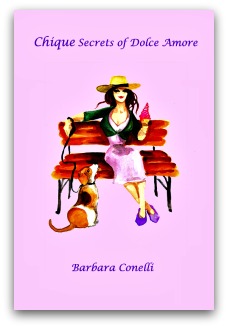
BOOK REVIEW: “Chique Secrets of Dolce Amore” by Barbara Conelli

TITLE: Chique Secrets of Dolce Amore
AUTHOR: Barbara Conelli
AUTHOR’S CYBER COORDINATES:
Website: www.barbaraconelli.com
Twitter: @BarbaraConelli
Facebook: www.facebook.com/AuthorBarbaraConelli
PUBLICATION DATE: May 2012
FORMAT: Ebook (Kindle) and Paperback, available from Amazon
GENRE: Travel
SOURCE: Review copy from author

Author Bio:

Born in London to an Austrian mother and an Italian father, Barb now splits her time between Milan and New York. Her first book, Chique Secrets of Dolce Vita, was published in 2011. She is the host of  Chique Show at Blog Talk Radio, where she interviews authors and talks about life in and her passion for Italy.

Summary:

Fascinating, enthralling and seductive travel and life tales about unexpected encounters with the capricious, unpredictable and extravagant city of Milan, its glamorous feminine secrets, the everyday magic of its dreamy streets, the passionate romance of its elegant hideaways, and the sweet Italian art of delightfully falling in love with your life wherever you go.

(Amazon product description)

Review:

In their instructions for describing someone’s appearance, “How To Write” gurus advise you not to reel off physical characteristics in a shopping list. Don’t write “blond hair, brown eyes, even teeth”, they say, but focus on a couple of arresting features: stripy but chipped nail polish, or a wrist laden with silver bangles.

By describing in detail only personal, quirky aspects of the whole, these teachers rightly insist, you create a vivid picture for your readers.

This is exactly how Barb Conelli brings to life the Milan she knows and loves.

Instead of reciting a shopping list of Places You Must See, which you could find in any guide to Milan, Conelli figuratively takes you by the hand and says, “Forget the official tour. Let me show you my Milan, the people and places I love.”

On this off-the-beaten-track tour of Milan’s streets, we visit The Paradise of Pink Feathers: the garden in Via die Cappuccini number nine, with its many flamingos, whose owner’s identity nobody really knows. We eat panettone at Marchesi’s, while Conelli relates the fascinating legends behind the pastry’s origin. (Tip: you should first try it on 3rd February, because on this day panettone has magic powers. Who knew?) On one day, she brings you along to visit the studio of an artist friend; on another, we go to the ballet school of Annamaria Bruno and her daughter Liliana to live out our dreams and become ballerinas in point shoes for a day. We meet the ghost of Mrs. Giuseppina Luini, an enterprising baker from Puglia who came to Milan in 1949, and turned the family recipe of Panzerotti into a Milanese legend.

Milan’s beauty, Conelli says, does not just lie in its breathtaking architecture, but in its inhabitants, past and present.

To me, the city is not an inanimate cluster of buildings and their architectural elements; the city is a living organism boiling with energy, its features are being recreated every day by the people who walk its streets.

It’s a city full of secret corners and quiet clusters of serenity; of shadows of people long dead, and the vibrance of those living today.

In taking a walk with Barbara, we discover the magic that is Milan.

Words of wisdom:

In order to see the world, you must know how to look at it.

~

When the streets of Milan ask you to dance, there’s nothing else to do but put on your ballet shoes and surrender with confidence to the arms of the city.

~

As an Italian, [my father] had rich experience with diabolic temptation and enjoyed surrendering to it very often and with great delight.

~

Despite its fickleness, vanity, unpredictability, and fancy for sophisticated elegance, Milan is an immensely simple city whose inhabitants know that real joy means seeing miraculous moments in everyday ordinariness.

Verdict:

At 76 pages, this book is a short but very satisfying read. If you have not been to Milan, it will make you want to visit; if you’re not a newcomer to the city, you will want to rediscover it.

Chique Secrets of Dolce Amore can be purchased here.

Or you can register for The Displaced Dispatch and hope you’ll be one of this month’s lucky winners!

Editor’s note: Kate Allison interviewed Barbara Conelli in March: “An Italian with a passion: How to live the Dolce Vita, with Barbara Conelli,” which is what inspired this month’s Displaced Nation theme of La Dolce Vita.

STAY TUNED for Wednesday’s Random Nomad interview with mid-life gap year expert, Jeff Jung.

If you enjoyed this post, we invite you to register for The Displaced Dispatch, a round up of weekly posts from The Displaced Nation, with seasonal recipes, book giveaways and other extras. Register for The Displaced Dispatch by clicking here!

Image:  Book cover – “Chique Secrets of Dolce Amore”

Related posts:

Me and my shadow: LIBBY’S LIFE #50 – Home again

Oh, thank the lord and all his angels. I am on my way back to England, after an extended stay with the Patricks.

How extended, exactly? Two weeks, two months, two years? Who knows?

Time expands to encompass the drama available.

~

Never have I wanted to be somewhere else so badly as on the evening that Tania Patrick appeared on Libby’s doorstep and refused to leave. She wanted to meet her big brother, come what may — and never mind the collateral damage to his family.

The awkwardness, the embarrassment, the toe-curling please-God-get-me-out-of-here-ness of that meeting. The sister seemed oblivious to our shuffling feet, the nervous coughs, and our collective intake of breath as we heard Oliver’s car pull onto the driveway.

“Oliver!” Tania Patrick cooed, as she elbowed Libby out of the way, opened the front door, and and leaned in to kiss him on the cheek.

While she’s not unattractive, she’s never going to feature in a Pirelli calendar either, and Oliver’s not the touchy-feely type without a good reason for being so.

“Do I know you?” he asked, leaning back to avoid her embrace.

Libby, meanwhile, watching the scene as intently as her husband would watch a penalty shootout between Arsenal and Spurs, couldn’t bear the suspense. It occurred to me afterwards that she could have exonerated herself by blaming the sister for tracking Oliver down, but, guileless as she is, she blurted out her version of the truth.

“Oliver, this is Tania. She’s your sister. We met online after I emailed her.”

I couldn’t help but cover my face with my hands, shaking my head. Libby would not only have shaken hands with her executioner but apologised for treading on his foot on the way across the scaffold.

Oliver sidled through the front door into the house, pressing himself against the walls so he didn’t have to touch the visitor.

“And you didn’t think to tell me at the time?” he asked Libby.

“Well…” She floundered. “I mean, I didn’t tell her where we lived or anything, so I didn’t think she’d come here.”

“Took a bit of detective work to find you!” Tania’s voice was raspy. A recently ex-smoker’s cough. “Dad never talks about you, but my grandma told me once I had a brother somewhere.”

“Did she.” Oliver’s question dropped at the end to become a statement. “I bet he doesn’t know you’re here now.”

For the first time, Tania seemed unsure of herself.

“He doesn’t, no.”

Oliver nodded.

“Keep it that way,” he said, opening the front door wide, and indicating to his newly-discovered and quickly-abandoned sister that this particular game of Happy Families was over.

~

I wasn’t sure what happened between Libby and Oliver after that. They disappeared into their room with the twins, and every now and then I heard the sound of raised voices, followed by one of the twins’ wailing.

Jane and I put Jack to bed, and had a whispered conversation while his bath was running.

“It will blow over,” Jane said, sounding more certain than she looked. “It has to. She meant no harm.”

“Things will look better in the morning,” I said.

~

They didn’t, of course.

They looked worse.

And the morning after that, too. Every day was worse than the last.

Libby put on a brave face and bright smiles during the day — while Oliver was out — and for minutes at a time we would forget anything was wrong. The babies always knew something was wrong, though, and cried alternately with hunger and colic. On Day Three, Libby abandoned her principles and gave them formula milk.

When Oliver came home in the evenings, the atmosphere changed in the house. Jane and I would scurry for cover in the basement, pretending that we were keeping Jack entertained and out of the way.

Bad enough to bear were the frozen silences whenever Libby and Oliver were in the same room together. When Jane and I prepared dinner in the kitchen, we whispered, as if by whispering we could dissipate the cloud of anger and resentment that billowed forth from Oliver.

Worst of all, though were the nights. When everyone was in bed, we could hear — although we pretended not to — the increasing volume of Oliver’s voice, as the same argument was rehashed again and again.

“You had no right! None of your business!”

An inaudible murmur from Libby. More raging from Oliver.

“How would you like it if I invited a whole bunch of your long lost, naff relatives to barge into our life and turn it upside down? You wouldn’t, would you?”

Another murmur from Libby, this time louder so the quaver in her voice is detectable.

“I don’t care how good your intentions were. I’ve spent my entire life trying to forget that bastard ever existed, and now I have to deal with him and a TOWIE half-sister, thanks to your good intentions. If those are your good intentions, God help us all when you have bad ones.”

And so on. Every night. Libby looked shattered — a normal look for a mother with new twins, but this was exhaustion on a different plane.

~

Sunday arrived, and I had to leave. I wished I could take Libby as well.

She had refused to talk about what had happened. Perhaps she felt that ignoring the problem would make it go away.

“I’ll be all right,” she said, as she said goodbye to me. “Mum’s still here, at least.”

Jane had stepped up her game in the last few days. If she previously thought Libby was confident, and felt inadequate around her, this was no longer the case. A mother is always a mother, no matter how old her children are.

“You’ve got to talk to someone, Libs,” I said. “You can’t bottle it up like this.”

She shook her head. “Can’t,” she said, pressing her lips together in a thin line. “You have no idea what a Pandora’s Box I’ve opened.”

I had an idea. “Then write. Get it out of your system that way.”

She nodded slightly. “I’ll think about it.”

“I can’t do your blog next week,” I said. Actually, I could, but this would be good therapy for Libs.

“I’ll think about it,” she repeated. She sniffed, straightened up, and put her shoulders back. “You’d better go. The traffic will be awful if you leave it any later. The Red Sox are playing at home today.”

I sat in the car, put it in reverse, and backed out of the driveway. As I stopped at the end of Juniper Drive, I looked in the rearview mirror. Libby was standing by her mailbox, still waving.

Even from this distance, I could see she was crying.

.

Next: LIBBY’S LIFE #51 – On a cliff edge

Previous: LIBBY’S LIFE #49- An unwelcome blast from the past

Stay tuned for Friday’s Displaced Q testing your ability in another aspect of La Dolce Vita!

If you enjoyed this post, we invite you to subscribe for email delivery of The Displaced Dispatch, a round up of the week’s posts from The Displaced Nation. Sign up for The Displaced Dispatch by clicking here!

Img: Map of the World – Salvatore Vuono