The Displaced Nation

A home for international creatives

EXPAT BOOK REVIEW: “Trucking in English” by Carolyn Steele

Image.ashx

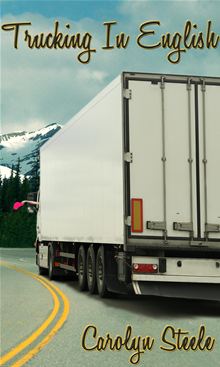
Today we review Carolyn Steele’s Trucking in English: a memoir of being a woman in what is very much a man’s world: that of long-haul tractor-trailor driving in North America.  A Londoner born and bred, Carolyn is now a Canadian citizen and lives in Kitchener, Ontario, where she ran a Bed & Breakfast for five years before trying her hand at negotiating 18-wheelers. Depending on who is asking,  she “maintains that she is either multi-faceted or easily bored”. Confirming this, her résumé states that, in addition to being a lady trucker, she has also been a psychologist and a London Ambulance Service paramedic, while her hobbies include tatting, a form of lace-making.

Trucking in English is available from SmashwordsAmazon (Canada, USA, UK), and Barnes & Noble, but this week we at TDN are in luck: Carolyn is giving away 3 ebook copies to Displaced Nation readers! (Details below.)

TITLE: Trucking in English
AUTHOR: Carolyn Steele
AUTHOR’S CYBER COORDINATES:
Blog: Trucking in English
Website: Carolyn Steele
Twitter: @Trucking_Lady
Facebook: Trucking in English
PUBLICATION DATE: November 2012
FORMAT: Paperback, Ebook (Kindle)
GENRE: Memoir
SOURCE: Review copy from author

Amazon Summary:

“So here’s the plan. I’m going to train to drive a truck and go long-haul. I can get paid and maybe write a book at the same time. What do you reckon?” “Go for it Mum, how bad can it be?” This is the tale of what happens when a middle-aged mum from England decides to actually drive 18-wheelers across North America instead of just dreaming about it. From early training (when it becomes apparent that negotiating 18 wheels and 13 gears involves slightly more than just learning how to climb in) this rookie overcomes self-doubt, infuriating companions and inconsiderate weather to become a real trucker. She learns how to hit a moose correctly and how to be hijacked. She is almost arrested in Baltimore Docks and survives a terrifying winter tour of The Rockies. Nothing goes well, but that’s why there’s a book. Trucking in English began as a blog from the cab and became a popular podcast before taking book form. It is part of Carolyn’s ‘Armchair Emigration’ series.

Review:

“Why would a fifty-something, nicely brought-up mother suddenly decide to go trucking?”

Indeed. Until I read this book, I’d considered trucks to be part of the roads’ parallel universe: menacing beasts that slow you down going uphill, hurtle dangerously fast behind you downhill, or who scatter remnants of blown tires across three lanes, strategically positioned to rip open your door skins like sardine cans.

Carolyn Steele, however, has given me a glimpse inside this parallel universe, and I’ll say this: she’s braver than I’ll ever be.  If I announced to my own family my intention of learning to drive one of these shiny monsters, the reaction would be unflattering: “You?” (Cue gales of incredulous laughter.) “You can’t even reverse a Mini.”  I’m not one of Life’s natural drivers, which makes me all the more admiring of people who are, particularly “fifty-something, nicely brought-up mothers.”

Trucking in English starts at Carolyn’s pipe dream to become a truck driver:

Why not get paid to see North America? I’d driven for a living before, I’d seen little of Canada and nothing of the States, how hard could it be?

— takes us through the training period which was more demanding than she’d anticipated:

I’d assumed it was merely a matter of getting used to where the corners were and developing a technique for climbing in.

— and recounts Carolyn’s adventures once she was let loose on the road.

These long-haul expeditions across Canada and the USA are peppered with frustrations deriving from red tape (seriously — Campbell’s Chicken Soup requires a Customs’ Meat Inspection certificate before it can cross the border?) and the sexism, both unintentional and blatant, that a female truck driver will encounter.

Red-faced squaddie escorted us outside and managed not to look too confused when we [Carolyn and her male co-driver] headed for the wrong sides of our vehicle and it became horribly apparent that I was driving.

Throughout the book shines Carolyn’s good humor, frankness, and sense of the ridiculous.  The characters and events she encounters are described so vividly that they seemed as real to me as they were to her, and in such a way that I had to stifle snorts of laughter if I was reading my Kindle in a public place.

Finally, as March is Style and Beauty Month at TDN, it would be remiss of me not to share a few of Carolyn’s style tips for lady truck drivers:

1. Do not go anywhere without a large supply of baby wipes. You never know when or where your next shower will be.

2. Use a bathroom whenever you see one, even if you don’t need to. (Ever wondered what happens when truckers are taken short in the middle of nowhere during a Canadian blizzard?)

3. Most important of all — dress androgynously. Do not, under any circumstances, let other truck drivers on the road know you are a woman.

A chap in a slower truck does not like to be overtaken by a woman and some of them can get quite snippy about it…With a cap over my eyes (so long as it isn’t pink) hair tucked up into it, large sunglasses and a golf-shirt I can just about pass for anybody… I left the cap off one day due to being so hot that even my hair was sweating. Overtook a truck just south of Toledo and he tried extremely hard to run [me] off the road.

And now it’s your chance to ENTER OUR DRAW TO WIN A FREE  COPY!!!  You can either:

1) Leave a comment on this post, saying why you’d like your own copy of Trucking in English, or

2) Head across to Twitter and tweet the following:

“I want a copy of Trucking in English by Carolyn Steele: http://wp.me/p11cxT-55G via @Trucking_Lady @DisplacedNation”

Don’t forget, you double your chances if  you’re a Displaced Dispatch subscriber!!!

The winner will be announced in our Displaced Dispatch in April.

.

STAY TUNED for tomorrow’s author interview!

Image: Book cover — “Trucking in English”

If you enjoyed this post, we invite you to register for The Displaced Dispatch, a round up of weekly posts from The Displaced Nation, with seasonal recipes, book giveaways and other extras. Register for The Displaced Dispatch by clicking here!

Related posts:

LIBBY’S LIFE #72 – Puppy love

I really don’t want to make this phone call. But I dial the number anyway.

The phone picks up at the other end, a child answers, and I’m about to launch into a high-pitched, nervous Hello-is-your-mommy-there routine when I realise it’s not a real child but one who’s been recorded in a message.

“Hiiiiiii….. This is the Addisons’ house.” (A breathy sigh and some adult promptings in the background.) “Say your number and — and — who you are and my mommy will call you.” (Another pause and more prompts.) “Or my daddy. But not Sammy, because he’s a cat and he can’t talk.” Beep.

Crystal’s parents probably love this message. However (and look away now if you’re easily shocked) I don’t find other children as cute as their parents do. Not that I’d ever admit it, of course. It would mean social suicide for Jack if his mother didn’t openly consider his little friends to be “precious” or “adorable.”

“This is Libby Patrick,” I say. Ugh. Leaving messages, for me, is almost as bad as listening to those recorded by nauseating five-year-olds. “Your daughter gave a gift to my son at nursery school. You might be missing an item from your model car collection.” I give my cell phone number and hang up.

Now, that wasn’t so bad, was it? Certainly, it will be a picnic compared to the next stage of the gift-returning process, which is the extraction of a red, collectible, model car from Jack’s sticky grasp.

I find Jack in his bedroom, making soft vroom-vroom noises and scooting the Ferrari around his Lego table.

“Sweetheart,” I say, bending down to his level, Supernanny-style. “Would you like to go to the toy shop? Maggie’s coming over later for tea. We could all go out together and buy a new toy car for you.”

Yes, I know. Total coward.  A stronger woman would explain the situation and firmly tell Jack he must give the Ferrari back to his little girlfriend. No bribes, no tantrums, no more cars to add to his already expansive Hotwheels collection.

Jack looks up from his impromptu racetrack. “Another car?”

“Yes.”

“So I get two cars today?” His voice rises an octave in excitement at his good fortune.

I consider my next words carefully. They could mean the difference between peace on earth and Armageddon in New England.

“Well, yes. But not at the same time.”

Jack narrows his eyes at me.

“I mean –” I flounder “– I’ll buy you another car, but we have to give this one back to Crystal.”

Jack picks up the car and hugs it protectively. “No.”

“She shouldn’t have given it to you. It belongs to her daddy, and now we have to give it back, but I know you’re disappointed, and I’ll buy you another car to make up for it.”

A nice one, I think, although not one that goes for 150 bucks on eBay, but Jack is having none of it.

“No! It’s MINE! Go AWAY!”

He hugs the car even tighter and throws himself on the floor in the foetal position. This is what comes, I think, of letting him watch American football all winter.

Come on, Libby. WWSD? What Would Supernanny Do?

Probably not what I do next, which is wrench the car from his hands and put it on the top shelf of his bookcase. He jumps to his feet, ineffectually trying to reach it down again, and calls me something that I can only imagine he’s learned from lip-reading football coaches on TV when the opposing team scores a touchdown.

“You do not speak to Mummy like that,” I say, wagging a finger at him and trying to keep my voice low and authoritative while disguising my shock at his new vocabulary.

“Yes I do!” Jack roars. “You took my car!”

He aims a kick at my shins. A four-year-old shouldn’t be able to inflict much damage, but this one is still wearing his Timberland boots and has accurate aim. I’m sure the Patriots would be interested in having him on the team one day, but right now —

“You little git,” I mutter through gritted teeth. “You want to play football? Let’s do timeout.” I take him by the shoulder and propel him through the bedroom door to the Naughty Spot outside the linen closet. “Sit there. Five minutes, and don’t you dare move.”

I go downstairs to attend to the twins, and Jack sits, cross-legged and seething but subdued, outside the linen closet.

I’ll give it to Supernanny, this Naughty Spot technique really works.

* * *

As I finish filling the twins’ sippy cups, my cellphone rings. It’s Crystal’s mum, who sounds confused when I tell her we have an item that might belong to her but, upon checking the display cabinet in her TV den, gasps and confirms there is a gap that should be filled by a small Ferrari. She would appreciate its return before Crystal’s daddy notices, she says. Her tone indicates that it’s all Jack’s fault and that he’s coerced her daughter into stealing.

“While you’re on the phone,” she says, “may I ask — are the crackers that Jack gave Crystal gluten-free?”

It’s my turn to be confused now. “Crackers?”

“Yes, crackers. They look like animal crackers but darker. She’s allergic to wheat, gluten, peanuts, tree nuts, dairy, turkey, and soy, so I need to check what’s in them before she eats them.”

It’s amazing the child eats anything at all. “I have no idea what you’re talking about. Jack gave Crystal two pencils. Not animal crackers.”

“Maybe they came from the school party, then,” she says. “But the wooden box was definitely from Jack.”

Box? I rummage through Jack’s backpack before answering. Beth’s wooden box from Maggie, that Jack took in for show-and-tell, is not there.

“Does it have pictures of fairies and toadstools, by any chance?” I ask.

* * *

Crystal’s mum was quite unreasonable. Apparently, it was OK for me to traumatise Jack by taking her husband’s toy Ferrari away from him, but not OK for her to traumatise Crystal by taking Beth’s box from her. “But your little girl is only a baby — how will she know?” she said at one point in the conversation. Finally, grudgingly, she agreed to return the box, but only when I hinted I might put Hubby’s little car on eBay.

I’m still fuming half an hour later when Maggie arrives, bearing a box of homemade cookies.

“I thought we could have these with our tea. Jack loves cookies,” she says, looking round. “Cookies, biscuits, whatever he likes to call them. Where is Jack, anyway? Still at school?”

I slap my forehead.

“Still in timeout.” Supernanny recommends a minute on the Naughty Spot for each year of a child’s age, so according to my timeout calculations, Jack by rights should have started male menopause.

I creep upstairs, thoroughly ashamed. “Jack,” I call. “It’s OK, sweetheart, you can get off the Naughty Spot now. Mummy’s so sorry…Jack?”

Jack has already taken the initiative and vacated the punishment space. I look in his room, expecting to see him playing with Ironman and Captain America, but he’s not there. He’s not in the bathroom, or the twins’ room, or our bedroom.

“I can’t find him,” I say to Maggie, hearing the panic in my own voice. “He’s just — gone.”

“He can’t be. Think. Where did you leave him?” she asks, as if he’s a bag of shopping or my reading glasses.

I point. “On the landing, by the linen closet. But he’s not upstairs–”

Maggie ignores me and tiptoes up the stairs. I follow. She stops by the linen closet, turns and puts a finger to her lips, then quickly opens the closet door.

Squeezed onto one of the shelves, concertinaed into a space far smaller than I’d ever thought possible, is Jack. He has cookie crumbs smeared all round his mouth and down the front of his T-shirt, and looks very happy.

I’m too relieved at seeing him to be cross that he’s eating between meals. On the other hand, all cookies and snacks have been banished to the top shelf of the pantry where he can’t reach them, so—

“What are you eating?” I demand.

Jack, I can see, is trying to hide something under the pile of pillowcases he’s sitting on. I reach into the closet, under the pillowcases, and pull out a box.

A varnished wooden box, painted with trains and cars, the one Maggie gave him for Christmas. I reach under the linens again and pull out another box. George’s. They’re both heavier than I remember, and they rattle.

I open one, and then the other.

They’re full of cookies: the animal cracker-type cookies that Crystal’s mum had described.

“Did you get these cookies at school today?” I ask Jack.

He unfolds himself from the shelf and squirms free. After a pause, he nods.

I’m getting to know that pause-then-nod technique. It means he’s telling fibs.

“Did you take them from the pantry?” I ask. “Did you climb on a chair and take these cookies from the snack shelf?”

Because the thing is, these cookies look familiar.

Jack shakes his head vigorously. He’s not fibbing. He mutters something.

“Excuse me?” I lean down to hear him better.

“I said they’re biscuits not cookies.”

“Don’t push your luck, sunshine. Stop contradicting me.”

Maggie holds up her hand. “Let me see.”

After a quick glance, she says: “Jack’s right. They’re not cookies, they’re biscuits.”

“They look like animal crackers to me,” I say.

Maggie smirks.

“In a manner of speaking, I suppose they are,” she says. “They’re Fergus’s special canine-celiac dog biscuits.”

*  *  *

In the kitchen, I read the empty packet of Fergus’s dog biscuits that Maggie has fetched from her house. The calorific content is terrifying.

“No wonder Jack’s been putting on weight,” I say. “And no wonder he liked being in timeout so much. It was snack time, with his secret stash under the pillowcases.”

“More to the point, no wonder poor Fergus has been starving.” Maggie strokes Fergus’s head. He gazes up at her, his eyes half-closed. “But Jack loves these things. He must really like this little girl to give them away to her.”

I put the packet down, and look for the phone.

“That reminds me, I’d better call Crystal’s mum,” I say. “I should let her know Jack’s present was gluten-free after all.”

.

Next post: LIBBY’S LIFE #73 – Stuck in my craw(fish)

Previous post: LIBBY’S LIFE #71 – Bonnie and Clyde go to preschool

Read Libby’s Life from the first episode

Want to read more? Head on over to Kate Allison’s own site, where you can find out more about Libby and the characters of Woodhaven, and where you can buy Taking Flight, the first year of Libby’s Life — now available as an ebook.

 STAY TUNED for Tuesday’s post!

If you enjoyed this post, we invite you to subscribe for email delivery of The Displaced Dispatch, a round up of the week’s posts from The Displaced Nation. Sign up for The Displaced Dispatch by clicking here!

Image: Travel – Map of the World by Salvatore Vuono / FreeDigitalPhotos.net
BOOK REVIEW: “The Career Break Traveler’s Handbook” by Jeffrey Jung

careerbreak_coverThe author of today’s reviewed book, Jeff Jung, was one of our featured Random Nomads last May. We caught up with him again at Christmas, shortly after The Career Break Traveler’s Handbook was published.

TITLE: The Career Break Traveler’s Handbook
AUTHOR: Jeffrey Jung

AUTHOR’S CYBER COORDINATES:
Website: Career Break Secrets
Twitter: @Career BrkSecret
Other: Facebook page, YouTube channel
PUBLICATION DATE: October 2012

FORMAT: Paperback, Ebook (Kindle)
GENRE: Nonfiction, Travel
SOURCE: Review copy from author

Author Bio:

Host of the new global TV show, The Career Break Travel Show, and publisher of CareerBreakSecrets.com, Jeff Jung is the world’s leading career break expert. Originally from Fredericksburg, Texas, Jeff became an international traveler at the age of sixteen with his first trip to Australia and, when he left a successful marketing career for his own career break, became a “true citizen of the world.” He lives in Bogotá, Colombia.

Summary:

The Career Break Traveler’s Handbook is your indispensable tool for dreaming, planning, and finally taking your trip of a lifetime. Filled with tips, stories, and photos from around the world, the Career Break Traveler’s Handbook will both excite you and prepare you.”

(Source: Amazon.com book description)

Review:

Six years ago, Jeff Jung, like many other people, was experiencing dissatisfaction with corporate life.  Business trips abroad racked up frequent flyer miles and provided a temporary escape from the office cubicle and constant phone calls, but those were the only benefits of his adult experiences of travelling. Faced with years more of a work-life balance teetering heavily on the “work” side of the scale, Jeff wondered if he had 

“made a bargain with the devil, building a successful career while sacrificing a satisfying personal life?”

More to the point:

“How was I ever going to engage with the things that really mattered to me: time for myself, for my family and friends, time to pursue my personal passions?”

A throwaway question from two friends provided the catalyst he needed to do something about this unsatisfactory state of affairs.

“What’s it going to take to make you happy?”

In answer, Jeff quit his job four weeks later, although it was several months before he set off on his trip. Planning is all — which is where this book comes in. It’s one thing to dream about getting away from it all, and another thing to do it right.

Based on Jeff’s own experiences, plus those of other seasoned travelers, this book offers advice on aspects from the mundane (budgeting and saving for both the trip and your return, when you might be out of work for a while) to the slightly morbid (make a will; go through details of insurance and finance with a close family member or friend; appoint someone to have power of attorney). There are tips on emotional aspects, too: how to stop talking yourself out of this wild idea, or how to deal with people who, out of concern or jealousy, aren’t as enthusiastic about this adventure as you are.

As you would expect, much of the book covers advice on preparations and the trip itself, such as managing money on the road, dealing with unexpected loneliness, and adjusting to being free again. It also includes specific tips such as “White headphones are an unmistakable marker of an iPod. Replace them with black ones” which might not occur to you at the packing stage and won’t be much use occurring to you when a mugger is running away with your iPod and unsaved photographs.

The final part of the book deals with your return trip, your re-entry into your old life, and how you can turn that “dreaded résumé gap” to your advantage.

It’s worth noting, however, that after their life-changing travels many career-breakers — including the author — don’t re-enter their old life at all but instead make a new one.

Word of wisdom:

On persuading yourself:

You only get one shot at life. Are you really sure you can’t take less than 3 percent of your working life to do what you want to do, to reconnect with yourself and pursue personal passions?

On reasons for going:

This is not a time to run away. It’s a time to run to something.

TDN verdict:

With many companies starting to see the benefits in offering paid sabbaticals to their employees — nearly one-quarter of Fortune’s 2012 “Best 100 Companies To Work For” do so — career breaks, we hope, will become more common. This book will help you make the most of yours.

STAY TUNED for next week’s posts!

Image: Book cover — “The Career Break Traveler’s Handbook”

If you enjoyed this post, we invite you to register for The Displaced Dispatch, a round up of weekly posts from The Displaced Nation, with seasonal recipes, book giveaways and other extras. Register for The Displaced Dispatch by clicking here!

Related posts:

Would this Brit ever marry an American man?

Night OutFor the sake of my own ongoing domestic harmony, I should clarify that this blog question is a) hypothetical; b) not my invention; and c) briefly answered by the statement  “No, because bigamy’s illegal.”  It’s a bit like asking me if I’d ever adopt the kids who live up the street. No, I’m very happy with the ones I’ve already got, thank you.

It’s not that I have anything against American men, you understand. Lots of my friends are married to them. But here’s the thing — these friends are all American themselves.

A “Special Relationship”

For the purpose of researching whether other British women might consider marrying American men, I googled  — you’ve got it — “British women married to American men.” Hoping the search would come up with Hollywood examples other than Emily Blunt and John Krasinski or Catherine Zeta-Jones and Michael Douglas  (the only celebrity Anglo-American couples I could immediately think of where the woman makes up the Anglo half, and even then, CZJ is Welsh) I was perturbed when this first result appeared — a 2006 headline from The Guardian:

Why American women are sexier than British girls — by a man who knows.

This helped neither my research nor my confidence, so I moved quickly on.

Further down the page, things improved as Toby Young at The Telegraph informed me that Friends star David Schwimmer has decided to marry his English girlfriend rather than “a mercenary American husband-hunter.” (This news, by the way, is three years old. On a Google search, that’s the last time an American celeb married a British girl.) The writer of the article, an Englishman himself, was of the opinion that no man in his right mind would choose an American girl over an English woman, based on his own unsatisfactory experience:

American women tend to judge men according to what desirable attributes they possess rather than what they’re really like underneath.

Then again, he admitted judging these women according to the severity of their bikini waxes, so it’s possible they viewed him in a similar light.

The rest of Page 1 of the search was taken up by immigration and visa questions from young Anglo-American couples, and I didn’t even bother to check Page 2.

Given the up-to-date-ness of Page 1, I suspected it would contain only references to WWII GI brides.

Men are from England, Women are from America

This post’s title question, I was beginning to understand, should not be “Would I ever marry an American man?” but “Could I ever marry an American man?”

Anglo-American marriages seem to be more common when the Anglo is male and the American is female. Think Gwyneth Paltrow and Chris Martin, Kate Hudson and Matt Bellamy, Paul McCartney and Linda Eastman, Guy Ritchie and Madonna. (Until they got divorced, anyway.)

This type of alliance has a rich history. In the late 1800s, quite a few impoverished members of the British aristocracy married rich American heiresses so they could use their fortunes to stop the ancestral mansions from crumbling away. Sir Winston Churchill himself was the offspring of Lord Randolph Churchill (son of 7th Duke of Marlborough) and Jeanette Jerome, an American socialite.

You might wonder what advantage this arrangement offered the socialites: if Lady Randolph’s reputation was anything to go by, perhaps it was the chance to chalk up an impressive number of extra-curricular royal conquests.

British guys: Not just for celebs!

And it doesn’t end there with rock stars, actresses and bankrupt dukes. Today, any American woman with a fetish for Estuary English and glottal stops can find a suitable husband. DateBritishGuys.com promises to

“provide the romantic and love hungry American Female public with British Men.”

although as a 2009 survey voted Englishmen as the second-worst lovers in the world (“too lazy”), these love hungry American females might be better off registering with DateSpanishOrItalianGuys.com and insisting that their Latin lovers learn to speak like Colin Firth.

In conclusion…

My answer to the post’s question, “Would this Brit ever marry an American man?”  is still “No”.

It would be pointless because, to all intents and purposes, I already am. My English husband knows more about American football than most American guys do, drives a Chevy pickup, and plows the drive in winter. But he’s still got that accent that American women love.

You could say I’ve got the best of both worlds. 🙂

.

STAY TUNED for tomorrow’s post!

If you enjoyed this post, we invite you to register for The Displaced Dispatch, a round up of weekly posts from The Displaced Nation, with seasonal recipes, book giveaways and other extras. Register for The Displaced Dispatch by clicking here!

Related posts:

Image: MorgueFile

LIBBY’S LIFE #71 – Bonnie and Clyde go to preschool

Jack and I sit at the kitchen table, surrounded by the Disney Valentine cards and heart-decorated pencils I bought in January. It’s serious business, writing out sixteen Valentine cards when you’ve only just learned your alphabet — Jack, not me — and over the course of this afternoon’s school project, Jack’s right fist has acquired a layer of black pencil smudges, and my patience is now but a chiffon veneer.

“Last card,” I say. Not before time. “Which one for Crystal?” I ask Jack. “The little one with Cinderella, or the big one with Belle?”

I know it’s not conventional to do this kind of project in late February, but the massive snowstorm and resultant clear-up three weeks ago meant the nursery school’s planned Valentine’s Party was cancelled. Jack had been distraught and sulked for days, his mood lifting only when he learned that the party would take place two weeks later instead. I was surprised at this; last year’s episode at his other preschool should have put him off romance for life.

Jack points at the card with Belle on the front. “That one for Crystal. The big one.

He picks up his pencil and writes “Jack” in the space marked “From”, his tongue poking out of one side of his mouth, then painstakingly copies Crystal’s name from the list provided by the nursery school. After he writes the final letter, I hold out my hand, ready to Scotch tape a new pencil onto the card like all the others.

“I haven’t finished yet,” he says, and proceeds to write two rows of x’s at the bottom of the card. When he runs out of room, he admires his handiwork, and passes it to me. “And Crystal needs two pencils.”

The clouds part, and at last I understand why Jack was so disappointed when the real Valentine’s party was cancelled.

You always give the big Valentine to the person you like best at nursery school — I remember this from last year. But two pencils? That’s serious.

At not quite five years old, my son Jack is in love.

*  *  *

With or without a crush on a five-year-old girl with blonde pigtails and a predilection for Hello Kitty T-shirts, Jack likes going to nursery school. He likes the toy car corner, and the toy DIY workbench you can bang loudly and legitimately with plastic hammers, and he particularly likes the Show-and-Tell sessions, where the children are encouraged to bring something from home to talk about. Some kids refuse to take anything, ever, and others like to bring something every day. Jack, being a talkative soul, is of the latter persuasion, but unfortunately his selection of objects is limited. He takes either a toy Lightning McQueen or a model of Ironman, and no helpful suggestions from me — “A seashell? A pound coin? This empty Curly Wurly wrapper?” — will convince him otherwise.

Today, though, he surprises me: as I walk him from the parking lot into school I notice he’s carrying the little wooden box that Maggie gave Beth for Christmas, the one with fairies and toadstools painted on it. Come to think of it, this is the first time in weeks I’ve seen it.

“Is that for Show-and-Tell?” I ask, and after a second’s pause he nods.

While I’m pleased he’s exercising his imagination by bringing something other than overpriced, trademarked tat, I’m concerned because the box doesn’t belong to him.

“You must look after it,” I say, helping him off with his coat, then adding unconvincingly, “and you should have asked Beth first before you took it.”

Jack glances at his sister in her pushchair then shoots me a disbelieving look that says clearly, “But Beth is ten months old and can’t talk yet.”

“Just make sure you bring it home again!” I call to him as he runs into the classroom clutching the box to his chest and is lost in a heaving sea of pink-and-red-clad, over-excited Lilliputians.

*  *  *

Parties are not parties without swag bags, and this Valentine’s party is no exception. Jack bursts into the house after school and, while I’m depositing the twins on the floor to crawl around and eat interesting items on the floor, dumps a brown paper bag upside-down on the kitchen table.

A heap of Valentine cards — pretty much identical to those we wrote yesterday — plus heart-decal pencils, temporary tattoos of Cupid, heart-shaped erasers, and heart-shaped lollipops scatter everywhere. Jack picks through them, putting the small gifts on one side and the cards on another. Then he goes through the gift pile and discards anything that is inedible and too frou-frou. The cards and girly gifts are ruthlessly chucked in the kitchen bin.

I close my eyes, reliving the two (pointless) hours yesterday of writing every child’s name on a card. In sixteen other Woodhaven homes at this moment, Jack’s careful handiwork and probably quite a few of his pencils  have met a similar fate and are now resting among potato peelings and flu-ridden tissues.

Or maybe not. One card has escaped the carnage: a large one with a picture of Ironman. It’s signed: “Lv Frm Crstl”. Presumably Crystal-who-must-receive-two-pencils, who appears to have a grudge against vowels.

I ask, as casually as possible, “Did Crystal like the pencils?”

Jack hesitates, then nods.

“And what did Crystal give to everyone?”

“Erasers.” Jack holds up one of the minuscule heart-shaped erasers. “And a car.” He delves into his Lightning McQueen backpack and brings out a model car.

“That’s nice,” I say. Then I study the car more closely. “You mean Crystal gave everyone one of these?”

Jack shakes his head proudly. “Only me.”

I’ll bet. This car is not a Matchbox or Hotwheels; it’s a 1/18 model of a classic Ferrari that bears more than a passing resemblance to Jack’s automotive hero, Lightning McQueen. I turn it upside down and look at for the manufacturer and model number, and do a quick google on my phone.

The results make me feel faint. An identical model is for sale on eBay. Fourteen bids, $150, reserve not met.

My guess is that a display cabinet somewhere in Crystal’s home — probably in a male-dominated part of the house — has a vacant spot at the moment.

You know — in all my fervent watching of Supernanny, I’ve yet to see an episode where one parent has to tell another mum and dad that their child is a kleptomaniac.

.

Next post: LIBBY’S LIFE #72 – Puppy Love

Previous post: LIBBY’S LIFE #70 – A brewing storm 

Read Libby’s Life from the first episode

Want to read more? Head on over to Kate Allison’s own site, where you can find out more about Libby and the characters of Woodhaven, and where you can buy Taking Flight, the first year of Libby’s Life — now available as an ebook.

 STAY TUNED for Tuesday’s post!

If you enjoyed this post, we invite you to subscribe for email delivery of The Displaced Dispatch, a round up of the week’s posts from The Displaced Nation. Sign up for The Displaced Dispatch by clicking here!

Image: Travel – Map of the World by Salvatore Vuono / FreeDigitalPhotos.net

LIBBY’S LIFE #70 – A brewing storm

Jack lies on the kitchen floor in his red pyjamas, legs and arms flailing, his face a puce, wet, dripping mess.

He looks like an overripe tomato.

“I want Fergus!” he wails, then hitches in a breath for more volume. “I — want — Fergus — baaaack!”

Despite all the episodes of Supernanny that I’ve watched over the years , I don’t know what to do. I’ve tried “bringing myself down to his level” (crouching down to make myself three feet tall), looking him in the eye, using a firm voice, putting him in time-out on the Naughty Spot, asking for apologies and hugs…

Nothing works. At nearly five, he should be growing out of tantrums, not more into them by the day.

The Naughty Spot, a mat outside the laundry closet, worked for about a month until a few days after Fergus left. Jack would sit on the landing quietly in time-out, and happily give me a hug and a “Sorry” when his five minutes was up. (I must be honest and admit here that it was usually more than the allotted five minutes, because I’d go off and do something else and forget he was there.)

I don’t want him to think he gets a reward for bad behaviour, but in this case, it’s unavoidable.

“You can stop that silly noise right now,” I say, sounding like my granny. “You’re going to see Fergus today because we are staying at Maggie’s tonight.”

The screams and kicking magically stop. For a second.

I put my hands over my ears as Jack yells again, this time with joy, and the twins in their high chairs yell with alarm.

“Go get dressed,” I tell him, raising my voice above the noise. “Your clothes are on your bed.”

*  *  *

“This storm looks as if it’s going to be a bad one,” Maggie had said to me yesterday. “We’re bound to lose power on this street, because we always do. Have you got a generator yet?”

I shuffled my feet and mumbled, as if she’d asked me where last night’s maths homework was. “No.”

“Then all of you should come and stay with me tomorrow night until it’s over, or until you get power back on. All five of you. No fun in a house in these temperatures, with three babies and no heat or hot water.”

“We can’t do that,” Oliver said, when I told him of Maggie’s offer. He has no idea what it’s like here without electricity. He’d been safely in England the last time we had a long power-cut.

” ‘We’?” I said. ” ‘You’ can do what you like, my love. Stay in a refrigerator if you prefer, should the worst happen. But the children and I are thinking ahead and staying in Maggie’s nice warm house.”

And after some grumbling, he agreed.

*  *  *

 Jack comes downstairs, fully dressed but not accurately so. I turn his sweatshirt so it’s not back-to-front, and twist a sock round so that the heel is under his foot. His jeans, I’m relieved to see, are looser than they were two weeks ago.

After nearly falling out with Maggie over what she perceived as Jack’s weight issue, I was mortified, when I went clothes shopping for him a couple of days later, to find that the regular boys’ trousers I bought for him were too tight when he put them on at home. I had to take them back and exchange them for the ‘Husky’ fitting, for boys with more generous waistlines. Maggie and that awful paediatrician had been correct, and my son was indeed piling on the inches.

“Puppy fat,” Maggie said, when I apologised later for getting huffy with her when she had been correct in her observation. “Just puppy fat. It will go.”

I wasn’t so sure though — and I was totally at a loss to explain how he could be putting on weight like that. Since Christmas I have only given him organic food — lots of vegetables and fruit and lean meat and stuff like that — and any treats are on the top shelf of the pantry where he can’t reach them. I did this after smugly watching one episode of Supernanny on Christmas Eve that showed a sugar-crazed toddler running around and bashing his younger brother with a toy car, before realising that my own elder son, who earlier had been quietly stuffing his face with a Hershey bar, was pounding George on the head with a plastic toy hammer.

That was the day all chocolate and cookies went on the top shelf, and the Naughty Spot on the landing instigated. Also the day the toy hammer was confiscated indefinitely.

Today, thought, Jack is the picture of sibling virtue as we all plod through the snowflakes across the street towards Maggie’s house.

Maggie sees us coming, opens the door, and we are greeted by a whirlwind of pit-bull-Labrador. Fergus bounds around us, nearly knocking me and Jack over. He saves his biggest welcome for Oliver, of course, but even so, I swear that dog has never been so happy in his life to see me. Not even after several months in kennels while he waited to be shipped abroad.

When we are all inside and have stomped the snow from our boots onto the doormat,  Jack stands on socked tiptoes and indicates to Maggie that he wants to say something in private. She bends down to listen while he whispers in her ear.

“I haven’t got many of those, sweetheart,” she says to him. “They’re a bit expensive, so Fergus only has them as a special treat on Sundays.”

Jack’s mouth droops, and I’m afraid he’s about to go into meltdown. He asks, “Is it Sunday today?”

Maggie laughs. “We can pretend it is, can’t we?”

His mouth becomes a normal shape again. Meltdown situation averted.

“What did he want?” I ask Maggie when Jack has run off to her TV den, where she’s put the DVD of Finding Nemo on for him.

“He wanted to give Fergus one of his special doggie treats, and I said he could. I think he misses that dog, you know.”

I know he does, and I feel guilty. I’d been so intent on getting rid of Fergus that I’d forgotten Jack’s feelings in the matter.

I tell Maggie this.

She frowns. “And yet he never bothered much with Fergus before, that I could see. Why all the fuss now, I wonder?”

Jack runs back into the hall to have another private word with Maggie. She shakes her head. “You’ll have to ask your mummy.”

Jack’s shoulders slump, and he slouches off back to the TV den.

“Ask me what?” I say.

“He wanted a cookie.”

“Ah.” I feel quite proud. “I think he knows better than to ask me that now. They’re strictly rationed in our house.”

Oliver laughs. “My mum did that to me once, when I was about 10, when she decided out of the blue that we should both go on a health kick, So I made myself jam sandwiches every morning before she got up, took them to school, and bought chocolate on the way home with the school lunch money she’d given me. She couldn’t understand why I kept putting on weight when all she fed me was cornflakes and salad.”

I roll my eyes at Maggie, as if to say, “You see what kind of a mother-in-law I have?”

Surprisingly, she doesn’t respond.

Later, when Oliver is busy taking our bags into the spare bedroom, she says: “Libby, you know I’m not one to interfere, and after our last near-argument about Jack, I’m reluctant to say anything at all, but…I have found that the more you stop someone from doing something, the more likely they are to find a way round the obstacle.”

I close my eyes. Maggie’s talking about Jack’s diet again, offering advice where it isn’t wanted.

“Thanks,” I say, and even I can hear the frostiness in my tone that makes the frigid weather outside seem tropical in comparison.

Oh dear. I do hope this storm isn’t a long one. I would like to still be friends with Maggie when the snow has stopped.

.

Next post: LIBBY’S LIFE #71  – Bonnie and Clyde go to preschool

Previous post: LIBBY’S LIFE #69 – This dog’s life takes the biscuit

Read Libby’s Life from the first episode

Want to read more? Head on over to Kate Allison’s own site, where you can find out more about Libby and the characters of Woodhaven, and where you can buy Taking Flight, the first year of Libby’s Life — now available as an ebook.

 STAY TUNED for next week’s posts!

If you enjoyed this post, we invite you to subscribe for email delivery of The Displaced Dispatch, a round up of the week’s posts from The Displaced Nation. Sign up for The Displaced Dispatch by clicking here!

Image: Travel – Map of the World by Salvatore Vuono / FreeDigitalPhotos.net

The 9 Muses for international artists and writers – which one is yours?

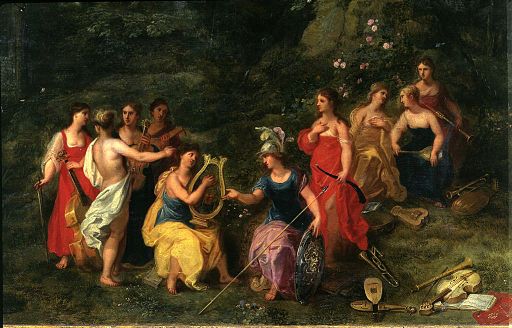
512px-Minerva_among_the_MusesAs modern, global writers and artists, we all have those wonderful days when we feel we are just holding the pen or brush while another “being” does the creative work and sends up firebolts of ideas into the imagination.

Some of us like to call this “Being” our “Muse.”

The original 9 Muses of Greek Mythology were a group of sister goddesses who inspired artists and philosophers to create artistic masterpieces. Ancient writers such as Homer appealed to the Muses for help and inspiration, and as Homer’s Iliad and Odyssey are still in print nearly 3000 years later, it’s probably fair to say these appeals to the sibling deities worked.

Nevertheless, even with his divine assistance, Homer probably had plenty of bad writing days,  just as we have days when the Muse is elusive, and everything we create is no better than our third-grade efforts many years ago.

On days like those, it’s wise to remember that times and fashions have changed since Ancient Greece, and perhaps the reason the Muses don’t come is because we don’t recognise them in their present forms. Unless you’re trying to write at a toga party, they probably won’t look like they do in the painting above. They come in all shapes and sizes.

So, to assist you in finding inspiration when the creative rivers run dry — meet the new generation of global Muses.

Bloggoria –  Muse of Travel Writing

Descendant of: Calliope; Muse of epic poetry; emblem – a writing tablet.
Modern Muse’s emblem: An iPad.
Sometimes disguised as: The female in the cafe who, when she sees you scribbling in your trusty Moleskin, wants to know what you’re writing and says that she could write a novel if only she had the time. If she doesn’t have the time but is so full of ideas that she has to tell strangers about them, her brain is ripe for shameless picking.

Sirius – Muse of Navigation (AKA Siri)

Descendant of: Urania; Muse of Astronomy; emblem – globe and compass.
Modern Muse’s emblem: Sirius can’t map-read to save her life, let alone navigate by the stars, so she goes for a more up-to-date look with a GPS box.
Sometimes disguised as: That woman you’ve passed three times while you’re lost and driving around a new city.  The woman your male companion won’t stop to ask directions because a) he doesn’t like asking for directions and b) this person looks a bit odd. The odder she looks, the more likely she is to be a Muse, and will end up as an anecdote or character in your next book. Don’t place too much faith in her directions, though.

Empithrie: Muse of music

Descendant of: Euterpe; Muse of music or flutes; emblem – a flute.
Modern Muse’s emblem: A set of earbuds.
Sometimes disguised as: The female DJ on a new radio station who plays the right song at the right time, one that just happens to fit your mood and gets the creative juices flowing. Also, pay attention to buskers: you never know when Muses (of either gender) are in unusual places, as in this video:

Fenderene: Muse of song lyrics

Descendant of: Erato; Muse of lyric and love poetry: emblem – a lyre.
Modern Muse’s emblem: A guitar pick.
Sometimes disguised as: That really good guitarist in the subway, singing Carole King songs. Don’t confuse her with the next Muse,

Slammia: Muse of modern poetry.

Descendant of: Polyhymnia; Muse of sacred poetry; emblem – a veil.
Modern Muse’s emblem: A joss stick
Sometimes disguised as: The only good entrant in a pub poetry slam.

Depressoria: Muse of tragedy

Descendant of: Melpomene; Muse of tragedy; emblem – a tragic mask.
Modern Muse’s emblem: A bottle of Prozac.
Sometimes disguised as: That person you get stuck next to on the train, who insists on telling you her life story which sounds like the outline for a bad country song. (See “Fenderene” and “Empithria”) Take notes, if you can.

Nostalgene: Muse of history and reminiscence

Descendant of: Clio; Muse of history; emblem – a scroll
Modern Muse’s emblem: An old photograph album
Sometimes disguised as: Your granny when she’s talking about her childhood.

Standuporia: Muse of alternative comedy

Descendant of: Thalia; Muse of comedy; emblem – a comic mask.
Modern Muse’s emblem: A large snake called Monty.
Sometimes disguised as: Like love, comedy is all around you. Just keep listening for those throwaway one-liners.

Bunionaria: Muse of dancing

Descendant of:  Terpsichore; Muse of dancing; emblem – dancing, holding a lyre.
Modern Muse’s emblem: A pair of satin, worn out ballet shoes.
Sometime disguised as: Dancing Muses at places like Covent Garden or Teatro alla Scala are rarely disguised. Buy a ticket, watch, be inspired. Do, however, avoid Irish pubs on St. Patrick’s Day, when everyone thinks they can out-tap Michael Flatley. And avoid Ibizan hotel dance floors at all times if you don’t want to lose all your other Muses (with the exception of Standuporia.)

STAY TUNED for next week’s posts.

If you enjoyed this post, we invite you to register for The Displaced Dispatch, a round up of weekly posts from The Displaced Nation, with seasonal recipes, book giveaways and other extras. Register for The Displaced Dispatch by clicking here!

Related posts:

Image: Minerva among the Muses, via Wikimedia Commons

LIBBY’S LIFE #69 – This dog’s life takes the biscuit

Fergus looks up at me, down at his empty dish in the corner of the laundry room, then back at me again. I could be imagining things, but I think his lip is curling.

“No,” I say to him, as I pull one lot of washing out of the dryer and insert another wet load. “Just — no. You can’t be hungry, not again. It’s impossible. And it’s no good trying to fool me. I know you don’t eat everything in sight when Maggie’s in charge of you. You’re just doing it to annoy me.”

At Maggie’s name, Fergus pricks up his ears, wags his tail, and goes to sit by the back door under the coat hook where I keep his lead.

“Later,” I promise him. “You can see Maggie when Jack has gone to school and I’ve gone shopping with the twins. And in a few days more you’ll be with her all the time. Won’t that be nice?”

Nice for him, and oh-so-blissful for me. I am counting the days until next Wednesday, when Maggie has — hallelujah! — agreed to take Fergus and I can rid myself of this hound for good.

Maggie, though, is looking forward to having him. A couple of burglaries in town last month made her nervous, and she thinks a dog barking around the place will be a good deterrent.

“Besides,” she said, sounding rather sad, “he will be good company when you move house.”

Oliver and I haven’t got a moving date yet, but Maggie isn’t looking forward to losing us as neighbours, although we’ll still be in Woodhaven. We haven’t even found a new house to move into, but lately I’m spending so much time and money in the local supermarket that I’m starting to think we should cut out the middle man and set up home in the checkout line.

When I first arrived here, all I heard from the other wives was how cheap it was to live in America compared with England. “I spend three-and-sixpence a month on food, and have money left over for a jar of caviar and some more diamond earrings.” That kind of thing. After a while I sussed out that the reason the wives spent so little on food from the supermarket is because they ate at restaurants, and the husbands hid the bills on their company expense accounts at the end of the month.

With Oliver being boringly honest and never putting items on expenses unless they’re work-related, my own grocery bills are astronomical. Add in disposable nappies and cans of formula milk for two, and even Wills and Kate in their starter flat at Kensington Palace would balk at the monthly total.

But that’s before we get to the pet food aisle.

Fergus, as I mentioned when I started this journal, is one of the most stylish dogs in the world. Never mind diamanté collars or fluffy dog sweaters like Dr. Lowell’s ridiculous chihuahua wears — for his fashion accessories, Fergus has food allergies. He went on a gluten-free diet long before Lady Gaga did. Not for him the cheapo dog kibble; only the best for Fergus. Special gluten-free dog biscuits, more expensive per pound than Black Angus filet mignon.

Hey. Those biscuits are nothing to do with me.

They were Oliver’s idea. Maybe coddling the dog she gave us is a way of assuaging the guilt he feels towards his mother for abandoning her, or for letting the cat out of the bag about her bigamist husband. Whatever the motive, the upshot is that while normal dogs are happily gnawing on bones and finishing the children’s leftover chicken nuggets, Fergus is lording it with grain-free, venison-and-cinnamon-and-butternut-squash dog treats, at 25 bucks a pound. To even things out, I buy the cheapest canned meat without wheat filler, but he turns his nose up at it most of the time. Only those doggie-deli-delights will do.

Not content with his food’s Michelin 5-star quality, Fergus also has to have it in Supersize Me quantity. It doesn’t matter how often I fill his bowl with these delicate morsels — when I look again, the dish is empty, and Fergus has a mournful expression on his face, begging for seconds.

I told Maggie she should rename him Oliver. Twist, that is, not Patrick.

“But he never eats that much when he stays with me,” she says. “He gets whatever meat the butcher has going cheap, and nothing else. Perhaps he’s got worms.”

I’ve given him enough worming tablets to eradicate the subterranean population of Massachusetts. It’s made no difference.

Fergus is still sitting by the back door, staring up at his lead. Every few seconds he lets out a little whine and shifts from side to side on his front paws.

What the hell. It’s nearly time to go, anyway.

I bundle the twins into their snowsuits and fasten them into their double pushchair. Then I tug Jack’s arms into his big winter coat, and pull the two sides of the front together to do up the zip.

The two sides don’t quite meet. Jack’s got an extra layer of fleece on, admittedly, because it’s so cold here at the moment, but even so…

“I need to buy you more clothes while you’re at school today,” I say to him. “You’ve grown again. You’ve eaten too many cookies. You’re the Cookie Monster!”

“No, Mummy,” he says. “Biscuit Monster!”

“Ah, that’s right. Silly me.”

Jack is rather particular lately about his vocabulary. It’s very sweet. He corrects his American friends if they say “Truck” (“Lorry!”) or “Chips” (“Crisps!”) or, in this case, he corrects his mother for saying “Cookie” instead of “Biscuit.”

I think his obsession started when I got into watching old episodes of Supernanny USA. Supernanny herself is unapologetically Essex and sounds like Jack’s Granny Sandra, even after filming with families in New Jersey for two weeks. But although she talks like my mother-in-law, I like watching the programme because it makes me feel superior after I’ve had a bad day, and I can think “Well, at least I don’t do that.” Occasionally, though, an episode will bring me down to earth, like the one a few weeks ago when this woman had about nine kids who kept diving into packets of fun-sized Milky Ways every five minutes, and then bounced off the walls all day, much to the mother’s bewilderment.

I watched one of the nine children having a tantrum just as Jack lay on the floor, kicking and shouting because I’d taken a clandestine Hershey bar off him, which he was about to eat five minutes before lunch was ready. From then on, all chocolate and sugary things have lived on the top shelf of the pantry where Jack can’t reach them, and I’ve doled them out sparingly, only once a day, in accordance with a big set of Mum’s Rules which I wrote in black marker on poster board immediately after the TV programme ended.

Jack seems to have adapted, though. After one episode on the naughty spot outside the landing linen closet on Boxing Day, he accepted it. I can’t say his tantrums have got much better, though.

With some pushing and huffing, I finally get his coat fastened.

“Ready to go?” I ask him. He nods, as best as he can beneath layers of woolly hat, hood, and scarf.

Fergus barks — once, twice, three times.

I open the back door, and the dog shoots out, straight across the road and up Maggie’s driveway. A Jeep coming down the street slows for him and honks its horn. Fergus looks back briefly. If a dog were physically capable of flipping the bird, Fergus just did it.

Next Wednesday can’t come a minute too soon.

.

Next post: LIBBY’S LIFE #70  – A brewing storm

Previous post: LIBBY’S LIFE #68 – Puppy fat

A note for Libby addicts: Check out Woodhaven Happenings, where from time to time you will find more posts from other characters.  Want to remind yourself of Who’s Who in Woodhaven? Click here for the cast list!

Read Libby’s Life from the first episode.

STAY TUNED for Tuesday’s post!

If you enjoyed this post, we invite you to subscribe for email delivery of The Displaced Dispatch, a round up of the week’s posts from The Displaced Nation. Sign up for The Displaced Dispatch by clicking here!

Image: Travel – Map of the World by Salvatore Vuono / FreeDigitalPhotos.net
THE DISPLACED Q: With enough time and resources, what would you most like to learn in your adopted culture?


file0001883482933A long time ago, in a country far, far away, my nine-year-old self visited a museum in England. The American Museum in Bath was my first experience of anything American that wasn’t viewed on a black-and-white TV, and, while I recall finding the museum interesting, there was one particular exhibition that is still lodged in my long-term memory: the extensive collection of antique quilts.  Exquisite, detailed, and painstakingly hand-sewn by American women hundreds of years ago, these quilts and the stories behind them fascinated me.

How difficult can it be?

Fast forward a couple of decades, and there I was, newly arrived in New England. I’d worked out the day-to-day details of where to shop, where to bank, and how to order a pizza in a fake American(ish) accent so that it got delivered to the right address. Perhaps it was the amount of free time suddenly on my hands, or the impending arrival of another baby that put me in a domesticated mood, but when I received in the mail a brochure for adult education courses at the local high school, I signed up for Quilting For Beginners. I was in the heart of quilting territory, and I was going to make one of those big quilts. How difficult could it be, if women two hundred years ago made them by hand, by candlelight?

A newfound respect…

The course lasted for eight weeks. If I’d previously admired the Old American quilters whose handiwork graced the museum in Bath, at the end of those eight weeks they had achieved god-like status in my mind. It’s not as if I was a novice at sewing. My mother, an expert needlewoman and daughter of a tailoress herself, had taught me the basics long ago. But whereas I was making a small lap-quilt on an electric sewing machine, many of the much larger quilts I’d seen in Bath would have been made by hand;  the first American patent for a two-thread machine wasn’t issued until 1846.

…and an appreciation for our foremothers

In the same way I am in awe of Austen and Dickens writing without the help of even a typewriter, let alone a Mac, I am humbled to think of the hours these women spent in creating a textile legacy for their country’s future generations. The two month process of learning a craft associated with the part of the world where I was living made me appreciate aspects of the region’s history and early life, perhaps more than visits to American museums on this side of the Atlantic did.

The quilt I made is still here, draped neatly over a chair in the spare bedroom, a reminder of eight weeks  of cutting, pinning, sewing, and then unpicking when it all went wrong — but eventually finishing. Eight weeks of learning a new craft…and so much more.

Readers, what about you? What would you like to learn in your adopted country, and what else would it teach you?

.
STAY TUNED for Wednesday’s post!

If you enjoyed this post, we invite you to register for The Displaced Dispatch, a round up of weekly posts from The Displaced Nation, with seasonal recipes, book giveaways and other extras. Register for The Displaced Dispatch by clicking here!

Related posts:

Image: Morguefile

LIBBY’S LIFE #68 – Puppy fat

The paediatrician pinches a wad of baby flesh and plunges her syringe into the right thigh of an unsuspecting George.

A couple of seconds of silence while George’s bottom lip sticks out and he fixes me with a reproachful stare. Then, tears squirting from his eyes, he opens his mouth wide and lets rip a bellow that echoes around the small consulting room, the corridor outside, and probably the waiting room as well.

Undeterred, Dr. Lowell picks up another syringe and sticks it in George’s left thigh. The bellows treble.

“I can give Elizabeth her shots now, as well,” she says, as she presses a small, circular Band-Aid over each pinprick. “She also should have had them several weeks ago.”

The last time I fell for this trick and had both twins vaccinated on the same day, I didn’t sleep for three nights, while I paced around the bedroom with one or the other feverish, grizzling baby. Our usual doctor, the lovely Dr. Wong, who is out sick today with a nasty dose of flu, learned from this. She would never make such a silly suggestion.

“I’d rather deal with just one at a time, thanks. We’ll come back next week. I doubt Beth’s going to catch hepatitis B by then.”

Dr. Lowell reaches for another vial and needle as if she hasn’t heard me. “Best to get it over with,” she says. “If you could just take Elizabeth out of the stroller and undress her—”

Dr. Lowell doesn’t have children. She has a chihuahua. I’ve seen her on Main Street, carrying it around in a wicker shopping basket, dressed in a little pink doggie sweater — pooch, that is, not paediatrician. The Coffee Posse warned me long ago that I should avoid this doctor if possible.

Today, thanks to Dr. Wong’s flu, it wasn’t possible.

“No,” I say, more firmly. Instead of unbuckling Beth from the pushchair, I strap George in beside her.

George’s roars have diminished to hiccuping whimpers. I stroke his head and tell him he’s a brave boy and that he can have some ice cream when we get home.

“He’s fat enough already.” The doctor throws the needles in the sharps bin, and snaps off her blue latex gloves.

I’m not sure I’ve heard right. “Excuse me?”

“Childhood obesity is a real problem. He’s already at the 95th percentile for weight. And you need to watch the weight of your older son, too. Neither of them need ice cream.”

Enough. This doctor visit is over. I wheel the pushchair through the doorway, grazing the paint on the door jamb in my rage.

“And I don’t need a chihuahua fashion expert pretending to be Jillian Michaels,” I tell her. “Come on, Jack. Let’s you and me and the twins go to Baskin Robbins and pig out.”

* * *

“And then, the old witch says my boys are fat and they don’t need any ice cream,” I say to Maggie. “So here we are with a gallon of full fat chocolate brownie ice cream to share with you while you tell me all about your holiday.”

We didn’t go to Baskin Robbins, in the end. We went to the supermarket to buy Maggie’s favourite flavour to share with her. She came back from the Seychelles yesterday and I was dying to hear all about it.

Maggie scoops the ice cream into three dishes, and gives the small one to Jack. The largest one she gives to me, because I have to share mine with the twins. Then she pulls a dog bowl out from under the kitchen sink, fills it with a can of premium dog meat, and gives it to Fergus, who is watching her every move with an adoring expression.

He never looks at me like that. Perhaps this would be a good time to approach the subject of her keeping Fergus indefinitely.

“Nothing like ice cream for de-stressing, I find,” Maggie says, shovelling in a mouthful and closing her eyes.

I’m guessing she’s not talking about my own post-doctor stress levels. I’ll mention Fergus another time.

“Was it so hard, spending five days on a tropical island?” I ask.

Another spoonful. Maggie nods.

“I was there as a witness.”

Blimey. I didn’t expect that. Witness to what, I wonder? Drug deals? I’ve heard rumours of Maggie’s hippie past, and there’s sometimes a suspicious whiff of ‘herbal cigarettes’ on her back porch, but this was different. Dangerous, even. You hear about people giving evidence then ending up in neat little dismembered parcels in the bowels of New York’s sewers.

“Will you have to move, or change your identity, or anything like that?” I’d hate to lose my friend just because some drug cartel had it in for her.

Maggie wrinkles her nose and squints at me. “What do you mean?”

“You know — like witness protection.”

Maggie puts her spoon down in her dish. She laughs, and laughs some more. She picks the spoon up, but has to put it down again because she’s still laughing.

On one hand, I’m pleased because I’ve amused Maggie and made her laugh. Laughter is better than ice cream for stress busting. On the other hand, I’m really offended.

“What did I say?” I ask, when she’s quiet at last.

“I wasn’t a witness to a crime,” she says. “I was a witness to a wedding. One of those barefoot beach weddings. My daughter’s.”

And that’s all she would say about it.

But I surmised that, for Maggie at least, it wasn’t a happy occasion.

* * *

As I zip Jack and the twins up into their coats to walk the couple of hundred yards to our house, Maggie says, “You know — don’t take this the wrong way, but that miserable doctor might not have been entirely wrong. You’re struggling to fasten Jack’s zip.”

Et tu, Maggie?

“The zip is stiff, and Jack is not obese. Thank you.” I’d like to say more, but I need to ask her soon if she will take Fergus off my hands. It wouldn’t do to ruin a beautiful friendship at this point.

“No, I didn’t say he was.” She hesitates. “But he’s…hefty, isn’t he? Heftier than he used to be.”

Maggie shouldn’t go on tropical vacations if it makes her this argumentative. I have a perfectly good mother-in-law available if I want to be insulted.

“Even if he is–” I say “— and he’s not — children need it for their growth spurts. They can’t be expected to follow the standard growth charts all the time.”

Maggie holds up her hands, palms outwards, in a “peace” gesture. “Of course not. Anyway, it’s none of my business. Do forgive me, my dear. Tell me, did they like my Christmas presents?”

“They loved them,” I say, stalling for time. They had so many presents from fond grandparents that I can’t instantly recall what Maggie gave them.

“Handpainted, those boxes are. A relic from the time I owned the craft store in Main Street.”

A-ha! Exquisite little wooden boxes with hinged lids, painted with trains and cars for the boys, and fairies and toadstools for Beth. No wonder I couldn’t remember them instantly — I hadn’t seen them since Boxing Day.

“They’re absolutely beautiful,” I say, quite sincerely. “The children loved them. I’ve put them away safely for now, of course,” I add, crossing my fingers behind my back.

Maggie nods. “A good idea.” She opens the front door and looks outside at the descending clouds. “You’d better go before this mist turns to rain. Where’s Fergus…I might have known, in the kitchen, asking for more food! I don’t know where he puts it. Anyone would think he was never fed. Don’t forget to take the rest of your ice cream with you.”

“You keep it,” I say, having just caught sight of my post-Christmas reflection in Maggie’s full-length hallway mirror.

As children, dog, and I hurry home through the rain, I reflect sourly that one member of the family won’t have to diet this January, and can eat as much as his canine heart desires.

Another reason — the final straw, even — why Fergus has to go.

*  *  *

Next post: LIBBY’S LIFE #69 – This dog’s life takes the biscuit

Previous post: LIBBY’S LIFE #67 – Lights in the rearview mirror

A note for Libby addicts: Check out Woodhaven Happenings, where from time to time you will find more posts from other characters.  Want to remind yourself of Who’s Who in Woodhaven? Click here for the cast list!

Read Libby’s Life from the first episode.

STAY TUNED for Tuesday’s post!

If you enjoyed this post, we invite you to subscribe for email delivery of The Displaced Dispatch, a round up of the week’s posts from The Displaced Nation. Sign up for The Displaced Dispatch by clicking here!

Image: Travel – Map of the World by Salvatore Vuono / FreeDigitalPhotos.net

