The Displaced Nation

A home for international creatives

Tag Archives: UK

LESSONS FROM TWO SMALL ISLANDS — 1) Keep Calm and Carry On

Justin Mussler is traveling around the world with his wife and two kids, recording their adventures in the blog “The Great Family Escape.” In a recent post defending his family’s decision to eschew a conventional lifestyle for one of constant travel, he says:

By the time it’s time to go home, we all realize that home is just not where we want to be.

Hmmmm… “Home is just not where we want to be.” Once upon a time, I could relate to those sentiments. I spent a significant chunk of my adult life living on two small (and rainy!) islands, England and Japan. I never expected to go home again.

But that was then and this is now. As regular readers of this blog will know, I’m now back in my native land, the United States — though still living on a small, mercifully less rainy, island (Manhattan).

So, can you go home again?

The conventional wisdom is that you can NEVER go home again, particularly if you spend more than three years abroad.

To which I say: “Poppycock!”

Well, not really. I’ve definitely had my Rip Van Winkle moments in attempting to get used to the United States again. Still do, in fact.

But unlike Mr Mussler and his family, home is exactly where I want to be right now.

By “home,” of course, I mean my original nation of birth. I mention that in case you’re one of those people who has lived abroad for so long that you no longer know where “home” is or have reached the point of questioning what “home” really means.

(If you are a Third Culture Kid who has never lived in your nation of birth, this post doesn’t really apply — though I’m happy to point you towards some blogs with plenty of posts that would.)

A few overall discoveries I’ve made since repatriating:
1) Travels are like stories: they need a beginning, middle — and an end — to have true meaning. By going home again, you can begin to see what you’ve actually retained from the experience. No doubt you changed some of your behavior — but how much of that was due to expediency and how much to actual lessons learned?
2) Hard as it may seem, travelers can contribute something of what they’ve learned to their native lands. Coming home again gives you a chance to do that.
3) We long-term expats, rex-pats and round-the-world travelers enjoy a good challenge. Trust me, going home again is a challenge of Olympian proportions — which just so happens to fit the theme The Displaced Nation will be exploring this summer.

Lesson #1: Keep Calm and Carry On!

And now to begin my new, occasional series for The Displaced Nation. Through my own expat-to-repat experience, I will try to demonstrate that going home again can be just as enriching as venturing across borders to travel and live.

So what did I learn from being displaced within two small-island countries for so long? I’ll start with the most obvious lesson that anyone who is at all familiar with Japan and/or England has doubtless picked up on:

KEEP
CALM
AND
CARRY
ON

In England it’s known as Stiff Upper Lip (SUL); in Japan, as gaman.

In America we use many words to describe this quality — perseverance, patience, fortitude, stoicism — but I think that’s because we don’t have a single cultural concept that corresponds to what the English mean by SUL or the Japanese by showing gaman.

This may be why I didn’t take to the concept in either country right away. On the contrary, I took to it kicking and screaming. Where the citizens of each of these countries saw grace, strength, endurance, and perseverance, I saw passivity, masochism, fatalism and pain. “Why is everyone bowing so readily to their fates?” I would ask myself repeatedly.

And, though I never committed an act of “queue rage” while standing in line at the post office in the English town where I lived, I came pretty close — especially when watching others who’d come in after I did get served before me.

On those occasions, I felt like crying out: why don’t we try a serpentine line instead? (You know the kind of line I mean — when all customers are funneled into one big snaking queue, demarcated by ropes or barriers. When you reach the head of the queue, you are directed to the next available server.*) But I was too polite to do so.
*Fellow serpentine-line enthusiasts should check out Seth Stevenson’s terrific article on the topic, published just now in Slate.

It’s the weather, stupid!

Thank you, Jared Diamond, for your book that supports, in scholarly depth and detail, the inkling I had while living in Japan and Britain that climate has much to do with how people behave. For a long time, I’d been convinced that it’s the weather on both of these small islands that builds stoicism.

My mental image of gaman is the famous woodblock print by Hiroshige depicting figures huddling under straw umbrellas as they cross a bridge in a driving, chilling rain — carrying on despite. Hiroshige was much admired in Europe for the slanting lines in his prints. But I suspect the Europeans didn’t fully understand the conditions that inspired him to portray rain in this manner — it’s a rainy (and windy) old island, Honshu.

My mental image of England is — well, in fact, it’s what happened on the River Thames Flotilla Spectacular for Queen Elizabeth’s Diamond Jubilee this past week-end. Yes, it rained on that dear lady’s parade, yet she carried on despite…

Now, I don’t mean to equate the English stiff upper lip with Japanese gaman. The Japanese have a grounding in the Buddhist religion, which shapes their understanding of this concept. In addition, they must often contend with fairly severe climactic conditions — earthquakes as well as typhoons. No wonder they tend to emphasize the fatalistic aspect of keeping calm and carrying on. There’s nothing you can do about Mother Nature’s whims, so just bow to the inevitable and make the best of it.

The English, by contrast, tend to feel that they should make the best of situations by finding some humor in them. SUL is called for in situations where you might otherwise be overwhelmed by huge feelings (to the point where your upper lip might start to tremble). Black humor along with understatement can provide some welcome relief or distraction: “I won’t let the Jerries spoil our picnic! What’s a few bombs on a sunny day?” (Hey, I wonder if the Queen cracked a joke about the rain the other day? She’s reputed to have a sense of humor…)

Respect for the aged

In my view, however, the overlap between England and Japan on this point is greater than the differences. It’s interesting, for instance, that both countries have created a special category for those who’ve mastered their professions through years of persistence. Japan confers the title of Living National Treasure, or Preserver of Important Intangible Cultural Properties, to prominent artists or craftspeople of advanced years.

Likewise in England, knighthoods and dame-hoods (is that a word?) go to artists, entrepreneurs, and other major contributors to British society once they’ve reached a certain age — Dame Judi Dench, Sir Richard Branson, Sir Paul McCartney (almost 70 and still rockin’ with no signs of stoppin’!).

And then there’s the veneration shown to Queen Elizabeth herself. Having bounced back from her self-proclaimed annus horribilis, she now finds herself admired precisely for the quality that people (myself included!) at one time loathed: her ability to keep calm and do her duty. As the political journalist Anne Applebaum put it in her Slate column this week:

…the queen, simply by living so long, has come to epitomize an increasingly rare idea of duty that many in Britain, and elsewhere, admire. She doesn’t quit, she doesn’t complain, she doesn’t talk to the press or protest when people draw nasty caricatures or say unpleasant things about her family…

My, she has aged well!

My queenly umbrella

When touring Nova Scotia in the rain this time last year, I ended up buying the exact same “birdcage” umbrella that the Queen uses. A product of the Royal warranted umbrella maker, Fulton, the umbrella is transparent so that the Queen’s public can still see her, but then trimmed with the appropriate color so that it matches her outfit exactly. (Mine is trimmed in gold.)

Notably, that’s the brand of umbrella she and Camilla were carrying as they stepped off the royal barge when Sunday’s Jubilee pageant came to an end at Tower Bridge.

I think I was attracted to the umbrella not just because the Queen uses it but because it reminded me of the transparent umbrellas you can buy everywhere in Japan — helps you to see where you’re going when you’re bent over in the wind and rain like a Hiroshige figure.

Of late a couple of my friends have remarked that I remind them of the Queen. At first I was horrified: are they trying to say I’m getting on? But I think they might have been referring to my habit of wearing hats to protect my skin from sun and rain (which I picked up in Japan, actually) — and now, of course, there’s my Fulton umbrella! 🙂

My takeaways

The lesson of “keep calm and carry on” enriches my current life in all kinds of ways and, I’m convinced, can enrich the lives of my fellow Americans. Here are a few scenarios close to some I’ve experienced, with pointers on appropriate responses:

1 — Two airplanes crash into the twin towers in your city and there are constant rumors of another attack on the subways. Keep calm and carry on — and take the bus for a change. It’s slower, but the culture is a lot more pleasant.

2 — Your dentist asks you if you mind a slight pinprick from the needle used to inject the novocaine for fixing your cavity. Keep calm and carry on — and resist the temptation to remark: “Yanks are such wimps!” Instead, make a joke: “That’s going to make it damn tricky to keep talking to you.” He won’t laugh, but at least you’ll be seizing the occasion to practice your black humor, a key component of SUL.

3 — You’ve gathered together a group of friends from your apartment building to go out for dinner. You all meet in the lobby, but just as you’re about to step outside it starts raining like it does in the tropics. Your friends show hesitancy and want to call off the evening’s festivities. Keep calm and carry on — and think of the Queen. After checking that everyone is wearing the proper foot gear (wellies), go out the door first, wielding your queenly umbrella. So what if you get a bit wet? Just smile and be regal. If anyone looks at you as though they think you’re crazy, give them the royal wave. How dare they intrude on this, your finest hour? Off with their heads!

* * *

So, tell me: does any of this make sense, or has living abroad for so long rendered me totally bonkers?!

STAY TUNED for Thursday’s post, a Displaced Q on patriotism and the expat life, by Tony James Slater.

If you enjoyed this post, we invite you to register for The Displaced Dispatch, a round up of weekly posts from The Displaced Nation, with seasonal recipes, book giveaways and other extras. Register for The Displaced Dispatch by clicking here!

Related posts:

Image: MorgueFile
Dear Mary-Sue: The Queen’s Diamond Jubilee — not the most sparkling of times

Mary-Sue Wallace, The Displaced Nation’s agony aunt, is back. Her thoughtful advice eases and soothes any cross-cultural quandary or travel-related confusion you may have. Submit your questions and comments here, or else by emailing her at thedisplacednation@gmail.com.

Another month passes us by, Mary-Suers. It seems only moments ago that I was penning my New Year post and yet here we are at the beginning of summer. Really, where does the time fly (and how many air miles does it have)?

Anyhoo, let’s get on with the show. We were running low on submissions this month, but this week’s jubilee celebration in Ye Olde Englande seems to have got The Displaced Nation readers all a-fluster.

__________________________________________

Dear Mary-Sue,

I don’t understand all the palaver about Queen Elizabeth II and her 60 years on the throne. Why is it such a big deal when the Britain she presides over now is much reduced in prestige from the one she inherited? I mean, it’s not as though her reign has heralded a second Elizabethan Age!

Curious from California

p.s. Yes, I am an American, just like you, but that’s not the reason I hold these opinions. Most of our fellow Yanks worship the British monarchy (don’t ask me why).

Dear Curious,

Do you have any travel-related queries or are you in need of any relationship advice? That’s kind of the point of the column, honey!

Did you send this to Tina Brown first and get no response? She’s always good for some royal chit-chat.

Write back when you have some juicy sexual problem for me to pontificate on. If it involves Tina Brown all the better. Although in fairness, a lot of the relationship letters I receive seems to involve Tina “man-eater” Brown.

Mary-Sue

———————————-

Dear Mary-Sue,

I’m an American expat in England, and the Diamond Jubilee celebrations that just took place were my first big exposure to how the Brits treat their royal family. Frankly, I think they could have done better. I mean, put most of the Royal Family on a boat in the middle of the river? It’s almost as though they were setting them up as a target for anyone who would like to dispose of them in one go. And I also kept thinking that the boat could easily capsize (what in heavens name were all those other boats doing there?).

Finally, I found it disrespectful of the Brits to expose their elderly monarch to the cold and wet river conditions. What if she contracts a nasty cold and chest infection?

Lorrie from Lancaster

Not only that Lorri, but they made her sit through a concert featuring Will.i.am (or however you spell it) and Grace Jones. What 83-year-old wants to sit through all that? They should have got her whoever the British equivalent of Lawrence Welk is. My dear departed mother loved Lawrence Welk – and who can blame her? The man was a natural entertainer. They didn’t call him the Elvis of North Dakota for nothing.

Mary-Sue

———————————-


Dear Mary-Sue,

I’m a British expat in Dubai, and I am now suffering a case of acute homesickness owing to not being at home for the Diamond Jubilee celebrations. It’s not the same to watch it on TV, and the parties held by British expats here — well, I attempted to join in but just couldn’t get into watching people dressed up like Mary Poppins or Knights of the Realm. Many of the latter were parading around in a drunken stupor bellowing out “God save the Queen!”

Do you think I’m crazy to feel this way? Wouldn’t you feel odd trying to celebrate 4th of July in Britain, for instance? I expect you’d be longing for a barbecue, just as I was for an old-fashioned street party.

Debbie from Dubai

Honey, July 4th is a holiday for the whole world.

Mary-Sue

___________________________________________

Anyhoo, that’s all from me readers. I’m so keen to hear about your cultural issues and all your juicy problems (no doubt all about Tina Brown) then drop me a line.

Mary-Sue is a retired travel agent who lives in Tulsa with her husband Jake. She is the best-selling author of Traveling Made Easy, Low-Fat Chicken Soup for the Traveler’s Soul, The Art of War: The Authorized Biography of Samantha Brown, and William Shatner’s TekWar: An Unofficial Guide. If you have any questions that you would like Mary-Sue to answer, you can contact her at thedisplacednation@gmail.com, or by adding to the comments below.

STAY TUNED for tomorrow’s post. Mary-Sue has heard it’s going to be great.

If you enjoyed this post, we invite you to register for The Displaced Dispatch, a round up of weekly posts from The Displaced Nation, with seasonal recipes, book giveaways and other extras. Register for The Displaced Dispatch by clicking here!

Related posts:


A marathon reign of Olympic proportions: Queen Elizabeth II’s Diamond Jubilee

Regardless of where you were in the world at the weekend, you were most likely aware of a little party going on in Britain, to celebrate one woman’s six decades as Queen.

Queen Elizabeth II is only the second monarch of Great Britain to have reigned sixty years, the first being Queen Victoria, who was on the throne for 63 years and 7 months. Given the Royal Family’s record of longevity — the Queen Mother was 101 when she died in 2002 —  Victoria’s record could well be beaten in 2016, and Brits shouldn’t rush to chuck away the flags and bunting. They’ll probably need them in another ten years’ time for Britain’s first Platinum Jubilee.

Sixty years is a long time for anyone to be in one job, particularly when you didn’t get much say in your nomination for it. And, OK, while republican sympathizers might think a carriage clock for the mantlepiece at Buckingham Palace would be adequate recognition, millions of Brits this weekend seemed very happy to foot their share of the bill for the extravagant national celebrations.

A job for life

Most people would have quit that job long ago. The Queen, however, is made of sterner stuff, and her determination to see the job through to the end — quite literally — means, inevitably, she has seen huge changes during her reign.

Not least of these is the issue of how she came to be Queen in the first place. Forced to choose between being King and marrying divorcee Wallis Simpson, Edward VIII abdicated the crown to be with the love of his life, and in doing so made his younger brother King, and his niece Elizabeth first in line to the throne. To have a monarch married to a divorcee went against the teachings of the Church of England, of which the British monarch is Supreme Governor.

Ironic, then, that three of Queen Elizabeth’s four children have divorced, including, of course, the Prince of Wales, Britain’s next King. They all divorced or separated in 1992, the year referred to by the Queen as her “annus horribilis”.

The monarchy survived this crisis with its usual show of stalwartness and stiff upper lip, only to be hit, five years later, by a much bigger crisis — the greatest since the abdication of the Queen’s uncle in 1936.

Making a rod for one’s own back

After the sudden death of Diana, Princess of Wales, the Queen again employed a stiff upper lip in her “business as usual” approach to the tragedy, but drastically underestimated the intensity of the public’s grief at the death of her ex-daughter-in-law. The public perceived the Queen as cold and uncaring when she stayed in Scotland in Balmoral Castle while insisting on adhering to Royal  protocol by not having the flag at Buckingham Palace flying at half mast.

In an article in The Telegraph, Mary Francis, a former advisor of the Queen,  said that at the time she “feared that republican MPs would call for a end to the monarchy because of public anger at the Royal Family’s initial reaction to the death of Diana.”

In the Radio 4 documentary, “A Royal Recovery”, Mrs. Francis said:

I do remember walking into Buckingham Palace the first morning I was back. Although there were so many people around, it was very quiet. It was a threatening and rather unpleasant atmosphere.

Rising from the ashes

Incredible, then, fifteen years later, to watch the enthusiastic crowds in London at the weekend as 1,000 boats sailed up the River Thames in the largest pageant on the Thames since the reign of Charles II, 350 years ago. It was as if the Diana crisis had never happened. Or maybe it was something more – an acknowledgement, admiration, of this woman’s unswerving devotion to duty.

As my Australian friend, Kym, said to me yesterday:

“Regardless of what you think of the monarchy, it’s an amazing testament to a woman who has been in ‘the job’ for 60 years.”

Indeed. Sixty years is, in terms of Olympian feats, a marathon; one which deserves a crowd to cheer on the runner.

Our theme for summer: Olympian Feats

It’s fitting, therefore, that the Jubilee’s acknowledgement of stamina and determination should come at the time of another event when these qualities are essential:  the 2012 Summer Olympics in London.

Because of this, we have decided to revolve our summer posts around an Olympic theme — not necessarily the sports themselves, but more about the qualities required of an Olympic athlete, or a long-reigning monarch.

As we are more armchair sportsmen, however — and it is Wimbledon very soon, of course, which takes up an awful lot of armchair time —  we will be taking a break ourselves, by cutting our posts down to four per week rather than the usual five. Nevertheless, you can look forward to two new series starting this month — “Chance Encounters” and “You CAN Go Home Again” as well as the familiar Random Nomads, Displaced Qs, questions for Mary-Sue, book reviews, and bulletins from Libby in Woodhaven.


If you enjoyed this post, we invite you to subscribe for email delivery of The Displaced Dispatch, a round up of the week’s posts from The Displaced Nation. Sign up for The Displaced Dispatch by clicking here!

THE DISPLACED Q: On your travels, what’s the most memorable chance encounter that brought you closer to The Sweet Life?

Since the beginning of May, I’ve been posing weekly questions as a way of getting at how we travelers experience La Dolce Vita, or The Sweet Life.

Seeking truths by your own lights — that’s what’s known as the Socratic method!

But while my questions thus far have focused on the sensory delights that travel offers — heart-stopping sights, delightful sounds, intoxicating scents, delicate flavors — today’s question is a little different. I want to know about the people you’ve encountered by chance on your travels, who’ve opened your heart and mind to the possibility of living The Sweet Life.

I’ve been very lucky in my life. I’ve met quite a few individuals who have inspired me in one way or another. Perhaps it’s because I’m a big believer in fate; I’ve always thought that everything will play out according to plan, if I just let it.

Not that I sit around and do nothing. Rather, I try to do as much as I possibly can, in the hope that I’ll end up doing enough of the Right Things to shape my life to come. Some of those things will reveal their hidden meaning only years later, in hindsight…

“Life is what happens to us while we are making other plans.”

— American cartoonist Allen Saunders, 1957 (later featured in a John Lennon song)

A couple of early mentors

I owe this philosophy in part to something that happened to me when I was still living in the UK, thinking I was going to become an actor. In order to help my sister, Gillian, integrate into university life, I took her to a kung-fu class. The teacher (or sifu) became more than just a friend to her, he became a spiritual mentor.

What Gill learned passed through to me, and eventually we both attended a personal development seminar that changed our whole worldview. I became more open and generous, rejecting the lessons I’d learned at acting school about clawing my way to the top over the bodies of those less fortunate. My epiphany led me to see that acting was an every-man-for-himself type industry — not exactly good for my soul.

So I gave it up. I went traveling instead. When volunteering in Ecuador, I met Toby, who also helped shape the course of my life. Toby was my boss at the Ecuadorian animal shelter; and, as I recount in my book, That Bear Ate My Pants!, he was confident and capable, at ease in his own skin — just the way I wanted to be.

Toby told me all about his adventures as a professional diver in Thailand, and I began to crave that life as though it was the answer to all my heart’s desires.

He also tricked me into getting my head shaved, the bugger.

A Sheila who suddenly showed up in my life

After three months in Ecuador, I suffered some pretty severe reverse culture shock when I got back to England. I got quite depressed, and wanted nothing more than to leave again. Well, it’s England — can you blame me? (No offense to those who are enjoying the Queen’s Diamond Jubilee celebrations while reading this…)

Around that same time, Gillian was traveling in the USA with a bunch of friends she’d met while working for Camp America. I decided to fly out and meet up with them, in the hope that a few more adventures would dispel my unhappiness.

By the time I got there, she only had two companions left, a young Kiwi-Aussie couple called Richie and Krista. We hung out together for a couple of weeks and had fun, and one by one they, and then the two of us, left for home.

Back in England again, I busied myself trying to recapture the combination of excitement and contentment I’d found in Ecuador, but to no avail. In the end I left for Thailand, following Toby’s advice, hoping that another stint of volunteering would sort my head out.

By pure chance, Gill had invited Krista to come and explore England with her; I flew out the same day she flew in, and we met briefly at the bus station. I said my good-byes and was gone. Though my original plan was to stay away for three months, I got kind of caught up in things and didn’t come back for over two years.

The two girls meanwhile, roamed around the UK until their money ran out, and Krista flew back to Australia. Gill promised to return the visit as soon as she could afford to.

In Thailand, I neither knew nor cared about such things! I was having a great time, diving for a living and partying every opportunity I got.

Toby would be proud, I thought.

Until one day I woke up broke. I’d lost a lot of money to fraud and then had what was left stolen from my bungalow. I realized I would never survive on my meager diving wages. My friends supported me for a while, but I knew I couldn’t ask this of them for long.

It was time to face facts; I was going to have to go home.

Hang on, there’s that Sheila again!

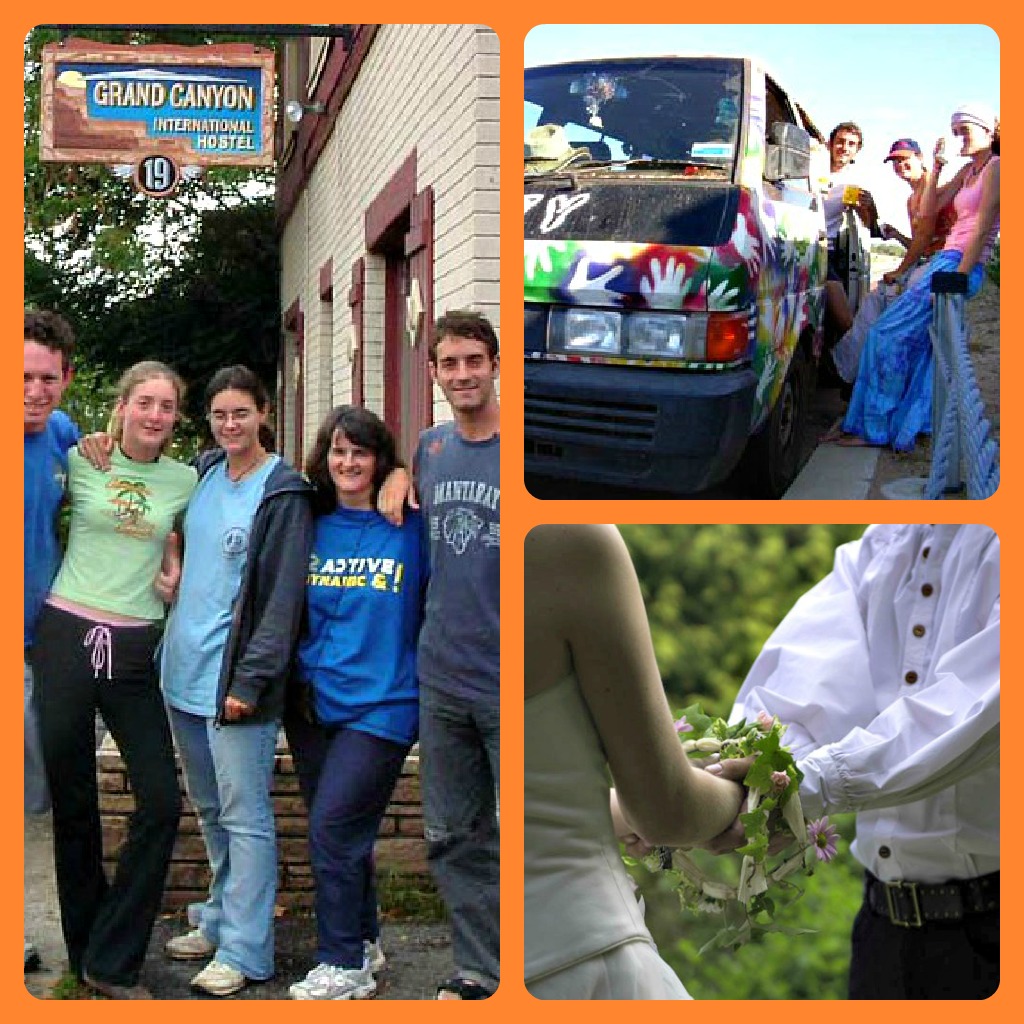
By this time, Gill was in Australia, exploring the country with Krista in a knackered van covered in multi-colored handprints. In a series of tearful emails to my sis, I poured my heart out — telling her how much I hated the idea of abandoning all my hopes and dreams and going home.

She wrote back with an offer from Krista: I could come over to Perth and stay with her family! Krista had even lined up an interview for me with a local job agency — I could hardly believe it! I still didn’t want to leave Thailand, but at least this way I could carry on traveling. (Krista and Gill also pointed out that there were plenty of spare seats in their van…)

I flew to Australia without the price of a cup of coffee. I didn’t even own enough clothing to fill a bag. The girls met me in the airport with their crumbling van (nicknamed Rusty!), and I immediately learned a few things about Krista:

  1. She was prettier than I remembered.
  2. She was now single.
  3. She was a whole lot of fun to be around!

Six years later, after many adventures together, Krista and I were married in the grounds of Taunton Castle, in Somerset in England. Her whole family flew out to join in the medieval-themed celebration, and not long after they flew back, we followed them, back to Perth, where we now live.

Of course, it was a LOT more complicated than that.

But as chance encounters go — and in terms of the ones that influence your life the most — well, that one, for me, takes the biscuit!

What about you? I want to know what chance encounters have affected you the most during your travels — leading to new experiences you wouldn’t have otherwise had. And did they ultimately take you closer to The Sweet Life, as in my case?

Spill the beans in the comments below. (You know you want to!)

STAY TUNED for Monday’s post, a tribute to Queen Elizabeth for lasting 60 years on the throne, despite a period of displacedness.

If you enjoyed this post, we invite you to register for The Displaced Dispatch, a round up of weekly posts from The Displaced Nation, with seasonal recipes, book giveaways and other extras. Register for The Displaced Dispatch by clicking here!

Related posts:

Images from Tony James Slater’s personal collection: Touring the Grand Canyon with Krista (she is in the green tee shirt), her boyfriend and his sister, Gill; his reunion with Krista and Gill in Perth, Australia, some years later (Tony is driving Rusty); all of this leading to Tony and Krista’s medieval-themed wedding in the UK (this is their “hand fasting”).

LIBBY’S LIFE #53 – Preserved on tape

I stare at the dark computer screen, wondering if my overactive imagination is misleading me.

Only one way to find out. An imagination doesn’t mislead twice. Not in the face of hard facts from a digital camera.

I hit “Play” on the screen again, and scroll through our unedited wedding footage until the time elapsed says 1 hour, 25 minutes.

Act 1:

The evening party at our wedding. To the left of the stage where the band is playing a particularly sickly version of  Stevie Wonder’s “I just called to say I love you” (look, my dad booked the band, OK?) a large clock on the wall shows the time to be 9:40.

At 9:40pm on our wedding day, Oliver and I were on the other side of London, in the bar at the Heathrow Hilton, ready for our flight to Ibiza the next morning.

This is all the stuff that happened after we left our party. It’s fascinating and morbid at the same time. Like watching your own funeral.

No one appreciates the band’s rendition of Stevie Wonder, and the only person on the dance floor is a little girl in a pink frothy frock — the daughter of Mum’s cousin. Yasmin, her name is. She  twirls around in circles, round and round and round again, until she is dizzy and falls down, laughing up at the camera. The camera zooms out, and to the right of the dance floor reveals a cluster of small, circular tables, covered with empty glasses and plates of half-eaten vol-au-vents. We were supposed to have had wait staff all night at the reception, but apparently they disappeared as soon as the Adorable Couple had left the bash.

At one of the small tables, on her own and nursing a glass of what looks like water but is most likely vodka, sits Sandra. She hunches to one side, leaning against the wall, a morose expression on her face as she swigs from the glass. She’s not happy that her little boy has another woman in his life.

The camera swings down in a jerky movement and drops its gaze to the floor. A man’s foot in a  scuffed black shoe — the videographer’s. (I’m guessing he’s had quite a bit of party bubbly and is merely filming for his own amusement, since the day’s main attractions are now propping up a different bar in a Hilton forty miles away.) Then up again, focusing on the little girl in the pink dress, who is dancing a ballet routine to the band playing a different song — a slow one by Journey, I think. A few feet behind the little girl, my mother comes into view. The mother of the bride is resplendent in a fuchsia pink wedding suit that would have been more at home at a wedding in 1987. She’s heading towards Sandra.

At the little table, Mum sits down and pushes some vol-au-vents aside. She smiles brightly at Sandra; they are related now, bonded by marriage and the mutual loss of their only offspring. Mum, though, is not as heartbroken as her counterpart, because she has not really lost a daughter. Daughters are never lost; they are merely loaned to their husbands.

Sandra, however is inconsolable. Her loss is total, and she is utterly bereft. Emotion runs deep in her veins. So does the vodka.

She says something to Mum which is inaudible above the strains of the Steve Perry wannabe. She waves her glass around, and speaks some more. I know that if I could hear her, the words would be slurred.

A look of concern crosses my mother’s face.

I recognise this look. It’s the look I used to see when I came home from school, slamming my book bag on the kitchen table and muttering dire, cryptic threats against whoever had happened to piss me off that day. A quick, sideways glance, sizing up the gravity of the situation: “Is Libby really going to slash that teacher’s tyres? Do I intervene or keep saying ‘Yes, dear’?”

Mum starts to speak, and Sandra’s face crumples. Mum takes her hand and squeezes it.

I want to know more about this little scene, but the videographer is intent upon capturing Second Cousin Yasmin  and her ballet routine whose tempo is too fast for this last-smooch-at-the-disco song.

The camera zooms in on the little dancing feet in their pink sparkly Mary Jane shoes, and the unfolding drama between my mother and Sandra is lost.

Act 2

I nearly missed this part, so intent was I upon the visual aspect of the film. My mother and Sandra do not appear on the whole of the DVD again, even though there is still another forty minutes of footage to go. My goodness, but we got our money’s worth from that videographer.

A tantrum on the dance floor.

Second Cousin Yasmin has exhausted her repertoire of dance routines but, undeterred, has dragged a chair to the middle of the floor so she can show off her barre exercises.

Battements tendus — un, deux, trois. To the side — un, deux, trois.

Pleasing, perhaps, to the eyes of fond mothers at ballet school, when set to the strains of Saint-Saens and Faure, but not so pleasing to the occupants of the dance floor who are trying to boogie to the band’s version of “Love Shack.” They keep tripping over the chair and Yasmin’s outstretched limbs.

Yasmin’s father, my mother’s cousin Ted, strides onto the wooden floor. He picks up the chair in one hand, and grabs onto TwinkleToes herself with his other.

“Bang bang, on the door baby,” sings the female vocalist in little more than a whisper.

The lull in the song is Yasmin’s cue to yell, very loudly. She calls her father a name that six-year-olds are not supposed to know, let alone use in the formal setting of a wedding reception. Uncle Ted is not impressed, and tries to haul her away. It’s well past her bedtime, anyway.

Yasmin, though, doesn’t agree with this sentiment, and sits down on the floor very suddenly, knocking her father off balance. He drops the chair, trips over his daughter’s leg, and sprawls in a most ungainly manner on the floor.

The videographer, who has been professionally quiet behind the camera until this point, lets out a huge snort of amusement and backs away, towards the cluster of tables, get a better view. The band has stopped playing; I can see them conferring on stage, wondering whether to ignore the little scene, or to play a noisy song to drown it out.

In the hush, close behind the camera, a voice.

Sandra’s voice, perfectly recorded for posterity.

“I was his third. If it hadn’t been for that car accident, when Oliver and I met his other wives in the hospital, we might still all be one big happy family.”

.

Next post: LIBBY’S LIFE #54 – Opening the cocoon

Previous post: LIBBY’S LIFE #52 – Life: A series of hellos and goodbyes

Click here to read Libby’s Life from the first episode

STAY TUNED for Friday’s post — another Displaced Q from Tony James Slater.

If you enjoyed this post, we invite you to subscribe for email delivery of The Displaced Dispatch, a round up of the week’s posts from The Displaced Nation. Sign up for The Displaced Dispatch by clicking here!

Image: Travel – Map of the World by Salvatore Vuono / FreeDigit

For expat novelist Laura Graham, even a dark Tuscan alley has La Dolce Vita to spare

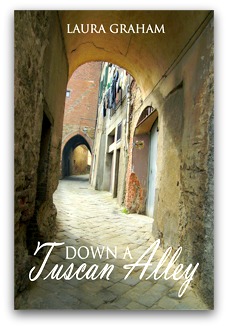
“Down a Tuscan Alley” — when I first heard the title of Laura Graham’s debut novel about an Englishwoman in Tuscany, I assumed it would be a thriller or mystery. Something nefarious would happen down a Tuscan alley, and the protagonist, whose name is Lorri, would find herself enmeshed in events beyond her comprehension, fearful of getting caught in the crossfire between rival Mafia gangs…

The book is no such thing, I’m happy to report (I’m not a fan of Mafia thrillers). Strange things do happen in the dark alley outside of the tiny flat where Lorri lives in the Centro Storico (village on a hill) of the Tuscan town of Sinalunga — but nothing worse than a peeping Tom. And at one point there’s a shady-looking man following Lorri — but he turns out to be (relatively speaking) harmless.

No, the book’s real mystery has to do with why Lorri is living in a tiny Tuscan village on her own. Well, she’s not on her own but has two cats. The last time she was in Sinalunga, it was with her husband, Richard. They had bought the flat together and Richard fixed it up. But now their marriage is over because of Richard’s infidelity. Or Lorri thinks it is over — Richard is having second thoughts.

Lorri, however, is determined. She has come to Italy to get lost in the culture and start her life again. But is she doing the right thing? Her Italian neighbors treat her with some suspicion: what’s a woman doing living on her own, with no visible means of support? (She has decided to do B&B in her little flat, but since it has only one bedroom, when the guests come, she has to sleep on the sitting room floor.)

And she also has to persuade herself to trust her gut instincts. As she says toward the start of the novel:

Am I crazy to come here? Hardly any grasp of the language, forty-seven, alone and with virtually no money? Many would think so…

Lest you think we’re venturing into Under the Tuscan Sun territory, rest assured, we’re not. Lorri does not take life, let alone her midlife predicament, too seriously. This is a flat overlooking an alley we’re talking about, not a 250-year-old villa. And so what if she ends up seizing an opportunity to get involved with the handsome young builder Ronaldo? Isn’t La Dolce Amore the quickest way to obtain La Dolce Vita?

But before I get too carried away with the story, let me turn the conversation over to Laura Graham, who has graciously agreed to answer a few questions about both her book and her life story — which, as she freely admits, the novel is based on.

The decision to write an autobiographical novel

Thank you so much, Laura, for agreeing to this chat. Your story — both in the book and in real life — neatly combines the two themes we’ve been talking about on The Displaced Nation this month: the quest for La Dolce Vita and the need for taking a “midlife gap year,” which sometimes heralds an even bigger life change. But let’s start by having you talk a little about your background — where you were born, what you studied and why you went to live in Italy.
I was born and brought up on the Isle of Tiree on the West Coast of Scotland for the first six years of my life. I then came to London and entered a convent school.

Later, as an adult, I won a scholarship to study drama at the London Academy of Music and Dramatic Art for two years. I received the prize for being the most promising student and immediately got a job understudying Helen Mirren in The Balcony at the Aldwych Theatre in London. I had a long and successful acting career at the Royal Shakespeare Company and the Young Vic, also on television.

When my long relationship ended with my former partner, I felt the need to turn my life around and decided to begin again in Italy. About ten years before, I’d invested £6,000 in a tiny hilltop village apartment in Tuscany, never thinking that one day it would become my permanent home. I still live in the village, but in a house, with my partner Rosalbo, a property restorer and an artist (he paints cats!). Besides writing, I run my own holiday agency, called “Laura’s Houses.”

Down the Tuscan Alley is your first novel. Have you written anything else?
I have also written a book for children called A Tale of Two Tuscan Cats, which was published last October. It has recently come out in Italian. Rosalbo did the illustrations.

What made you decide to write a novel about a middle-aged woman who is determined to change her life by moving abroad?
Because I’ve experienced it and thought it would make a good story — and might help others so inclined.

Why a novel and not a memoir?
I wrote my story in a novel form to protect the people I wrote about — I’ve changed their names, although some of them are now dead.

What audience did you have in mind when writing the book?
Women like myself, who want more from life than just settling into middle age with nothing but memories. Life is to be lived!

One of your Amazon reviewers wrote: “Brava! Brava! Brava! I loved reading Down a Tuscan Alley. The comic cast of characters brought me to the heart of bellisima Italia.” Other readers, however, said they were grateful that the book isn’t just about how beautiful Italy is. To which parts of the story have most readers responded?
The parts that are thought-provoking — about losing oneself in another culture in order to find oneself — and the humor are what people seem to enjoy.

Getting to the heart of La Dolce Vita…

From the time she arrives Italy, Lorri seems to be in touch with the little things that make her Tuscan alley so different from the Devonshire alley where she was living with friends, just before she left: the old stone steps, the steeple of the magnificent ochre-colored church she can see from her window, the birdsong… Is there something special about Italy that awakens the five senses?
In my opinion it is the light that awakens the senses. The light in Tuscany touches something in you, brings you to life — it’s like a medicine, a tonic.

Since you’re a former actress, would you say that daily life in Italy is more theatrical?
Living in Italy is certainly more theatrical than living in the UK. The people here are open and spontaneous.

And Lorri immediately becomes part of that drama. As her elderly English-speaking neighbor in Sinalunga, Lionello Torossi, says: “The people are delighted to see you…You are their portable theater.” But doesn’t some of the charm of a place have to do with its novelty value? Wouldn’t an Italian feel charmed by a Devonshire alley?
I think the Italians would be fascinated by a Devonshire back alley, if only to think — how is it possible to live there?

…and La Dolce Amore

At one point, Lorri is contemplating her affair with Ronaldo and says to herself: “How can you speak with your heart when you don’t know the words?” Call me a skeptic, but couldn’t their relationship change for the worse once their verbal communications improve?
No, I think Lorri would still find Ronaldo enchanting once she’s able to understand more of the language. But perhaps also more infuriating at times!

Lorri also says, with reference to Ronaldo: “These torrid passions are what happens to English women in hot countries.” Is romance so very different in Italy as compared to the UK?
Torrid passions indeed! The Italian art of seduction is very different from the UK. An Italian makes a woman feel every inch a woman and delights in her beauty and femininity no matter what her age.

Many of The Displaced Nation’s readers are in cross-cultural relationships. What do you find to be the biggest challenge about getting together with someone of another culture?
I cannot pretend it’s easy getting together for a long time with someone of a different culture — although it’s not the culture so much as the mentality. There are many things to learn, mainly about one’s self — and that’s always a challenge. Here in Italy, it’s the language I find most difficult and the humor, which is somewhat different from ours. Of the two, language is the bigger difficulty. Communicating is the key to success when living in another country. Otherwise, you can’t offer as much as yourself as you would like to.

The challenge of exporting La Dolce Vita

After living in a small Italian community for so long, do you think you could ever fit back into living in Britain?
No, I can’t imagine myself living again in the UK even though I go back twice a year and enjoy it. But if I had to I would adjust simply because I’m English. But the biggest culture shock — apart from the food — would be the people. I’ve grown so used to the warmth of the Italians.

Could you bottle the formula you’ve developed for La Dolce Vita in Tuscany and bring it back with you?
The only way to bottle the formula of the Tuscan Dolce Vita is to carry it inside my heart — and take it with me wherever I go.

Coming soon!

Please tell me that you’re working on another book. By the time I finished Down a Tuscan Alley, I’d grown fond of Lorri, Ronaldo and the various neighbors — and felt bereft!
I am on the last chapter of my next book: The Story of Kelly McCloud. This is also set in Italy and is about a young woman who takes a job as a housesitter in an Italian villa. Amongst an eccentric English family, a fallen angel and a dragon, she discovers how to use the whole of her brain and realizes the potentiality of the human race.

Assolutamente favoloso! Thanks so much, Laura!

Readers, you can purchase Down a Tuscan Alley on Amazon. You can also read more about Laura Graham at her author site. And, should you now feel tempted into trying out La Dolce Vita for yourself, then consider renting one of her two houses in the Centro Storico of Sinalunga. What are you waiting for?!

STAY TUNED for tomorrow’s episode in the life of our fictional expat heroine, Libby, who has traded her Boston Red Sox cap for a Sherlock Holmes deerstalker in her quest to uncover her husband’s roots. (What, not keeping up with Libby? Read the first three episodes of her expat adventures.)

If you enjoyed this post, we invite you to register for The Displaced Dispatch, a round up of weekly posts from The Displaced Nation, with seasonal recipes, book giveaways and other extras. Register for The Displaced Dispatch by clicking here!

Related posts:

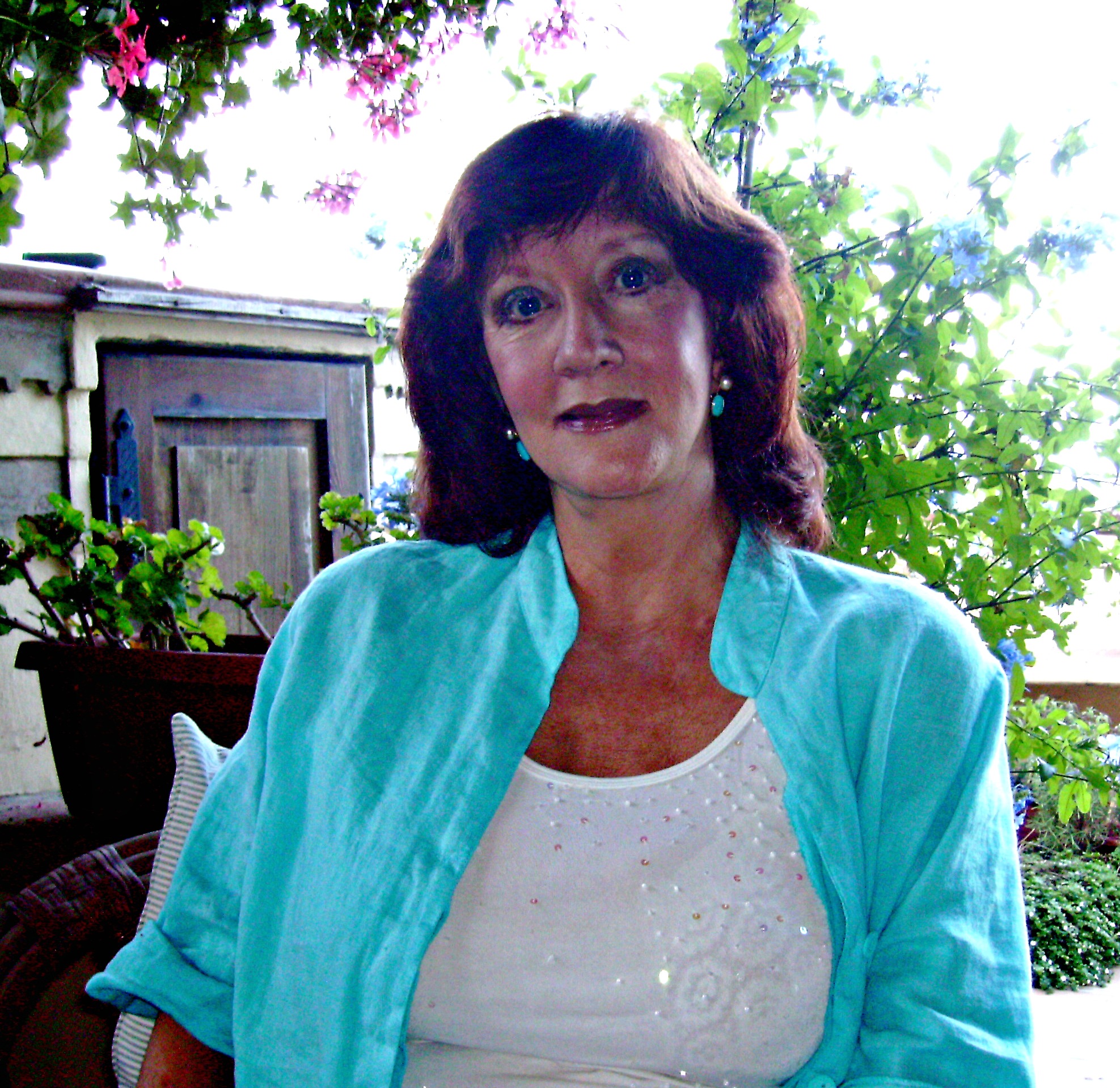
img: Laura Graham, on the terrace outside her house in Tuscany.

Displaced Poll: Which one of these celebs should take a gap year, and where?

A couple of weeks ago, we interviewed Random Nomad Jeff Jung, a specialist in career break travel. For anyone who is considering taking time out of the cubicle — or even just daydreaming about taking a baseball bat to the printerhis site is a good place to start looking for inspiration.

But what about people who aren’t in a cubicle? What about those who already lead charmed lives that, frankly, turn the rest of us a delicate shade of pea-green?

Naturally, it depends who they are, and what they want out of a gap year.

Another career breaks website recommends you “think about what effect you want your career break to have on your career. Do you want to develop your teamwork ability, or leadership skills?” It lists ideas that will have a “positive professional impact”, such as volunteering in an orphanage, or participating” in a community development project teaching your professional skill to underprivileged people”.

The Princes William and Harry obviously took this advice to heart, and picked activities that would further their careers of following in their parents’ footsteps. Prince William volunteered in Chile with Raleigh International during his gap year, while Prince Harry worked on a cattle farm in Australia and with orphaned children in Lesotho. Similarly electing to follow her own parents’ chosen paths, their cousin Princess Eugenie furthered her career by sunbathing on the Goan Coast and slumming it in Mumbai’s five-star Taj Mahal Palace Hotel.

Nevertheless, I think we can agree that the purpose of a career break is to do something out of the ordinary.  Something that you would not otherwise do, and something that will further your professional life when you come back.

With that in mind, I have some individualized suggestions for various celebs, should they decide their present ways of life lack meaning.

Snooki: Star of Jersey Shore, and now a devoted mother-to-be. Once she has birthed Little Pumpkin, though, Snooki might find it hard to remember that she was once the bestselling author of three books. (That old saying about leaving half your brain cells in the maternity ward is unfortunately true.) So a stint  of being Writer-in-Residence at Princeton University might be just what the doctor ordered. What better way for Princeton to support the state of New Jersey than to select a successful home-grown author?

Russell Brand: A bit of an unknown on the west side of the Pond until he married singer Katy Perry, Brand is again single after he filed for divorce at Christmas. Once a hard-partying bachelor and self-confessed sex addict, Brand is said to have disapproved of his wife’s party animal lifestyle. For him, I suggest a stint in a monastery, or failing that, in an ironware factory painting the bases of pots and kettles with black paint.

The Kardashian clan: A complete retreat, for everyone’s mental wellbeing, far away from the reaches of paparazzi, TV, and Twitter. However, until the Virgin Galactic program becomes more adventurous and has destinations further afield — like Saturn or Alpha Centauri, for example — this will remain merely a pleasant fantasy.

Gwyneth Paltrow: No, I like Gwyneth, really. She was great in Shakespeare in Love. I just wish she’d stop pretending to be ordinary when she isn’t. Reading her blog on how to be a regular working mum is like reading a Google translation of a Martian website, she’s so much on another planet. Her credibility as Ordinary Mum would be greatly enhanced if she did something…well, ordinary. As she lives in England, where in summer every third vehicle is pulling a mobile dwelling, and her English husband’s parents made their fortune out of selling caravans, Gwyneth should raise her Ordinary profile by spending some time going back to hubby’s roots. Might I suggest a few weeks on a stationary camp site — this one near Clacton offers an 8-berth caravan from £171 per week, so plenty of room for hubby and two kids, plus a hair stylist if she’s desperate.

Take our poll here!

Related posts:

LIBBY’S LIFE #52 – Life: A series of hellos and goodbyes

Mum kisses me. “I love you,” she says.

She’s done that quite a few times in the last couple of weeks, which is funny because she’s not really a kissy or “I love you” kind of person. When I was growing up, she displayed her affection via a surprise addition of homemade cake in my school lunch box, a Ladybird book from a trip to WH Smith, or a poster of Take That sneaked into the weekly shopping trolley.

But kisses and “I love you”s?

Never. “Show, don’t tell” was Mum’s philosophy. Walk the walk, don’t talk the talk.

So either her six weeks in America has rubbed off more vigorously than anyone could have anticipated — they’re very big on saying “I love you” at every opportunity here — or she’s unbearably worried.

When I was fourteen, I fell off my bike and hit my head on the tarmac. I was out cold, in hospital — for twenty-four hours, I’m told, although from my point of view it could have been anywhere between five seconds and an eternity. In the moments or hours before my eyelids fluttered open and Mum’s voice proclaimed “She’s awake!” I heard her saying the same thing, over and again. “Don’t go, Libby. Please don’t go. I love you. Please stay here, Libs. I love you.”

It had puzzled me at the time. I was in bed; of that much I was aware in my semi-conscious fog, so where could I go? Later, of course, I realised that Mum was speaking of a more permanent one-way trip, so I didn’t mention I’d overheard her bedside soliloquy. Saying “I love you” out loud like that was slightly embarrassing; like not being able to reach the bathroom on time, or having other bodily emissions erupt against our will.

It must be a British thing. We acquired our reputation of stiff upper lip and British reserve for a reason, I guess. The preschoolers’ moms here drop their children off at nursery with a chorus of “Mommy loves you, honey!”, while the kids run into school without a backward glance. I wonder how many of them grow up thinking that “Mommy loves you” is just another form of “Goodbye”, rendered less valuable by its daily usage.

You see, when my mum says it, I know it’s from the heart and not merely a salutation.

“I love you too,” I say, and kiss her cheek.

She could be saying it because she’s about to get in the Lincoln Town Car that takes her to Logan Airport for her flight back to Heathrow, but even lovey-dovey goodbyes aren’t Mum’s scene. A laconic “Well, I suppose I won’t be seeing you for a long time” would have been more her style.

No. She’s worried. I’m sure of it.

She’s worried that I’m descending into a pit of depression, which because of its timing could conveniently be classified as “post-natal” but in reality has been brought on by my husband’s ever-increasing distance from me, and his preoccupation with…what? I don’t know what. He’s got something on his mind, something to do with his father, but apparently his own wife is not allowed to be privy to those inner thoughts.

She never has been, I know now.

“All set?” the driver asks her.

Mum nods. She gets into the back seat of the long, black car, shuts the door, and winds down the window.

“Sandra,” she mouths. “Don’t forget.”

The car backs down our driveway, reverses onto Juniper Drive.

Mum waves. I wave back. So does Jack.

Oliver, naturally, is absent from the family scene.

I go inside, and for once, Oliver’s absence is a blessing. What I’m about to do wouldn’t be a good idea while he’s around.

This week I have learned from Mum that, at our wedding, after Oliver and I had left for our first night in a hotel as a married couple, my mother-in-law got falling-down drunk but unfortunately not speechlessly so, and started telling my own mother a few family secrets. Mum tried to shut her up but not before Sandra had released a collection of dead ancestors’ remains from a large cupboard — information which, I inferred, was relevant to the present situation. My mother had kept this information to herself for six years, but even now, she delicately skirted round the details of what Sandra had told her.

“It’s not my information to give,” she insisted. “You’ll have to get it from the horse’s mouth.”

Tantalising and unhelpful, albeit highly satisfying to hear my mother-in-law referred to as a horse.

And then, just this morning while I was helping Mum finish her packing, I remembered. Tucked away in a box in the basement is a box of our English DVDs. We don’t get them out because they’re in the wrong format for the DVD player here, but they will play on my laptop. The particular one I want, though, I’ve never actually played before.

With a flashlight in my hand, I descend the wooden stairs into the basement. It’s dark down here, and with the humidity rising as summer approaches, there’s a smell of musty damp in the air. A rustling noise, a scurry of rodent feet makes me jump — I’ve disturbed something the pest control people missed on their last visit — but even the threat of mouse attack doesn’t deter me.

I find the box of DVDs and, shining the flashlight on them, flick through until I see the one I’m looking for.

I double-check the label.

Yes. This is it.

“Libby and Oliver. Wedding footage (not in official video).”

.

Next post: LIBBY’S LIFE #53 – Preserved on tape

Previous post: LIBBY’S LIFE #51-On a cliff edge

Click here to read Libby’s Life from the first episode

STAY TUNED for Friday’s post — another Displaced Q from Tony James Slater.

If you enjoyed this post, we invite you to subscribe for email delivery of The Displaced Dispatch, a round up of the week’s posts from The Displaced Nation. Sign up for The Displaced Dispatch by clicking here!

Image: Travel – Map of the World by Salvatore Vuono / FreeDigit

Living La Dolce Vita with Heather Hamilton — Writer, Sailor & Adventurer

One year ago almost to the day, Heather Hamilton and her husband cast off their docklines in Annapolis, Maryland, in their 40-foot ketch. Since then, they’ve covered over 3,500 miles, up the east coast of the U.S. and down through the Caribbean island chain. Life on the open seas with nary a care in the world — sounds like La Dolce Vita, doesn’t it? I asked Hamilton to share the sensory highlights of her nautical adventures, along with a few “sweet life” tips for confirmed landlubbers.

Most heart-stopping sights

On the terrifyingly heart-stopping end of the spectrum: the sight of my mizzen-mast rocking back and forth (definitely something you don’t want) while the boat lurched in 12-foot seas and 45-knot winds. It nearly caused a heart attack. It was our first coastal offshore passage, and we were already sleep deprived and exhausted by the time the storm blew up overnight. We hove-to — that is, basically set the sails so that the boat could kind of “park” and wait out the blow. Pip was below, trying to get some rest, when I noticed that the mizzen sail just kept getting looser and looser, despite my many attempts to tighten it. Then I noticed the mast moving. PANIC!

Turns out, we had just had the rigging replaced, and during the big storm the new rig decided to undergo its initial stretching. The loosening of the stays had allowed the chocks to fall out of the mast’s base.

Despite the howling wind and lurching seas, Pip was able to tighten the rig and replace the chocks — only to discover that the pounding into the waves had splintered the bowsprit platform. After hours of work, we had finally secured the boat. We collapsed in a heap for some rest.

On the heart-stoppingly beautiful side of the spectrum: the hundreds of dolphins that danced around us on our trip down the Chesapeake Bay from Annapolis to Norfolk, Virginia. Despite having spent my childhood sailing with my dad in California and having sailed for five years on the Chesapeake, I’d never seen dolphins in the wild. On this particular day, I saw more than I’ve ever seen since: the pod stretched literally further than the eye could see. We radioed a sailing buddy who was two miles ahead of us and he was also surrounded. They played in our bow wave and did acrobatic flips around the boat — but the most astounding thing was their sheer numbers. Hundreds is probably an understatement; there may well have been a thousand dolphins frolicking around us. It was magic.

Most intoxicating scent

Ganja. It’s ever-present in many of the Caribbean islands, and its characteristic skunky smell is nothing if not intoxicating. Local youths and gnarled old rastas alike lounge around the town square smoking their joints; in certain places you get the impression that half the population is stoned. Boat vendors — the men who approach your boat in an anchorage to help you anchor, sell you fish/fruit/veggies, do your laundry, or otherwise do just about anything you will pay them for (uh, no thanks…) — seem particularly fond of weed, often puffing away as they row their boats along.

As we entered a bay in St. Vincent, one particularly ill-mannered vendor shouted at me for declining his services. He sported a spliff literally the size of a stogie, leading Pip to dub him “Stoner Churchill.” His aggression was surprising. Given the amount of weed he’d clearly ingested, one would have expected a much mellower response!

Dreamiest sounds

When I was at home, I had a fancy-schmancy alarm clock that allowed you to fall asleep or awaken to different sounds, like a Zen bell or running water. My two favorites to listen to while falling asleep were the ocean waves and the frogs. Who doesn’t love to fall asleep to the sound of surf? And the sound of the frogs reminded me of the few weeks every spring when the spring peepers went wild in the remote Appalachian area where I grew up.

One night, when we were moored in the national park in St. John, U.S. Virgin Islands, I fell asleep in the cockpit to these two sounds playing in harmony: the real surf gently breaking on the rocks only a hundred yards from the boat, and the nighttime frogs’ chorus providing the treble counterpoint. Heaven.

Most delicate flavors

Tree-ripened mango in Dominica — actually, the taste itself is nowhere near delicate, but I enjoyed the subtle distinctions between the different kinds of mango the island has. We arrived in Dominica in mid-April, just as these tropical fruits were coming into season. Everywhere you looked, sticky children and adults were peeling mangoes and gnawing the flesh off the seed as they walked down the street, chilled on their porches, or waited for the bus. Mangoes rolled in the gutters, where they became treats for street dogs and chickens. Since mango trees are everywhere, it’s simple to pick up a long stick and knock down a few ripe ones anytime you get the craving.

One day, we hiked several miles to the top of a hill where we were greeted by the sight of a stunningly beautiful little farm nestled in the jungle. There were coconut palms, banana trees, taro and sweet potato plants cascading down the steep hills. The farm’s owner, Ti-Babe, was a gnarled old man with approximately six remaining teeth and the warmest smile and eyes you can imagine. Ti-Babe answered all of our questions about his farm before insisting that he load us up with mangoes, peeling open both the large and small mangoes he grew so that we could taste the difference between the two. (The smaller mango had an amazing flavor, with a little sour to balance the sickly sweetness characteristic of a really ripe mango, but was very fibrous.) We sucked on mangoes the whole way back, arriving back at the boat exhausted, sticky and sated.


Softest physical sensations

The feel of the current across my skin while floating along snorkeling in perfectly clear turquoise waters, bright tropical fish flitting underneath in the dappled sunlight. (Pretty much every other physical sensation on a cruising sailboat is intense, painful, or just uncomfortable!)

Most interesting unexpected encounter with a stranger

The other day, I talked the owner of a local beach bar in Bequia, the largest island in the Grenadines, into allowing me to write an article about how she makes her roti, which are a flat bread wrapped around curried fillings, a kind of West Indian burrito. I’d heard that her roti were excellent, but was most intrigued as other sailors had cautioned me that she took a long time to make them — mixing and rolling out the tortilla-like dough for each order rather than making several in a batch. We’d chatted with Ruthie briefly at the bar the day before, when her eight-year old son proudly served us our beers. Her wicked sense of humor promised a fun afternoon in the kitchen.

Ruthie chopped ingredients for the fillings and then walked me through the labor-intensive process of creating the dough, which involves folding cooked, mashed yellow split peas into a flour dough and then rolling it out carefully. While the dough rested, she demonstrated how to make the fillings — both the vegetarian (black-eyed pea/pumpkin) and fish kind, both of which are strongly flavored with Trinidadian curry powder, which is milder and sweeter than the spices used for Indian curries in the States.

As Pip and I tucked into the final, delicious product, we invited Ruthie to sit with us and chat — and that’s when the real fun started. She regaled us with stories of island life, including a side-splitting story about a gay dog she once had. We talked about life and politics and travel, laughing the afternoon away over beers and her delicious food. It was the first serious conversation I’ve had with a local that lasted more than ten minutes, and I know that when we return to Bequia in the future, I’ll seek out Ruthie right away to catch up and continue building our friendship.

The place that stimulates all five senses

Because my life is constant travel, my boat is that place. Living on a voyaging sailboat means that your senses are constantly being stimulated — and not always in pleasant ways. You are stimulated for instance by the smell of a full holding tank, the sight of an approaching squall, the sound of a storm howling in the rigging, the sensation of a rough anchorage that makes you seasick in your own home, and the bitter, dry taste of fear. On the other hand, taking your home with you opens amazing possibilities: staying in one place for long enough to really get to know it; taking days off to do nothing, knowing that another hike or snorkel or town will be there the next day to explore; meeting not just locals but adventurers who have sailed from all over the world; and — most importantly — going to sleep every night in a bed of your very own, cats cuddled at your side. A sailor’s life is bittersweet.

Favorite artist with a sense of dolce vita

In the British Virgin Islands, I was entranced by the art of a man named Aragorn, who had started an artists’ cooperative, complete with pottery studio and organic garden, in the town of Trellis Bay. Every month, Aragorn’s Studio hosts a full moon party, a traditional Caribbean jump-up held on the beach. Trellis Bay’s party is legendary because of Aragorn’s art. Known for his sculpture, Aragorn recently started creating large outdoor fire sculptures: steel spheres, pyramids or cubes that come to life with fire. He hand cuts elaborate silhouetted shapes into the steel to tell a story. On full-moon night, he mounts these sculptures in the sea just beyond the shoreline, fuels them with firewood and sets them ablaze. The roaring fire within the sculptures, each of which is the height of a man, makes the almost prehistoric-style figures seem to dance in the darkness, evoking the earliest cave paintings. All of the elements — water, earth, wind, fire — combine to evoke a kind of primal beauty.

Favorite travel quote

“Every great and commanding moment is the product of some enthusiasm.”

— Ralph Waldo Emerson

I truly believe that without enthusiasm, life risks not only being terribly boring, but meaningless as well. Great things do not generally occur because one stumbles into them, but instead are the product of passion. Travel, with its many discomforts and trials, requires that one persevere with enthusiasm and passion. If you manage to do that, you’ll be rewarded accordingly — with great and commanding moments.

Advice for living la dolce vita under more mundane circumstances

The very same thing that makes travel great — but takes the most work — is something you can do at home: seek out new experiences and take the time to talk with people you meet while having them. I spent 15 years in Washington, DC, and while I hit the art museums more than some people would, I certainly didn’t begin to plumb the depths of experiences I could have had in that city. I wish I had taken the time to attend a service at the African-Methodist-Episcopalian church around the corner, whose rockin’ gospel shook the neighborhood windows every Sunday morning. I didn’t take any funky, historical tours or visit the off-the-beaten-path attractions. Most importantly, I didn’t take as much time to talk to people about their lives as I would have liked. When I travel, I’m good at asking questions and drawing people out; at home, I was in such a hurry to get things done that I didn’t take the time to ask the quirky characters omnipresent in any city about their lives. Travel is definitely a state of mind, a way of becoming an observer rather than a doer. Take a day now and then to become a traveler in your home town; it’s amazing what stories people have to tell.

A self-described “overachieving save-the-worlder” who used to run an international affairs advocacy group in Washington, D.C., Heather Hamilton is enjoying her newest incarnation as a writer, sailor and adventurer in the company of her husband, Pip Fryers. (Fryers has been sailing since he was a wee laddie in the Lake District of northern England.) You can learn more about this adventuresome pair and see where their boat is right now on their Picaroon Blog.

STAY TUNED for tomorrow’s post, another expat book review, by Kate Allison.

If you enjoyed this post, we invite you to register for The Displaced Dispatch, a round up of weekly posts from The Displaced Nation, with seasonal recipes, book giveaways and other extras. Register for The Displaced Dispatch by clicking here!

Related posts:

THE DISPLACED Q: What’s the most intoxicating scent you’ve encountered on your travels?

It’s Friday here at the Displaced Nation — La Dolce Vita time!

For the past couple of weeks, I’ve been doing a series of posts in aid of living the sweet life — even if you’re feeling displaced! The key, of course, lies in cultivating an approach to travel involving the five senses.

We began with the eyes and the ears, and we’re now moving on to the nose. Have you ever had the experience of catching a whiff of something and instantly being transported back to a specific moment in time — to a memory so sharp and clear you can picture it exactly? And then it’s gone, almost as quickly, as the smell wafts away and your other senses take over again, feeding the real world back into the loop…

Smell is the oldest sense, it touches the most emotional part of the brain.

– Roja Dove, the world’s sole Professeur de Parfums

Smell, like taste, is tied very closely to memory. Actually smell and taste are almost the same sense, but we won’t get into that right now — largely because we’d be talking about how in order to smell something, you have to get tiny particles of it up your nose. And that particular conversation rarely ends well…

Because smells create such strong associations with individual memories, your ideas and my ideas of an intoxicating smell are probably rather different.

Ah, the smell of…Thai petrol?!

For example, everyone loves the smell of freshly mown grass; but how many of you like the smell of petrol (gasoline, for those of you across the pond)?

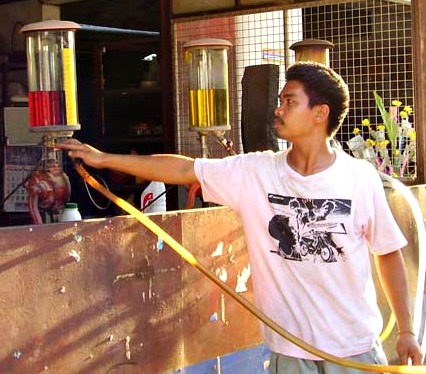
I love it. I associate it with long, busy days in Thailand, running errands for the animal clinic where I was volunteering, driving around looking for stray dogs in need of vaccinating — on my tiny little Yamaha motor scooter.

I could always smell the petrol when filling up the scooter tank — because most of the gas stations had only one barrel of the stuff, with a hand-pump and a rubber hose just long enough to reach your tank.

So that smell always brings back happy memories…even though it’s not widely considered a delicate fragrance!

The most noxious of odors — bread?!

Here’s another odd one. I’ll say it slow, in case anyone is likely to faint from pure, unadulterated, lust: Freshly. Baked. Bread.

Mmmmmm! Right?

Wrong. For me, anyway! To afford my trip to Thailand (and Fiji), I had a job working shifts in a bread factory in Australia, where that gorgeous smell permeated the whole building 24 hours a day. Perhaps because I was the only guy, and therefore resilient (or expendable?), I got to be in charge of the enormous, stainless-steel walk-in ovens. I put the bread trolleys in and, twenty minutes later, took them out again. It’s a process that has to be done quickly, or else the oven loses too much heat — but the trolleys themselves get rather warm in the process, and of the four of them, two had broken wheels.

You know how hard it is to steer a supermarket shopping trolley with a jammed wheel, right? Now imagine trying to do it fast — very fast — with a trolley approaching 200 degrees Celsius…and for 12 hours straight. Even my burns had burns.

I survived a whole two weeks in that job, and then as soon as my paycheck hit the bank, I fled straight to Bali to spend it!

To this day I can’t smell baking bread without thinking that pain — the kind that accompanies searing, scorching flesh — is about to follow…

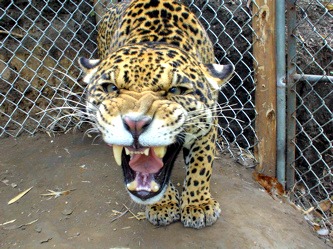
Another smell to avoid: live jaguar!

Now I’ll tell you something you don’t ever want to smell: anywhere a jaguar is living! When a jaguar is confined in, say, a remote mountain-top rescue centre in Ecuador (such as the one I worked in and on which my book is based), you have to clean the enclosure out pretty regularly. Now what goes into a jaguar — especially when you’re doing this on behalf of a nonprofit that’s operating on a shoe-string budget — isn’t particularly wholesome.

To begin with, the jaguar’s body odor isn’t noted for its appeal, unless perhaps you’re another jaguar. And of course they scent-mark everything.

But what comes out of them? Bearing in mind they are pure carnivores, living exclusively (in captivity) on carrion. It’s not…I mean, it’s just…. Look. Just don’t ever go there. Trust me on this!

And now for some winners!

Okay, back to the good. Toward the top of my list of intoxicating smells is that of the traditional Australian Sausage Sizzle. Usually held as a fund-raiser for some charity or other, they never fail to rake in the dough because the smell — of frying meat and frying onions — is utterly delicious, utterly irresistible, and carries for miles.

Now that I’m living as an expat in Perth, I get to experience this smell on a regular basis, as there’s a Sausage Sizzle held directly opposite the entrance to my gym every Saturday morning.

The moment I finish my hard-core workout, I come outside and walk full-tilt into that heavenly smell…at just the point when my body is starting to crave sustenance.

It’s almost as though those cooks are waging a personal crusade against my willpower. And my waistline.

And you know what? They win every bloomin’ time.

But my absolute favorite? I’ve got to tell you mine, right? Then you can tell me yours… It’s food again (of course!): the aroma of fresh donuts!

This dense, cakey scent takes me right back to one small stand in Morecambe Bay, in the north of England, where I went on holiday as a child. Yes, to one of my very earliest trips with my parents. I loved that I could get three donuts for £1! And, if I ate them quickly enough, I could pretend as thought I’d never had them, and convince my parents to give me another pound to buy three more! Ah, happy days indeed.

So there you have it. Now it’s your turn to describe the most delicious smells you’ve encountered on your travels — meadows, Himalayan incense, sunlight on rainbows…? Tell us in the comments! And if you happen to have a photo to illustrate this intoxicating scent, send it to me at tony@thedisplacednation.com. Yes, I may make that “la dolce vita” slideshow I’ve been promising before too long…

STAY TUNED for Monday’s post, when expat Anthony Windram recalls some chance encounters with “locals” that have enhanced his sense of the bittersweetness of life in his adopted home.

If you enjoyed this post, we invite you to register for The Displaced Dispatch, a round up of weekly posts from The Displaced Nation, with seasonal recipes, book giveaways and other extras. Register for The Displaced Dispatch by clicking here!

Related posts:

Images: photos of the gas pump and the jaguar are from Tony James Slater’s personal collection.