The Displaced Nation

A home for international creatives

Tag Archives: Malaysia

RANDOM NOMAD: Kirsty Rice, Freelance Writer & Blogger

Born in: Renmark*, South Australia
Passport: Australia (no one else will have me!)
Countries lived in: Australia (Adelaide & Perth): 1997-98; Indonesia (Jakarta): 1999 – 2001; Malaysia (Kuala Lumpur): 2001-02; Libya (Tripoli): 2002-04; Canada (Calgary): 2004-08; USA (Houston): 2008-09; Qatar (Doha): 2010-present.
Cyberspace coordinates: 4 kids, 20 suitcases and a beagle (blog)
*A small town of 7,500; my parents still live there.

What made you leave your homeland in the first place?
I am married to a former expat child. I know the term is Third Culture Kid, but I don’t really think it applies to him. He was always keen on doing the “expat” thing. I, on the other hand, was raised in the same town that I was born in and wasn’t a great lover of change. Our first move was the result of a promotion for my husband and the fact that I was pregnant with our first child. The plan was to do a two-year posting in Indonesia and to return “home”. That was 7 countries and 12 years ago. I now thrive on change.

So your husband was already “displaced”?
My husband’s parents were expats. He was actually born in New Zealand and then they went to the Philippines for many years before moving to Sydney, then Melbourne, and finally to Brisbane.

How about your kids?
My children were all born in different countries. We were living in Jakarta when I had my first child, my second was born in KL, the third in Malta and the fourth in Canada. Although none of them have lived permanently in Australia (our longest stint has been during school holidays, so a maximum of 12 weeks), they all think of themselves as Australian. My husband and I have both worked hard for that to be the case.

Describe the moment when you felt most displaced.
When we first moved to Tripoli — it was the middle of summer and I had a two-week-old baby and a two-year-old. We then had to endure months of housing hell — we couldn’t find one! For a while, I shared a “guest house” with about sixty men who were rotating in and out of the desert: there were no other women. Breast feeding amongst men who hadn’t seen a woman for a couple of months was a rather unique experience. Due to the weather, fruit and vegetables were limited and small in size. I can remember standing in a fruit and vegetable stand with a screaming baby and a restless toddler wondering how I was going to cook carrots the size of my little finger. I was continually getting lost, and the simplest of tasks seemed very overwhelming. There were many days that I considered getting on a plane — but I’m so pleased I didn’t. Three months later, we had a house, the weather was better, I made friends, and I loved our life in Libya. I was devastated to leave.

Describe the moment when you felt least displaced.
I feel like that here in Qatar. Our children are at a fabulous school, I have a place to write, and my husband works for a Qatari company and really enjoys it. There is so much here in the community for expats, and we are made to feel very welcome. I have made local friends and love heading to the local souqs. I feel that this is very much our second home. In other locations I have felt that we were passing through, but not here.

You may bring one curiosity you’ve collected from your adopted country into The Displaced Nation. What’s in your suitcase?
From Indonesia: A jamu (traditional medicine) woman made of silver, given to me by a very dear friend.
From Malaysia: The Selangor pewter tea set I was given as a gift. Each time I use it I think of my friends.
From Libya: A wedding blanket with traditional jewellery pinned to it, which was given as a farewell present. It is such a unique gift and always a talking point when people spot it in our house.
From Canada: Nothing material, just the memory of what it was like to be back to work full time. In Calgary, I returned to the “old” me, remembering who I was pre children and travel. That was Canada’s gift — along with a huge appreciation of weather!
From the U.S. (Houston): A fantastic painting of an American flag that I picked up in San Antonio. It’s 3D and not in the traditional colors. It reminds me that America is far more layered and multidimensional that what I’d given it credit for.

You’re invited to prepare one meal based on your travels for other Displaced Nation members. What’s on the menu?
We’ll have some kind of soup for starters: either Indonesian soto ayam (chicken soup), Libyan soup* (I love it!), or the Canadian version of Italian wedding soup. Though I come from an area in Australia that has a large Italian community, I’d never heard of Italian Wedding Soup — turns out it’s more of a North American thing.

For the mains, perhaps I’ll offer a choice between Malaysian curry or maybe a nasi goreng from Indonesia.

And for drinks, we’ll have margaritas. I learned to make a mean margarita in Houston.

For dessert, a caramel cheesecake — a recipe I picked up from a fellow Aussie in Houston.

You may add one word or expression from the country you’re living in to The Displaced Nation argot. What will you loan us?
From Indonesia: Satu lagi (one more) — I said that way to often!
From Malaysia: I just loved how you could put lah on the end of everything and automatically make a sentence sound friendlier.
From Tripoli: Shokran (thank you). It was the first Arabic word I learned and makes me think of how special the people in Libya are — so kind and helpful. Incidentally, in learning how to say “pregnancy test,” I discovered that hamil is the word for “pregnant” in Indonesia, Malaysia and Tripoli.
From Canada: Hey — kind of the same as lah in Malaysian.
From the U.S. (Houston): I found myself describing things differently. It wasn’t just “the big tree out the front” but “the big ‘ol tree out the front.”
From Qatar: Right now I’m back to learning Arabic (unsuccessfully). Oh how I wish I had a chip I could just insert into my brain to switch languages. Why haven’t they invented that yet?

It’s Zen and the Art of the Road Trip month at The Displaced Nation. Robert M. Pirsig, author of Zen and the Art of Motorcycle Maintenance, famously said: “Sometimes it’s a little better to travel than to arrive.” Do you agree?
I disagree. I like to arrive, settle and learn how a city/country works. You can learn so much about a place just by trying to get the telephone connected! Traveling through is just a brief picture. I love that we’ve been able to become part of a community everywhere we have lived.

Pirsig’s book details two types of personalities: 1) those who are interested mostly in gestalts so focus on being in the moment, not rational analysis; and 2) those who seek to know the details, understand the inner workings, and master the mechanics. Which type are you?
If you read my blog you’ll see there is usually a romantic viewpoint or flowery end to a posting. I’m a big believer in things happening for a reason and not always being logical. Having said that, I am a stickler for details, I hate to enter into things blindly and have to know exactly what the story is. Which personality am I in my expat life? I’m a bit of both. I don’t believe that anyone can be a successful expat without having the flexibility to change with the situation. In our daily lives as expats we need to quickly learn the rules, find out the details, go with the flow and just enjoy the ride. You have to be both.

* Libyan soup is a tomato-based soup. There are many variations. The one I loved was with lamb.

Ingredients:
1/2 to 1/3 lb. lamb meat cut into small pieces
1/4 cup oil or “samn” (vegetable ghee)
one large onion
1 tablespoon tomato paste
2-3 tomatoes
1 lemon
1/2 cup orzo, salt, red pepper, Libyan spices (Hararat) or cinnamon

Directions:
Sauté the onion with meat in oil.
Add parsley and sauté until meet is brown.
Add chopped tomatoes, tomato paste, salt, spices, and stir while sizzling.
Add enough water to cover meat, simmer on medium heat until meat is cooked.
Add more water if needed, and bring to a boil.
Add orzo, simmer until cooked.
Before serving, sprinkle crushed dried mint leaves, and squeeze fresh lemon juice to taste.

Readers — yay or nay for letting Kirsty Rice into The Displaced Nation? Tell us your reasons. (Note: It’s fine to vote “nay” as long as you couch your reasoning in terms we all — including Kirsty — find amusing.)

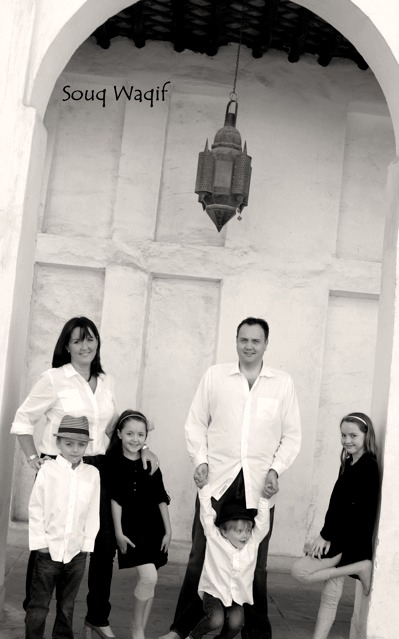
img: Kirsty Rice with her family (sans the beagle) at Souq Waqif, Doha, Qatar.

STAY TUNED for tomorrow’s installment from our displaced fictional heroine, Libby, whose rather dramatic road-trip adventure has come to an end. Time to face reality again in Woodhaven! What, not keeping up with Libby? Read the first three episodes of her expat adventures.

If you enjoyed this post, we invite you to register for The Displaced Dispatch, a round up of weekly posts from The Displaced Nation. Includes seasonal recipes and book giveaways. Register for The Displaced Dispatch by clicking here!

Related posts:
Random Nomads to the rescue! How to have an enchanted August (2/2)

Every year in mid-August, I swear I can still hear the beat of the taiko drums, even though it’s been years since I lived in Japan as an expat.

As I mentioned in my comment on Anthony Windram’s post of last week, the Japanese hold their Obon Festival in the dead of August. Appropriately, it’s the Buddhist version of the Festival of the Dead — when the dead are supposed to come back and visit.

That said, I have always thought of obon festivities as an attempt to arouse the living dead, which is what most people are after enduring the agonies of a Japanese summer. Just hearing the lively drumbeat can be revitalizing, getting one’s blood flowing again.

I am therefore personally curious to see how The Displaced Nation’s Random Nomads who live in Asia are doing. Are they managing to have some enchanting moments despite the heat — which, if anything, appears to be even more brutal in that part of the world than it was in my day? And what advice can they impart to the rest of us? (Besides the fact that compared to them, we shouldn’t really be complaining…)

Three of them got back with answers to these questions:
1) What has been your most enchanting moment of Summer 2011 thus far?
2) What has been your least enchanting moment?
3) Do you have any survival tips for people who can’t escape?

Please note:
a. You can read interviews with each of these three Random Nomads about their “displacement” by clicking on their names. They, and their lives, are fabulously inspiring regardless of season.
b. In Part 1 of this post, five US/Europe-based Random Nomads answered the same three questions. Check it out!

KIM ANDREASSON — Swedish passport; current home: Vietnam (Saigon)
Most enchanting:
Vacationing in my native Sweden with my wife. It was the longest time I have spent in my homeland in over a decade, and I have a new-found appreciation for the proverb: “Away is good, but home is best.”

Least enchanting:
Trying to do work while vacationing in Italy. An hour before an important conference call, the Internet went down at our 4-star hotel, and the hotel manager airily proclaimed, “That’s what usually happens when it rains.”

Survival tips:
We live in Saigon, where it’s basically 90 degrees all the time so there are only two options: stay inside and use AC; or if you go outside, wear light-colored clothes and drink lots of liquid.

EMILY CANNELL — U.S. passport; current home: Japan (Tokyo)
Most enchanting:
In spite of not being terribly interested in the rainforest or the quest to save it, I found myself smack dab in the middle of Borneo, Malaysia, on an Ecotour. Searching for the endangered orang-utans, we happened upon what became one of the highlights of my summer — and life. A pygmy elephant emerged from the trees, and just like the rest of us, he was hot. Slowly, he ambled in to the river where he proceeded to entertain us with his cooling down antics — scratching his ears on the trees, blowing water out of his trunk, and completely submerging himself while only 10 feet away from our boat. What a gift! I got out my checkbook then and there.

Least enchanting:
Getting up at 4:00 a.m. for the fifth time this summer in order to catch a 7:00 a.m. flight to somewhere. Once is okay, but five times?

Survival tips:
Currently I’m writing from the complete darkness of the guest bedroom, fan on high. Keep the curtains closed and the fans on high to circulate the air. When outside, wear a hat to keep the sun off the top of the head. It’ll do wonders.

JO GAN — U.S. passport; current home: China (Yuyao City, Zhejiang Province)
Most enchanting:
Since my summer is usually spent teaching high school and university students on their summer holidays, I usually don’t get many enchanting moments.  However, I did have one thing that was kind of nice.  After a long day at the language school, I walked down to the Yaojiang River that flows through the downtown area, with some fellow expat teachers and a couple of our adult students.  To our great surprise, white plastic chairs and tables had been set up all along the river underneath the willow trees. Cold beer and hot tea was being served, and there was a lone guitarist playing Chinese folk music for all to enjoy. We sat down and chatted, drank our beers, and watched the river float by with a slight breeze. The servers kept the beggars at bay so we were not hounded for money.

The best part of the evening was around midnight when they started shooting fireworks over the river.

It wasn’t a special occasion or even a special event — just the right mix of people and location, at just the right moment.

Least enchanting:
That would have to be when it rained for a month. I don’t know what was going on with the weather, but in the month of June I thought we were going to have to build an ark. It rained for three weeks straight every day without stopping. I didn’t want to do anything, but had to trek in the rain and puddles all the way to school every day. One day was particularly miserable because the electricity went out.  So it was hot and rainy, and we had no lights. I just kept thinking, why me?

Survival tips:
In the small Chinese city where I live, it’s the little things that count. Taking a trip around the city center in a rickshaw may cost you a little, but you get to sit back and survey the different things going on — and if that special person joins you, it can be romantic.

Another option is going out to the local parks every evening from 7:00 to 8:30 p.m. to dance with the older locals. They are almost always playing some salsa or pop music and dancing the cha cha, or there’s some line dancing action. It is actually kind of fun to join them even if your are not in their age set. They always are excited to teach you their moves.

Lastly, we live close to Siming Mountain. You can take a trolley bus to the top and then float down the small river in a little orange raft. The river has added twists, turns and drops that make you scream out for your mama to help you. It makes for an interesting day, and you are bound to get wet and cool off.

STAY TUNED for tomorrow’s post, in which Anthony Windram debuts his new Agony Aunt column!

If you enjoyed this post, we invite you to subscribe to The Displaced Dispatch, a weekly round up of posts from The Displaced Nation, plus some extras such as seasonal recipes and occasional book giveaways. Sign up for The Displaced Dispatch by clicking here!

Related posts:

RANDOM NOMAD: Jack Scott, Former Bureaucrat & Soon to Be Published Author

Born in: Canterbury, England
Passport(s): British with official Turkish Residency
Countries lived in: Malaysia (Malacca): 1967-1969; Turkey (Bodrum): 2010-present
Cyberspace coordinates: Perking the Pansies | A comical narrative of expat life (blog)

What made you leave your homeland in the first place?
I moved to Bodrum in Turkey with my civil partner, Liam. I was a petty bureaucrat for 30 years gently ascending a career ladder to middle management, middle income and a middling London suburban terrace; comfortable, secure and passionately dissatisfying. We thought it high time to take a break from our labors, put our feet up and watch the pansies grow while we were young enough to enjoy it.

Is anyone else in your immediate family a “displaced” person?
My father more or less ran away from home when he was 16 to join the army. If he hadn’t, he probably would have ended up down a mine or in a factory (the days when Britain had such things). He (and then we) traveled widely — to Northern Ireland, where he met and married my mother and where my eldest brother was born; then on to Germany, where my second brother was born and contracted polio; then on to Malaya (before independence), where my elder sister was born; then back to England (Canterbury), where I was born. Our family then moved to Pimlico, in Central London, living in a barracks that is now the Chelsea School of Art(!). Finally, we went to Malaysia, where my younger sister was born. In Malaysia, we lived in a large, self-contained complex on the coast near Malacca called Terendak Camp. The camp had been built along miles of golden sands overlooking the Malacca Straights for army personnel and their families from Britain and across the Commonwealth — we shared it with Aussies, Kiwis and a few people from Malta. It was all very colonial, unimaginable today. I also seem to remember Dad traveling on his own to Cyprus, Aden (in Yemen), and Egypt. He died some years ago. Maybe I’ll write something about him one day…

Describe the moment when you felt most displaced over the course of your many displacements.
It was right here in Bodrum. We were spited by a storm of Biblical proportions that was punctured by a spectacular light-and-sound show that lit up the sopping sky and cut the power. Prodigious pulses of horizontal rain assailed every crack and cranny of our house, through every easterly window frame and beneath every threshold. It was freezing, so Liam and I hid under the duvet and fought over the hot water bottle. All Turkish houses leak, have no insulation and precious little heating. Of course, it rains in England, too — but not like that. Now, that’s not in the guidebooks and travelogues.

Describe the moment when you felt least displaced.
Liam and I were chuffed when our Turkish neighbors invited us over for dinner. Our grasp of Turkish remains lamentably poor and their English is virtually non-existent — but they made us feel very welcome and the food was delicious. There was much waving of hands and furious gesticulation. We used a Turkish-English dictionary to chuck random words into the conversation just for the hell of it. Turks are blessed with an honorable tradition of hospitality long abandoned in the West. In London I hardly knew my neighbors.

You may bring one curiosity you’ve collected from the country where you’ve lived into the Displaced Nation. What’s in your suitcase?
I was very young when I lived in Malaysia. I haven’t been back since though would love to. Sadly, I’ve kept nothing from those distant days. As for Turkey, our prized possession is the fragment of an ancient Ionian capital in our garden. It’s a bit heavy to put in a suitcase, and I’d be arrested if tried. Turkey is an incredible land where history lies casually underfoot.

You’re invited to prepare one meal based on your travels for other Displaced Nation members. What’s on the menu?
Turkish cuisine is up there with the best in the world. I would offer a meze plate of tasty Turkish fare using the best produce from the local market seasoned with exotic herbs and spices you just can’t get at Sainsburys. My guests would be offered:

  • roasted aubergine blended with garlic puree; artichoke hearts with herb dressing, peas and lemons
  • seaweed with a tangy vinaigrette
  • vine leaves stuffed with spiced rice
  • sauteed beans with olive oil and tomatoes
  • white cheese with olives drizzled in olive oil and garnished with oregano
  • finally, the ubiquitous but delicious sigara borek – shallow, fried, cigar-shaped mixed-cheese pastries.

It makes my mouth water just thinking about it. Yours?

You may add one word or expression from each of the countries you’ve lived in to the Displaced Nation argot. What words do you loan us?
Avustralyalılaştıramadıklarımızdanmışsınızcasına. This is a Turkish term pronounced as a single word and an extreme example of agglutination, the process of adding affixes to the base of a word. This word translated into English means “as if you were one of those whom we could not make resemble the Australian people.” Though rhythmic and poetic on the ear, Turkish is not an easy language for Europeans to assimilate as it is thought to belong to the Altaic language family and is distantly related to Mongolian, Korean and other inscrutable Asiatic tongues. Despite Atatürk’s valiant 1928 adoption of the Latin alphabet and the fact that the language is phonetic and mostly regular, the word order, agglutinations and the absence of familiar sounds all conspire to make learning Turkish a very daunting prospect. I’ve chosen it specially for The Displaced Nation to torture, to amuse and to remind everyone how completely hopeless many of us — particularly native English speakers — are with foreign tongues.

Question: Readers — yay or nay for letting Jack Scott into The Displaced Nation? Tell us your reasons. (Note: It’s fine to vote “nay” as long as you couch your reasoning in terms we all — including Jack — find amusing.)

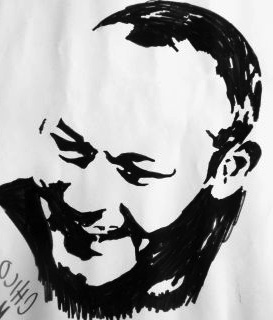
img: Pencil sketch of Jack Scott by a local Turkish artist

If you enjoyed this post, we invite you to subscribe for email delivery of The Displaced Nation. That way, you won’t miss a single issue. SPECIAL OFFER: New subscribers receive a FREE copy of “A Royally Displaced Tea.”

Related posts:

RANDOM NOMAD: Nerissa Muijs, Business Development Specialist

Born in: Kingston S.E., a wee town in South Australia
Passport: Australian, but will be eligible to become a dual Australian-Dutch citizen this year
Countries lived in: Malaysia (Shah Alam): 1997; New Zealand (Christchurch): 2003; England (Plymouth): 2006-2007; Scotland (Edinburgh): 2007-2008; Netherlands (Almere): 2008-present
Cyberspace coordinates: Adventures in Integration (blog)

What made you leave your homeland in the first place?
I grew up in a small town in South Australia called Lucindale (just 300 people). I don’t feel like I was ever a good fit. I have always had a feeling of wanderlust and being able to go on an AFS exchange to Malaysia when I was 17 added more fuel to the fire, rather than sating my taste for experiencing new places. Once I returned home, I never really settled down again. I was constantly planning my next adventure.

Is anyone else in your immediate family a “displaced” person?
One of my Fabulous Aunts is also perfectly displaced. She lives on a yacht with her partner and two cats. They are currently floating around the Colombian coast, preparing for hurricane season before braving the Panama Canal to head back into the Pacific and beyond.

Describe the moment when you felt most displaced over the course of your many displacements.
Perhaps it was sitting in a restaurant in Malaysia with my wonderful Chinese host family. They had taken me out especially to eat shark’s fin soup. Or it could be the time I was the only Australian sitting in a bar in Christchurch watching the Wallabies beat the All Blacks in the semi finals of the 2003 Rugby World Cup. But seriously, it was probably when I found myself in the immigration offices in Amsterdam realizing I was making a potentially permanent commitment by moving to my husband’s homeland — it was time to grow up!

Describe the moment when you felt least displaced.
On my birthday in 2007. I was living in Edinburgh at the time. My Dutch boyfriend, who is now my husband — we met in Australia when he joined one of my tours to Uluru — was visiting from the Netherlands. A group of my friends took us out to celebrate. In that moment I was happy, I was at home. I find I don’t have the sense of “home” when I return to my hometown in Australia any more. I feel at home with people, not places. Having a cup of tea with my best friend, for example. We’ve done that in at least four countries together and it’s always the same.

You may bring one curiosity you’ve collected from each of the countries where you’ve lived into the Displaced Nation. What’s in your suitcase?
From Malaysia: A batik sarong. I’ve been wearing the same one weekly since 1997, and I love it just as much as the day I paid 5RM for it.
From NZ: The jade pendant I got from Hokitika. It feels cool or warm on my skin and is smooth and comforting.
From England: A cream tea with scones and Cornish clotted cream. A cream tea will always make me think of my elderly great aunts at home and of England.
From Scotland: A “hairy coo” fluffy toy. (Actually, I’d prefer to bring a real-life hairy coo, but I imagine you have strict quarantine rules…)
From Netherlands: Rookworst (a type of smoked sausage, similar to bratwurst).

You’re invited to prepare one meal based on your travels for other Displaced Nation members. What’s on your menu?
Being Australian, I will have to say a barbie. We’ll eat steak, snags [sausages], lamb chops and onions. We’ll tip our hats to Malaysia with some satay sticks. We’ll have bread and my grandma’s hot potato salad. There will be noodle salad that my mum made and sliced beetroot on the side, which I’ll drop on my shirt. Of course, because I live in the Netherlands, we’ll have garlic sauce along with our tomato sauce. And because of the UK influence it will probably be raining, but there will be beer. Lots of beer. And it won’t end for two days. I’ll be up early to cook bacon and eggs again the next morning for the people who just won’t leave. (Dad, I’m talking to you!) It will be fun — care to join me?

You may add one word or expression from each of the countries you’ve lived in to The Displaced Nation argot. What words do you loan us?
From Malaysia: Adding a “la” onto words and sentences: “Okay-la.”
From New Zealand: “Chur bro.” Depending on the context, it can mean “thanks,” “nice,” or “cheers, mate.”
From England: “I’m not trying to be funny, but [insert random passive aggressive insult here].”
From Scotland: Any swear word you can imagine.
From Netherlands: Gezellig, the most important word in the Dutch language. There is no real English translation, though “cosy” is sometimes used. It’s a word people use to describe a pleasant situation. Going out with friends is gezellig. Sitting around having a nice dinner with family is gezellig. Anything that gives you a nice warm fuzzy happy feeling inside can be described as gezellig. Wonderful word.

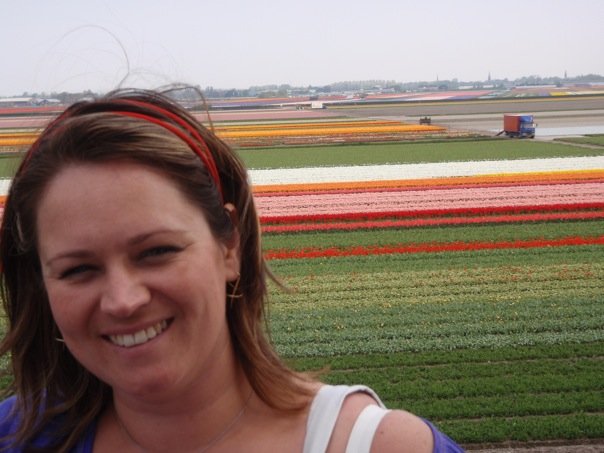
img: Nerissa Muijs at tulip fields outside Lisse, Netherlands.

If you enjoyed this post, we invite you to subscribe for email delivery of The Displaced Nation. That way, you won’t miss a single issue. SPECIAL OFFER: New subscribers receive a FREE copy of “A Royally Displaced Tea.”

Related posts: