The Displaced Nation

A home for international creatives

Tag Archives: Africa

CLASSIC DISPLACED WRITING: Albert Schweitzer, early humanitarian & medic without borders

Fifty years ago, “Albert Schweitzer” was a household name. Nowadays it is hard to find anyone who knows who he is. But given our current theme of looking at those who’ve displaced themselves on behalf of humanitarian causes, today I would like to resurrect this great man for the purpose of honoring him with a membership in our Displaced Hall of Fame.

Were he still alive, Schweitzer, a brilliant theologian and musical genius who received the 1952 Nobel Peace Prize for his philosophy known as Reverence for Life, might not be all that flattered.

Then again, considering that he chose to spend much of his time living simply and without pretension in Africa, is it too far fetched to think he’d “get” what the Displaced Nation is all about? He might even have a good wheeze at learning of his elevated status among our citizenry…

A displaced early life

Schweitzer was born in 1875 in Alsace, which at that time belonged to the German Reich (it would change hands four times between France and Germany over the next 75 years).

According to Professor J. Rufus Fears who has lectured on Schweitzer for the Teaching Company:

Alsatians are their own people — neither French nor German, though they like to say they eat as much as the Germans and as well as the French.

Did being born an Alsatian give Schweitzer a head start on leading a displaced life? It’s tempting to think so. Curiously, although he spoke two languages — actually, three: Alsatian (a dialect of German), German and French — he professed not to believe that anyone was ever truly bilingual. He maintained that a person’s true native tongue could be discovered by asking:

What language do you count your change in when you give someone a dollar bill?

A displaced career

For our ceremony inducting Schweitzer into the Displaced Hall of Fame, we would do well to choose one of Bach’s organ works. While still in his twenties, Schweitzer distinguished himself not only in his chosen field of theology, but also as an organist and musicologist who specialized in Bach.

He wrote two early works that established his reputation in both of these fields: The Quest for the Historical Jesus (German, 1906; English translation, 1910), arguing that Jesus was human, not divine; and J.S. Bach (enlarged German edition 1908; English translation, 1911), a study of the life and art of Johann Sebastian Bach.

As if being an accomplished theologian and notable organist weren’t displaced enough, while still in his twenties, Schweitzer decided he would go out into the world and devote his life to humanity rather than remaining locked up in the cloisters of academe.

Upon turning 30, he shocked and horrified his parents and friends by declaring his intention to become a medical student in preparation for the life of a physician in French Equatorial Africa.

While studying medicine, he married Helene Bresslau, who although a scholar herself, became a trained nurse in order to share her husband’s life in Africa.

In 1913 the couple set sail from Bordeaux for what today is Lambaréné, Gabon.

The conditions the Schweitzers faced were desolate in the extreme. The climate — characterized by fiercely hot days, clammy nights and seasonal torrents of rain — was appalling. Besides the usual diseases, the natives were suffering from leprosy, dysentery, elephantiasis, sleeping sickness, malaria, yellow fever and animal wounds.

But the couple persisted through thick and thin (including a period of being interned during World War I), setting out to build a hospital on the grounds of the Lambaréné station of the Paris Missionary Society (they would later move the hospital to an even more remote spot).

Eventually, Schweitzer’s wife went back to Europe to raise their daughter, while Schweitzer himself carried on working in, and on behalf of, this remarkable medical facility until his own death in 1965. By then the compound had grown to more than 70 buildings, 350 beds and a leper village of 200, and the hospital was staffed by 3 unpaid physicians, 7 nurses and 13 volunteer helpers.

(It still exists today as the Albert Schweitzer Hospital, one of the leading research centers in sub-Saharan Africa training African doctors in the treatment of diseases such as HIV/AIDS, malaria and tuberculosis.)

Schweitzer, who passed away in the hospital itself, was buried next to the Ogooué River in a ceremony attended by hospital workers, lepers, cripples and other patients.

An epiphany of hippopotaman proportions

Schweitzer considered his work as a medical missionary in Africa to be a small recompense for the injustices committed by the African Continent’s European colonizers. In a sermon preached in 1905, he proclaimed:

Oh, this “noble” culture of ours! It speaks so piously of human dignity and human rights and then disregards this dignity and these rights of countless millions and treads them underfoot, only because they live overseas or because their skins are of different color or because they cannot help themselves.

By the time he dedicated his life to serving the natives of Africa, Schweitzer could no longer make the intellectual case for Jesus’s divinity. The French had recruited him to work in their mission as a physician not a pastor (somehow a Lutheran who didn’t believe in Christ was just a little too displaced!). Yet Schweitzer remained deeply spiritual. He wanted to find a philosophy that would persuade others to displace themselves to the most desolate places on earth, just as he had done — separate and apart from a proselytizing mission.

While on a boat trip on the Ogooué, Schweitzer noticed a herd of hippopotamuses swimming in the water, and thought to himself: what purpose does the hippo serve? He decided that the spirit of the universe had made this creature — and that this was reason enough to treat it with respect.

From that point on, he promoted the idea that man, in his quest for dominance, should never forget the need to show reverence and awe for all living creatures.

For Schweitzer, such a belief should suffice as motivation to reach out and help others who are less fortunate than oneself. You can almost sense his relief at discovering this philosophy from the epilogue he attached to his major autobiographical volume, Out of My Life and Thought:

Two observations have cast their shadows over my life. One is the realization that the world is inexplicably mysterious and full of suffering, the other that I have been born in a period of spiritual decline for mankind.

I myself found the basis and the direction for my life at the moment I discovered the principle of Reverence for Life, which contains life’s ethical affirmation.

His Reverence of Life philosophy further led him to warn against man destroying animals (what we know today as “animal rights”) as well as his environment — he was an early environmentalist, who predicted that man “will end by destroying the Earth” (Rachel Carson dedicated Silent Spring to him).

Schweitzer tried to put these principles in practice in all sorts of ways, but the two examples I like best are his refusal to teach his pet parrot how to talk (talking would lower its dignity), and his decline of an offer by a foundation to replace his dug-out canoe with a motorboat for fear it would pollute the Ogooué River.

Schweitzer’s relevance for today’s global nomads

In his lecture on Albert Schweitzer, Professor Fears insists that this early humanitarian still speaks to us. I agree and would add that he positively shouts to those of us who’ve chosen to live much of our lives abroad. For a start, we can find inspiration in his refusal to follow a conventional career path (a quality that, by the way, drove the bureaucrats in charge of French Equatorial Africa crazy).

But the really impressive thing about Schweitzer, of course, is his unconquerable spirit, his desire to do good. Despite living through two world wars, he carried on believing in mankind’s potential to treat life, in all its forms, with the reverence it deserves.

Even after World War II, when Albert Einstein called on him to speak out against the atom bomb, he did so despite his better instinct to get involved in politics (and suffered the fall-out of having funds withdrawn from his hospital when the FBI and CIA began persecuting him for his anti-nuclear-arms-race position).

The way I see it, we expats and “internationals” are perfectly positioned to understand where Schweitzer was coming from. Our travels have taught us that life, whether human or animal, deserves respect no matter where one is on the globe.

But how do we share this knowledge? What do we actually do with it?

As mentioned in my post on Richard Branson at the start of November, for some of us it’s challenge enough to cultivate our own gardens and hope that in doing so, some of our attitudes will rub off on others.

But Schweitzer, whom Fears calls a “living testimony to goodness,” clearly believed in the need to do more. And after a month of celebrating those who’ve done more — see our profiles of Adria Schmidt, Jennifer Lentfer, Matt Collin, and Vilma Ilic — I’m prepared to concede he is right.

To give the redoubtable Albert Schweitzer the final word:

I have always held firmly to the thought that each one of us can do a little to bring some portion of misery to an end.

STAY TUNED for Monday’s reflections on global philanthropy by third-culture-kid columnist Charlotte Day.

If you enjoyed this post, we invite you to subscribe to The Displaced Dispatch, a weekly round up of posts from The Displaced Nation, plus seasonal recipes, book giveaways and other extras. Sign up for The Displaced Dispatch by clicking here!

Related posts:


Journeys through nomadic Africa — a travel yarn in two parts (Part 2)

Today we are joined again by Kathleen Colson, who delivers the second part of her travel yarn on a trip she made to Kenya from September 8 to October 14. In Part 1, Colson shared some overall impressions of the country, which she has visited innumerable times — most recently in the role of founder and CEO of a micro-enterprise development organization known as the BOMA Project. Today she focuses on the portions of the journey having to do with that project.

I founded The BOMA Project in 2005. “Boma” is a Swahili word for a livestock enclosure, but it also means “to fortify.” Our main program is the Rural Entrepreneur Access Project (REAP), which offers a seed-capital grant and business-skills training to small business groups of three people. The training is delivered by BOMA Village Mentors, who in turn are trained and supported by BOMA field staff.

So far, 2,688 adults, some of the poorest people on earth, are running 720 businesses, impacting the lives of over 14,000 children in northern Kenya.

As the project’s founder, I’ve had the great fortune to spend time with the pastoral nomads of this isolated region of Africa during several extended visits each year. In the first few years, there were four of us who traveled around the district meeting with village elders and groups of women. Since then, the organization has grown, and my trips have been busy hosting donors, photographers and consultants.

For this trip we would be back to the core team: Kura Omar, BOMA’s Operations Director; Semeji, our bodyguard; Omar, field support; and me, Mama Rungu. People always ask about my name, one that I have had for many years. It’s a long story, but a rungu is a warrior club. I got this name because someone thought I was tough.

I looked forward to the long drives across the rough terrain of northern Kenya — talking with Kura non-stop, sometimes shouting above the corrugated roads. While we drive, Semeji sings and Omar spots for cheetahs and hoopoes, all the while listening for the sound of a bad tire. At night, stories are told under a brilliant night sky, and we listen to Semeji’s soulful warrior songs along with the hyena’s call.

Shiny is good

The BOMA Project now has 40 businesses in and around the village of Kargi and we are soon to launch 20 more.

Kargi, home to numerous clans of the Rendille people, has grown into a substantial village because it’s a road-accessible location where missionary and aid organizations can easily distribute food relief. (Periodic droughts are part of the life cycle of these arid lands.)

BOMA has worked hard to establish ourselves in this village — keeping in mind that we also had to keep our staff safe in an area that sees frequent ethnic conflicts over livestock. Now there is tremendous enthusiasm for our work, including from the village leadership. The chief has told Kura:

…these BOMA people, they look shiny.

Clean, healthy, shiny. Shiny is good.

The case of Ndebe Arbele

In the Rendille village of Falam, near Kargi, Kura insisted that I meet Ndebe Arbele, a member of one of the BOMA businesses. BOMA had given her business group, May Yeel, a seed capital grant of $150 and they used it to buy food, beads, washing powder and other small essentials in Marsabit, a town on Africa’s main artery, the Cape to Cairo Road — which they now sell to residents and travelers in their village.

Ndebe and her partners have attended BOMA business-skills training programs, and soon they will start a training program on savings. After just two short months they were able to distribute profits, and according to their record book, they now have savings and cash on hand of 5,300 shillings, or about $56.

As Kura translated, Ndebe told me about her son who was bitten by a rabid dog. The medical treatment was 4,000 shillings for four injections. She told me, “If it was not for this business, I would not have been able to pay for the medical treatment for my son. Many children here die from rabies, but not my son.”

I am very aware when I visit with our BOMA businesses, that I am sometimes told what I want to hear. On this occasion, I decided to push back.

“But didn’t you also receive money from HSNP [Hunger Safety Net Programme]? I am looking at your group’s record book and I don’t see how the 4,000 shillings came from the BOMA business,” I said to her.

Ndebe looked down. “Yes, you are right. I also took my HSNP money to pay for the shots.”

She looked up at me with tears in her eyes, then said:

Please don’t take this business away from me. All my life I have been a beggar. I used to be idle, waiting for food relief to feed my children. Now I am a trader. Now I work every day. From others we get relief, but it always ends. This business stays with us, and now I am someone. Please, please don’t take this away from me.

I suddenly realized that it is here that we stake our claim. We can provide grants and training so that women like Ndebe can earn an income that will help her care for her seven children. But the human spirit craves dignity and respect more than it seeks wealth, and that is what we had given Ndebe. It was enough.

“I could never take this business from you, Ndebe. It is yours forever. Thank you for telling me why this business is important to you. I will always come and visit you when I am here, and I want you always to tell me what you feel in your heart.”

Kalath (thank you), Mama Rungu.”

A gloomier picture

In another Northern Kenyan village, Lengima, BOMA has facilitated the building of a school through the Dorothea Haus Ross Foundation. Currently, “school” is taught under a tree, with a blackboard and a volunteer teacher. For most of the students, there are no desks, no chairs, no paper, no pencils — not a single thing that would enrich the learning experience.

The whole village is involved in the building of the school. The men do the hard labor and each woman has been asked to collect a pile of stones — equivalent to a wheelbarrow-size load — for which they receive 50 shillings (55 cents).

The poverty in Lengima is extreme. Traditionally, the area relies on livestock as a source of income and food, but in times of drought, the men move the livestock elsewhere.

When we visited this time, a period of extreme drought, many of the children had the telltale signs of kwashiorkor (protein malnutrition), with reddish hints in their hair and extended bellies. The women were all painfully thin.

I met with Nalebicho Koitip, an older woman and a member of a BOMA business in the village, called Nkabe. She told me:

This drought has taken our livestock and our husbands. We keep our children alive with the small profits we make in this business. But it is hard because those without a business are turning to us for short-term food credit.

Locals must lead

In each village, we have BOMA Village Mentors. Using standard of living indicators — household assets and nutritional information — the Mentors select the “poorest of the poor” residents who are also enterprising and willing to work.

One of the highlights of my trip was attending BOMA’s Mentor University — our annual training session for the 26 BOMA Village Mentors — in South Horr.

This year, the goal of local leadership was a reality. I was now an observer. I said hello but was not expected to do anything else.

Sarah Ellis, one of our new researchers, has developed a micro-savings program for REAP participants, and at the meeting she introduced the new program to our Mentors. They will be the ones responsible for implementing the program region-wide. By regularly setting aside committed funds in a safe location, we believe we can provide insurance against the regular shocks that are typical for people who live in extreme poverty. It can also become a source of savings-led credit for BOMA grant recipients to grow their businesses.

Fresh ideas, goals

I always go to Kenya with lots of ideas and come back with even more. In the months prior to this trip to Kenya, I had spent time reading about the success of healthcare in Africa. While economic interventions, in general, have not been successful — incomes across the continent are down or stagnant — healthcare delivery has done reasonably well. The book Getting Better: Why Global Development Is Succeeding — And How We Can Improve the World Even More, by the economist Charles Kenny, is a fascinating read.

I wondered if we could apply some of the lessons learned by community healthcare workers in Africa to our team of BOMA Village Mentors.

In our last impact assessment, we had a 4 percent failure rate of the first 100 businesses. So I asked the BOMA team, “What if our businesses were patients? Would we tolerate a 4 percent failure rate?”

Once we started focusing on our failures, we became more imaginative, more creative. Every organization, for profit or not, likes to focus on its successes. If you are a nonprofit, you especially want to tout your successes, as this enables you to secure donations.

When we focused on our failures, however, we suddenly realized what we had to do — strengthen the training and support of our BOMA Mentors, the people at the heart of our program. We needed to give them the resources to fortify the success of BOMA businesses. We set a zero percent failure-rate goal for the following year.

Asked to say a few words at the end of the Mentor University meeting, I shared the concept of zero percent failure. It was a goal — a lofty goal — but I could sense the confidence in the room.

Our Mentors come from communities that have been overwhelmed by aid organizations that keep them on life support. Our program represents an opportunity to bring out the strength and resilience that resides in all of us.

Readers, any questions or comments for Kathleen Colson on her travel yarn or the BOMA Project?

For more details on Kathleen Colson’s recent East African journeys, go to the BOMA Project blog. Those familiar with the Matador Network may be curious to note that the BOMA Project was recently listed as one of the top 50 organizations “making a world of difference.”

STAY TUNED for Monday’s post on the “celebrity’s burden,” by Displaced Nation founding contributor Anthony Windram.

If you enjoyed this post, we invite you to subscribe to The Displaced Dispatch, a weekly round up of posts from The Displaced Nation, plus seasonal recipes, book giveaways and other extras. Sign up for The Displaced Dispatch by clicking here!

Related posts:

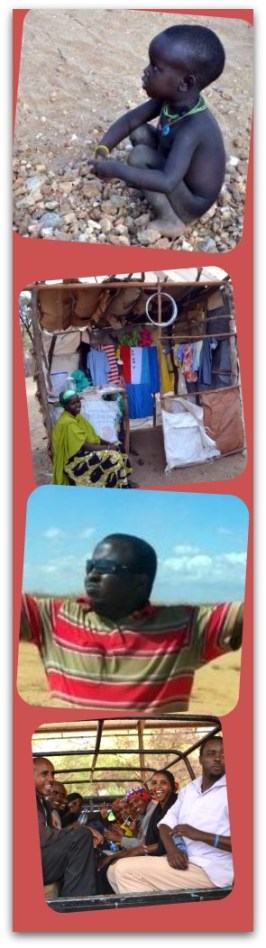
Images (top to bottom): A child in Lengima helping to collect stones for the building of the village school; a BOMA business in the village of Ngurunit; Kura Omar, BOMA’s man in Northern Kenya; a “taxi” full of  BOMA Village Mentors, at the end of the three-day Mentor University training program.
RANDOM NOMAD: Jennifer Lentfer, International Aid Consultant, Writer & Blogger

Born in: Bruning, Nebraska USA
Passports: USA
Countries, states, cities lived in: Zimbabwe (Mutare & Harare): 1999 & 2002-04; Michigan (Detroit): 1999-2000; Pennsylvania (Pittsburgh): 2000-2002; Namibia (Windhoek): a few months in 2001; Malawi (Lilongwe): 2004-05; California (Santa Cruz): 2005-10; Washington, DC: two weeks ago-present.
Cyberspace coordinates: How Matters | Aid effectiveness is not what we do, but HOW we do it (blog); @intldogooder (Twitter handle)

What made you leave your homeland in the first place?
I grew up on a pig farm in Bruning, Nebraska, population 248. The graduating class of my secondary school had 16 people. Every time the phrase “it takes a village to raise a child” is uttered, I think “If only they really knew…” Thinking back, there were two very important teachers, one in high school, and another at university, who were extremely influential in shaping and expanding my world view. And my parents certainly raised me to cultivate a curiosity about life. This, along with my insatiable, youthful desire to get as far away from Nebraska as possible, was a combustible mix that shaped my career and life path.

Is anyone else in your family a “displaced” person?
I was the first person in my family to go or live abroad. I don’t think I even knew anyone who had been to Africa before my first trip abroad, at age 19.

Describe the moment when you felt most displaced.
On the bustling Nelson Mandela Avenue in Harare, Zimbabwe, in 2003. I always hated driving to city centre, but a colleague and I had to go to the immigration office to update our work permits. When we came out of the office, our car was blocked by another on the street. So we just got into the car and waited.

Eventually a man came up my driver’s side window and tapped on the glass. Not knowing him, I rolled the window down a couple of inches. This seemed to anger him and he walked away to talk to another man, a companion of his, who started yelling out to walkers-by that this white woman [me] would not roll down my window — I must think Africans are “stinky,” on and on… Luckily people didn’t engage him. There was a dynamic going on that I didn’t understand — apparently, I had parked in the man’s space, and he felt justified in scolding and harassing me for that.

After a few more minutes, the original man came back to my window, pulled out his wallet and his War Veterans identification card, placed it up against the glass and menacingly dragged it across. And then it made sense. The card, along with the man’s demeanor, indicated that he was probably one of the veterans of Zimbabwe’s war for independence, who’d been recruited by the Mugabe government for help in brutally suppressing opposition demonstrations, in murdering and torturing opposition leaders, and in seizing land on behalf of the government elite.

Eventually, the man had had enough with me. He motioned for the car behind me to move, and I backed out and drove away very quickly.

Obviously, my experience that day was nothing compared to the very real and severe political violence and torture experienced then and now by Zimbabwe’s opposition supporters. If I felt displaced, imagine how black and white Zimbabweans felt who were violently displaced from their lands on behalf of so-called fast-track land resettlement. And on another level, my experience was nothing compared to the everyday torments of living in a country where in a sense everyone (war veterans included) has been displaced from a state of personal dignity and safety, through subtle yet deliberate expressions of power.

Describe the moment when you felt least displaced.
Also in Zimbabwe — when talking with a group of local leaders in 2008. We were sharing stories about the issues women face in their struggles to raise families and improve their communities. One woman shared a brilliant story of triumph from being a physically and emotionally abused wife to now owning her own hairdressing business. She cried as she bravely told us about her life, and many others shared her tears.

Because I was there as a visitor, I was expected to respond (through a translator), and I took a chance in trying to break the tension and make the moment a bit lighter. I told her that I could tell she was a hairdresser because her plaits [braids] looked so perfect.

After the pause in which the translator shared what I had said, the room erupted in laughter. We were all reminded, no matter where we were from, of the sweetness of laughter through tears.

You may bring one curiosity you’ve collected from each of your adopted countries into the Displaced Nation. What’s in your suitcase?
I had quite the African basket collection going for a while until they were stolen from my storage unit in Santa Cruz. That’s all the thieves got since I was in the process of moving at the time. Their house probably looks really cool now.

You’re invited to prepare one meal based on your travels for other Displaced Nation members. What’s on the menu?
Peanut butter vegetable stew is what I crave — from Zimbabwe. Let me know which of these recipes you fancy:

You may add one word or expression from the countries you’ve lived in to The Displaced Nation argot. What will you loan us?
Zvakaoma. This is a phrase in Shona that means, “it’s tough” or “it’s difficult.” It also roughly translates to “shucks” in English or “c’est la vie” in French. It was a phrase I heard often in Zimbabwe because of the severe economic downturn and the unavailability of basic commodities and cash during my time there. To my ears, it was a very compassionate phrase. Zvakaoma — I lament with you; I feel your frustration and pain. Sometimes a well-timed zvakaoma can get you through your day.

This month we are looking into “philanthropic displacement” — when people travel or become expats on behalf of helping others less fortunate than themselves. Do you have a role model you look up to when engaged in this kind of travel — whose words of advice you remember when you find yourself in a difficult situation?
Great question — one that we aid workers should always be asking themselves as well, because how we go about developing our role or calling can have an impact on our effectiveness as helpers. Helping is hard. Unfortunately, there aren’t any simple solutions to aiding the poor.

Having worked in international aid and philanthropy for over a decade, I’ve come to admire the people who have managed not to totally lose their idealism and commitment to the work. So many aid workers become jaded and cynical — I can’t help but wonder if this hinders their effectiveness in the field.

In addition, I really look up to the leaders of local nonprofits and grassroots organizations in the countries where I’ve worked. I’ve had the privilege of working with over three hundred such groups in southern and eastern Africa during my career. Most were linked to local churches, schools, or clinics though some were also independent. They extend support and services into areas that are not reached sufficiently by government or international agencies.

The web of local initiatives in the developing world is still largely undocumented, unrecognized and under-resourced. WiserEarth.org conservatively estimates there well may be over a million such groups around the world! In my experience, these local leaders are there for kids, families and communities, whether funding or support from outsiders is available or not. Watching them and their persistence keeps me going.

Voluntourism is said to be the fastest growing segment of the travel industry (itself one of the world’s fastest growing industries). Do you think this kind of travel can help the uninitiated understand the problems our planet is facing?
Aid workers easily get frustrated when we see harm being done by well-meaning but naive tourists. Though if we are honest, that is how many of us got our start in this work. A great article by writer J.B. MacKinnon, entitled “The Dark Side of Volunteer Tourism,” provides a reality check. He wrote:

First, nothing is likely to stop the increase in person-to-person contact between people of the richer nations and people of the poorer. Second, there is much to be gained on both sides from this exchange. Third, those gains will be made through a series of small, personal, humbling errors.

To anyone considering voluntourism, I can recommend PEPY Tours in Cambodia. It’s doing voluntourism responsibly, thoughtfully, and respectfully — and has a great blog to follow, Lessons I Learned.

In general, I’d advise volun-tourists to ask critical questions of whatever project or trip in which they’re involved. Link the big issues to what you’re trying to do locally. It’s important to be curious about the root causes of poverty and vulnerability and what is needed for long-term change. Commit yourself to this learning process and never stop asking the deeper questions, whether it’s your first trip abroad or you’ve been working “in the field” for decades.

It’s also vital to recognize that every community has important non-monetary assets. When we come from a perspective of “we have so much, they have so little,” it’s easy to miss this. So the question becomes: “Who are the local leaders who are already doing great work who need the resources I have to offer?”

Finally, don’t let your good work become all about you. Place local people’s efforts before your own, in order to foster ownership and sustainability. Remember that whatever you do will always be secondary to the relationships you build.

Readers — yay or nay for letting Jennifer Lentfer into The Displaced Nation? Tell us your reasons. (Note: It’s fine to vote “nay” as long as you couch your reasoning in terms we all — including Jennifer — find amusing.)

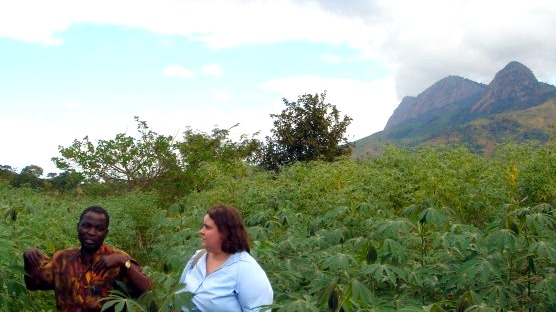
img: From corn to cassava — Jennifer Lentfer talking with farmer and local leader Jones Pilo in Zomba, Malawi (2007).

STAY TUNED for tomorrow’s installment from our displaced fictional heroine, Libby, who is hoping that Oliver’s visit back to Milton Keynes doesn’t result in any surprise guests (Sandra, for instance!) at their first Thanksgiving. (What, not keeping up with Libby? Read the first three episodes of her expat adventures.)

If you enjoyed this post, we invite you to register for The Displaced Dispatch, a round up of weekly posts from The Displaced Nation, with seasonal recipes, book giveaways and other extras. Register for The Displaced Dispatch by clicking here!

Related posts:

Look at little me on my gap year! I’m so superior to other kinds of tourists!

We welcome back Lawrence Hunt to the Displaced Nation, who wrote a popular post for us in September about what it’s like to grow up in England with a mum who is an expat American. Today, in keeping with our theme of global philanthropy, he offers some thoughts on why the UK’s educated youth seems so preoccupied with the authentic, meaningful travel experience.

It’s hard to pinpoint when and how it started, but more and more UK students feel compelled to spend at least part of their gap years between secondary school and university doing their bit to save the world.

The wealthiest students were the first to pioneer this trend. Many of you may be familiar with Prince William’s gap year in Southern Chile with Raleigh International, an organization started by his father, to help build schools and teach English; and Prince Harry’s gap year in Lesotho to further his mother’s work with AIDS orphans.

But have you watched “Gap Yah,” a comedy video that’s been dominating the British corner of YouTube?

“Tarquin, yes, I can’t come shopping on the King’s Road today, because, yes, I’m literally in Burma.” A traveling student is on the phone to a friend back home, droning on about being subject to various experiences of “spiritual, cultural and political” significance, such as meeting a malaria-suffering woman with flies around her eyes, and then having “chundered [vomited] everywhere” due to excessive partying the night before.

The notion of a Hooray Henry returning home with stories of his interactions with noble, primitive cultures has really struck a chord with university students. As one exasperated YouTube user from Manchester University comments under the video: “I know so many people like this! Worst kind of person.”

The offense is made infinitely worse by the fact these kids have been so brazenly insulated from the realities of these places by wads of their parents’ money all the way through.

I love animals. I love kids. I want to save the world.

I’m one to talk. I did a gap year in China before going off to Warwick University in 2008. I chose China as I wanted to learn Chinese and see what it’s like to live under a post-communism communist regime. I took on a job as a teacher in a city called Wuhu in Anhui Province, and spent the next five months struggling to make myself understood above the noise of 60-plus unruly teenagers.

And yes, my friends who saw the “gap yah” video said it reminded them of me! (But I worked to pay for my trip, damn it!)

Did I help the kids? Maybe a little. Did I have fun? For sure. But I also came back with the realization that not much can be accomplished in just a few months by people who don’t speak the language and have little cultural training.

Judith Brodie, the director of Voluntary Service Overseas, one of Britain’s leading charities, concurs. Voluntourism has become big business in the UK, with the average student paying out close to $10,000 for the opportunity to teach street children, rescue sea turtles, dig wells and the like. Brodie cautions that many of these projects have been designed to satisfy the demands of students rather than the needs of locals. As she told the Guardian:

“Young people want to make a difference, but they would be better off traveling and experiencing different cultures, rather than wasting time on projects that have no impact and can leave a big hole in their wallet.”

The desire for authenticity — whatever that means

Going hand in hand with this compulsion for doing good — as long as you can cram it into a half-year stint, preferably funded by your parents — is the desire to prove to others that you won’t settle for anything less than an “authentic” cultural experience.

During my own gap year, I spent some time walking around Beijing with a friend of mine, Josh, who was obsessed with the idea of “authenticity” — the acid test for which was the absence of any sort of commercial element aimed specifically at tourists.

Josh would thoroughly inspect any restaurant we went to before deciding whether it was “touristy” or the “real China.” It almost got to the point where if there was a suspect old Chinese man hunched up in the corner looking as though he needed serious medical attention, Josh would yelp excitedly and sit down, commenting on how he could taste the poverty in the noodle soup.

One particularly vivid memory from the experience was walking through the hutongs, the ancient lanes that revolve around the Forbidden City in a maze of houses and courtyards. They are a popular tourist attraction, and though they house half the city’s population of 18 million, many of them are being demolished to make room for more modern buildings.

Josh, at the behest of his trusty guidebook, was insistent that we take the chance to see them before they were modernized beyond recognition. While we walked, we were followed by an angry rickshaw driver who wanted to take us on a tour. We refused to pay for his services — not because the price he was asking was too high but because to accept his offer would be tantamount to admitting that we’d settle for a staged and commercial version of the “hutong experience.” And that would undermine our whole reason for being there.

Just a little too late, I realized the gross insensitivity of what we were doing. We were walking through people’s back gardens and peering over their fences on the pretext of digging beneath the veneer of their culture. Ultimately, however, what we were getting was exotic, and cheap, entertainment. And if that was the case, we might as well have allowed the locals to set the terms of their own commodification.

Unintended consequences

If I had any sort of epiphany myself from traveling, it was this: the search for the “authentic” experience outside of Western boundaries is itself the reason for these cultures’ destruction.

The way I see it, it happens in three phases:

  1. Travelers arrive at an undeveloped exotic location.
  2. They report on the experience as having been so “authentic” that other people follow them.
  3. Soon enough the locals catch on to this, and offer their services in delivering what people want — mountain treks, temple tours, and so on until eventually, it becomes an overly commercialized “tourist spot” and the landscape becomes dominated by souvenirs, maps, and information points.

And just about then, the original travelers, exasperated with all those damn tourists, leave in search of more fertile ground and the cycle repeats itself.

For years in this way, the counter-cultural traveler has served as the main shock trooper of mass tourism.

While there is nothing wrong with spreading a little Western wealth through tourism to places that need it — although admittedly the process of development does have its drawbacks — the idea that anti-materialist tourists are superior to the other kinds — well, that’s just pretentious, isn’t it?

Readers, any responses to Lawrence Hunt’s thoughts on gap years, voluntourism and the quest for the “authentic” travel experience?

STAY TUNED for Tuesday’s post, providing a humorous slant on the aid work profession.

If you enjoyed this post, we invite you to subscribe to The Displaced Dispatch, a weekly round up of posts from The Displaced Nation, plus seasonal recipes, book giveaways and other extras. Sign up for The Displaced Dispatch by clicking here!

Related posts:

Img: Lawrence Hunt playing the tourist in Beijing’s Forbidden City during his gap year (August 2008).

Journeys through nomadic Africa — a travel yarn in two parts (Part 1)

Today we welcome Kathleen Colson to The Displaced Nation as a guest blogger. Colson was in Kenya from September 8 to October 14 to lead a safari for her alma mater, St Lawrence University, and to meet with her staff and the participants of The BOMA Project — the micro-enterprise development organization that she founded in 2005. Colson has traveled to the African continent over 30 times.

In this, the first in a two-part series on her most recent travels, Colson shares some overall impressions of Kenya. In Part 2, to be published next week, she will report on her journeys related to the BOMA Project’s work.

For over a quarter of a century, I have traveled to Africa, visiting 11 African countries in the process. But East Africa — in particular, Kenya — is the place that keeps bringing me back.

Each time I’m in Kenya, there’s a moment when I feel overcome by the sheer physical beauty and rawness of the landscape. This time, that moment occurred when I was flying over the land that I had spent years driving through — northern Kenya. Now — only my second time to do so — I was seeing the land from the air.

Fractured volcanic mountains stood in stark contrast to the vast open spaces of desert and scrub brush. But for the occasional circle of villages inhabited by Samburu or Rendille nomads, the land looked uninhabited.

I was looking down on ancient untamed wilderness.

Land of infinite variety

Kenya is a land of varied terrains and climates. So it is always difficult to pack when you are traveling between the extremes — from the cold and damp nights in the village of Nanyuki (Kongoni Camp), at the base of Mount Kenya, to the heat and arid conditions of the nomadic villages of northern Kenya.

Millions of years ago, the African continent tore itself apart, creating a 5,400 mile trench that runs from Jordan in the north to Mozambique in the south. A 19th-century British explorer called the trench the Great Rift Valley. It is visible from the moon.

On either side of this crevice, great volcanic mountains erupted creating Kilimanjaro and Ol Donyo Lengai (Mountain of God) in Tanzania and Longonot, Menengai and Mount Kulal in Kenya.

Wake-up calls

Being in Kenya always heightens my sense of hearing — whether it is the sounds of the night that reach me through the thin barrier of tent canvas, or the sounds that come with the morning light.

In mid-October, while staying in South Horr, I was awakened by the muezzin calling the faithful to prayer at 4:30 a.m. In this village of mostly Catholic parishioners, South Horr was a typical village in northern Kenya with a diversity of spiritual practices.

As light filtered through the cracks of my wooden windows I heard the sounds of a village awakening — chickens and goats and the murmur of soft, gentle voices. A tropical bulbul, go-away birds and the honking of a hornbill joined the chorus. And then it came — the sound that has started almost every day that I have ever spent in Africa — the whisk, whisk of a palm branch broom.

By the next day, those noises were drowned out by the growl of winds blasting down the Rift Valley. I awakened from a night of Malarone-infused dreams to the sound of young fruit dropping onto the tin roof of my hut from the gnarled olive tree above it.

That day we would make the treacherous climb up Mt. Kulal to Gatab, a Samburu village perched on the edge of a sheer cliff. I was glad we would be staying in a solid cement house — the home of a doctor who had left the area but who allowed visitors, as long as they were approved by the missionaries, to use it.

That first night in Gatab, the thorn branches of a bougainvillea bush, brilliant with pink blossoms during the day, now clawed at the tin roof of the building, desperately trying to hang on as the wind blew and blew.

The missionaries’ dogs barked in desperate pleas for calm which eventually came with the dawn, as the winds quieted down and the mists descended from the forest, blanketing the village in an eerie white fog.

On safari

One of the purposes of my trip was to lead a safari of 22 people from September 16 to 28. After a costly snafu with my return flight from northern Kenya to Nairobi, I was finally able to check in with my head guide, Eutychus, and introduce myself to the group members, whom I recognized from their passport photos.

Our safari consisted of a mix of presentations on some of the good works being done in Kenya — Ken Okoth of St. Lawrence University started it off by giving us a tour of his facility in the Kibera slums of Nairobi — and animal sightings.

In the Samburu National Reserve, we saw cheetah, lion and leopard. We also had a sighting of rare wild dogs — unbelievable! One afternoon, we watched a delighted group of young elephants swim and bathe in the rushing waters of the Ewaso Nyiro River.

At a surprise sundowner setting in the hills surrounding Sekenani Camp, I awarded two of our travelers a rungu — the traditional club of Maasai and Samburu men — for carrying on with the trip despite becoming ill.

East African joie de vivre

Another purpose of my journey was to attend a training program for the Mentors of The BOMA Project. On our last night together, I paid for a case of Tusker beer and sodas. As it grew dark everyone straggled back to camp and gathered in a circle of chairs outside my hut. Song leaders like Teresa, our Mentor from Loiy, and Semeji, our security man, led us in rounds of music. Spirits were high by the time dinner was served — steaming bowls of rice, cabbage and goat meat.

After the meal, the dancing began. It started with sonar tenor chants and simple songs. Soon other guests staying at the club as well as people from the town joined in the celebration. Arms around waists, hands clasped and feet pounding in a circle of bodies, the ethnic mix of Samburu, Rendille, Ariaal and Turkana voices joined together in a shared chant — i-lee-um, il-ee-um, il-ee-um, il-ee-um.

Teresa and Semeji’s voices pierced the chanting voices with whoops and wails, connecting the voices to stories of love and longing and the battles of brave warriors.

Two young mothers handed me their babies and I held them close as the dancers pounded their feet and sang the songs of the nomadic people from the north. The dust from the dancers’ feet and the chanting voices rose into the night sky.

Rumblings of discontent

I arrived in Kenya in early September. By that time, the news of the East African drought that started over a year ago was bringing well-intended organizations into the region who had not spent time asking the people what they need. During my first few days, I heard many complaints from residents.

One organization, for instance, had proposed that the community build a greenhouse to grow vegetables.

“And where do we get water for the greenhouse?” the residents responded.

Another organization arrived with desks and chairs for the local primary boarding school.

“But we have desks and chairs,” the residents told them. “We need beds and mattresses for the dormitory so the children do not sleep on the ground.”

And those weren’t the only complaints I heard voiced against foreigners. In the remote mountain village of Gatab, I witnessed hundreds of residents quietly protesting the presence of one of the missionaries who has lived in the village with his family behind a tall chain-link fence.

I was only a casual observer and the circumstances were, I am sure, complicated.

But it is hard not to notice, in contrast to the poverty of this village, the relative wealth of a missionary family whom I am told do not interact socially with the villagers — multiple ATV and lorry vehicles, a backhoe, a wind tower, a satellite dish and a trampoline for children who do not attend the local school. All of this infrastructure was in support of a clinic and Haven Home — a boarding school for nomadic children and orphans.

A number of years ago a local woman had received a divorce after years of abuse by her husband. She was employed by this missionary family and had finally decided that she wanted to have a baby but would do so without a husband. She was fired. According to a number of village leaders that I spoke with, this was the last straw. “We’ve had enough,” the villagers told me again and again.

I tried to find out more and later that evening I did a search on the Web (yes, you can get slow Internet through a mobile phone modem), where I found this description:

Haven Home provides a Christian environment for these young people from many of the immoral and destructive tribal practices.

Before I started The BOMA Project, I spent two years traveling the district and listening to the people. We tried lots of things and we kept listening. Out of this came two founding principles — that we would focus on income as our development strategy and that we would remain committed to the local leadership of all BOMA programs.

But more on that in next week’s post…

For more details on Kathleen Colson’s recent East African journeys, go to the BOMA Project blog. Those familiar with the Matador Network may be curious to note that it recently listed the BOMA Project as one of the top 50 organizations “making a world of difference.”

Readers, any questions or comments for Kathleen Colson before next week’s installment?

STAY TUNED for Monday’s post by our guest blogger Lawrence Hunt, about gap years, voluntourism, and the search for the “authentic” travel experience.

If you enjoyed this post, we invite you to subscribe to The Displaced Dispatch, a weekly round up of posts from The Displaced Nation, plus some extras such as seasonal recipes and occasional book giveaways. Sign up for The Displaced Dispatch by clicking here!

Related posts:

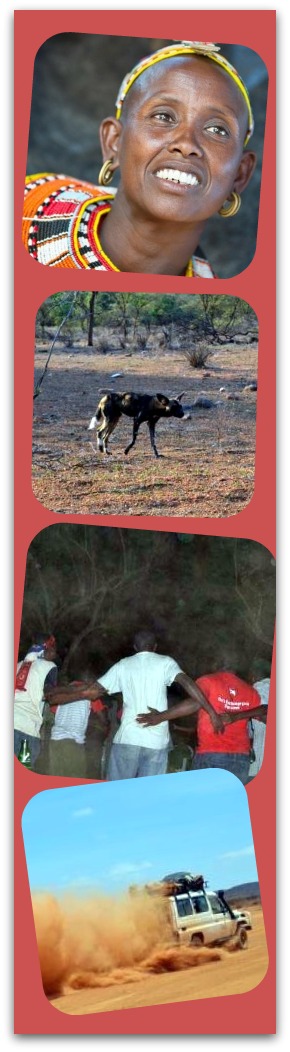
Images (top to bottom): Nalepicho from Lependera, a Rendille nomadic village in the Kaisut Desert; a rare sighting of a wild dogs in Samburu; dust from dancing feet during the BOMA Project’s celebration; GUMPS (the BOMA Project vehicle) crossing the desert on the way to Gatab.

RANDOM NOMAD: Matt Collin, Ph.D. Student in Development Economics, Researcher on Tanzania & Aid Blogger

Born in: Oxford, UK
Passports: USA & UK
Countries lived in: South Carolina, USA (Conway & Clemson): 1984-2001 & 2001-05; UK (Oxford): 2005-06, 2008-present; Malawi (Lilongwe): 2006-08.
Cyberspace coordinates: Aid Thoughts | Digesting the difficult decisions of development (currently on hiatus)

What made you leave your homeland in the first place?
I’m not sure I actually had much a homeland to begin with. Despite living in the American South for quite a long time, my parents — a well-traveled American father and an Anglo-American mother — kept me from completely identifying as a South Carolinian. Frequent trips to the United Kingdom to see my mother’s family made me very familiar with life there, although I don’t know that I managed to feel completely “normal” in either location.

This upbringing made it easier for me to leave the United States. While I felt very at home in South Carolina, it didn’t provide the best opportunities for the career I wanted to pursue, in development economics. Oxford did — plus it was familiar from previous visits.

Is anyone else in your immediate family “displaced”?
Both of my parents are “displaced.” My father spent a large hunk of his life in the Middle East and Europe. He ended up in England, where he met my mother. They returned to the US just after I was born. My mother, whose mother is English and father American, was born in the US but raised in the UK — the opposite of me.

Describe the moment when you felt most displaced.
My first few days in Malawi. I went there as a fellow with the Overseas Development Institute in the UK, which sends young economists off to developing countries on two-year stints to work as civil servants for the host government. (I’d been placed in Malawi’s Ministry of Finance.)

My connecting flight through Johannesburg was late, so I ended up tagging a long with an Asian Malawian man who got us onto a flight to Blantyre, Malawi’s commercial capital — which is reasonably far away from where I needed to be. I spent my first night in Malawi alone in a large, empty guest house, with a promise I’d be driven to Lilongwe the next day. I was young (22) and at that point possessed all the typical Western prejudices about African countries. Everything was unknown. What followed, though — a long, leisurely drive up the spine of the country — was an amazing and illuminating introduction.

Describe the moment when you felt least displaced.
It’s hard to pinpoint when you stop feeling displaced because you don’t really notice the absence of the feeling — you just feel comfortable.

The first time I started noticing how comfortable I felt in Malawi was during my first visit back to the UK. There was this sudden anxiety in realizing that there were things going on back in Malawi that I wouldn’t be around to observe. Your home is where you want to get back to, whether or not it is a physical place or a person, and I wanted to get back to Malawi, after having lived there for only eight months.

I suppose I felt least displaced after two years in Malawi, just as I was about to leave. I had never before felt sad about leaving a place, as my moves were always part of my personal trajectory — going to school, taking a new job, etc. Leaving Malawi was heart wrenching in a way I’d never experienced before.

You may bring one curiosity you’ve collected from each of your adopted countries into the Displaced Nation. What’s in your suitcase?
From the United Kingdom: British sweets — when I was young, I developed a major craving for fruit pastilles, wine gums and the like — and would horde them whenever my family visited the UK.
From South Carolina: Sand dollars and salt water taffy from Myrtle Beach, the beach town I used to live near. (The town is a little garish, but it’s incredibly relaxed in its tackiness.)
From Malawi: A small, simple scene constructed out of banana leaves, in a wooden frame. It’s of a small village in Malawi, with a striking blue sky — the sky takes up half the frame. I had it in my bedroom in Lilongwe, and it’s followed me wherever I’ve moved since. I think it does a good job of capturing the quiet, laid-back atmosphere of the country.

You’re invited to prepare one meal based on your travels for other Displaced Nation members. What’s on the menu?
This is difficult, as I’m not known for my cooking, but here we go:

For a starter, I’d serve an avocado and mango salad (both grown in Malawi).

For the main course, we’d have chambo curry (chambo is a fish from Lake Malawi, similar to tilapia) with nsima (ground maize meal) — preferably refried and spiced. Or if you’d prefer, I can replace the nsima with grits from South Carolina — they are practically the same thing. For good measure, let’s have fried okra from South Carolina on the side.

For drinks, I’d offer either iced tea (that South Carolina classic) or a bottle of Carlsberg Brown — technically Danish, but Malawi has had its own Carlsberg brewery for decades now, and it’s the only place that produces “Browns.”

For dessert, it’s hard to go wrong with apple crumble from the UK, a country that knows its desserts!

You may add one word or expression from the countries you’ve lived in to The Displaced Nation argot. What will you loan us?
From the US: Ain’t — it’s incredibly stereotypical, and I can’t say that I actually used it that often when I lived in South Carolina, but occasionally I’ve wanted to bust out with this in conversation in the UK, to enjoy the bewildered response it would inevitably elicit.
From the UK: Nip, or go quickly. I grew up using this, thanks to my parents. As it’s an extremely common expression in the UK, I always assumed it was known elsewhere. Halfway through my undergraduate degree, I announced I was nipping out to the toilet, when a friend leaned in and quietly said, “Matt, no one here knows what you are talking about.” It’s indicative of the slight difficulty of navigating two countries with a common language, but different vocabulary.
From Malawi: Zikomo (thank you!), short for zikomo kwanbiri (thank you very much). Very simple, very basic — yet it was the word I ended up using most often.

This month we are looking into “philanthropic displacement” — when people travel or become expats on behalf of helping others less fortunate than themselves. Do you have a role model you look up to when engaged in this kind of travel — whose words of advice you remember when you find yourself in a difficult situation?
“Philanthropic displacement” is a difficult concept — one I’m not wholly comfortable with. It’s very difficult to travel to a completely new place and effectively help. Assistance requires familiarity, knowledge, and humility, so I think the most successful philanthropists will be those who make this choice independent of their decision to become displaced.

That said, I think the kind of displacement that comes from actually living in a country is a necessary condition for effective assistance. Many Americans are paralyzed at the thought of going to live overseas, especially in “exotic” and distant, developing countries. In that sense, my father was my greatest inspiration. He felt that you needed to travel to understand the world — and that you need to understand the world before you can aim to make it a better place. This was in stark contrast to most of the people I encountered in South Carolina, who rarely considered leaving the state.

My father also instilled in me an interest in human development, and so I suppose if you combine the two — overseas travel and human development — you have a good motivation to get into a field like development economics, and go jetting off to Africa to see what life is like there.

Voluntourism is said to be the fastest growing segment of the travel industry (itself one of the world’s fastest growing industries). Do you think this kind of travel can help the uninitiated understand the problems our planet is facing?
The difficulty I have with voluntourism is that is supply, not demand, driven. Citizens of developed countries feel the need to go learn about and assist people in developing countries, but often they are doing very basic tasks, such as building schools, which could easily be performed by local people. A fundamental question we should ask ourselves for these small-scale voluntourism initiatives is: “If we gave the village the money that we spent on the project, would they still pay for our plane tickets over?”

What’s more, I suspect most Westerners could gain the same or similar insights from straight-up tourism. You can, for example, go on slum tours in Nairobi. And, while I find “slum tourism” to be a bit strange, it at least isn’t trying to justify itself. There are also plenty of longer-term volunteer opportunities that can yield more insights than a one-week visit to build a school can.

So I suppose my answer is: don’t be afraid to make visiting a developing country a regular vacation — tourism dollars also help, and you can stretch your boundaries a little bit more. By the same token, don’t be afraid to take a leap and go to one of these countries for six months — just as long as you don’t go under the presumption that in half a year, you’ll be able to improve things. This takes time.

Readers — yay or nay for letting Matt Collin into The Displaced Nation? Tell us your reasons. (Note: It’s fine to vote “nay” as long as you couch your reasoning in terms we all — including Matt — find amusing.)

img: Matt Collin on a rock near Domwe Island, Lake Malawi (New Year’s Eve, 2006).

STAY TUNED for tomorrow’s installment from our displaced fictional heroine, Libby, who, following a freak snowstorm in New England, has moved out of her house to avoid being turned into a popsicle. (What, not keeping up with Libby? Read the first three episodes of her expat adventures.)

If you enjoyed this post, we invite you to register for The Displaced Dispatch, a round up of weekly posts from The Displaced Nation. Includes seasonal recipes and book giveaways. Register for The Displaced Dispatch by clicking here!

Related posts:

DISPLACED Q: When traveling to developing countries, are you conscious of how you photograph people?

On July 13, 1985, I sat down in front of the TV at noon and scarcely moved for the rest of the day. Millions of people around the world did exactly the same.

It was the day of Live Aid, of course – the brain child of Bob Geldof and Midge Ure, who organized this worldwide concert to raise money for the starving in Ethiopia.

While news reports the following day stated that around £50m had been raised (and this figure eventually turned out to be much higher), seven hours into the UK concert, reputedly only £1.2m had been raised. Bob Geldof’s reaction to this information spawned what was, for me, the second most memorable moment of that day – his impassioned, four-letter outburst on live BBC TV, in which he begged the public to send in their money.

Note that I said “second most memorable moment.” The image of Live Aid that most clearly remains with me 26 years later – apart from Queen’s rendition of “Radio Ga Ga” – is the montage of film and photographs of suffering Ethiopians, set to the song “Drive” by The Cars.

After Geldof’s outburst, it is said that donations increased to £300 per second, and after The Cars’ video, the rate increased even more. While I can’t verify those facts, I do know my own checkbook came out as the last note of “Drive” died away.

A surprising legacy

One would think this global event, born from pure and altruistic motives, could only leave a trail of good in its wake. However, a 2002 report by the British VSO (Voluntary Services Overseas) called “The Live Aid Legacy” highlighted some unexpected side effects regarding the way Westerners (Britons) now saw the developing world.

Its first key finding was:

Starving children with flies around their eyes: 80% of the British public strongly associate the developing world with doom-laden images of famine, disaster and Western aid. Sixteen years on from Live Aid, these images are still top of mind and maintain a powerful grip on the British psyche.

Given my own memories of Live Aid, I can believe that.

Victims are seen as less human: Stereotypes of deprivation and poverty, together with images of Western aid, can lead to an impression that people in the developing world are helpless victims. 74% of the British public believe that these countries ‘depend on the money and knowledge of the West to progress.’

– which disturbingly leads to:

False sense of superiority and inferiority: The danger of stereotypes of this depth and magnitude is the psychological relationship they create between the developed and the developing world, which revolves around an implicit sense of superiority and inferiority.

Probably not what Bob Geldof had in mind when he wrote the first lines of “Do they know it’s Christmas?”

A picturesque plea for help, or poverty porn?

Matt Collin, author of the blog Aid Thoughts and our Random Nomad tomorrow, is in no doubt that too many photographs in the media cross the line into “poverty porn.”

In his recent post, Guardians of poverty porn, Matt takes The Guardian newspaper to task for printing a photograph which, he feels, has all the checks in boxes to qualify as Poverty Porn.

  • Very cute, if impoverished, Haitian child? Check
  • No shirt? Check
  • Other cute, impoverished children, for context? Check
  • Longing gazes upward (where you look down upon them and consider yourself gracious and merciful donor). Check
  • Hands outstretched to receive help. Check

In other words, the photo falls rather neatly under the category of stereotypical images to which the VSO report referred — nearly ten years later after the report was written.

A fuller picture – or photograph

No one is denying that humanitarian crises exist in the developing world.

Ashley Jonathan Clements, photographer of the picture above, is “a nomadic aid worker with a passion for photography.” Although he must have witnessed more devastating scenes than most of us will ever do, his photographs on his website show a more balanced picture. (Do head over to his site and take a look.)

While Ashley is not a professional photographer, his photographs show a wider perspective of humanitarian situations.

The picture of the boy with a camera, for example, was taken in Haiti, at one of Port-au-Prince’s displacement camps – as was the picture in the Guardian article.

Everyone’s responsibility

An uplifting key point from the VSO report:

More than half want the whole story: The strongest call is to media, particularly television. 55% of British people say they want to see more of the everyday life, history and culture of the developing world on television. They want to see the positives as well as the negatives, and they want context and background to a news story.

With today’s proliferation of travel blogs, it is important to remember that we are now all “media”.

So, the question is — are you conscious of how you photograph people?

.

STAY TUNED for tomorrow’s Random Nomad, Matt Collin!

Img: A Budding Photographer in the Midst of Camp Chaos by Ashley Jonathan Clements

Related Posts:

7 extraordinary women travelers with a passion to save souls

RANDOM NOMAD: Vilma Ilie, Research Associate for Sub-Saharan Africa

All hail Sir Richard Branson, along with global nomads who delve into global misery

7 extraordinary women travelers with a passion to save souls

A week ago, I announced that The Displaced Nation will be dedicating the month of November to exploring the displaced lives of those who travel the world to do good works on behalf of those less fortunate.

Blame it on the years I spent as an expat in England, but the whole time I was writing that post, I had the sense of a Victorian couple — the man in a top hat, the woman in a full skirt — looking over my shoulder, whispering in my ear: “We tried to save the world, too, you know.”

To be fair, those phantoms of mine have a point. The Victorians ventured into the wilds of Africa, Asia and the Americas not just as imperialists looking for riches but also as missionaries looking to save souls.

And, just as we 21st-century people think we have the answers for people who live in developing countries — microfinance, entrepreneurship, mosquito nets, gifts of sheep and goats — our forbears thought they had the answers, too: Christianity, coupled with a strong belief in the universality of basic human freedoms.

Today I will attempt to put said ghosts to rest by paying tribute to 7 women missionaries from the 19th and early 20th centuries, from both sides of the Atlantic.

So, why the women and not the men? Three reasons:

  1. Being women, they tended to stand up for the rights of women and children wherever they went.
  2. Many also learned the language and assimilated to the local culture, thereby winning respect.
  3. And many were further willing to acknowledge the blunders committed by missionaries when attempting to penetrate the world’s most remote communities. As missiologist Ruth Tucker, who has read many missionary memoirs by women, observes:

These women writers one after another have allowed themselves to be vulnerable in painting a sometimes messy picture of their own character and of their missionary work. [Their] raw memoirs have much to say to us in the 21st century.

I’m going to take Tucker’s words to mean that even if you’re not religious, disapprove of proselytizing, or are something other than Christian, you might still concede that, on derring-do, fortitude, and decency alone, the following women deserve a place in the Displaced Hall of Fame.

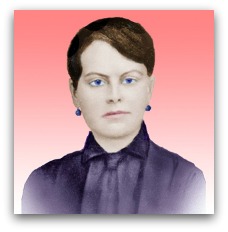
Ann Haseltine Judson (1789 – 1826)

Who was she? A Bradford, Massachusetts native, teacher, and the wife of Andoiram Judson. Two weeks after they married, the couple set out on a mission trip — first to India, then to Burma.
Key achievements: While her husband was imprisoned in Burma under suspicion of being a spy, Judson wrote stories of the struggles she faced on her own in the mission field. She included tragic descriptions of child marriages, female infanticide, and the trials of the Burmese women who had no rights except for those their husbands gave them.
How she died: Of smallpox in Burma, at age 37.
Interesting fact: At least 16 biographies of Judson were published in the 19th century, the most famous of which had a new edition printed almost every year from 1830 to 1856. She and Andoiram were American celebrities.

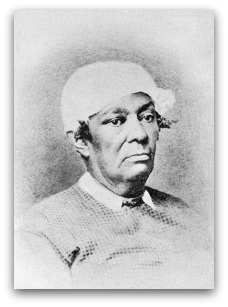
Betsey Stockton (c. 1798 – 1865)

Who was she? A freed slave who left domestic service to travel as America’s first single female missionary to Hawaii, then known as the Sandwich Islands. In fact, she went partly as a missionary and partly as a servant to one of the couples on the mission, the Reverend and Mrs. Stewart.
Key achievement: After being asked by the son of the Hawaiian king to teach him English, Stockton started up a school at Lahaina (in West Maui) for the makeainana — fishermen, farmers and craftsmen who lived off the land — which continued after she left.
Why her mission ended: Stockton’s service in Hawaii was cut short when Mrs. Stewart became ill. The party decided to return to the States in 1826.
Where she died: In Princeton, NJ. She is buried in the Stuarts’ plot in Cooperstown, NY.
Stockton’s diary: Stockton kept a detailed written record of the mission, which conveys her somewhat turbulent, occasionally agonized, inner spiritual life; her interest in the natural world — including the kinds of fish caught from the ship, the color of the waves, and various bird life; and her spirit of adventure. Like others on board she was frightened at her first sight of the Hawaiian men who come out in canoes to greet the ship:

half man and half beast—naked—except a narrow strip of tapa round their loins…

But then she adds: “They are men and have souls.”

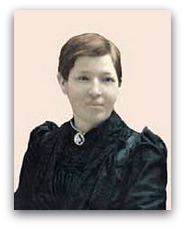
Adele Marion Fielde (1839 – 1916)

Who was she? A working-class native of Rodman, NY, who followed her fiancé, a Baptist missionary, to Bangkok, Thailand (then Siam) — only to discover he’d died of typhoid fever 10 days after she’d set sail from New York. She carried on nevertheless, remaining in Siam for a couple of years.  Later she went on a mission to China for training Bible women.
Key achievement: Fielde mastered the Chinese language and was also a powerful writer. She encouraged each of her Chinese Bible women to tell their stories, and then translated these stories and got them published in magazines back home. As one of her biographers puts it:

Their heart-rending sagas proved enormously appealing to American women, who could sympathize with their suffering Chinese sisters.

Where her life ended: In the United States. She retired from missionary work, went home, and became involved in scientific research.
Strange twists and turns: A free thinker since childhood, Fielde broke away from her family’s Baptist roots — only to return after becoming engaged to a Baptist missionary candidate. She faithfully served as a Baptist missionary for two decades — and then turned to science. Notably, the Baptists for a a long time sensed that she wasn’t quite one of them, accusing her of indulging in card-playing and dancing when she lived in Siam. She responded:

“I desire to be good. But I do not wish to be Pious.”

Lottie Moon (1840 – 1912)

Who was she? A highly educated Virginia native (she was born “Charlotte Digges Moon” on her family’s ancestral slave-run tobacco plantation). She became a teacher and then was called, at age 33, to serve for decades in China with the Southern Baptist Convention. Initially she went to join to her sister, Eddie, who was stationed at the North China Mission in the treaty port of Dengzhou.
Remarkable turnaround: When she first arrived at the mission, Moon made a point of wearing Western clothes to distance herself from the “heathens.” But then she mastered the language, became an admirer of Chinese culture and history, and started wearing Chinese clothes and adopted many of their customs.
Commendable behavior: When China was facing plague, famine, revolution, and war, Moon shared her personal finances and food with anyone in need around her.
How she died: Of starvation, in the harbor of Kobe, Japan, while en route back to the United States. (At that point she weighed only 50 pounds!)
Impressive statistic: Southern Baptists have named their annual mission fund after Lottie Moon. It finances half the entire Southern Baptist missions budget every year.
Part of her lore: She used to tell people she was 4′ 3″ tall. While something of an exaggeration, she was definitely petite!
Lottie Moon Cookies: Moon won over the children in her Chinese village by making tea cakes for them — they called her “the cookie lady” instead of “foreign devil.” Baptist families bake Lottie Moon Cookies for Christmas.

Mary Slessor (1848 – 1915)

Who was she? A Victorian mill girl who left the slums of Dundee to live among the tribes of Calabar, Nigeria, to take up the mantle of David Livingstone two years after he died.
Noteworthy friendship: While in Africa, Slessor became acquainted with the writer Mary Kingsley. Although the latter had never been baptized and hadn’t even been brought up a Christian, their common status — both were single females living among native populations with little company — presumably created the basis for lasting friendship.
Key achievement: The tribal people believed that if a woman gave birth to twins, one of the twins was the offspring of the devil who had secretly mated with the mother — and since the innocent child was impossible to distinguish, both should be killed (the mother was often killed as well). Slessor fought hard to end this practice.
Where she died: In Nigeria, at age 67. There was great mourning among the tribes to whom she’d dedicated her life.
A tribute from an unexpected source: During London Fashion Week in 2010, Nigerian-born designers Bunmi Olaye and Francis Udom named Slessor as one of the muses behind their collection, which fused Victorian costume with furs of the African tribe Slesson had lived in. The reason? Slessor had rescued Francis’s great-grandmother, who was born a twin, from human sacrifice.

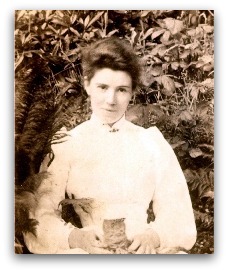
Amy Carmichael (1867 – 1951)

Who was she? A small-village girl from a devout Presbyterian family in County Down, Northern Ireland (her father founded an evangelical church in Belfast). She was called first to work among the mill girls of Manchester and then overseas, finding her life-long vocation in India.
Key achievement: In those days, Hindu priests kept “temple children” — mostly young girls who were forced into prostitution to earn money for them. Carmichael tried to rescue them by setting up a sanitarium in Tamil Nadu, thirty miles from the southern tip of India.
Bold behavior: She would dress in Indian clothes, dye her skin with dark coffee, and travel long distances on hot, dusty roads to save just one child from suffering.
How she died: In India at the age of 83. She asked that no stone be put over her grave. Instead, the children she had cared for put a bird bath over it with the single inscription Amma, meaning “mother” in Tamil.
Cryptic remark: While serving in India, Carmichael received a letter from a young lady who was considering life as a missionary. She asked, “What is missionary life like?” Carmichael wrote back saying simply,

“Missionary life is simply a chance to die.”

A measure of her fortitude: Carmichael served in India 55 years without furlough and produced a total of 35 published books about her experiences.

Gladys Aylward (1902 – 1970)

Who was she? A working class London girl who left domestic service for to Yuncheng, Shanxi Province, China, in the tumultuous years leading up to World War II. She worked with an older missionary, Jeannie Lawson, to found an inn where traveling merchants could get a hot meal and hear stories from the Bible. Notably, Aylward was initially rejected as a potential missionary to China because of her lack of education. She spent her life savings on her passage.
Key achievements: Appointed by the local mandarin to serve as a “foot inspector,” she toured the countryside to enforce the new law against foot binding and met with much success. She also took in orphans and adopted several herself, and she intervened in a volatile prison riot, advocating for prison reform. When the region was invaded by Japanese forces in 1938, Aylward led around a hundred children to safety over the mountains, despite being wounded herself.
How her life ended: She returned to England in the 1940s, then tried to go back to China but was re-denied entry by the Communist government. She ended up in Taiwan, where she started another orphanage. She lived in Taiwan until her death.
Chinese nickname: She was known in China as Ai-weh-deh, or Virtuous One.
Celebrations of her life: Numerous books, short stories and movies have been created about the life and work of Gladys Aylward, including the film The Inn of the Sixth Happiness.
Not easily flattered: For Aylward, this 1957 movie was a thorn in her side: she resented being played by the tall, Swedish Ingrid Bergman (small in stature, she had dark hair and a cockney accent) and was further horrified to discover she’d been portrayed in “love scenes” with the Chinese Colonel Linnan.

Readers, what do you think of these 7 women? Have they inspired you?

STAY TUNED for tomorrow’s post, a Displaced Q on the “pornography of poverty.”

If you enjoyed this post, we invite you to subscribe to The Displaced Dispatch, a weekly round up of posts from The Displaced Nation, plus some extras such as seasonal recipes and occasional book giveaways. Sign up for The Displaced Dispatch by clicking here!

Related posts:

Image: MorgueFile

Dear Mary-Sue: Gap year destinations and learning to speak properly

Mary-Sue Wallace, The Displaced Nation’s agony aunt is back. Her thoughtful advice eases and soothes any cross-cultural quandary or travel-related confusion you may have. Submit your questions and comments here, or else by emailing her at thedisplacednation@gmail.com.

Dear Mary-Sue,

I’m in my last year of school, but instead of just mundanely heading off to university next September I’m planning on taking a gap year. I have some older friends who went on gap years and I was really impressed with how it rounded out their CVs. I was initially thinking of going to an ashram, but then I thought that I should go to where I can be the most useful. As I’ve heard you’re such a font of knowledge when it comes to matters of travel and international relations. Any suggestions?

Archie, Bath, England.

Dear Archie,

Go where you are most needed, sweet noble prince.  I say Somalia. Or Fresno.

Dear Mary-Sue,

I love reading the little globules of wisdom you spit out for us. I think we must have been separated at birth! We’re like two peas in a pod. Like you, I live in Arizona and I love all things British. Even the crap stuff like Torchwood. Anyhoo (wonder who I learned that term from? I love it! Use it all the time) I have one teeny query re: my one little teeny — my 13-year-old son, Scott. The other day I was watching Harry Potter and the Half-Blood Prince for, like, the thousandth time and I was thinking: why can’t my Scott speak like one of those lovely Harry Potter teenagers? I want him to sound a little more Dan Radcliffe and a little less Dan Ackroyd.

Susie-May, Arizona

p.s. Want to meet up?

Dear Susie May,

I have two words for you: Nicholas Witchell. Being a committed member of the sisterhood of the tea cosy (that’s the Mary-Sue term for an anglophile), you doubtless knew about the divine Nicholas W. His fiery red hair matching his fiery red passion. He’s clearly sex-on-legs — am I right or am I right, girls? Being the BBC Royal Correspondent, Nicholas not only has brains but also a healthy, deferential respect for constitutional monarchies. Now what I suggest is that you go onto YouTube and find all the Nicholas Witchell footage that you can find. Now your son Scott needs to spend at least an hour a day listening to Nicholas’s dulcet tones. Hopefully, he’ll do it willingly, but if he doesn’t then you may need to strap him down to a gurney. Also, if you take the audio from the videos and burn it onto a CD, you can make sure when Scott goes to bed, he turns on the CD. While he’s asleep the soothing voice of Nicky W. will be playing in Scott’s ears. Subconsciously, Scott’s brain will absorb all of Nicholas Witchell’s good speaking habits and before you know it little Scott will be like your own Little Lord Fauntleroy.

Mary-Sue

p.s. No.

Anyhoo, that’s all from me readers. I’m so keen to hear about your cultural issues and all your juicy problems. Do drop me a line with any problems you have, or if you want to share your fave meatloaf recipe with me (yum! yum!). As they say in Italy, “ciao!”

Mary-Sue is a retired travel agent who lives in Tulsa with her husband Jake. She has taken a credited course in therapy from Tulsa Community College and is the best-selling author of Traveling Made Easy, Low-Fat Chicken Soup for the Traveler’s Soul, The Art of War: The Authorized Biography of Samantha Brown, and William Shatner’s TekWar: An Unofficial Guide. If you have any questions that you would like Mary-Sue to answer, you can contact her at thedisplacednation@gmail.com, or by adding to the comments below.

STAY TUNED for Monday’s post.

If you enjoyed this post, we invite you to subscribe to The Displaced Dispatch, a weekly round up of posts from The Displaced Nation, plus some extras such as seasonal recipes and occasional book giveaways. Sign up for The Displaced Dispatch by clicking here!

Related posts:

RANDOM NOMAD: Vilma Ilic, Research Associate for Sub-Saharan Africa (Social & Economic Development Projects)

Born in: Sarajevo, Bosnia (at the time of my birth, still Yugoslavia)
Passports: Happily, I carry a USA passport — and realize how lucky I am!
Cities/States/Countries lived in: Utah (Salt Lake City): 1985-90; Ohio (Columbus): 1991-99; Washington, DC: 2000-01; Washington (Randle*): 2002; Connecticut (Storrs & Hartford): 2003-05 & 2006-08; Germany (Hamburg): 2006; New York (New York): 2008-10, 2011-present; Uganda (Kalisizo Town, Rakai District): 2010-11.
Cyberspace coordinates: Still a work in progress, but stay tuned!
* A small community deep in the temperate rainforest of the Pacific Northwest, between Mt. St. Helen’s and Mt. Rainier.

What made you leave your homeland in the first place?
My mother was accepted to graduate school at the University of Utah. Both my mother and father yearned to leave Bosnia (formerly part of Yugoslavia), for no unusual reasons: they sought greater academic and career opportunities and a better future for their children. They also sensed the progressing demise of our country, which started promptly after Tito’s death. Unlike the rest of our family, friends, and neighbors, my family fled the country before the civil war and genocide began in the early 1990s.

Is anyone else in your immediate family “displaced”?
My parents are definitely displaced. Similar to other immigrants who’ve spent their childhood, adolescence, and young adult years in their home country and then lived more than thirty years in their adopted country, my parents have never quite fit into the United States. The extent to which immigrants like them do or do not have control over “fitting in” remains a mystery to me — resting as it does on so many social, racial, cultural, religious, economic, geographic, and ethnic variables. Maybe they are destined to always feel displaced? People like my parents tend to feel at “home” only when they have found pockets of people from their homeland who have created sub-communities in whatever locales they reside. But then when my parents actually do go home after spending so much time abroad, their friends and family regard them differently: “You’re an American now.” Comments like those — from your own family — can make you feel as though you’re living on the “moon.” You’re seen as something of a traitor, regardless of the amount of remittances you’ve sent home.

Describe the moment when you felt most displaced.
For me, feeling displaced has to do with suffering through a bad life decision — you only realize it’s a terrible choice when it’s too late. Call it poor planning or a penchant for ignoring sage advice, but unfortunately, I have a lot of experience in this realm. Working in Hamburg, Germany, was like that for me. I went there to teach English as a foreign language to Germans. I absolutely loathed the work — and also didn’t have a positive attitude. In retrospect, it’s pretty distressing to think that my time in Hamburg could have been much richer. Although it’s ethnically homogenous and the German culture is a tough one to crack, Hamburg is a wonderful northern European city with an abundance of parks, museums, delicious restaurants, festivals, free events, concerts, shopping, affordable living, social services, and whatever you wish for in a metropolis with enough space to never feel stifled. Yet I felt displaced the entire time I was there.

Describe the moment when you felt least displaced.
The moment I set foot in the Pearl of Africa. There’s something about Uganda. It’s a loving country — the people are warm, welcoming, celebratory — and the terrain itself, not to mention the climate, is extraordinarily beautiful. All of these elements combined — the beauty of the people, the country, the climate — made me feel instantly at home. Of course, in a place like Uganda, I stick out in the crowd — hence am always at the mercy of onlookers and of people incessantly yelling “Muzungu!” But even when I was the only muzungu for miles and miles, and didn’t understand the language, I felt more comfortable and at peace there, than I have anywhere in the world.

If I had to analyze it, I’d say my comfort level also had to do with the work I was doing in that country. I was on a small team that was part of the Suubi Research Project: we’d been given the task of designing a sustainable school-lunch program for 10 primary schools in southern Uganda. The majority of pupils don’t eat anything all day because their parents/caregivers cannot afford the nominal lunch fees. For those who can afford it, the midday meal consists of boiled maize-meal and water in a soupy consistency. Together with school teachers and administrators, pupils, and community members, we tried to come up with a program that would be nutritional but also generate a profit for schools in the long run.

To do this kind of work, I had to access parts of my brain, psyche, and heart that, in many highly-industrialized Western countries, are frequently subdued, or even sabotaged.

You may bring one curiosity you’ve collected from each of your adopted countries into the Displaced Nation. What’s in your suitcase?
From Zagreb, Croatia: A licitarka srce, an ornamental-sized heart-shaped cookie. Not intended for eating, it’s hardened, painted red, and adorned with loving phrases or sketches of historical sites in Zagreb. It’s a typical souvenir, but hasn’t lost its significance for me. And better yet, it’s small and lightweight.

From Sarajevo, Bosnia: A džezva, a pot used to make Turkish coffee, which locals consume about 4-5 times per day in the street cafes of Sarajevo. Pack it in your suitcase, and its uncomplicated design makes it possible to enjoy a strong Turkish coffee anywhere in the world — as long as there are finely ground coffee beans, water, and fire.

From Uganda: Handmade baskets woven from grasses, tree-bark hats, banana-fiber mats, and colorfully printed smocks. I would give all of these items away as gifts to Displaced Nation residents as I know I’ll keep returning to Uganda.

From the US: All of my iLife appendages — nothing else matters. But if there is still space, I’d pack a good pair of American blue jeans, running shoes, powdered electrolyte drink mixes, and probiotics.

You’re invited to prepare one meal based on your travels for other Displaced Nation members. What’s on the menu?
I’m going to choose the food from my home country, and various other parts of former Yugoslavia, which remains my favorite. I would prepare an assortment of meat, cheese and cabbage burek, with kajmak and kupus salata on the side.

For anyone needing to top off the meal with something sweet, I’d offer plates of oblande, tulumbe, kadaif, and krempite.

Beverages would include red wine from Macedonia and some sort of rakija (domestic spirits) as an aperitif.

And for an African touch, I’d consider including fresh tilapia from Lake Victoria, as well as fresh pineapples, avocado, mango, and papaya.

You may add one word or expression from the countries you’ve lived in to The Displaced Nation argot. What will you loan us?
From Uganda: You are lost. The first time a Ugandan said this to me (they say it in English), it took me some time to realize that in fact, I was very much found. After hearing it time and again, I interpreted it to mean: “I haven’t seen you in a while, where have you been?” or “I miss you.”
From American English: It’s not so much a word but the habit Americans have of inventing new words by converting nouns into verbs or combining two words/concepts: eg, voluntouring, voluntourism, professionalize, beveraging, tween…

This month we are looking into “philanthropic displacement” — when people travel or become expats on behalf of helping others less fortunate than themselves. Do you have a role model you look up to when engaged in this kind of travel — whose words of advice you remember when you find yourself in a difficult situation?
I would choose my father for this one. Some advice he has dished over the years has actually stuck. Many immigrant parents wish their displaced and nomadic offspring would settle down in the burbs already — but not my dad. He genuinely supports what I do. Here’s what he said:

Who you are, in terms of your skin color, gender, ethnicity, ability, whatever it may be, it’s all by chance. No one should be so attached to their position in society, because it could change at any moment, and you didn’t have a choice in the first place.

My interpretation of that is, regardless of how you position yourself or where other people place you in the ruthless global hierarchy, what you value in yourself, in other people, and in life, is of prime importance. You are not superior or inferior to anyone on this planet. We are all the same. With that approach, nothing is scary and everyone is valuable.

Voluntourism is said to be the fastest growing segment of the travel industry (itself one of the world’s fastest growing industries). Do you think this kind of travel can help the uninitiated understand the problems our planet is facing?
A lot people, myself included, scoff at the term “voluntourism.” We find it disturbing to think that privileged people are paying very large sums of money to spend a few weeks or months in a low-income country, somewhere in the global south or South/East Asia — to do what, exactly? How much of this money is being invested into the communities in which the voluntourists are traveling/visiting, and how much is supporting the Western-based organization? I think we know the answer.

On the other hand, I realize that this industry provides an organized, safe, and coordinated way for people who wouldn’t otherwise have the opportunity to visit certain parts of the world. I just don’t think the voluntourists should be misled. It is both their — and the organization’s — responsibility to fully understand the implications of their visit, and the impact of their visit on the community.

It’s difficult to measure how much this type of exposure can change one’s attitude toward and knowledge about a particular place and its inhabitants. I would advise anyone who has never left a highly-industrialized country and has enough resources, simply to board a flight to a poor developing country. The real learning and growing happens when you leave the comfort of a temporary expat community, the organized lodging, the capital cities and urban areas — and actually travel, by local means, to very remote and rural villages. It is these very raw, uncomfortable, and painful experiences — when people break the tourist habit of simply arriving, observing, interacting, taking, and leaving — that can lead to major epiphanies.

Readers — yay or nay for letting Vilma Ilic into The Displaced Nation? Tell us your reasons. (Note: It’s fine to vote “nay” as long as you couch your reasoning in terms we all — including Vilma — find amusing.)

img: Vilma Ilic and a friend from Zagreb nervously — owing to their leftover Catholic guilt — navigate the Virgin Mary’s blessed cove in the bluffs of Šibenik, a town on Croatia’s Dalmatian Coast (summer 2009).

STAY TUNED for what may or may not be tomorrow’s installment from our displaced fictional heroine, Libby, who has been in a state ever since her creator, Kate Allison, went missing on Halloween. Has she done an Agatha Christie on her? (What, not keeping up with Libby? Read the first three episodes of her expat adventures.)

If you enjoyed this post, we invite you to register for The Displaced Dispatch, a round up of weekly posts from The Displaced Nation. Includes seasonal recipes and book giveaways. Register for The Displaced Dispatch by clicking here!

Related posts: